It’s Sunday morning. You want a healthy, tasty Indian breakfast. Parathas are too heavy. Bread is too boring. Your mind immediately goes to one word: Cheela.
But as you reach for the jar, you pause.
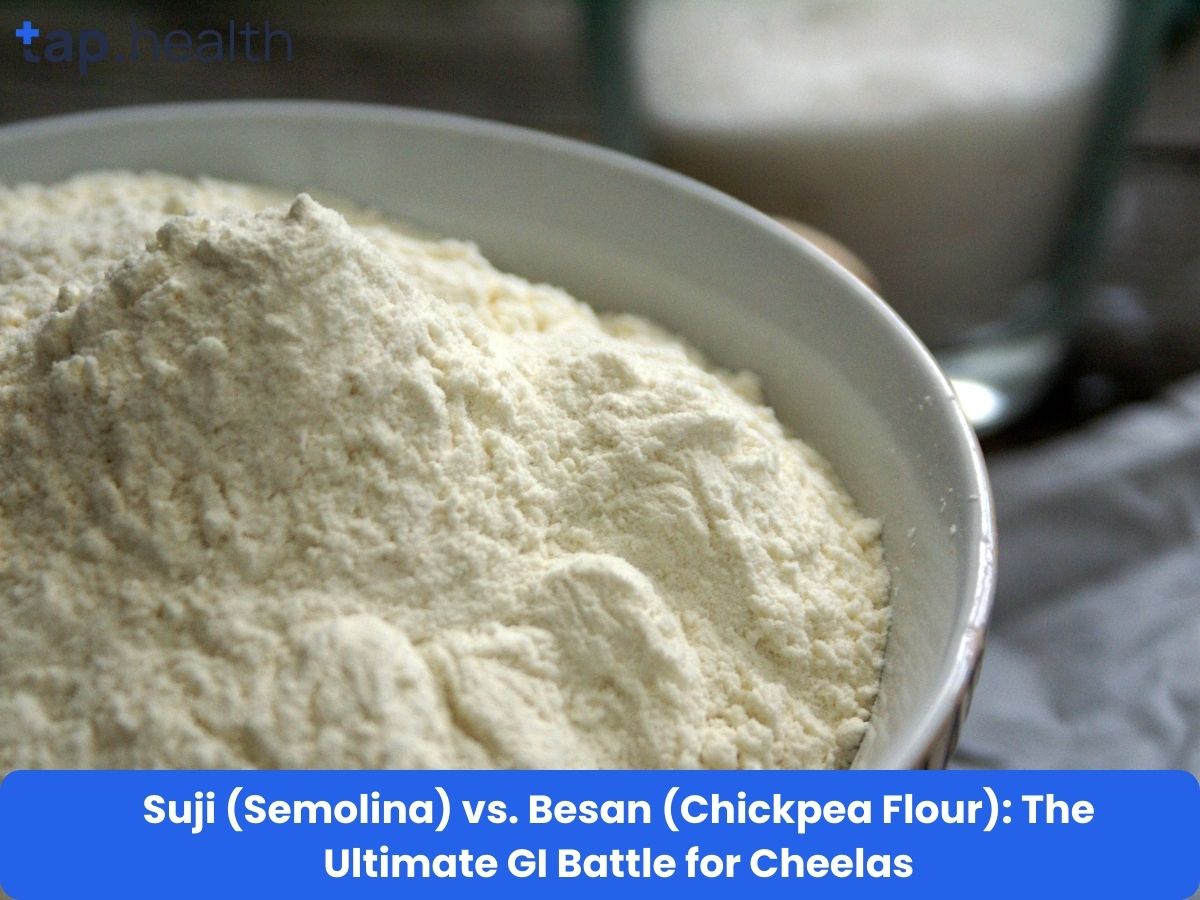
On the left, you have white, granular Suji (Semolina/Rava). It makes crispy, golden cheelas that taste divine.
On the right, you have yellow, powdery Besan (Chickpea Flour). It makes soft, savory cheelas packed with protein.
Which one should you pick?
If you are trying to lose weight, manage diabetes, or just eat cleaner, this isn’t just a matter of taste. It is a battle of biology. It is Suji vs. Besan.
In this comprehensive guide, we are going to dive deep into the nutritional profile of these two Indian kitchen staples. We will compare their Glycemic Index, protein content, and digestive impact to declare the ultimate winner of the “Cheela Wars.”
Meet the Contenders
Before we look at the numbers, let’s understand what we are actually eating.
1. Suji (Semolina/Rava):
Suji is made from Wheat. Specifically, it is the coarse, purified wheat middlings of durum wheat.
- The Good: It gives instant energy and is easy to digest.
- The Bad: It is refined. Most of the fiber-rich bran is removed during processing, leaving mostly starch.
2. Besan (Chickpea Flour/Gram Flour):
Besan is made from ground Bengal Gram (Chana Dal). It is a pulse (legume) flour, not a grain flour.
- The Good: It is naturally high in protein and fiber. It is gluten-free.
- The Bad: It can be heavy on the stomach and cause gas (bloating) for some people.
Understanding Glycemic Index (GI)
To judge which Cheela is healthier, we use the Glycemic Index (GI).
Think of GI as a speedometer for your blood sugar. It measures how fast a food converts into glucose and hits your bloodstream on a scale of 0 to 100.
- Low GI (0-55): Digests slowly. Releases energy steadily. (Best for Diabetics).
- Medium GI (56-69): Moderate rise. Safe in moderation.
- High GI (70+): Digests instantly. Causes a rapid “sugar spike.”
Our goal is to find the flour that keeps us in the Low range.
1. Suji Glycemic Index: The Wheat Trap
Suji is often marketed as “lighter” than whole wheat, but does that mean it’s healthier?
The Glycemic Index of Suji (Semolina) is approximately 66.
This places Suji in the Medium GI category.
Because Suji is a refined form of wheat, your body breaks it down fairly quickly. While it is better than Maida (GI ~75) or White Rice (GI ~73), it is not a “Low GI” food.
The Impact: Eating a plain Suji Cheela will raise your blood sugar moderately fast. It provides a quick burst of energy, which is great for active kids but not ideal for a sedentary diabetic adult.
2. Besan Glycemic Index: The Protein Powerhouse
Now, let’s look at the yellow flour.
The Glycemic Index of Besan (Chickpea Flour) is approximately 35 to 44.
This places Besan firmly in the Low GI category.
Why is it so low?
Besan is made from lentils (dal). Lentils have a complex starch structure and are packed with protein and soluble fiber. This combination acts like a brake on digestion, slowing down the release of sugar into your blood.
The Impact: A Besan Cheela will keep your blood sugar stable. You won’t feel that “sugar crash” or sudden hunger an hour later.
Comparison: Suji vs. Besan Cheela
Let’s put them side-by-side for the ultimate showdown.
| Feature | Suji (Semolina) | Besan (Chickpea Flour) | The Winner |
| Glycemic Index | ~66 (Medium) | ~35-44 (Low) | Besan |
| Protein (per 100g) | ~12 g | ~22 g | Besan (Double!) |
| Fiber | ~3.9 g | ~10.8 g | Besan (3x more!) |
| Carbohydrates | High (~73g) | Moderate (~58g) | Besan |
| Gluten | Contains Gluten | Gluten-Free | Besan |
| Taste/Texture | Crispy, Light | Soft, Savory | Personal Choice |
The Verdict:
Besan is the clear winner.
Nutritionally, Besan destroys Suji. It has half the glycemic impact, double the protein, and three times the fiber. For weight loss and diabetes, Besan Cheela is superior in every way.
Why Do People Still Eat Suji Cheelas?
If Besan is so much better, why is Suji so popular?
- Digestion: Suji is very light. It digests quickly and doesn’t cause gas. Besan can be heavy. For toddlers or elderly people with weak digestion, Suji is often the safer choice.
- Crispiness: You cannot deny the texture. A Suji Cheela (Rava Dosa style) gets crispy and lacy. Besan Cheela tends to be soft and pancake-like.
- Preparation: Suji requires no effort. Just mix and pour. Besan can form lumps and needs thorough whisking.
The “Rava-Besan” Compromise
Can we get the best of both worlds? Yes.
If you find pure Besan Cheela too heavy or pure Suji Cheela too high in carbs, mix them.
The Golden Ratio:
- 70% Besan + 30% Suji.
This mix gives you the crispiness of Suji and the protein/low-GI benefits of Besan. By adding just a little Suji, you improve the texture without spiking the glycemic load too much.
Real-Life Scenario
Let’s meet Rohit, a 40-year-old IT manager from Hyderabad.
The Context:
Rohit loves breakfast. His favorite was “Rava Dosa” (Suji Cheela). He would eat three crispy cheelas with coconut chutney every morning. Despite avoiding sugar in his tea, his HbA1c (diabetes marker) was creeping up.
The Mistake:
He thought, “It’s homemade, so it’s healthy.” He didn’t realize that Suji is essentially refined wheat carb. Eating three of them was like eating three slices of white bread.
The Fix:
His nutritionist made a simple swap.
- The Flour: Switch to Besan Cheela mixed with grated paneer.
- The Veggies: Add huge amounts of spinach (Palak) into the batter.
The Result:
- Satiety: Rohit could only eat two Besan Cheelas because they were so filling (thanks to protein).
- Sugar: His mid-morning sugar spike disappeared.
- Weight: He lost 2 kgs in a month because he was naturally eating fewer calories.
Expert Contribution
We consulted nutritional experts to get the medical perspective.
Dr. N. Singh, Diabetologist:
“Besan is a superfood for Indian vegetarians. We lack protein, and Besan is the easiest way to add it to breakfast. Suji is fine for active children who run around and burn it off, but for a diabetic adult sitting at a desk, Besan is the only correct choice.”
Nutritionist Perspective:
“Many people complain that Besan causes gas. To fix this, always add Ajwain (Carom seeds) and Hing (Asafoetida) to the batter. These spices aid digestion and prevent bloating. Also, ensure the Besan is cooked thoroughly; raw Besan is hard on the stomach.”
Recommendations Grounded in Proven Research and Facts
Based on data from the Glycemic Index Foundation and National Institute of Nutrition (NIN), here are actionable tips:
- Vegetable Loading: The ultimate trick to lower GI is not just changing the flour, but changing the volume. Your batter should be 50% Flour and 50% Vegetables. Use grated bottle gourd (Lauki), carrots, spinach, or onions. This cuts the carb count per cheela in half.
- The Protein Boost: Add a spoonful of Curd (Dahi) or grated Paneer to your Besan batter. This increases the protein further and makes the cheela softer.
- Cooking Fat: Don’t deep fry. Use a non-stick or cast-iron tawa with a teaspoon of Ghee or Mustard Oil. Avoid refined oils.
- Oats Besan Cheela: For an even healthier version, grind rolled oats into powder and mix it with Besan (50:50). Oats add beta-glucan fiber which lowers cholesterol, while Besan adds protein.
Key Takeaways
- Besan (Chickpea Flour) has a Low GI (~35-44) and is excellent for diabetes and weight loss.
- Suji (Semolina) has a Medium GI (~66) and is a refined carbohydrate suitable for active people but less ideal for sugar control.
- Besan has 2x more protein and 3x more fiber than Suji.
- Suji wins on crispiness and digestion; Besan wins on nutrition.
- Best Strategy: Use Besan as the base, add a little Suji for texture, and load it with vegetables.
Conclusion
So, Suji vs. Besan: The Ultimate GI Battle for Cheelas.
The winner is undeniably Besan.
In a country fighting a diabetes epidemic, the humble Chana Dal flour is a weapon we should all use. It transforms your breakfast from a “carb fest” into a “protein meal.”
While Suji is delicious and has its place (occasional Upma or Halwa is fine!), for your daily breakfast staple, let the yellow flour take the crown. Your blood sugar, your waistline, and your heart will thank you.
Frequently Asked Questions (FAQ)
Is Suji healthy for weight loss?
It depends. Suji is low in fat but high in carbohydrates. If you eat plain Suji Cheelas, it may not help much with weight loss. However, if you load it with vegetables and eat it in moderation, it can be part of a weight-loss diet, though Besan is a better choice.
Does Besan cause gas?
Yes, it can. Being a legume, Besan contains complex sugars that can cause bloating in some people. To prevent this, always add a pinch of Hing (Asafoetida) and Ajwain (Carom seeds) to your cheela batter and cook it well.
Which has more protein: Suji or Besan?
Besan has significantly more protein. Besan contains about 22g of protein per 100g, whereas Suji contains only about 12g. This makes Besan a much better protein source for vegetarians.
Can diabetics eat Suji Upma?
In moderation. Suji Upma has a medium Glycemic Index. To make it safer for diabetics, add lots of vegetables (peas, carrots, beans) and perhaps a handful of peanuts or roasted chana to increase the fiber and protein content, slowing down sugar absorption.
Is Suji gluten-free?
No. Suji is made from Wheat, so it contains Gluten. People with Celiac disease or gluten intolerance must strictly avoid Suji. Besan is naturally gluten-free and is a safe alternative.
Can I mix Suji and Besan together?
Yes, absolutely. A mix of Besan and Suji (e.g., 70% Besan, 30% Suji) is a great idea. The Besan provides the nutrition and low GI, while the Suji adds a nice crispy texture that pure Besan lacks.
Is Besan Cheela good for dinner?
Yes. Because it is high in protein and fiber, a Besan Cheela is a light yet filling dinner option. It digests slower than rice or roti, keeping you full through the night without spiking your sugar levels before bed.
References:
- National Institute of Nutrition (NIN): Glycemic Index of Indian Foods. Link
- Harvard T.H. Chan School of Public Health: Carbohydrates and Blood Sugar. Link
- WebMD: Health Benefits of Chickpea Flour (Besan). Link
- Medical News Today: Semolina vs. Whole Wheat. Link
- Diabetes.co.uk: Pulses and Diabetes. Link
(Disclaimer: This content is for educational purposes only. Always consult your doctor or a certified dietitian before making significant changes to your diet, especially if you have diabetes or digestive issues.)