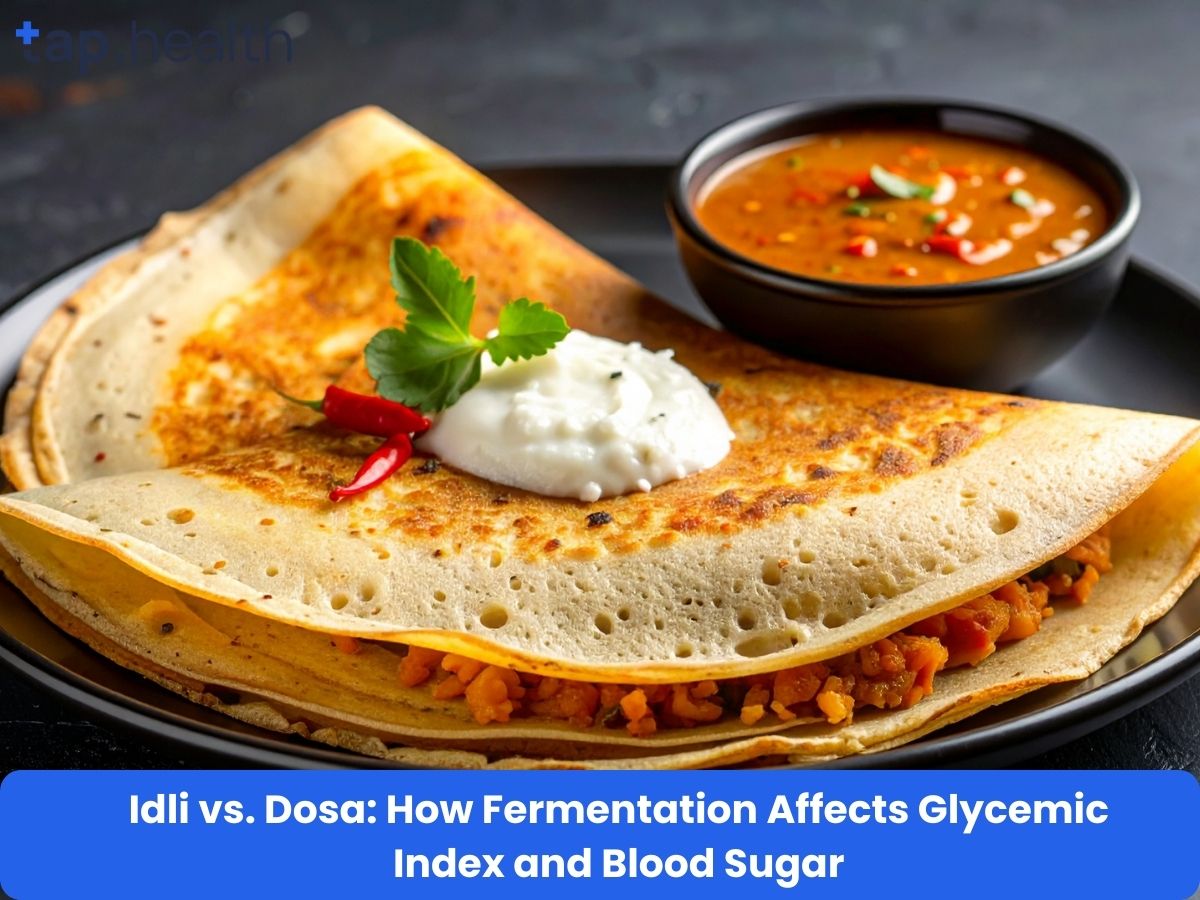
It is the classic South Indian morning dilemma. You are standing at the breakfast table or sitting in your favourite Darshini restaurant. The waiter asks, “What will you have?”
Option A: Soft, fluffy, steamed Idlis.
Option B: Crispy, golden, roasted Dosa.
For years, we have believed that South Indian breakfast is the healthiest option in the world. It is fermented, it is made of dal and rice, and it is delicious. But if you have been diagnosed with diabetes or are watching your weight, you might have heard a different story. You might have heard that rice is the enemy.
So, is the humble Idli safe? Is the crispy Dosa a sugar bomb? And does the magic of fermentation actually help lower your blood sugar?
In this comprehensive guide, we are going to break down the Idli vs. Dosa battle. We will look at the science of fermentation, analyze the Glycemic Index (GI), and determine which of these two superstars deserves a place on a diabetic’s plate.
The Batter Brothers: What Are They Made Of?
Before we look at the blood sugar impact, let’s look at the ingredients. Surprisingly, both Idli and Dosa start their life as the exact same thing.
The Base Ingredients:
- Parboiled Rice / Raw Rice: The source of carbohydrates (energy).
- Urad Dal (Black Gram): The source of protein and mucilage (fluffiness).
- Fenugreek Seeds (Methi): Added for fermentation and blood sugar control.
The Ratio:
Usually, the ratio is 3:1 or 4:1 (3 cups of Rice to 1 cup of Urad Dal). This means that whether you eat Idli or Dosa, you are primarily eating Rice.
The Difference lies in preparation:
- Idli batter is usually thicker and fermented longer to get that fluffy rise. It is steamed.
- Dosa batter is slightly thinner (more water) and is spread on a hot tawa. It is shallow fried with oil or ghee.
What is Fermentation and Why Does It Matter?
The secret weapon of South Indian food is Fermentation.
When you soak the rice and dal, grind it, and leave it overnight, you are inviting millions of good bacteria (probiotics) and wild yeasts to feast on the batter. This process does three magical things:
- Increases B-Vitamins: Fermentation boosts levels of Vitamin B12 and Thiamine.
- Breaks Down Anti-Nutrients: It destroys phytates, which are compounds that block mineral absorption. This means your body gets more iron and calcium from fermented food.
- Protein Availability: It breaks down complex proteins into simple amino acids, making them easier to digest.
But how does it affect Blood Sugar?
This is the tricky part. Fermentation breaks down starches into simpler sugars. You might think this raises the GI. However, the bacteria also produce Lactic Acid (which gives the sour taste).
Lactic Acid is a hero. It slows down the rate at which your stomach empties food into your intestines. This means sugar enters your bloodstream slower, potentially lowering the Glycemic Index.
Idli Glycemic Index: The Steamed Truth
Idli is often called the “world’s healthiest breakfast” because it uses zero oil. But for a diabetic, oil isn’t the only concern; starch is.
The Glycemic Index of Idli is approximately 60 to 75.
This places Idli in the Medium to High GI category.
Why is it high?
- Refined Rice: Most batter is made from white rice, which is stripped of fiber.
- Steaming: Steaming gelatinizes the starch, making it very soft and incredibly easy for your body to digest. Rapid digestion = Rapid sugar spike.
The Saving Grace:
You never eat Idli alone. You eat it with Sambar (Dal/Fiber) and Coconut Chutney (Fat). This combination lowers the overall Glycemic Load of the meal.
Dosa Glycemic Index: The Crispy Conundrum
Now, let’s look at the crispy cousin.
The Glycemic Index of Dosa is approximately 55 to 65.
Wait, is Dosa better than Idli? In terms of pure GI, Yes, slightly.
This places Dosa in the Medium GI category.
Why is it lower than Idli?
- Fat Content: Dosa is roasted with oil or ghee. Fat is a digestive brake. It slows down the absorption of carbohydrates.
- Crispiness: The browning of the dosa (Maillard reaction) changes the structure of the starch slightly compared to the wet steam of the idli.
The Catch:
While the GI might be slightly lower, the Calorie Density is much higher. A plain Dosa can have double the calories of two Idlis because of the oil. For a diabetic who also needs to lose weight, Dosa can be a trap.
Idli vs. Dosa: Head-to-Head Comparison
Let’s put the data in a clear table to settle the Idli vs. Dosa debate.
| Feature | Idli (Steamed) | Dosa (Roasted) |
| Cooking Method | Steaming (No Oil) | Shallow Frying (Oil/Ghee) |
| Glycemic Index | Higher (~60-75) | Lower (~55-65) |
| Calories (per piece) | Low (~40-50 cal) | High (~120-150 cal) |
| Fat Content | Almost Zero | Moderate to High |
| Digestion Speed | Very Fast | Moderate |
| Best For | Weight Loss / Gut Health | Sustained Energy |
The Verdict on Blood Sugar:
Dosa causes a slightly slower spike in blood sugar because of the fat content. Idli causes a sharper spike because it is pure, soft starch.
The Verdict on Health:
Idli is healthier for your heart and weight because it has no fat. Dosa is “safer” for immediate sugar spikes but bad for long-term weight management if eaten daily.
The Fermentation Factor: Does it Help Diabetics?
We mentioned earlier that fermentation produces Lactic Acid. Does this help?
Yes.
A study on fermented Indian foods showed that while the rice content is high, the fermentation process improves Insulin Sensitivity. The bio-active peptides formed during fermentation help the body utilize insulin better.
So, eating a fermented Rice Idli is arguably better than eating a bowl of plain, unfermented Steamed Rice, even if the GI looks similar on paper. The fermented food supports your gut microbiome, and a healthy gut is crucial for managing Type 2 Diabetes.
Real-Life Scenario
Let’s meet Mr. Venkatesh, a 52-year-old teacher from Chennai.
The Context:
Mr. Venkatesh has Type 2 Diabetes. He follows a strict routine: 4 Idlis with Chutney for breakfast every single day. “It is boiled food, very safe,” he tells his doctor. Yet, his post-breakfast sugar levels (PP) are constantly touching 180 mg/dL.
The Mistake:
He is eating 4 Idlis. That is essentially 4 cups of compressed rice. He eats very little Sambar (Dal) and mostly Coconut Chutney. He is loading up on carbohydrates with no fiber.
The Fix:
His dietician changed his plate:
- Reduce: Cut down to 2 Idlis.
- Replace: Switch to Ragi Idli or Oats Idli batter.
- Add: Fill half the plate with thick Sambar (full of drumsticks, brinjal, pumpkin).
The Result:
His sugar dropped to 140 mg/dL. The issue wasn’t the Idli itself; it was the quantity and the type of rice used.
Expert Contribution
We consulted medical guidelines and nutritionists to get the professional stance.
Dr. S. Krishnan, Endocrinologist:
“I often tell my patients: Don’t drink your rice, and don’t steam your sugar. Idli made from white polished rice is very rapidly digested. If you are diabetic, white rice Idli should be a weekend treat, not a daily habit. Dosa is fine, but be careful with the oil. The best compromise is ‘Set Dosa’ or ‘Sponge Dosa’ made with very little oil and plenty of vegetable curry.”
Nutritionist Perspective:
“The chutney matters more than the dosa. Coconut chutney is high in fat but zero carb. Tomato-Onion chutney can be sugary if you add jaggery. Peanut chutney is the best for diabetics because protein blunts the sugar spike. Always pair your Idli/Dosa with Peanut or Chana Dal chutney.”
Recommendations Grounded in Proven Research and Facts
Based on data from the National Institute of Nutrition (NIN) and Harvard Health, here are actionable tips to make your South Indian breakfast diabetic-friendly:
- Change the Grain:Stop using only Rice. Make batter with Whole Moong Dal (Pesarattu), Ragi (Finger Millet), or Oats.
- Moong Dal Dosa (Pesarattu) has a GI of roughly 38 (Very Low). This is the gold standard for diabetics.
- The “Sambar” Rule:Your Sambar should not be watery. It should be thick with Dal and vegetables. Eat the vegetables first, then the Idli. Fiber creates a mesh in your stomach that slows down sugar absorption.
- Cold Idli Trick:This sounds strange, but it works. If you cook Idli and let it cool down (or refrigerate it) and eat it later, the starch converts into Resistant Starch. Resistant starch acts like fiber and lowers the GI significantly.
- Limit the “Podi” (Gunpowder):Idli Podi is mixed with oil or ghee. While tasty, it adds calories without adding volume/fullness. Stick to vegetable Sambar.
Key Takeaways
- Idli has a higher Glycemic Index because steaming makes the starch easy to digest.
- Dosa has a slightly lower Glycemic Index because the added fat slows digestion, but it is higher in calories.
- Fermentation is beneficial! It creates probiotics and lactic acid which aid gut health and insulin sensitivity.
- The Problem is White Rice: The main culprit in both dishes is polished white rice.
- The Solution: Use Moong Dal (Pesarattu), Ragi, or Oats to make the batter. Always eat with more Sambar than Idli.
Conclusion
So, Idli vs. Dosa: How Fermentation Affects Glycemic Index and Blood Sugar?
The winner is not clear-cut.
If you are looking strictly at Blood Sugar Spikes, Dosa (eaten in moderation) might cause a slower rise than soft, steamed Idli.
If you are looking at Heart Health and Calories, Idli is superior because it is oil-free.
But for a diabetic, the real winner is neither the standard white Idli nor the white Dosa. The winner is the Alternative Grain Dosa. Switching to Green Moong Dosa (Pesarattu) or Ragi Dosa gives you the fermented goodness without the high-carb punishment.
Enjoy your South Indian breakfast, but remember: It’s not just about what you eat, but what you eat it with. Let the Sambar take the lead!
Frequently Asked Questions (FAQ)
Is Idli good for diabetes?
It depends on the ingredients. Idli made from standard white rice has a high glycemic index and can spike blood sugar. However, Idli made from Rava, Oats, or Ragi is very healthy for diabetics. Portion control (2 idlis) is essential.
Does fermentation reduce carbohydrates in Idli batter?
No, not significantly. Fermentation breaks down complex starches into simpler sugars, but the total carbohydrate count remains roughly the same. However, it produces lactic acid, which helps slow down digestion slightly.
Which is better for weight loss: Idli or Dosa?
Idli is better for weight loss. One Idli contains about 40-50 calories and zero fat. One plain Dosa can contain 120-150 calories due to the oil or ghee used for roasting. Steamed foods are always lower in calories.
Can I eat Masala Dosa if I have diabetes?
Avoid the potato. The “Masala” inside the dosa is usually boiled potato, which is a high-GI food. Eating a rice crepe filled with potato is a double-carb bomb. Ask for “Vegetable Masala” (beans/carrots) or eat plain Sada Dosa.
What is the glycemic index of Rava Idli?
Rava Idli has a Medium GI. It is made from Semolina (Wheat) rather than rice. While it is not “Low GI,” it digests slower than rice idli. Adding vegetables (carrots/peas) to the Rava batter lowers the GI further.
Is Pesarattu (Moong Dal Dosa) good for diabetics?
Yes, it is excellent. Pesarattu is made from whole green moong dal instead of rice. It is high in protein and fiber and has a very low Glycemic Index (~38). It is the best South Indian breakfast option for blood sugar control.
Does coconut chutney increase cholesterol?
Generally, no. Fresh coconut contains saturated fats, but they are Medium Chain Triglycerides (MCTs) which are metabolized differently. However, diabetics should be mindful of calories. Peanut chutney or Mint chutney are lower-calorie alternatives.
How many Idlis can a diabetic eat?
A general recommendation is to limit intake to 2 medium-sized Idlis per meal. This should be accompanied by a large bowl of vegetable Sambar to ensure the meal is filling and fiber-rich.
References:
- National Institute of Nutrition (NIN): Glycemic Index of Indian Foods. Link
- Harvard Health Publishing: Glycemic Index and Diabetes. Link
- Journal of Ethnic Foods: Fermented Foods of South India. Link
- WebMD: Benefits of Fermented Foods. Link
- Diabetes.co.uk: Rice and Blood Sugar. Link
(Disclaimer: This content is for educational purposes only. Always consult your doctor or a certified dietitian before making significant changes to your diet, especially if you have diabetes or hypertension.)