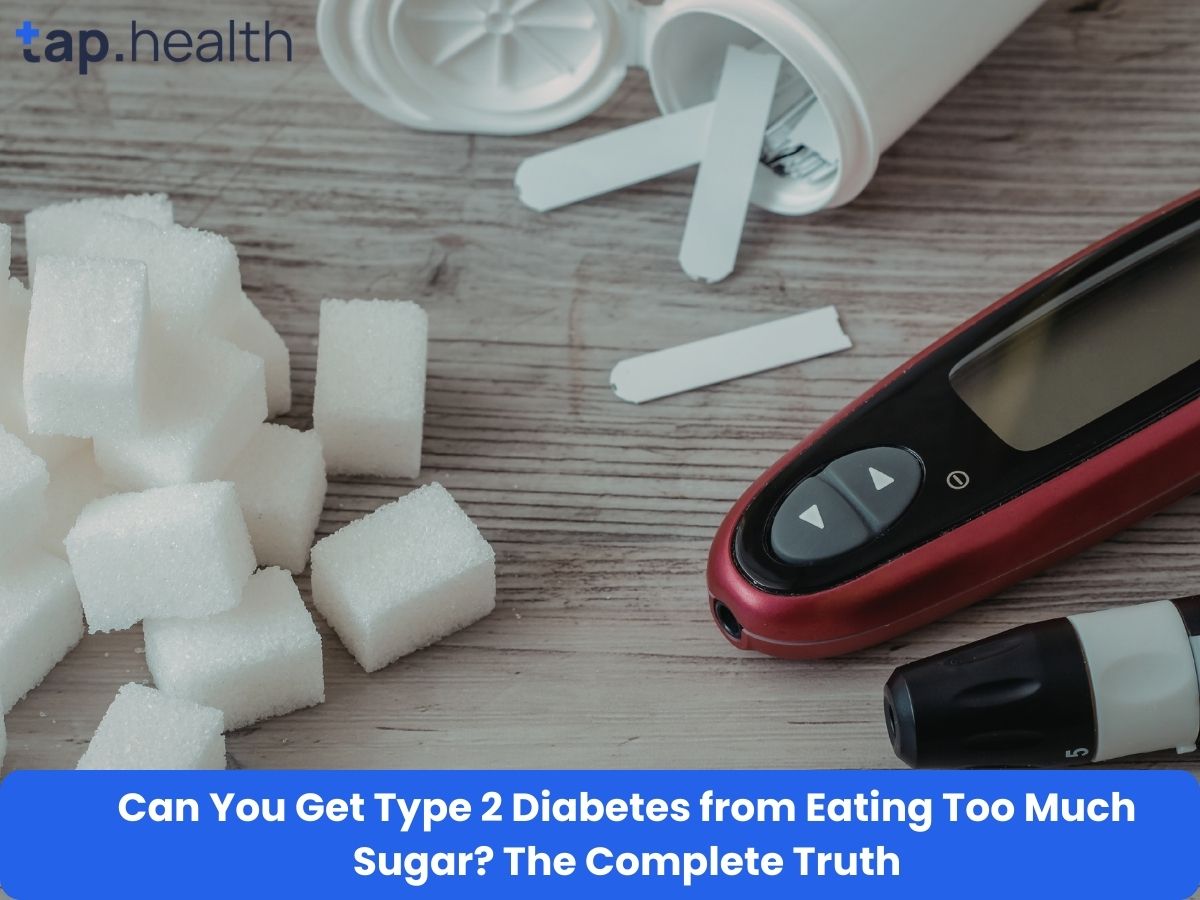
We have all heard it since childhood. Your grandmother scolds you when you reach for a second Gulab Jamun: “Don’t eat so much sweet, you will get sugar disease!”
In India, where every celebration—from passing an exam to a wedding—is marked with “Kuch meetha ho jaye” (Let’s have something sweet), sugar is everywhere. But with India now being called the “Diabetes Capital of the World,” that old warning feels more scary than ever.
You look at your cup of chai, loaded with two spoons of sugar, and wonder: “Can you get type 2 diabetes from eating too much sugar?”
Is it really that simple? If you eat sugar, do you get diabetes? Or is there more to the story?
The medical answer is a mix of “Yes” and “No.” While sugar itself isn’t a direct poison that infects you with diabetes, it is the fuel that drives the engine of the disease.
In this detailed guide, written in simple Indian English, we will unravel the sticky truth. We will explain exactly how sugar affects your pancreas, the difference between eating a mango and drinking a cola, and why your weight might matter more than your sweet tooth.
The Short Answer: It’s Complicated
Let’s start with the direct answer. Can you get type 2 diabetes from eating too much sugar directly? No. Can eating too much sugar lead to type 2 diabetes indirectly? A huge YES.
Here is the difference: If you are a thin, active person and you eat a lot of sugar, you won’t necessarily wake up with diabetes tomorrow. Diabetes is not like a cavity in your tooth that forms directly where the sugar touches.
However, eating too much sugar leads to weight gain. Excess weight (especially around the tummy) causes Insulin Resistance. And Insulin Resistance is the direct cause of Type 2 Diabetes.
So, sugar is the matchstick, obesity is the fire, and diabetes is the burnt house.
Read this: Is Thirst a Symptom of Diabetes?
How Your Body Handles Sugar (The Traffic Jam Analogy)
To understand why eating too much sugar leads to diabetes, you need to understand what happens inside your body.
Imagine your bloodstream is a busy road in Mumbai.
- The Cars: The sugar (glucose) you eat.
- The Traffic Police: Insulin (a hormone made by your pancreas).
- The Parking Lots: Your body’s cells (muscles, liver).
When you eat a laddoo, “cars” (sugar) flood the road. The “Traffic Police” (insulin) rushes out to direct these cars into the “Parking Lots” (cells) to be used for energy.
The Problem with Excess Sugar: If you constantly flood the road with cars (binge-eating sweets), the parking lots get full. The Traffic Police (insulin) gets tired and overwhelmed. Eventually, the cars have nowhere to go, so they stay on the road, causing a permanent traffic jam. This traffic jam is High Blood Sugar.
The Real Villain: Visceral Fat (Belly Fat)
This is the most critical section for Indian readers. Research shows that Indians are genetically prone to storing fat around the stomach. This is called Visceral Fat.
When you drink sugary sodas or eat heavy sweets:
- The liver gets overloaded with fructose.
- It turns this excess energy into fat.
- It stores this fat around your liver and pancreas.
Why is this dangerous? This belly fat is not just “extra weight.” It is active tissue. It releases inflammatory chemicals that tell your cells: “Ignore the insulin!” This is called Insulin Resistance. Once your cells stop listening to insulin, Type 2 Diabetes begins.
Added Sugar vs. Natural Sugar: Is Fruit Safe?
Many people ask, “If sugar causes diabetes, should I stop eating mangoes?”
No. You must distinguish between the two types of sugar.
1. Natural Sugar (Good)
Found in fruits, vegetables, and milk.
- Why it’s safe: It comes packaged with Fibre.
- The Safety Net: Fibre acts like a speed-breaker. If you eat an apple, the fibre slows down the digestion. The sugar enters your blood slowly, drop by drop. Your insulin can handle this easily.
2. Added Sugar (Bad)
Found in soda, biscuits, cakes, ketchup, and Indian mithai.
- Why it’s dangerous: It has zero fibre.
- The Flood: When you drink a cola, the sugar hits your blood like a tsunami. Your pancreas panics and pumps out massive amounts of insulin. Over time, this “panic mode” burns out your pancreas.
The Verdict: You rarely get Type 2 Diabetes from eating fruit. You get it from processed, added sugars.
Can You Get Type 1 Diabetes from Eating Too Much Sugar?
This is a very common confusion. “Can you get type 1 diabetes from eating too much sugar?”
The answer is NO.
- Type 1 Diabetes is an autoimmune disease. Your body’s immune system attacks the pancreas by mistake. It has nothing to do with diet or lifestyle.
- Type 2 Diabetes is a lifestyle disease. It is caused by age, weight, inactivity, and diet.
You cannot “give yourself” Type 1 diabetes by eating sweets. It is largely genetic and bad luck.
The “One Day” Myth: Can a Binge Cause Diabetes?
We have all had those days—Diwali, Eid, or Christmas—where we eat sweets from morning to night. Later, we feel guilty and Google: “Can you get diabetes from eating too much sugar in one day?”
Relax. No, you cannot.
Diabetes is a chronic condition. “Chronic” means it develops slowly over years.
- A single day of binge-eating will stress your body, yes. You might feel thirsty, tired, and groggy (a sugar hangover).
- But your pancreas is resilient. It will work overtime to fix your mistake.
- The Danger: The danger is not one day. The danger is when that “one day” becomes a daily habit. If you binge-eat sugar three times a week for 5 years, you are walking down the red carpet to diabetes.
Can Eating Too Much Sugar Cause Diabetes in Pregnancy?
Pregnancy puts massive stress on a woman’s body. “Can eating too much sugar cause diabetes in pregnancy?”
This condition is called Gestational Diabetes.
- The Cause: Hormones from the placenta block insulin from working.
- The Sugar Link: While the hormones are the main cause, eating too much sugar contributes to excessive weight gain. Excessive weight gain makes the insulin blockage worse.
So, while sugar isn’t the sole cause, a high-sugar diet makes it much more likely that you will develop Gestational Diabetes, which puts both mother and baby at risk.
What Happens When a Type 2 Diabetic Eats Too Much Sugar?
Everything we discussed above applies to healthy people. But what if you already have the diagnosis? “What happens when a type 2 diabetic eats too much sugar?”
For a diabetic, the “Traffic Police” (insulin) are already on strike.
- Immediate Spike: Blood sugar shoots up to dangerous levels (Hyperglycemia).
- Symptoms: Blurred vision, extreme thirst, fatigue, and frequent urination.
- Silent Damage: The excess sugar acts like shards of glass in your blood. It scratches the inside of your arteries, leading to heart disease, kidney failure, and blindness over time.
Can Type 2 diabetics eat sugar? Yes, but in very small, controlled amounts. It is not a ban; it is a budget. You have a small budget for carbs—spend it wisely.
Can You Get Diabetes from Eating Too Much Salt?
People often search for this related question: “Can you get diabetes from eating too much salt?”
Salt has no sugar. So directly? No. But indirectly? Yes.
- Blood Pressure: High salt intake raises blood pressure.
- The Link: High blood pressure and high blood sugar are “best friends.” They almost always travel together in a gang called Metabolic Syndrome.
- The Craving: Salty food makes you crave sugary drinks. (Think of how you want a cola with a salty pizza). This cycle drives the diabetes risk.
Real-Life Scenario
Let’s look at a relatable story to understand the timeline.
Meet Amit (32, IT Professional): Amit is “Skinny Fat.” He looks thin but has a small paunch. He sits at a desk for 10 hours a day. The Diet: Amit drinks 3 cups of sweet tea and one energy drink daily. He skips lunch and eats biscuits. The Belief: “I am thin, so I won’t get diabetes.” The Reality: The liquid sugar from the tea and energy drinks is causing visceral fat to build up around his liver (Fatty Liver). The Diagnosis: At age 35, during a routine checkup, his HbA1c is 6.8%. He has Type 2 Diabetes. The Lesson: It wasn’t just the sugar; it was the liquid sugar combined with sitting all day that destroyed his metabolism, even though he wasn’t visibly obese.
Expert Contribution
We consulted Dr. S. Iyer, a Senior Diabetologist, to clarify the sugar-diabetes link.
“I tell my patients: Sugar is not the enemy; excess is the enemy. The human body was designed to handle the sugar from a few berries or a mango. It was not designed to handle a 500ml bottle of cola which has 10 teaspoons of sugar. When you drink that, you are essentially punching your pancreas. Do that every day, and eventually, the pancreas fights back by quitting. That is Type 2 Diabetes.”
Recommendations Grounded in Proven Research and Facts
According to the American Heart Association (AHA) and the World Health Organization (WHO):
- The Safe Limit:
- Men: Max 9 teaspoons (36 grams) of added sugar per day.
- Women: Max 6 teaspoons (25 grams) of added sugar per day.
- Note: One can of cola contains about 35-40 grams. That is more than your daily limit in one drink!
- The “Liquid” Rule: Cut out liquid calories first. It is the single most effective way to lower diabetes risk. Eat your calories; don’t drink them.
- Read Labels: Sugar hides under 60 different names: Sucrose, High Fructose Corn Syrup, Dextrose, Maltose, and even “Healthy” Agave Nectar. If it ends in “-ose,” it is sugar.
Key Takeaways
- The Verdict: Sugar does not cause diabetes directly, but it causes obesity, which causes diabetes.
- The Mechanism: Excess sugar leads to belly fat -> Insulin Resistance -> Type 2 Diabetes.
- Type 1 Exception: You cannot get Type 1 diabetes from eating sugar; it is autoimmune.
- Natural vs Added: Fruit is generally safe due to fibre; fruit juice and soda are the real dangers.
- One Day Binge: A single day of overeating won’t give you diabetes, but it stresses your system.
- Lifestyle: Combining sugar with inactivity (sitting all day) is the fastest way to get the disease.
FAQ: Frequently Asked Questions
Can you get type 2 diabetes from eating too much sugar?
Indirectly, yes. Eating large amounts of added sugar leads to weight gain and visceral fat (belly fat). This fat releases chemicals that stop your insulin from working properly (Insulin Resistance), which is the primary cause of Type 2 Diabetes.
Can you get type 1 diabetes from eating too much sugar?
No. Type 1 diabetes is an autoimmune condition where the body’s immune system destroys the insulin-producing cells. It is caused by genetics and environmental triggers, not by eating sweets or sugar.
Can you get diabetes from eating too much sugar in one day?
No. Diabetes is a chronic condition that develops over years. A single day of binge-eating sugar will spike your blood glucose temporarily, but your body will bring it back down. However, repeating this behavior frequently leads to the disease.
What happens when a type 2 diabetic eats too much sugar?
Since their body cannot process sugar effectively, their blood glucose levels spike dangerously high (Hyperglycemia). This can cause symptoms like extreme thirst, fatigue, and blurred vision. Long-term, it damages eyes, kidneys, and nerves.
Can eating too much sugar cause diabetes in pregnancy?
High sugar intake contributes to excessive weight gain during pregnancy, which is a major risk factor for Gestational Diabetes. However, the condition is primarily driven by pregnancy hormones affecting insulin.
Can you get diabetes from eating too much fruit?
It is very unlikely. Whole fruits contain fibre, which slows down the absorption of sugar. Studies show that eating whole fruits like blueberries and apples is actually linked to a lower risk of Type 2 Diabetes. Fruit juice, however, increases the risk.
Can too much sugar cause diabetes in children?
Yes. The rising consumption of sugary drinks and processed snacks has led to an explosion of childhood obesity. Because of this, we are now seeing children as young as 10 years old being diagnosed with Type 2 Diabetes, which was historically an “adult” disease.
Can you get diabetes from eating too much candy?
Yes, over time. Candy is pure processed sugar with no nutritional value. Regular consumption leads to rapid weight gain and insulin spikes, which wears out the pancreas and leads to insulin resistance.
References
- Mayo Clinic: Diabetes risk factors: Sugar and diet
- Harvard T.H. Chan School of Public Health: The Nutrition Source – Sugar and Type 2 Diabetes
- American Heart Association: Added Sugars and Cardiovascular Disease
- Diabetes UK: Sugar and Diabetes: The Facts
- World Health Organization (WHO): Guideline: Sugars intake for adults and children
Disclaimer: This article is for educational purposes only. If you are concerned about your sugar intake or notice symptoms like excessive thirst, please consult a doctor for a blood test.