Imagine sitting down for a simple lunch. You see a bowl of Rajma Chawal (Kidney Beans and Rice).
- Your Diabetes Brain says: “Eat the Rajma! It’s high in fiber and protein, good for blood sugar.”
- Your IBS Brain says: “Don’t you dare! That Rajma will give you gas and stomach pain for two days.”
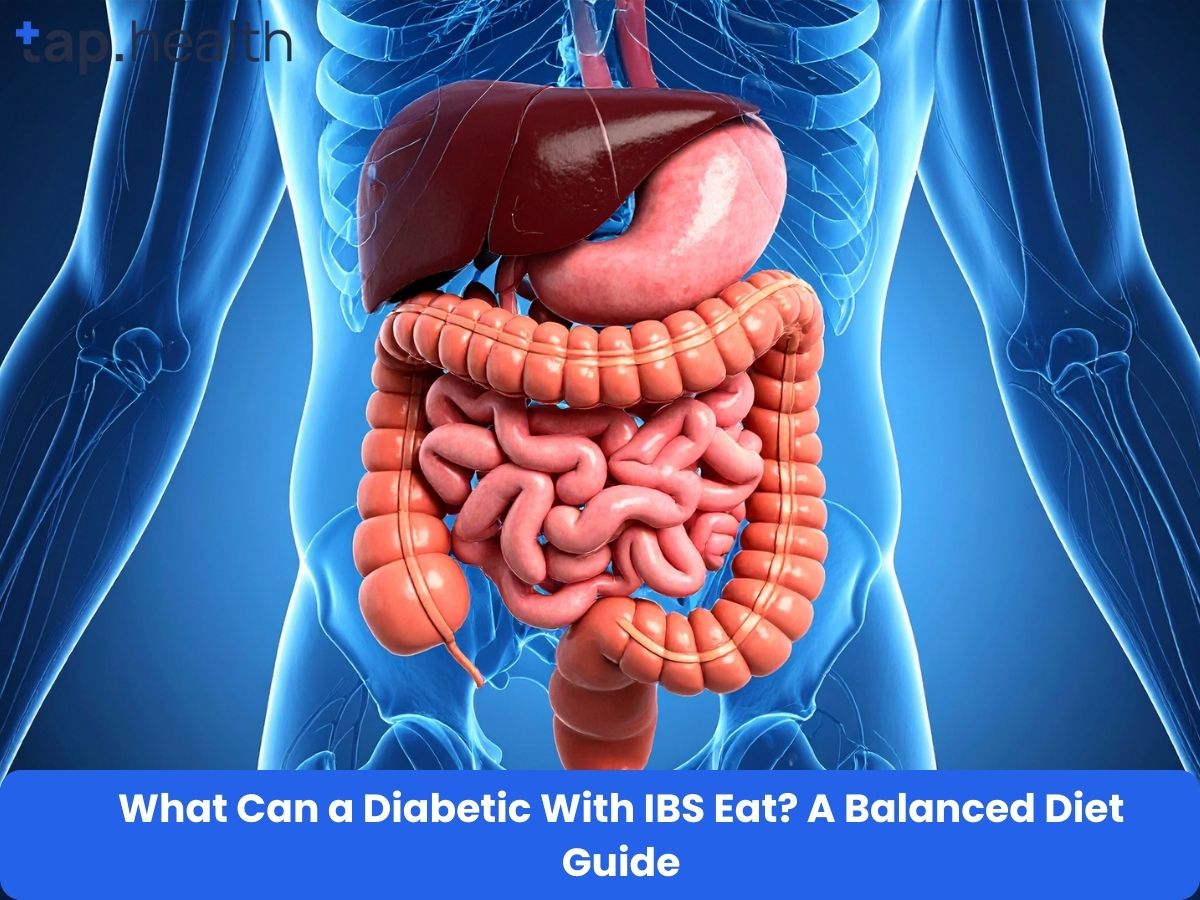
This is the daily battle of having Diabetes and Irritable Bowel Syndrome (IBS) together. It feels like a cruel joke. The very foods that are “good” for diabetes (high-fiber whole grains, beans, raw salads) are often the “worst” foods for IBS because they trigger bloating and diarrhea. Conversely, the “safe” foods for IBS (white rice, plain toast) can spike your blood sugar.
So, what can a diabetic with IBS eat?
The answer lies in finding the “Golden Middle Path”—foods that are gentle on the stomach (Low FODMAP) but slow to digest (Low Glycemic Index).
In this comprehensive guide, written in simple Indian English, we will solve this puzzle. We will give you a clear list of safe Indian foods, explain how to cook your favorite Dals without regret, and help you enjoy your meals again without fear.
Understanding Diabetes and IBS Together
Why is this combination so hard to manage?
- Diabetes Goal: Keep blood sugar stable. We usually do this by eating High Fiber foods (Whole wheat roti, raw veggies, pulses).
- IBS Goal: Keep the gut calm. We usually do this by eating Low Residue/Low Fermentation foods (White rice, cooked veggies, less spice).
When you follow standard diabetes advice, you might eat a lot of “Roughage” (salad, skins of fruits). For an IBS gut, this roughage acts like sandpaper, causing irritation. On the flip side, the “Brat Diet” for IBS (Banana, Rice, Toast) is a carb-heavy nightmare for your blood sugar.
The Solution? You need to focus on Soluble Fiber (which is gentle) rather than Insoluble Fiber (which is rough), and choose carbohydrates that don’t ferment in your stomach.
Key Diet Principles for Diabetes + IBS
Before we list the foods, you need to know the two scientific rules that will save your stomach.
1. The Low-FODMAP Approach
FODMAPs are specific types of carbohydrates (sugars and fibers) that don’t digest well. They sit in your intestine and ferment, causing gas and bloating.
- High FODMAP (Avoid): Wheat, Onions, Garlic, Cauliflower, Rajma, Milk.
- Low FODMAP (Safe): Rice, Oats, Spinach, Carrot, Paneer, Curd.
2. The Low Glycemic Index (GI)
This measures how fast a food spikes your sugar.
- Safe Combo: You want foods that are Low FODMAP (for the gut) AND Low GI (for the sugar).
Best Foods for Diabetics With IBS
Let’s break this down by category, focusing on what you can actually buy in an Indian market.
Low-GI, IBS-Friendly Carbohydrates (The “Roti vs. Rice” Debate)
This is the biggest question: Can I eat Roti? For many IBS sufferers, Wheat (Gehu) is a major trigger because it contains Fructans (a type of FODMAP).
- Rice: White rice is very safe for IBS but high GI.
- The Hack: Eat Basmati Rice (lower GI than short-grain rice) and strictly control the portion (1 small cup).
- Oats: Excellent for both! Oats contain “Beta-glucan,” a soluble fiber that soothes the gut and lowers blood sugar. Savory “Masala Oats” is a great breakfast.
- Millets: Jowar (Sorghum) and Bajra (Pearl Millet) are naturally gluten-free and often tolerated better than wheat. They have a lower GI than rice.
- Quinoa: A modern superfood available in India now. It is high protein and very gentle on the stomach.
Protein Sources That Are Gentle on Digestion
Protein is your best friend. It has zero carbs (good for diabetes) and usually doesn’t ferment (good for IBS).
- Eggs: The “Gold Standard.” Boiled, scrambled, or omelet—eggs are perfectly safe for both conditions.
- Paneer (Indian Cottage Cheese):
- IBS Note: Paneer has very little lactose (unlike milk), so most people tolerate it well.
- Diabetes Note: It is high protein/fat, so it stabilizes sugar.
- Tip: Stick to 50-60g to avoid excess fat, which can sometimes trigger IBS cramps.
- Chicken & Fish: Lean meats are excellent. Avoid deep-frying (Chicken 65) or heavy creamy gravies (Butter Chicken), as grease triggers IBS.
- Tofu: If Paneer gives you trouble, Tofu is the plant-based, gut-safe alternative.
The “Dal” Dilemma: Which Lentils are Safe?
Indian diabetics rely on Dal. But Dal (Lentils) triggers gas.
- Worst Dals for IBS: Rajma (Kidney Beans), Chole (Chickpeas), Urad Dal (Black gram). These are high in “Galactans” which cause massive bloating.
- Best Dals for IBS:
- Moong Dal (Yellow/Washed): This is the easiest to digest.
- Masoor Dal (Pink/Split): Generally well tolerated.
- Cooking Secret: Always soak your dal for 4-6 hours and rinse the water before cooking. This washes away the gas-causing compounds!
Vegetables That Are IBS-Safe and Diabetes-Friendly
Avoid “Gassy” vegetables like Cauliflower (Gobi), Cabbage, and Broccoli. Instead, choose:
- Spinach (Palak): Cooked spinach is excellent.
- Carrots: Low FODMAP and moderate GI.
- Bottle Gourd (Lauki/Dudhi): The ultimate stomach-soother.
- Cucumber: Peel it to remove insoluble fiber.
- Capsicum (Bell Peppers): Green is usually safer than Red for acidity.
- Bhindi (Okra): Surprisingly good for diabetes (slime lowers sugar) and gut-safe for most.
Fruits That Are Safe in Small Portions
Fruits have Fructose (sugar). Too much Fructose triggers IBS and Diabetes issues.
- Eat: Papaya (Best!), Kiwi, Oranges, Strawberries, Blueberries.
- Avoid: Mango (High fructose), Apple (High fructose/sorbitol), Watermelon.
Dairy Choices for Diabetics With IBS
Milk contains Lactose, a sugar that spikes blood glucose and causes diarrhea in IBS.
- Milk: Avoid regular cow’s milk if it hurts your tummy. Try Lactose-Free Milk or Almond Milk.
- Curd (Dahi): The Holy Grail. The bacteria in curd break down the lactose, making it easier to digest. It acts as a probiotic to heal your gut. Eat unsweetened curd daily.
Foods Diabetics With IBS Should Limit or Avoid (The Danger List)
If you are having a “flare-up” (bad stomach days), cut these out immediately:
- Onion & Garlic: This is heartbreaking for Indians, but onion and garlic are top IBS triggers.
- Substitute: Use Hing (Asafoetida) and Ginger for flavor.
- Maida (Refined Flour): Bad for diabetes (high GI) and bad for IBS (constipation glue).
- Artificial Sweeteners: Check your “Sugar-Free” biscuits. If they contain Sorbitol or Maltitol, they act like laxatives and cause gas. Stevia is the safest option.
- Fried Foods: Samosas and Pakoras. Fat slows digestion, making you feel nauseous and bloated.
Meal Timing and Eating Habits
It’s not just what you eat, but how you eat.
- Small, Frequent Meals: Don’t eat a massive Thali lunch. It overloads the gut and spikes sugar. Eat 4-5 small meals.
- Chew Properly: Digestion starts in the mouth. Unchewed food irritates the IBS gut.
- Early Dinner: Eat 3 hours before bed to prevent Acid Reflux (GERD), which often comes with IBS.
Real-Life Scenario
Meet Meera (52, Teacher from Pune): Meera has Type 2 Diabetes and IBS-D (Diarrhea type).
- Her Old Lunch: 2 Wheat Rotis + Bowl of Chole + Raw Salad.
- Result: High sugar 2 hours later (due to large portion) + Severe bloating/gas (due to Chole and Wheat).
- Her New “Smart” Lunch: 1 Cup Rice (Basmati) + 1 Bowl Moong Dal (Yellow) + Cooked Lauki Sabzi + 1 Cup Curd.
- Result: Stable sugar (Portion controlled rice + Protein in Dal/Curd) + Happy stomach (No wheat, no chickpeas, no raw veggies).
Sample Meal Ideas (IBS + Diabetes Friendly)
Breakfast:
- Safe: Idli (2 pcs) with Coconut Chutney (mild).
- Safe: Masala Oats (made with carrots/beans, less onion).
- Safe: Besan Chilla (Gram flour pancake) – usually well tolerated.
- Avoid: Wheat Paratha or Bread Toast with Jam.
Lunch:
- Safe: Small portion of Rice + Fish Curry (mild spice) + Cooked Spinach.
- Safe: Jowar Bhakri + Paneer Bhurji + Cucumber slices (peeled).
Dinner:
- Safe: Grilled Chicken/Tofu + Soup (Pumpkin or Carrot soup).
- Safe: Khichdi (Made with Moong Dal and Rice, light on ghee).
Snacks:
- Handful of Walnuts (good Omega-3).
- Hard-boiled Egg.
- Slice of Papaya.
Expert Contribution
We consulted Dr. S. Iyer, a Clinical Gastroenterologist & Nutritionist:
“The biggest mistake my diabetic-IBS patients make is forcing themselves to eat salads. Raw salads are ‘roughage’. If you have a sensitive gut, steam your veggies! Steamed broccoli or carrots give you the same vitamins and fiber for diabetes control but are ‘pre-digested’ by the heat, making them gentle on your IBS. Also, watch out for ‘Sugar-Free’ gums and sweets; the alcohols in them are terrible for IBS.”
Recommendations Grounded in Proven Research and Facts
- The Monash University Study: Monash University (Australia) developed the Low-FODMAP diet. Their research confirms that reducing high-FODMAP foods (like wheat/onions) improves IBS symptoms in 75% of patients.
- Probiotics Efficacy: Studies published in the World Journal of Gastroenterology suggest that specific strains (Bifidobacterium) found in homemade Curd/Yogurt can significantly reduce bloating in IBS patients without affecting blood glucose.
- Soluble Fiber: Harvard Health recommends soluble fiber (like Psyllium Husk or Isabgol) for both conditions. It regulates bowel movements (fixes constipation/diarrhea) and slows sugar absorption.
Conclusion: Key Takeaways
Managing Diabetes and IBS is a balancing act, but you don’t have to starve.
- Prioritize Proteins: Eggs, Chicken, Fish, and Paneer are safe for both conditions.
- Choose “Gentle” Carbs: Swap Wheat/Maida for Rice (small portion), Oats, or Quinoa.
- Cook Your Veggies: Avoid raw salads; eat cooked, steamed vegetables like Lauki, Carrot, and Spinach.
- Avoid the “Gas” Dals: Stick to Yellow Moong Dal and Masoor Dal; avoid Rajma and Chole.
- Watch the Triggers: Onion, Garlic, and Artificial Sweeteners are hidden enemies.
Listen to your body. Keep a “Food Diary.” If a food spikes your sugar or hurts your tummy, cut it out. You can live a healthy, delicious life with these simple swaps!
FAQs – Diabetes and IBS Diet
What is the best breakfast for a diabetic with IBS?
A savory Vegetable Moong Dal Chilla (lentil pancake) or Masala Oats is excellent. Both are low in fat, gentle on the stomach (gluten-free/low residue), and have a low glycemic index to keep morning sugar stable. Avoid sugary cereals or heavy parathas.
Is curd good for IBS and diabetes?
Yes, Curd (Dahi) is a superfood for both! It is low in carbs (good for diabetes) and contains probiotics (good bacteria) that heal the gut in IBS. Just ensure it is unsweetened and homemade if possible.
Can type 2 diabetes cause IBS?
Yes, there is a link. High blood sugar over many years can damage the nerves that control digestion (Autonomic Neuropathy). This can lead to symptoms that mimic IBS, such as irregular bowel movements, diarrhea, or constipation.
What are the worst foods for IBS and diabetes?
The “Double Trouble” foods are Refined Flour (Maida) products like biscuits/pizza (spike sugar + cause constipation) and High-Fructose Fruits like Mangoes or dried fruits (spike sugar + cause bloating). Also, avoid deep-fried foods.
Can I eat Dal if I have IBS?
Yes, but choose wisely. Yellow Moong Dal and Pink Masoor Dal are the safest. Always soak them for 4 hours and cook them thoroughly to remove gas-causing compounds. Avoid Rajma (Kidney Beans) and Chole (Chickpeas) as they are hard to digest.
Is Isabgol (Psyllium Husk) safe for diabetics with IBS?
Yes, it is highly recommended. Isabgol is pure soluble fiber. It helps regulate bowel movements (for IBS) and slows down glucose absorption (for diabetes). Take 1 teaspoon in water before dinner, but start slowly to avoid gas.
Is sugar ok with IBS?
Small amounts of sugar (Sucrose) are usually tolerated by the IBS gut, but it is bad for diabetes. Artificial sweeteners (like Sorbitol) are okay for diabetes but bad for IBS. The best sweetener compromise is Stevia or small amounts of Maple Syrup (if sugar control allows).
Can IBS affect blood sugar levels?
Indirectly, yes. An IBS flare-up causes stress and pain. Stress releases hormones like cortisol, which can cause your blood sugar to spike even if you haven’t eaten much. Managing stress is key for both conditions.
References
- Monash University: Low FODMAP Diet for IBS
- Healthline: The Link Between Diabetes and IBS
- Mayo Clinic: IBS Diet & Nutrition
Disclaimer: This article is for informational purposes only and does not constitute medical advice. Every person’s gut is unique. Please consult a Registered Dietitian to create a personalized meal plan.