You have probably stood in the supermarket aisle, holding a packet of white sugar in one hand and a green box of Stevia in the other. On one side, you have the sweet, familiar taste of sugar that you grew up with. But you know the cost: weight gain, diabetes risks, and the dreaded sugar crash. On the other side, you have Stevia—the “miracle” zero-calorie leaf. It promises all the sweetness with none of the guilt.
But then, a doubt creeps in. Is it too good to be true? You might have heard whispers about side effects. “It causes gas,” says one friend. “It leaves a bitter taste,” says another. “Is it safe for my kidneys?” you wonder.
When it comes to stevia sugar side effects, there is a lot of confusion mixed with marketing hype. As health-conscious Indians, we are desperate to break up with sugar, but we are terrified of jumping from the frying pan into the fire.
In this comprehensive 3,000-word guide, written in simple Indian English, we will strip away the marketing labels and look at the hard science. We will compare the side effects of Stevia directly against Sugar. We will tell you why your stomach might rumble after eating “sugar-free” mithai, and help you decide which white powder is actually safer for your body.
Overview of Stevia and Sugar as Sweeteners
To understand the side effects, we first need to know what we are putting into our bodies.
What is Sugar? Table sugar (Sucrose) is a carbohydrate extracted from sugarcane or sugar beets. It is a disaccharide, meaning it is made of two parts: glucose (energy) and fructose (fat-storage signal). When you eat it, it is broken down rapidly, spiking your blood sugar and providing 4 calories per gram.
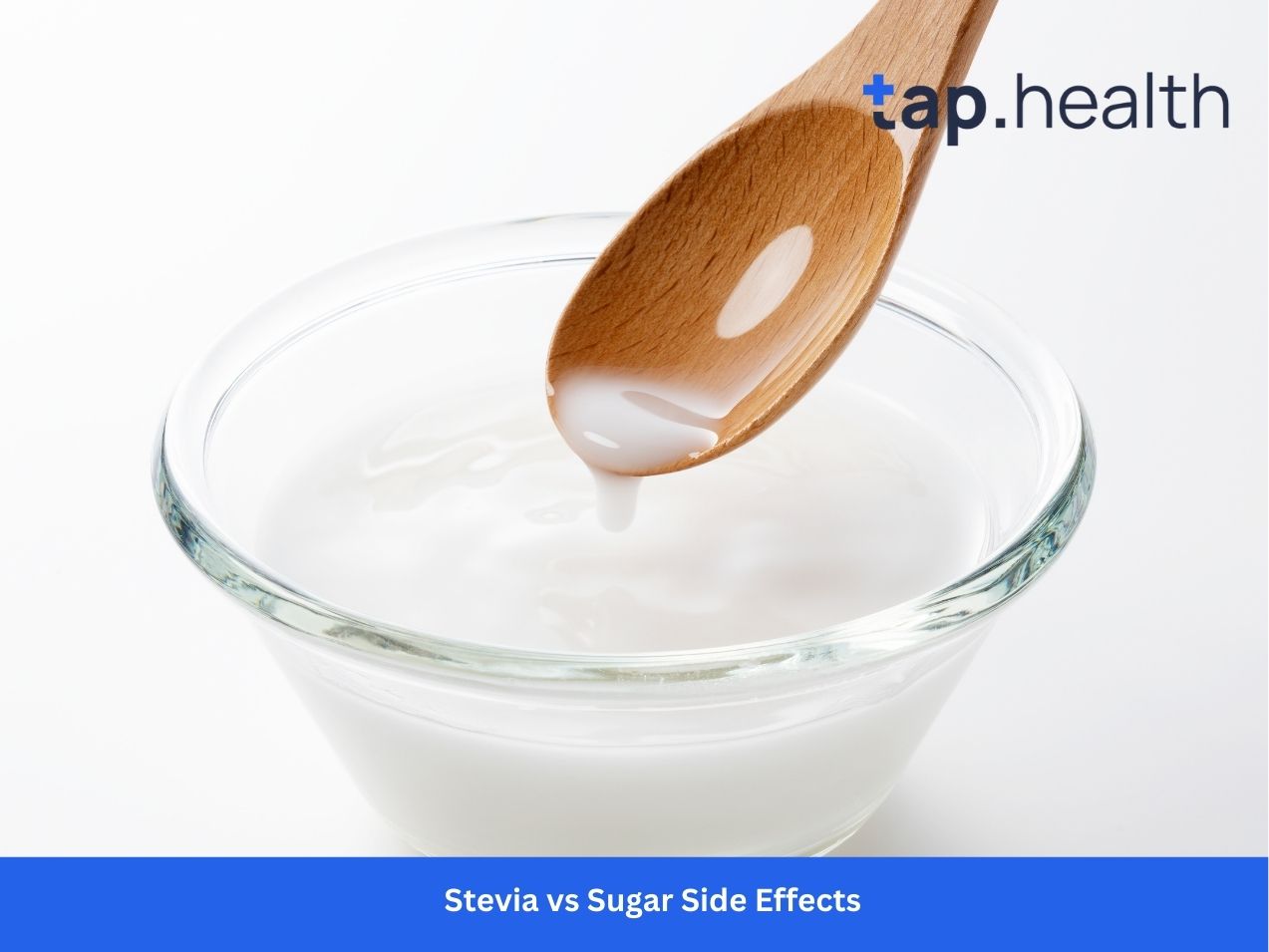
What is Stevia? Stevia is a natural sweetener derived from the leaves of the Stevia rebaudiana plant, native to South America. The sweetness comes from compounds called steviol glycosides (mainly Stevioside and Rebaudioside A). These compounds are 200–300 times sweeter than sugar but are not metabolized by the body for energy. This means Stevia has zero calories and a zero glycemic index.
Does Stevia Have Fewer Side Effects Than Sugar?
The Short Answer: Yes, absolutely.
If we look at the severity of side effects, sugar is the heavy hitter. The “side effects” of sugar are chronic diseases like Type 2 Diabetes, heart disease, and obesity. These are life-threatening conditions.
The side effects of Stevia, on the other hand, are mostly mild and temporary—things like bloating or a strange aftertaste. While annoying, they are rarely dangerous for the average person. However, “natural” doesn’t always mean “side-effect free,” and it is crucial to know what risks exist.
Common Side Effects of Eating Too Much Sugar
Before we critique Stevia, let’s look at the competitor. Sugar is so common in Indian diets (from morning Chai to post-dinner Meetha) that we often forget it is a potent chemical that alters our biology.
Blood Sugar Spikes and Insulin Resistance
This is the most dangerous side effect.
- The Mechanism: Sugar enters the blood rapidly. The pancreas pumps out insulin to manage it.
- The Damage: Over time, if you keep spiking your sugar, your cells stop listening to insulin (Resistance). This is the direct path to Type 2 Diabetes. Stevia does not do this.
Weight Gain and Increased Appetite
Sugar is sneaky. Fructose (found in sugar) does not suppress your hunger hormone (Ghrelin).
- You can drink a 300-calorie sugary soda and still feel hungry five minutes later.
- Sugar triggers the “reward center” in the brain, causing addiction-like cravings. Stevia does not trigger this same caloric reward loop.
Higher Risk of Type 2 Diabetes
India is the diabetes capital of the world. High sugar intake drives visceral fat (belly fat), which strangulates the organs and causes metabolic disease.
Tooth Decay and Cavities
Sugar is the favourite food of the bacteria in your mouth. When they eat sugar, they produce acid that eats away your tooth enamel. Stevia is non-fermentable, meaning bacteria cannot eat it. It does not cause cavities.
Inflammation and Heart Health Risks
Chronic high sugar causes low-grade inflammation in the blood vessels. This leads to plaque buildup (atherosclerosis) and high blood pressure.
Energy Crashes and Mood Changes
We all know the “Sugar Rush.” You feel great for 30 minutes, and then you crash. You feel tired, irritable, and brain-fogged. This rollercoaster ruins your productivity.
Common Side Effects of Stevia
Now, let’s turn the microscope on Stevia. While it won’t give you diabetes, it isn’t perfect. Here are the specific side effects users report.
Digestive Issues (Bloating or Gas)
This is the number one complaint. “I switched to Stevia, and now I feel bloated.”
- The Truth: Pure Stevia usually does not cause bloating.
- The Real Culprit: Most commercial Stevia packets (like Stevia sachets) are not 100% Stevia. They are blends. Manufacturers mix Stevia with Sugar Alcohols like Erythritol or Maltitol to give it volume.
- Why it hurts: Sugar alcohols can ferment in the gut, causing gas, bloating, and even diarrhea in sensitive people. If your Stevia causes gas, check the ingredient label for Erythritol.
Aftertaste or Taste Sensitivity
Stevia has a distinct flavor profile.
- The Taste: While sweet, it often has a bitter, metallic, or licorice-like aftertaste.
- The Effect: This isn’t a medical “side effect,” but it can ruin your enjoyment of food. It lingers on the tongue longer than sugar.
- Expert Tip: Look for products high in Rebaudioside A (Reb-A), which is the sweetest part of the leaf with the least bitterness.
Possible Allergic Reactions
Stevia belongs to the Asteraceae plant family. This family includes:
- Ragweed
- Chrysanthemums
- Marigolds
- Daisies
If you have a severe allergy to these plants (hay fever), there is a theoretical risk you might react to raw Stevia. However, highly purified Stevia extracts (the white powder) usually have the plant proteins removed, making allergic reactions extremely rare.
Blood Pressure Lowering Effects
Stevia is a vasodilator—it can relax blood vessels.
- The Benefit: For many, this is great! It helps lower high blood pressure.
- The Risk: If you already have Low Blood Pressure (Hypotension) or are on heavy medication for BP, consuming large amounts of Stevia might drop your pressure too low. It creates a “synergistic effect” with the medicine.
Interaction With Diabetes Medications
Similarly, Stevia lowers blood sugar (or rather, prevents it from rising).
- If you are a diabetic on insulin or Sulfonylureas (medicines that lower sugar), and you swap a high-carb meal for a low-carb Stevia meal without adjusting your dose, you risk Hypoglycemia (Low Blood Sugar).
- Note: This isn’t Stevia “causing” low sugar; it’s the lack of sugar intake combined with strong medicine.
Stevia vs Sugar – Gut Health and IBS Considerations
Gut health is the new frontier of wellness. How do these two rivals compare?
Sugar and the Gut: Sugar is bad news for the gut. It feeds pathogenic bacteria and yeast (like Candida). An overgrowth of bad bacteria leads to inflammation, leaky gut, and poor immunity.
Stevia and the Gut:
- Pure Stevia: Research generally shows it is gut-neutral. It doesn’t feed bad bacteria, but it doesn’t feed good bacteria either.
- Stevia Blends (with Erythritol/Maltitol): These are problematic for people with IBS (Irritable Bowel Syndrome). The sugar alcohols pull water into the intestine, causing loose stools.
Verdict: If you have IBS, use Liquid Stevia (usually pure extract) rather than powder packets to avoid the gut-irritating fillers.
Which Is Worse for Diabetics – Stevia or Sugar?
This is an easy win. Sugar is infinitely worse for diabetics.
For a diabetic, sugar acts almost like a toxin. It directly spikes glucose, stresses the pancreas, and damages blood vessels. Stevia, despite its minor potential side effects (like taste or mild gas), is a lifesaver for diabetics. It allows for sweetness without the glucose load.
The “Safety Halo” Danger: The only real danger Stevia poses to diabetics is psychological.
- The Trap: “This cake is made with Stevia, so I can eat the whole thing.”
- The Reality: The cake still contains flour (maida) and butter. The Stevia won’t spike your sugar, but the flour will. Do not let the “Sugar-Free” label trick you into overeating carbs.
Safe Daily Intake – How Much Stevia or Sugar Is Too Much?
Sugar Limits: The American Heart Association and WHO recommend:
- Men: Max 9 teaspoons (36g) per day.
- Women: Max 6 teaspoons (25g) per day.
- Reality: Most Indians consume double or triple this amount.
Stevia Limits: The Acceptable Daily Intake (ADI) for Stevia is 4 mg per kg of body weight.
- For a 60 kg person: That is 240 mg of pure steviol glycosides.
- Translation: Since Stevia is 200x sweeter than sugar, 240 mg is roughly equivalent to 40 teaspoons of sugar in sweetness.
- Verdict: It is almost impossible to exceed the safe limit of Stevia through normal consumption (tea, coffee, occasional dessert). You would have to eat it by the spoon—which would taste terrible anyway!
Real-Life Scenario
Meet Anjali (34, Teacher from Mumbai):
Anjali decided to quit sugar to lose weight. She bought a big bag of “Stevia Sweetener” from the chemist. She started adding it to her tea, her oats, and even baking with it.
The Problem: By Day 3, she felt extremely bloated and had stomach cramps. She thought, “Stevia doesn’t suit me!”
The Investigation: She looked at the ingredients on her Stevia jar.
- Ingredients: Erythritol (95%), Stevia Extract (5%). She wasn’t reacting to Stevia; she was reacting to the massive amount of Erythritol she was eating.
The Fix: She switched to Liquid Stevia Drops (100% extract).
- Result: The bloating stopped immediately. She continued her sugar-free journey successfully.
Lesson: Always read the label. The “side effect” might be coming from the filler, not the leaf.
Expert Contribution
We consulted Dt. S. Sen, Clinical Nutritionist:
“I often hear patients complain about Stevia side effects. In my experience, 90% of the time, the issue is either Psychological (they expect it to taste bad) or Digestive (due to sugar alcohol additives).
Stevia itself is one of the safest additives we have. Unlike aspartame, it is natural. Unlike sugar, it is non-inflammatory. My advice? Start with small doses. Your taste buds need 2 weeks to adjust to the new sweetness. Don’t give up on day one just because it tastes ‘different’ from sugar.”
How to Use Stevia Safely as a Sugar Alternative
If you want to switch to Stevia without the side effects, follow these rules:
- Check the Ingredients: Avoid brands that list Dextrose, Maltodextrin, or Lactose. These are fillers that can spike blood sugar. If you have gas issues, avoid Erythritol/Xylitol.
- Use Liquid Drops: Liquid forms are usually purer and don’t need bulking agents. They are easier to dose (2 drops = 1 tsp sugar).
- Don’t Overdo It: Stevia is potent. If you use too much, it turns bitter. Less is more.
- Rotate Sweeteners: If you are worried about side effects, rotate between Stevia and Monk Fruit (another natural, zero-calorie sweetener).
Recommendations Grounded in Proven Research and Facts
According to the National Institutes of Health (NIH) and FSSAI (India):
- Safety Status: High-purity steviol glycosides are labeled GRAS (Generally Recognized As Safe). They are safe for children, pregnant women, and diabetics.
- Cancer Myth: There is no evidence linking Stevia to cancer. This is a myth often associated with artificial sweeteners like Saccharin, not natural ones like Stevia.
- Kidney Health: Studies show Stevia does not harm kidney function. In fact, by helping control blood sugar, it protects kidneys from diabetic damage.
When to Avoid Stevia or Limit Sugar
Avoid Stevia If:
- You have a known allergy to the ragweed/marigold family (test a small amount first).
- You find the aftertaste unbearable (food should be enjoyable!).
- You feel dizzy or have unexplained low blood pressure (consult your doctor).
Limit Sugar If:
- You have Prediabetes or Diabetes.
- You are overweight or obese.
- You have PCOS (Polycystic Ovary Syndrome) – sugar worsens hormonal imbalances.
- You have high triglycerides or fatty liver.
Conclusion: Key Takeaways
So, is Stevia safer than Sugar?
- Yes. The “side effects” of Stevia (bloating, aftertaste) are annoying but harmless. The side effects of Sugar (diabetes, heart disease) are deadly.
- Read the Label: The biggest side effect (gas) comes from additives like Erythritol, not Stevia itself. Switch to liquid drops if this happens.
- No Spikes: Stevia is the clear winner for blood sugar control.
- Moderation: Even with Stevia, train your palate to crave less sweetness over time.
In the battle of the white powders, the green leaf wins. Make the switch, but do it smartly.
Frequently Asked Questions on Stevia vs Sugar Side Effects
What are the negative side effects of stevia?
The most common negative effects are digestive issues (bloating, gas) caused by additives like sugar alcohols mixed with stevia. Some people also report a bitter or metallic aftertaste. Rare side effects include allergic reactions in people sensitive to the ragweed plant family.
Does stevia cause belly fat?
No. Stevia has zero calories and does not trigger insulin, the fat-storage hormone. Unlike sugar/fructose, which directly drives visceral belly fat, stevia can actually help reduce belly fat by lowering your overall calorie intake.
Is stevia safe for kidneys?
Yes. Research indicates that stevia is safe for kidneys. In fact, since high blood sugar is the leading cause of kidney damage, using stevia to manage diabetes can protect your kidneys in the long run.
Why does stevia make me fart?
This is likely because you are using a Stevia Blend containing Erythritol or Inulin. These are fibers/sugar alcohols that ferment in the gut, producing gas. Try switching to a pure liquid stevia extract to stop this.
Can stevia raise blood sugar?
Pure Stevia cannot raise blood sugar. However, some powdered stevia brands use Maltodextrin or Dextrose as fillers. These fillers are carbohydrates and will raise blood sugar. Always read the ingredient label to ensure you aren’t buying hidden sugar.
Is stevia better than sugar for weight loss?
Yes. Swapping sugar (16 calories/tsp) for stevia (0 calories) creates a calorie deficit. If you drink 3 cups of tea a day, this swap alone saves ~35,000 calories a year, which could equal 4-5 kg of weight loss without other changes.
Does stevia affect hormones?
There is no credible evidence in humans that stevia disrupts hormones. Old studies on rats cited fertility issues, but these used massive doses that no human could consume. Modern safety authorities confirm it does not act as an endocrine disruptor in humans.
References
- Healthline: Stevia Side Effects: Is it Safe?
- Mayo Clinic: Artificial sweeteners and other sugar substitutes
- WebMD: What is Stevia? Benefits and Risks
Disclaimer: This article is for informational purposes only. Always consult your doctor or dietician before making significant changes to your diet, especially if you have chronic health conditions.