Have you ever noticed your gums bleeding when you brush your teeth, or felt that your teeth are becoming a little loose? If you are living with diabetes, these are not just routine dental problems to ignore. They could be important signals from your body about your blood sugar control. The connection between what happens in your mouth and what happens in your bloodstream is much stronger than most people realise.
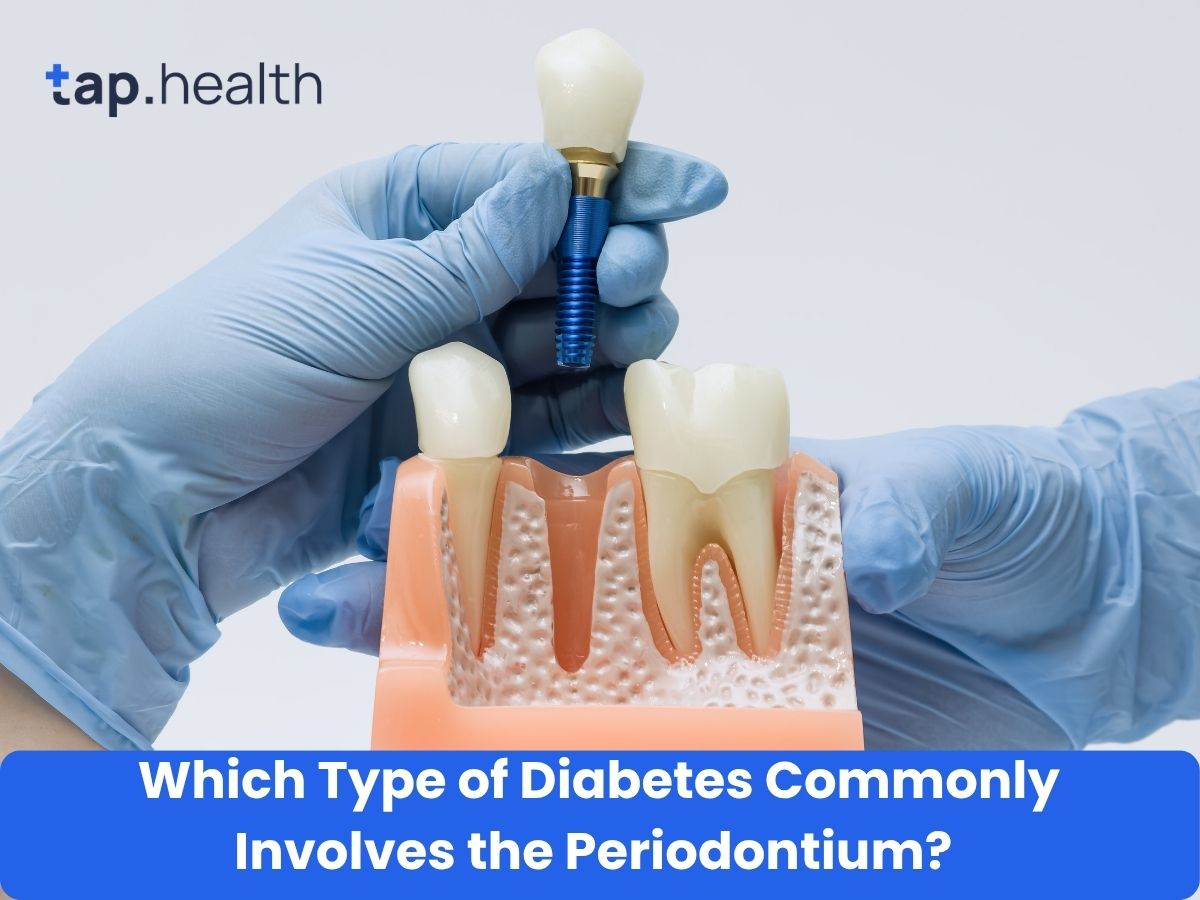
The periodontium refers to the specialised tissues that surround and support your teeth. This includes your gums (gingiva), the bone that holds the tooth sockets (alveolar bone), the ligament that anchors the tooth to the bone (periodontal ligament), and the root surface covering (cementum). When these tissues become infected and inflamed, it leads to a condition called periodontitis, a severe form of gum disease.
The question of which type of diabetes commonly involves the periodontium is not just an academic exercise. Understanding the answer can help you protect not only your smile but also your overall health. In this comprehensive guide, we will explore the profound two-way relationship between diabetes and gum disease, clarify whether type 1 or type 2 diabetes poses a greater risk, and give you practical steps to safeguard your health.
Understanding the Periodontium and Periodontal Disease
Before we dive into the connection with diabetes, let us first understand the battleground. The periodontium is not just a passive cushion for your teeth; it is a complex, living structure that anchors your teeth firmly in place.
What is the Periodontium?
The periodontium consists of four main components working together:
- Gingiva (Gums): This is the soft, pink tissue that covers the jawbone and surrounds the necks of your teeth. It acts as a protective barrier against bacteria.
- Periodontal Ligament (PDL): These are tiny, elastic fibres that connect the root of your tooth to the surrounding bone, acting like miniature shock absorbers when you chew.
- Cementum: This is a thin, calcified layer covering the tooth root, to which the PDL fibres attach.
- Alveolar Bone: This is the part of the jawbone that contains the tooth sockets and supports the teeth.
Gingivitis vs. Periodontitis: Knowing the Difference
The journey from a healthy mouth to a serious problem usually happens in two stages:
- Gingivitis: This is the milder, reversible form of gum disease. It is an inflammation of the gingiva caused by the buildup of plaque—a sticky film of bacteria—on your teeth. Signs of gingivitis include red, swollen gums that bleed easily when you brush or floss. At this stage, the deeper supporting structures are not yet damaged, and the condition can be reversed with good oral hygiene.
- Periodontitis: If gingivitis is left untreated, the inflammation can spread deeper. The inner layer of the gum and bone pull away from the teeth, forming small pockets. These pockets become a breeding ground for more bacteria. As the body’s immune response kicks in, it can inadvertently damage the periodontal ligament and the alveolar bone. This is periodontitis, a chronic, destructive condition that can ultimately lead to tooth loosening and tooth loss. It is this advanced stage of gum disease that has a powerful, two-way relationship with diabetes.
The Powerful Two-Way Link: Diabetes and Periodontitis
For decades, doctors and dentists have observed that people with diabetes tend to have more gum problems. But the relationship is not a simple one-way street. It is now well-established as a bidirectional relationship, meaning that each condition makes the other worse.
How Diabetes Worsens Periodontitis
Diabetes, particularly when blood sugar is poorly controlled, creates a perfect storm in the mouth. Multiple studies have demonstrated that both type 1 and type 2 diabetes are established risk factors for periodontitis. The prevalence, extent, and severity of periodontitis are all increased in people with diabetes compared to those without.
Here is how high blood sugar fuels gum disease:
- Hyperinflammatory Response: High blood sugar levels (hyperglycemia) cause the body to mount an exaggerated and prolonged inflammatory response to the bacteria in dental plaque. This “hyperinflammation” is more destructive than the inflammation seen in people without diabetes.
- Impaired Healing and Repair: Diabetes impairs the body’s ability to resolve inflammation and repair damaged tissues. This means that once the periodontal tissues are injured, they are slower to heal.
- Advanced Glycation End Products (AGEs): High blood sugar leads to the formation of harmful compounds called AGEs. These AGEs accumulate in the periodontal tissues and bind to receptors (RAGEs) on cells, which further amplifies the inflammatory response and contributes to tissue destruction.
The consequence is that a person with poorly controlled diabetes is not only more likely to develop periodontitis, but the disease also progresses faster and is more severe, leading to more rapid bone loss around the teeth.
How Periodontitis Worsens Diabetes
The relationship works in the other direction as well. Severe periodontitis is not just a local mouth infection; it has systemic effects that can make it much harder to control your blood sugar.
This happens primarily through systemic inflammation:
- Release of Inflammatory Mediators: The deep, infected pockets of periodontitis act as a reservoir for bacteria and their toxins. This triggers a chronic, low-grade inflammatory response throughout the entire body. Proinflammatory cytokines (like TNF-alpha and IL-6) are released into the bloodstream.
- Exacerbation of Insulin Resistance: These circulating inflammatory mediators interfere with the body’s ability to use insulin effectively, a condition known as insulin resistance. When your cells become more resistant to insulin, your blood sugar levels rise.
- Worsening Glycemic Control: Consequently, untreated periodontitis can directly contribute to higher HbA1c levels and make diabetes management significantly more challenging.
This vicious cycle—where diabetes worsens gum disease and gum disease worsens diabetes—is why periodontitis is now widely recognised as the “sixth major complication” of diabetes mellitus, joining the ranks of retinopathy, nephropathy, neuropathy, and cardiovascular disease.
Which Type of Diabetes Most Commonly Involves the Periodontium?
Now, let us address the central question. While both type 1 and type 2 diabetes significantly increase the risk of periodontal disease, the scientific evidence points to a clear answer: Type 2 diabetes is more commonly and more strongly associated with periodontitis in the general population.
This conclusion is supported by multiple large-scale studies and clinical observations:
- A 2017 study presented at the American Diabetes Association’s annual meeting directly compared the two types. The researchers found that patients with type 2 diabetes were significantly more likely to have periodontitis and gingivitis than patients with type 1 diabetes. In fact, the rate of periodontal disease in the type 2 group was more than double that of the type 1 group (93.2% vs. 41.2%).
- A 2023 cross-sectional study published in the journal Healthcare confirmed this trend. The study reported a periodontitis prevalence of 46.4% among type 2 diabetes patients, compared to only 7.4% among type 1 diabetes patients.
- The risk is also quantifiable. A meta-analysis showed that type 2 diabetes increases the risk of developing periodontitis by 34% and is linked to greater disease severity.
Why is Type 2 Diabetes a Greater Risk Factor?
The higher prevalence of periodontitis in type 2 diabetes is not necessarily because the disease mechanism is more destructive at a cellular level. Rather, it is largely driven by other factors that commonly coexist with type 2 diabetes.
- Age: Type 2 diabetes is most often diagnosed in adults over the age of 45, while type 1 diabetes frequently appears in childhood or young adulthood. Since periodontitis is a chronic disease that accumulates over time, the older age of the typical type 2 diabetes patient is a major contributing factor. Studies consistently show that age is one of the strongest predictors of periodontal disease in diabetics.
- Duration of Disease: People with type 2 diabetes may have had undiagnosed high blood sugar for years before their condition was identified. This longer exposure to the damaging effects of hyperglycemia contributes to a higher risk of complications, including periodontitis.
- Lifestyle Factors: Type 2 diabetes is often associated with other risk factors for periodontitis, such as obesity and smoking. In the comparative study, 30% of type 2 diabetes patients were smokers, while none of the type 1 diabetes patients smoked. Smoking is a powerful and independent risk factor for severe gum disease.
What About Type 1 Diabetes? Is the Risk Still High?
Yes, absolutely. It is crucial to understand that having type 1 diabetes also significantly elevates your risk of gum problems, especially when blood sugar is not well controlled. The lower overall prevalence numbers are partly because type 1 diabetes patients are often younger and have had the disease for a shorter duration.
However, the risk is very real:
- Children with type 1 diabetes are twice as likely to develop gingivitis as those without diabetes.
- Among adults with type 1 diabetes, one study found that periodontitis reached a prevalence of 55.7%, and these patients had a higher rate of bleeding on probing and deeper periodontal pockets compared to controls.
- The key factor in type 1 diabetes is glycemic control. Individuals with type 1 diabetes and high HbA1c levels are much more likely to have advanced periodontal disease.
In short, both types of diabetes demand vigilant oral care. But from a population perspective, the combination of age, disease duration, and lifestyle factors makes the periodontium a more common battleground for people with type 2 diabetes.
Key Risk Factors, Signs, and Symptoms
Understanding what puts you at greater risk and recognising the early warning signs are the first steps in protecting your periodontal health.
What Increases Your Risk of Diabetic Periodontitis?
- Poor Glycemic Control: This is the number one risk factor. A higher HbA1c is consistently linked to a greater prevalence and severity of periodontitis in both type 1 and type 2 diabetes.
- Longer Duration of Diabetes: The longer you have had diabetes, the higher your cumulative risk of developing complications, including gum disease.
- Smoking and Tobacco Use: This is one of the most significant modifiable risk factors. Smokers with diabetes face a dramatically higher risk of severe periodontitis and tooth loss.
- Age: The risk of periodontitis naturally increases with age. This, combined with the age of onset for type 2 diabetes, creates a compounding effect.
What Are the Warning Signs You Should Never Ignore?
Periodontitis is often painless in its early stages, which makes regular dental check-ups essential. However, there are specific signs you should watch for:
- Gums that bleed easily: This is the most common and earliest sign. If you see pink in the sink when you brush or floss, it is a sign of inflammation (gingivitis) that should not be ignored.
- Red, swollen, or tender gums: Healthy gums are firm and pale pink.
- Persistent bad breath (halitosis) or a bad taste in your mouth: This can be caused by bacteria breaking down in the infected pockets.
- Gums that have pulled away (receded) from the teeth: This makes your teeth look longer.
- Loose or separating teeth: This is a sign of advanced bone loss.
- A change in the way your teeth fit together when you bite.
If you have diabetes and experience any of these symptoms, it is a clear signal to see a dentist without delay.
Management and Prevention: Protecting Your Smile and Your Health
The good news is that the vicious cycle between diabetes and periodontitis can be broken. Managing one condition effectively will have a positive impact on the other.
The Power of Periodontal Treatment
One of the most compelling findings in this field is that treating gum disease can actually lead to measurable improvements in blood sugar control. Multiple meta-analyses have confirmed that non-surgical periodontal therapy (NSPT)—a deep cleaning procedure known as scaling and root planing—can significantly lower HbA1c levels in people with type 2 diabetes.
A 2026 meta-analysis of randomised clinical trials found that subgingival periodontal therapy resulted in a 0.29% lower HbA1c compared to no treatment. Another 2025 meta-analysis showed an even greater reduction of -0.64% at three months and -0.33% at six months. To put that in perspective, a 0.5% drop in HbA1c is considered clinically significant and is comparable to the effect of adding a second-line diabetes medication.
Practical Steps for Optimal Oral Health
Here are the essential, evidence-based recommendations for anyone with diabetes:
- Achieve and Maintain Excellent Glycemic Control: This is your most powerful tool for protecting your periodontium. Work closely with your healthcare team to keep your blood sugar and HbA1c within your target range.
- Practice Impeccable Oral Hygiene:
- Brush your teeth at least twice a day with a soft-bristled toothbrush and fluoride toothpaste.
- Floss at least once a day to clean the areas between your teeth where a toothbrush cannot reach.
- Consider using an antimicrobial mouthwash.
- See Your Dentist Regularly: The American Diabetes Association (ADA) and other global guidelines now explicitly recommend that individuals with diabetes undergo a dental examination at least once a year. Do not wait for a problem to arise.
- Inform Your Dentist and Doctor: Make sure both your dentist and your physician are aware of your full medical history. This includes your type of diabetes, your most recent HbA1c level, and a list of all medications you are taking.
- If You Smoke, Seek Help to Quit: Quitting smoking is one of the single best things you can do for both your periodontal and overall health.
Real-Life Scenario: The Two-Way Street in Action
To bring this connection to life, let us consider the story of Mr. Iyer, a 58-year-old accountant from Chennai who has been living with type 2 diabetes for over a decade.
For the past year, Mr. Iyer had been struggling. His fasting blood sugar was consistently higher than usual, and his HbA1c had crept up from 7.1% to 8.5%. He was careful with his diet and took his metformin regularly, so he and his doctor were puzzled. Around the same time, he noticed his gums were bleeding every time he brushed, and a couple of his teeth felt a bit loose. He dismissed it as a normal sign of ageing and a minor annoyance.
During a routine visit to his diabetologist, Mr. Iyer casually mentioned the bleeding gums. His doctor, aware of the two-way link between diabetes and periodontitis, immediately referred him to a periodontist. The dentist diagnosed him with advanced, generalised periodontitis and performed a thorough scaling and root planing procedure.
Over the next three months, something remarkable happened. As his gums healed and the chronic inflammation in his mouth subsided, Mr. Iyer noticed his morning blood sugar readings began to drop. At his next check-up, his HbA1c had fallen back to 7.4%. His doctor explained that by eliminating the hidden reservoir of infection and inflammation in his gums, his body’s insulin was able to work more effectively again.
Mr. Iyer’s case is a classic real-world example of the bidirectional relationship. Uncontrolled diabetes made him vulnerable to severe gum disease, and the resulting periodontitis, in turn, made his diabetes harder to control. Treating his gums was a critical step in regaining control of his blood sugar.
Expert Contribution
The consensus among medical and dental experts is clear and unwavering. The link between diabetes and periodontitis is one of the strongest connections between a systemic disease and an oral condition.
A consensus report from the Italian Society of Diabetology and the Italian Society of Periodontology and Implantology states: “Patients affected by type 1 and type 2 diabetes have a higher prevalence of periodontitis than the general population, due to several metabolic factors. A strict collaboration among dentists and diabetologists is required and strongly recommended.”
This expert view highlights that managing one condition in isolation is no longer acceptable. Optimal care requires a team-based approach that treats the mouth and the body as interconnected parts of a whole.
Recommendations Grounded in Proven Research and Facts
Based on the extensive body of research reviewed in this article, here are clear, actionable recommendations for anyone with diabetes:
- Acknowledge the Risk: Understand that having diabetes—whether type 1 or type 2—significantly increases your risk for serious gum disease. This is not a minor cosmetic issue; it is a major health concern.
- Break the Cycle with Oral Hygiene: Commit to a meticulous daily oral hygiene routine of brushing and flossing. This is your first line of defence against the plaque that triggers inflammation.
- Make Dental Visits a Non-Negotiable Part of Your Diabetes Care Plan: Follow the ADA guideline and schedule a comprehensive dental exam at least once per year, if not more frequently as advised by your dentist.
- Treat Periodontitis to Improve Glycemic Control: If you are diagnosed with periodontitis, understand that undergoing professional treatment is not just about saving your teeth; it is a proven strategy to help improve your HbA1c and overall metabolic health.
- Foster Communication Between Your Healthcare Providers: Encourage your dentist and your doctor to communicate. Sharing information about your HbA1c levels and periodontal status can lead to better, more coordinated care.
Key Takeaways
- The periodontium, which includes the gums, bone, and ligaments supporting the teeth, is a primary target for the complications of diabetes.
- Diabetes and periodontitis share a powerful bidirectional relationship: high blood sugar worsens gum disease, and severe gum disease makes blood sugar harder to control.
- Periodontitis is now widely recognised as the “sixth major complication” of diabetes.
- Type 2 diabetes is more commonly associated with periodontitis than type 1 diabetes, largely due to older age at onset, longer disease duration, and associated lifestyle factors like smoking.
- Both types of diabetes significantly increase the risk of periodontal problems, especially when blood sugar is poorly controlled.
- Effective periodontal treatment has been clinically proven to lower HbA1c levels, highlighting the importance of oral health in comprehensive diabetes management.
- The key to prevention lies in a combination of excellent glycemic control, rigorous daily oral hygiene, and regular professional dental care.
Frequently Asked Questions (FAQs)
Q1: How does diabetes affect the periodontium?
A: High blood sugar in diabetes triggers an exaggerated inflammatory response to oral bacteria and impairs the body’s ability to heal and repair tissues. This leads to more rapid and severe destruction of the gums, periodontal ligament, and the supporting bone around the teeth.
Q2: What are the 4 types of periodontium?
A: The periodontium is the collective name for the supporting structures of the teeth. It consists of four main tissues: the gingiva (gums), the periodontal ligament, the cementum covering the tooth root, and the alveolar bone that forms the tooth socket.
Q3: Do type 2 diabetics get free dental treatment?
A: In most healthcare systems, including the UK’s NHS, having type 2 diabetes does not automatically entitle you to free dental treatment. However, people on a low income may be eligible for help with health costs through specific schemes, or free treatment may be available based on other criteria like age or specific benefits.
Q4: Why does type 2 diabetes cause gum disease?
A: Type 2 diabetes, especially when uncontrolled, causes high blood sugar, which damages blood vessels and impairs the immune response. This creates an environment where oral bacteria can thrive and trigger a severe, chronic inflammatory response that breaks down the gums and bone.
Q5: Is periodontitis more common in type 1 or type 2 diabetes?
A: While both types increase the risk, clinical studies show that periodontitis is more prevalent in patients with type 2 diabetes compared to those with type 1 diabetes. This is largely attributed to the older age and longer duration of disease in the typical type 2 diabetes patient.
Q6: What is the bidirectional relationship between diabetes and periodontitis?
A: It means the relationship is a two-way street. Diabetes worsens periodontitis by increasing inflammation. In turn, the chronic inflammation from periodontitis releases chemicals into the bloodstream that increase insulin resistance, making diabetes harder to control.
Q7: Can treating gum disease help lower my blood sugar?
A: Yes. Multiple research studies have shown that professional non-surgical periodontal treatment (deep cleaning) can lead to a significant reduction in HbA1c levels in people with type 2 diabetes, typically around 0.3% to 0.6%.
Q8: How often should a diabetic person see a dentist?
A: The American Diabetes Association recommends that individuals with diabetes undergo a dental examination at least once a year. Depending on your oral health status and glycemic control, your dentist may recommend more frequent visits.
References
- Diabetes mellitus and periodontitis: a tale of two common interrelated diseases. Nature Reviews Endocrinology, 2011. https://www.nature.com/articles/nrendo.2011.106
- Patients with type 2 diabetes more likely to develop periodontitis. DrBicuspid, 2017. https://www.drbicuspid.com/dental-hygiene/oral-systemic-link/diabetes/article/15373430/patients-with-type-2-diabetes-more-likely-to-develop-periodontitis
- Prevalence and Associated Factors for Periodontal Disease among Type I and II Diabetes Mellitus Patients: A Cross-Sectional Study. Healthcare, 2023. https://www.mdpi.com/2227-9032/11/6/796
- Periodontitis and diabetes: a bidirectional link. Acta Diabetologica, 2026. https://link.springer.com/article/10.1007/s00592-026-02642-3
- Periodontal status and risk factors in patients with type 1 diabetes mellitus. Clinical Oral Investigations, 2025. https://rd.springer.com/article/10.1007/s00784-024-06113-3
- Effect of subgingival periodontal therapy on glycaemic control in type 2 diabetes patients: Meta-analysis and meta-regression of 6-month follow-up randomized clinical trials. 2026.
- The Bidirectional Relationship between Periodontitis and Diabetes: How Should Patients Affected by Either or Both These Diseases be Managed? Oasis Discussions, 2014. https://oasisdiscussions.ca
- Diabetes and Periodontal Disease: A 2-Way Link. Pharmacy Times, 2004. https://www.pharmacytimes.com/view/2004-10-4626
- Periodontitis and implant complications in diabetes. Periodontology 2000, 2022. https://pmc.ncbi.nlm.nih.gov/articles/PMC9805043/
- Diabetic Patients Should Undergo Dental Check-ups Once a Year: ADA Standard of Care Diabetes 2025 Guidelines. Medical Dialogues, 2024. https://medicaldialogues.in/diabetes/news/diabetic-patients-should-undergo-dental-check-ups-once-a-year-ada-standard-of-care-diabetes-2025-guidelines-139533
- Does my medical condition entitle me to help with my NHS health costs? NHS Business Services Authority. https://faq.nhsbsa.nhs.uk/knowledgebase/article/KA-03073/en-us
- Pathogenic Mechanisms That May Link Periodontal Disease and Type 2 Diabetes Mellitus—The Role of Oxidative Stress. International Journal of Molecular Sciences, 2024. https://pmc.ncbi.nlm.nih.gov/articles/PMC11432179/