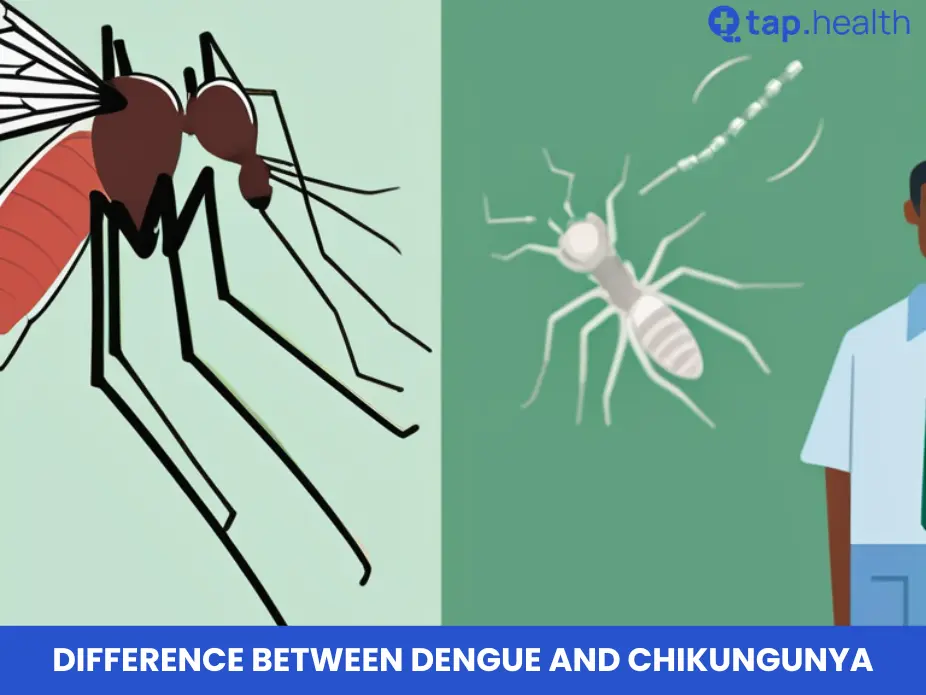
Dengue and Chikungunya are mosquito-borne viral infections that share similarities but differ in their causes, symptoms, and long-term effects. Both are transmitted by Aedes mosquitoes and are prevalent in tropical and subtropical regions, making them significant public health concerns. This blog provides a concise comparison of Dengue and Chikungunya, addressing their origins, symptoms, diagnosis, treatment, and prevention strategies to help you understand their differences and similarities.
What Are Dengue and Chikungunya?
Dengue Fever: Dengue is caused by the Dengue virus (DENV), a member of the Flaviviridae family, with four distinct serotypes (DENV-1, DENV-2, DENV-3, DENV-4). It’s a widespread disease affecting over 100 countries, with an estimated 50-100 million cases annually.
Chikungunya: Chikungunya is caused by the Chikungunya virus (CHIKV), part of the Togaviridae family. The term “Chikungunya” means “that which bends up” in the Makonde language, reflecting the severe joint pain it causes. It has one serotype and has spread globally since its identification in the 1950s.
How Are Dengue and Chikungunya Transmitted?
Both diseases are primarily transmitted through bites from infected Aedes aegypti and Aedes albopictus mosquitoes. These mosquitoes thrive in urban environments, breeding in stagnant water sources like containers, tires, and drains. They are active during the day, with peak biting times in the early morning and late afternoon.
- Aedes aegypti: The primary vector for both diseases, highly adapted to urban settings.
- Aedes albopictus: A secondary vector, more adaptable to cooler climates, contributing to Chikungunya’s spread in temperate regions.
Key Symptoms of Dengue and Chikungunya
While Dengue and Chikungunya share symptoms like fever and fatigue, their clinical presentations differ significantly.
Dengue Symptoms
- High Fever: Sudden onset, reaching up to 104°F (40°C), lasting 2-7 days.
- Headache: Severe, often with retro-orbital pain (pain behind the eyes).
- Rash: Appears 2-5 days after fever, starting as flushed skin or petechiae (small red spots), sometimes followed by a measles-like rash.
- Joint and Muscle Pain: Intense but typically less severe than Chikungunya, often described as “bone-breaking.”
- Mild Bleeding: Nosebleeds, gum bleeding, or bruising due to low platelet count.
- Nausea/Vomiting: Common, along with abdominal pain.
- Fatigue: Persists after fever subsides.
Chikungunya Symptoms
- High Fever: Sudden onset with chills, similar to Dengue.
- Severe Joint Pain: Debilitating arthralgia, affecting wrists, knees, ankles, and fingers, often persisting for months or years.
- Rash: Maculopapular (flat red areas with bumps), widespread on the face, trunk, limbs, palms, and soles.
- Headache/Muscle Pain: Present but less intense than joint pain.
- Fatigue: Long-lasting, impacting recovery.
- Conjunctivitis: Mild eye redness in some cases.
Dengue vs Chikungunya: A Detailed Comparison
| Aspect | Dengue | Chikungunya |
|---|---|---|
| Causative Agent | Dengue virus (Flavivirus, 4 serotypes) | Chikungunya virus (Togavirus, 1 serotype) |
| Incubation Period | 3-7 days | 1-12 days |
| Fever Duration | 4-7 days, may be biphasic | 1-2 weeks |
| Joint Pain | Moderate, short-lived | Severe, debilitating, may persist for months/years |
| Rash | Limited to limbs and face | Widespread, affects face, palms, soles, and limbs |
| Complications | Dengue Hemorrhagic Fever (DHF), Dengue Shock Syndrome (DSS) | Chronic arthritis, rare neurological issues |
| Platelet Count | Often significantly reduced | Normal or slightly affected |
| Bleeding Tendency | Common in severe cases (e.g., nosebleeds, bruising) | Rare |
| Geographic Spread | Over 100 countries, mainly tropics | Africa, Asia, Americas, Europe |
Complications of Dengue and Chikungunya
Dengue Complications
- Dengue Hemorrhagic Fever (DHF): Involves plasma leakage, severe bleeding, and low platelet count, potentially leading to shock or death.
- Dengue Shock Syndrome (DSS): A critical condition with severe plasma leakage, requiring urgent medical intervention.
- Organ Damage: Can affect the liver, brain (encephalitis), heart (myocarditis), or kidneys.
Chikungunya Complications
- Chronic Joint Pain: Mimics arthritis, lasting months or years, impacting mobility and quality of life.
- Neurological Issues: Rare but may include Guillain-Barré syndrome, meningoencephalitis, or optic neuritis.
- Myocarditis: Inflammation of the heart muscle in rare cases.
How Are Dengue and Chikungunya Diagnosed?
Dengue Diagnosis
- NS1 Antigen Test: Detects Dengue virus protein in early infection stages.
- RT-PCR: Identifies viral RNA in blood within the first week.
- Serology Tests (IgM/IgG): Detects antibodies; IgM indicates recent infection, IgG suggests past exposure.
Chikungunya Diagnosis
- RT-PCR: Detects Chikungunya viral RNA in the acute phase.
- Serology Tests (IgM/IgG): Confirms recent or past infection.
- Virus Isolation: Rarely used but can identify the virus in early stages.
Treatment Options for Dengue and Chikungunya
Dengue Treatment
- Supportive Care: Focuses on hydration (oral or IV fluids) and fever management with acetaminophen. Avoid NSAIDs to prevent bleeding risks.
- Monitoring: Severe cases require hospitalization to monitor for shock or organ damage.
Chikungunya Treatment
- Symptom Relief: NSAIDs (e.g., ibuprofen) for joint pain and fever. Acetaminophen for mild symptoms.
- Rest and Hydration: Essential during the acute phase.
- Physical Therapy: Recommended for chronic joint pain to improve mobility.
Prevention Strategies for Mosquito-Borne Diseases
Preventing Dengue and Chikungunya involves reducing mosquito exposure and controlling breeding sites.
- Personal Protection:
- Use insect repellents (DEET, picaridin, or lemon eucalyptus oil).
- Wear long-sleeved clothing and pants.
- Use mosquito nets in high-risk areas.
- Environmental Control:
- Remove stagnant water from containers, tires, and drains.
- Apply larvicides to water sources that cannot be drained.
- Support community mosquito control programs (e.g., fogging).
- Vaccination:
- Dengue: Dengvaxia vaccine is available for individuals aged 9-45 with prior Dengue infection.
- Chikungunya: No licensed vaccine yet, but research is ongoing.
FAQs: Dengue vs Chikungunya
1. What is the main difference between Dengue and Chikungunya? Dengue, caused by four serotypes of the Dengue virus, often involves severe headaches, mild bleeding, and risks of DHF/DSS. Chikungunya, caused by a single-serotype virus, is known for debilitating joint pain that can persist for months.
2. How can I tell if I have Dengue or Chikungunya? Dengue typically presents with severe headaches, retro-orbital pain, and bleeding tendencies, while Chikungunya is marked by intense, long-lasting joint pain and a widespread rash. Laboratory tests (RT-PCR, serology) confirm the diagnosis.
3. Are Dengue and Chikungunya preventable? Yes, both can be prevented by using insect repellents, wearing protective clothing, eliminating mosquito breeding sites, and supporting community mosquito control efforts.
4. Can Dengue and Chikungunya occur together? Yes, co-infection is possible since both are transmitted by the same mosquitoes. Symptoms may overlap, requiring laboratory tests for accurate diagnosis.
Conclusion
Dengue and Chikungunya, though transmitted by the same Aedes mosquitoes, differ in their viral causes, symptom severity, and long-term effects. Dengue poses risks of severe complications like DHF and DSS, while Chikungunya is notorious for chronic joint pain. Accurate diagnosis through laboratory tests and supportive care are crucial for managing both diseases. Preventive measures, such as mosquito control and personal protection, are key to reducing infection risks. By understanding these differences, individuals and communities can take proactive steps to combat these mosquito-borne diseases.