Introduction: The Tenuous Bridge Between Hope and Certainty
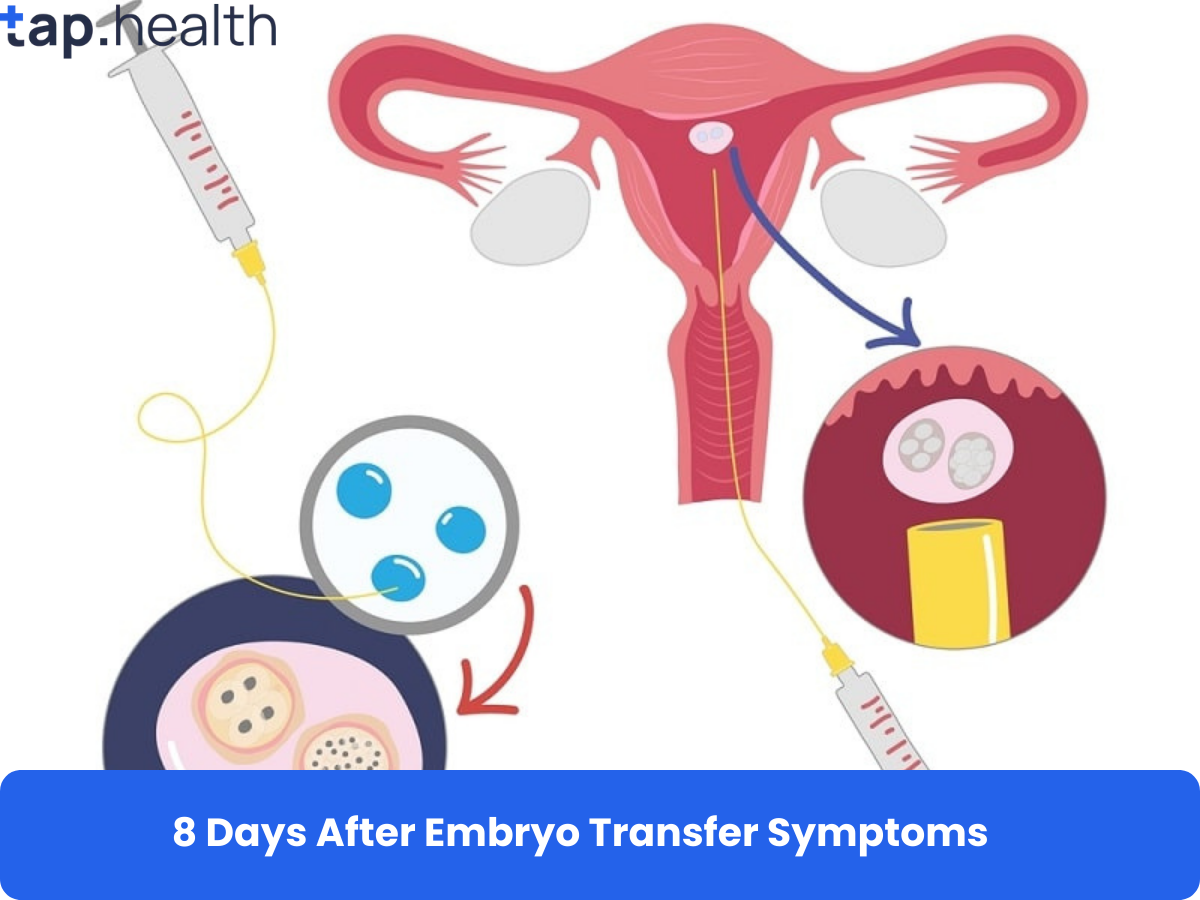
The journey of In Vitro Fertilization (IVF) is a profound odyssey of science, patience, and emotional resilience. For thousands of couples across India, this journey culminates in a specific, high-stakes period known universally in the fertility community as the “Two-Week Wait” (TWW). Within this window, the eighth day following an embryo transfer (8dpt) stands as a significant psychological and physiological precipice. It is the threshold where the biological processes of implantation are theoretically complete, and the body stands at a crossroads: either the embryo has successfully signaled its presence to the maternal system through the secretion of Human Chorionic Gonadotropin (hCG), or the cycle has essentially concluded, even if the clinical confirmation is days away.1
For the patient, however, “8 Days After Embryo Transfer” is not merely a biological marker; it is a time of intense, often agonizing, scrutiny. Every bodily sensation—a cramp, a spot of blood, a wave of fatigue, a twinge in the lower back—is analyzed with forensic intensity. Is this the miracle of life taking root, or is it merely the physiological echo of high-dose progesterone supplements? This ambiguity creates a unique form of emotional turbulence, compounded in the Indian context by deep-seated cultural expectations, the dynamics of joint family living, and the immense social pressure surrounding conception.3
This exhaustive research report serves as a definitive guide for patients, partners, and families navigating this delicate phase. It synthesizes medical facts from authoritative global sources like the Mayo Clinic and Healthline with specific, contextual insights from leading Indian fertility experts. It distinguishes between the biological reality of a Day 3 (cleavage stage) transfer versus a Day 5 (blastocyst) transfer, offering a nuanced understanding of what symptoms truly signify at this juncture. Furthermore, it addresses the specific dietary and lifestyle queries prevalent in Indian households, separating scientific necessity from persistent myths regarding “hot” and “cold” foods, bed rest, and activity levels.
Real-Life Scenario: Navigating the “Two-Week Wait” in an Indian Household
To understand the clinical significance of the eighth day, one must first appreciate the lived experience of the patient. The medical data is sterile until it is placed within the context of human emotion and daily life. Consider the case of “Ananya” (a representative persona constructed from common patient narratives in Indian fertility clinics and support forums). Ananya is 32 years old, undergoing her second IVF cycle at a clinic in Mumbai. She received a fresh transfer of two Day-5 blastocysts.
The Morning of Day 8
By Day 8, the initial relief and optimism of the transfer procedure have evaporated, replaced by a hyper-vigilance regarding her body. Ananya wakes up early, her sleep disturbed by the anxiety of the “wait.” As she goes to the washroom, she notices a smear of brownish discharge on the tissue. Her heart hammers against her ribs. In the silence of the bathroom, panic sets in. Is this the end? Is my period coming? She recalls the doctor mentioning “implantation bleeding,” but the line between spotting and menstruation feels terrifyingly thin.5
She feels a dull ache in her lower abdomen—a pulling sensation on the left side. Her mind races: Is the embryo burrowing in? Or is it a cramp? She feels bloated and her breasts are tender, but she recalls the nurse administering a progesterone injection the previous day. The conflict between hope (pregnancy symptoms) and logic (medication side effects) creates a storm of anxiety.
The Social Dynamics
Walking into the kitchen of her joint family home, the atmosphere is heavy with unspoken questions. Her mother-in-law, well-meaning but steeped in tradition, immediately insists she sit down. “Don’t lift the kettle,” she might say. “You need rest. Your body is too heated.” She might offer a special laddoo made of gum and nuts, or conversely, forbid her from eating papaya or chicken, fearing they generate “excess heat” (Ushna) that could harm the baby.7
Ananya is caught between two worlds. Her doctor has advised light activity to keep blood flowing to the uterus, but her family equates care with immobility. She wants to eat spicy poha for breakfast to cut through the metallic taste in her mouth (a potential side effect of hormones), but she is handed bland porridge.
The Digital Echo Chamber
Retreating to her room, Ananya opens her phone. She scours internet forums for “8dp5dt success stories.” She finds a confusing mix of women who had no symptoms and tested positive, and those who had every symptom—nausea, cramping, spotting—and tested negative.9 She reads about “phantom symptoms” and “chemical pregnancies.” The information overload, rather than soothing her, amplifies her stress. She wonders if she should take a home pregnancy test (HPT) hidden in her drawer, knowing well that the clinic advised against it until Day 14.
This scenario highlights the critical need for accurate, context-aware information. Ananya’s experience is not just about biology; it is about navigating the intersection of medical science, cultural beliefs, and psychological stress. The following sections deconstruct these symptoms through a scientific lens to provide clarity to patients like Ananya.
The Biology of Day 8: What is Happening Inside?
To interpret symptoms accurately, one must understand the microscopic drama unfolding within the uterus. The timeline of embryo development differs significantly depending on the age of the embryo at transfer. This distinction is crucial because “Day 8” means something very different for a Day 3 embryo compared to a Day 5 blastocyst.
The Day 3 vs. Day 5 Timeline
When a patient reaches “8 Days Post Transfer” (8dpt), the gestational age of the potential pregnancy differs based on the transfer type.
If a Day 5 Blastocyst was Transferred (8dp5dt)
The embryo is effectively 13 days past ovulation (DPO).
- Embryonic Stage: By this stage, a successful embryo has completed the hatching process from its zona pellucida (shell). It has attached to the endometrial lining and invaded the uterine wall.
- Hormonal Activity: The syncytiotrophoblast cells (the outer layer of the blastocyst that forms the placenta) should be actively secreting hCG into the maternal bloodstream.
- Implantation Status: Implantation is typically complete. The embryo is now dependent on maternal blood supply for nutrients rather than just the uterine secretions.1
If a Day 3 Embryo was Transferred (8dp3dt)
The embryo is effectively 11 days past ovulation (DPO).
- Embryonic Stage: The embryo had to spend the first two days inside the uterus growing from a cleavage-stage embryo (6-8 cells) into a morula and then a blastocyst before implantation could even begin.
- Hormonal Activity: While implantation has started, it is roughly two days “behind” the schedule of a Day 5 transfer. Consequently, hCG levels will be significantly lower compared to a blastocyst transfer at the same post-transfer milestone.10
The Implantation Status at Day 8
By the eighth day after a transfer, the process of implantation is theoretically complete or nearing completion for both transfer types.
- Days 1-5 Post-Transfer: The blastocyst finds a receptive spot on the endometrium, hatches, and implants.
- Days 6-8 Post-Transfer: The placenta begins to form. The production of hCG shifts from a local signaling mechanism to a systemic one. This hormone is the “signal flare” that tells the corpus luteum (or the medical supplementation in IVF) to maintain progesterone production, preventing the shedding of the uterine lining (menstruation).1
Crucially, at Day 8:
- hCG Levels: In a successful pregnancy, hCG is entering the bloodstream. However, the concentration varies wildly between women and even between successful pregnancies. While some women may have high enough levels to trigger a sensitive home urine test (which typically requires 25 mIU/mL), many will not, leading to the perilous “false negative” zone.12
- Progesterone Saturation: The patient’s body is saturated with progesterone, either from endogenous production (if a corpus luteum exists) or, more likely, from the heavy supplementation (injections like Gestone/Susten, gels like Crinone, or pessaries) that is standard protocol in Indian IVF clinics.14
Table: Comparative Timeline of Embryo Development
| Day Post Transfer | Day 3 Transfer Status (Cleavage) | Day 5 Transfer Status (Blastocyst) |
| Day 1 | Embryo continues dividing (Morula stage). | Blastocyst begins to hatch from shell. |
| Day 2 | Embryo becomes a Blastocyst. | Blastocyst attaches to uterine lining. |
| Day 3 | Blastocyst begins to hatch. | Implantation begins (Invasion). |
| Day 4 | Blastocyst attaches to uterine lining. | Implantation continues deeply. |
| Day 5 | Implantation begins. | Implantation complete; Placental cells form. |
| Day 6 | Implantation continues. | hCG enters bloodstream (trace amounts). |
| Day 7 | Implantation nears completion. | Fetal development continues; hCG rises. |
| Day 8 | Placenta cells form; hCG starts entering blood. | hCG levels detectable in blood (Serum Beta). |
Analysis: As the table indicates, a Day 5 transfer patient is physiologically “more pregnant” at Day 8 than a Day 3 transfer patient. This explains why Day 5 transfer patients might see a faint positive on a home test at Day 8, while Day 3 patients likely will not.1
8 Days After Embryo Transfer Symptoms: Detailed Breakdown
The symptoms experienced at this stage are a complex interplay of the embryo’s activity and the medications used to support the pregnancy. It is vital to categorize these “symptoms” with the caveat that none are definitive proof of pregnancy.
1. Spotting and Light Bleeding
The Symptom: Light pink or brownish discharge on the underwear or when wiping.
The Cause: This is frequently cited as “implantation bleeding.” As the blastocyst burrows into the vascular endurance of the uterus, it can disrupt microscopic blood vessels, causing a small amount of old blood (brown) or fresh blood (pink) to be released. This usually occurs 6 to 12 days after conception (or transfer equivalent).6
Differentiation:
- Implantation Bleeding: Scant, stops on its own, usually pink/brown, never enough to fill a pad, not accompanied by clots.
- Period Start: Starts light but progressively becomes heavier and redder, often accompanied by intense, rhythmic cramping.
- Medical Context: In IVF, vaginal progesterone applicators can also irritate the cervix. The cervix is highly vascular during this phase, and minor scratches from the applicator can cause bright red spotting that is unrelated to the uterus itself.14
2. Cramping and Abdominal Discomfort
The Symptom: Mild, menstrual-like cramps, pulling sensations, or twinges on one side.
The Cause: Successful implantation can cause mild cramping as the embryo invades the uterine lining. Additionally, the uterus may be slightly enlarged due to the hormonal environment.
Differentiation:
- Normal: Mild, dull cramping, similar to PMS.
- Warning Sign: Severe, sharp pain, especially if focused on one side (shoulder tip pain). This could be a sign of an ectopic pregnancy or ovarian torsion (if ovaries are still enlarged from retrieval).14
3. Breast Tenderness and Changes
The Symptom: Breasts feel heavy, sore to the touch, or nipples become sensitive. The areola may darken or veins may become more visible.
The Cause: High levels of progesterone and estrogen stimulate the breast ducts and glands to grow in preparation for potential lactation.
The Reality Check: This is the most notorious “mimic.” The progesterone supplements prescribed in almost all IVF cycles cause identical breast tenderness to early pregnancy. Therefore, while often present in pregnancy, it is not a reliable differentiator. If the tenderness suddenly disappears, do not panic; it often fluctuates with the timing of the medication dose.18
4. Fatigue and Exhaustion
The Symptom: An overwhelming desire to sleep, feeling drained despite adequate rest, or feeling “heavy.”
The Cause: In early pregnancy, metabolic rates increase to support the developing embryo, and progesterone acts as a central nervous system depressant, causing sleepiness.
The Reality Check: The “progesterone crash” from daily injections or suppositories can also cause significant lethargy. The emotional toll of the TWW also contributes to physical exhaustion.16
5. Bloating (The “Progesterone Belly”)
The Symptom: Feeling uncomfortably full, clothes feeling tight around the waist, or looking visibly distended.
The Cause: Progesterone relaxes smooth muscle tissue throughout the body. This includes the intestines. When intestinal muscles relax, digestion slows down, leading to gas accumulation and bloating.
The Reality Check: In patients who had a fresh transfer (egg retrieval followed by transfer in the same cycle), bloating can also be a lingering sign of mild Ovarian Hyperstimulation Syndrome (OHSS). If the bloating rapidly increases, causes breathlessness, or results in sudden weight gain (>1 kg per day), it is a medical emergency, not just a pregnancy sign.19
6. Nausea and Digestive Shifts
The Symptom: Mild queasiness, aversion to strong smells (like frying spices/tadka), metallic taste in the mouth, or constipation.
The Cause: Rising hCG levels can trigger nausea. Progesterone slows the gastrointestinal tract, causing constipation.
The Reality Check: True “morning sickness” typically starts closer to 6 weeks of pregnancy (about 2 weeks after the beta test). Nausea at Day 8 is possible but less common and can also be a side effect of oral estrogen or antibiotics if prescribed.21
7. The Absence of Symptoms (No Symptoms)
The Symptom: Feeling completely normal. No cramps, no spotting, no nausea.
The Insight: This is perhaps the most anxiety-inducing state for a patient. However, data confirms that a significant percentage of successful IVF pregnancies present with zero symptoms during the two-week wait. The absence of cramping or spotting does not imply failure. Every woman’s threshold for hormonal sensitivity differs. Some bodies tolerate high progesterone levels without manifesting side effects.22
Pregnancy Signs vs. Medication Side Effects: The Great Overlap
One of the most difficult aspects of the IVF TWW is that the treatment mimics the cure. The goal of Luteal Phase Support (LPS) is to create a hormonal environment identical to early pregnancy. Therefore, the side effects of the drugs are biologically indistinguishable from the symptoms of pregnancy.
Table: Differentiating Symptoms
| Symptom | Mechanism in Pregnancy | Mechanism in Medication (IVF Support) | Distinctive Features / Notes |
| Bloating | Rising endogenous Progesterone relaxes gut muscles. | Exogenous Progesterone supplements (Gels/Injections). | Severe, painful bloating with rapid weight gain may indicate OHSS, which requires immediate medical attention. |
| Breast Soreness | Hormonal preparation for lactation (Progesterone + Estrogen). | Estrogen and Progesterone supplements. | Pregnancy-related soreness may persist/worsen; Medication-related soreness might fluctuate with dosage timing. |
| Cramping | Implantation; Uterus stretching; Increased blood flow. | Uterine irritation; Progesterone effect. | Implantation cramps are often described as “twinges” or “prickling” rather than the deep ache of menstruation. |
| Fatigue | Metabolic demand; Progesterone sedative effect. | Progesterone (sedative effect). | Extremely difficult to distinguish clinically at Day 8. |
| Spotting | Trophoblast invasion (Implantation bleeding). | Cervical irritation from vaginal pessaries. | Cervical irritation spotting is often bright red/fresh; Implantation is often pink/brown and scant. |
| Nausea | hCG rising. | Estrogen supplements (Oral). | Nausea is less common as a purely medication side effect compared to pregnancy but can occur with high estrogen. |
Insight: As the table illustrates, there is no single symptom at 8 days post-transfer that can definitively confirm pregnancy without a blood test. The overlap is nearly 100%. The “feeling” of being pregnant is biochemically identical to the “feeling” of being on progesterone support.18
Expert Contribution
To provide authority and depth, we analyze the perspectives of leading Indian fertility specialists whose insights shape the protocols used in the subcontinent. Their approaches reflect a blend of global best practices and sensitivity to the specific cultural context of Indian patients.
Dr. Nandita Palshetkar (Mumbai)
Dr. Palshetkar, a pioneer in the field and associated with the Bloom IVF group, emphasizes the psychological management of this period. Her approach suggests that the “symptoms” women feel are real but their origin is ambiguous.
- Stress Management: Dr. Palshetkar notes that stress management is as vital as the progesterone itself. The constant anxiety of symptom checking raises cortisol levels. While studies are mixed on whether stress directly causes failure, it certainly impacts the patient’s quality of life and immune response. She advocates for “positive distraction”—engaging in work, light hobbies, or meditation rather than strict bed rest.25
- The “Beta” Focus: She advises strictly against the “home pregnancy test” on Day 8. The potential for a false negative is high, which can lead to a premature cessation of medication or severe emotional distress.
Dr. Hrishikesh Pai (All India)
Dr. Pai, formerly President of the Federation of Obstetric & Gynaecological Societies of India (FOGSI), often addresses the myth of bed rest which is pervasive in Indian culture.
- Activity Levels: He clarifies that by Day 8, the embryo is either implanted or it is not. “Gravity” does not affect the embryo; it cannot fall out. He recommends normal, light activity to maintain blood flow to the uterus, which is crucial for endometrial health.
- Thermal Safety: He warns specifically against the “heat” myth—while hot baths, saunas, and steam rooms should be avoided because raising core body temperature can be teratogenic (harmful to the embryo), the consumption of “heating foods” is a cultural construct that should not lead to nutritional deficits.27
Dr. Aniruddha Malpani (Mumbai)
Known for his patient-centric education and transparent counseling, Dr. Malpani is blunt about the “symptom trap.”
- The Progesterone Reality: He explicitly states that progesterone supplements are responsible for the “pregnancy” symptoms women feel in the TWW. He warns that focusing on these symptoms leads to “emotional rollercoasters” where a woman feels pregnant one hour and despairing the next.
- Testing Protocol: His advice is strictly to wait for the Serum Beta hCG blood test. Urine tests at 8 days can be false negatives (due to low hCG concentration in urine vs blood) or false positives (if an hCG trigger shot was used and hasn’t cleared the system). The trigger shot (usually 10,000 IU of hCG) takes about 10-14 days to leave the system.29
Recommendations Grounded in Proven Research and Facts
Based on the synthesis of medical guidelines and expert advice, the following recommendations are structured for the Indian patient at the 8-day post-transfer mark.
1. The “Beta” Protocol: When to Test
- Avoid Urine Tests at Day 8: While sensitive tests might pick up a pregnancy (especially with twins or high implanters), a negative result causes devastating stress that may be unwarranted. hCG levels need to reach roughly 25-50 mIU/mL to be consistently detected by standard urine strips. At Day 8, levels might be 10-20 mIU/mL in a viable singleton pregnancy, which is detectable in blood but not urine.
- Wait for the Blood Test: The Serum Beta hCG test is quantitative. It gives a number, not just a yes/no.
- Target: Clinics often look for a value >100 mIU/mL at Day 14 for a robust prognosis.
- Early Testing: Some clinics test at Day 9 or 10. A value >50 mIU/mL is generally positive.
- Research: Studies show that Day 5 beta levels can predict biochemical pregnancy, but Day 12-14 levels are better predictors of live birth. Testing too early can detect a “biochemical pregnancy” (very early loss) that might have otherwise gone unnoticed, adding to emotional trauma.32
2. Dietary Guidelines: Science vs. Tradition
In India, the diet after embryo transfer is heavily influenced by Ayurveda and family tradition. Navigating this requires a balance of nutrition and cultural harmony.
- The “Heat” (Ushna) Myth: Families often forbid papaya, pineapple, eggplant, and chicken, fearing they generate “heat” that causes miscarriage.
- Scientific Fact: Ripe papaya is safe. Unripe papaya contains latex which can trigger uterine contractions, so it is best avoided out of an abundance of caution. Pineapple contains bromelain, but one would need to eat several whole pineapples to affect the cervix. Chicken and eggs are excellent sources of protein, which is crucial for embryo development.7
- Recommended Indian Diet:
- Protein (The Building Block): Moong dal, paneer, eggs, lean chicken, fish (low mercury like pomfret). Protein builds the endometrial structure and supports fetal tissue growth.
- Fiber: Green leafy vegetables (palak, methi), oats, and whole grains to combat progesterone-induced constipation. Straining at stool should be avoided.
- Hydration: Chaas (buttermilk), coconut water, and plain water. Hydration is essential for maintaining blood volume and amniotic fluid levels. Avoid sugary fruit juices which spike insulin.
- Avoid: Raw foods (salads outside home) to prevent infection (gastroenteritis/food poisoning is dangerous due to dehydration). Avoid excessive caffeine (limit chai/coffee to 1-2 cups per day). Avoid alcohol completely.34
Table: Specific Foods to Include and Avoid (Indian Context)
| Category | Include (Safe & Beneficial) | Avoid (Potential Risk) |
| Fruits | Pomegranate (Anar), Apple, Banana, Ripe Papaya (in moderation), Berries. | Unripe Papaya (Green), Excessive Pineapple core. |
| Vegetables | Cooked Spinach (Palak), Bottle Gourd (Lauki), Carrots, Beetroot. | Raw sprouts (bacteria risk), Brinjal (if prone to acidity/allergies). |
| Proteins | Well-cooked eggs, Chicken curry (mild spice), Paneer, Tofu, Lentils (Dal). | Raw/Undercooked meat, High-mercury fish (Shark, King Mackerel), Raw eggs. |
| Beverages | Coconut water, Buttermilk, Warm milk with turmeric (Haldi doodh). | Alcohol, Excessive Coffee/Tea (>200mg caffeine), Sugary sodas. |
| Spices | Turmeric, Cumin, Coriander, Ginger (good for nausea). | Excessive Red Chilies (acidity risk), Ajwain (in large amounts – varying views). |
3. Activity and Lifestyle
- Bed Rest: Do not do it. Prolonged bed rest increases the risk of Deep Vein Thrombosis (blood clots), especially given the high estrogen levels in IVF. Blood flow to the uterus is improved by gentle movement.
- Work: Resuming office work or light household chores is beneficial for mental health (distraction).
- Intercourse: Most doctors advise pelvic rest (no intercourse) until the heartbeat scan (6-7 weeks) to avoid uterine contractions or infection risks introduced to the vaginal tract.27
- Travel: While travel itself (cars, trains) doesn’t dislodge embryos, the bumpy Indian roads can cause discomfort. Avoid two-wheelers on bad roads to prevent jarring, but standard car travel is safe.
4. Stress Management
- The Cortisol Connection: High stress does not “kill” an embryo, but it makes the experience traumatic. Chronic stress can alter immune system function.
- Techniques: Gentle Pranayama (breathing exercises like Anulom Vilom) is safe and effective. Avoid “Kapalbhati” (forceful abdominal breathing) as it increases intra-abdominal pressure. Meditation and journaling are highly recommended to process the TWW anxiety.4
Risks and Warning Signs: When to Call the Doctor
While most symptoms are benign, 8 days post-transfer is a critical window for two specific complications that require medical intervention.
1. Ovarian Hyperstimulation Syndrome (OHSS)
If the patient had a fresh transfer (eggs retrieved and transferred in the same cycle), the ovaries are still healing. If pregnancy occurs, the rising endogenous hCG can “reactivate” the ovaries, leading to Late-Onset OHSS.
- Red Flags: Severe bloating (looking 5 months pregnant), difficulty breathing, sudden weight gain (>1kg per day), severe nausea/vomiting that prevents keeping fluids down, decreased urination (dark, concentrated urine).
- Action: This is a medical emergency. Contact the clinic immediately. Do not drink excessive plain water (it can worsen fluid retention in the abdomen); electrolyte drinks are often preferred, but medical management (IV fluids, albumin) is required.19
2. Ectopic Pregnancy
Though rare in IVF (since the embryo is placed in the uterus), the embryo can migrate to the fallopian tube.
- Red Flags: Sharp, stabbing pain on one side of the lower abdomen. Pain in the tip of the shoulder (caused by internal bleeding irritating the diaphragm). Dizziness, fainting, or rectal pressure.
- Action: Immediate ultrasound and blood test required. Rupture of an ectopic pregnancy is life-threatening.17
Cultural Nuances: Handling the “Joint Family” Pressure
In the West, IVF is often a private matter between a couple. In India, it is frequently a family project involving parents and in-laws. This creates a distinct “pressure cooker” environment.
- The “Good News” Inquiry: Relatives may start asking for “good news” (Khushkhabri) as soon as the transfer is done.
- Strategy: Experts suggest setting boundaries early. Couples should agree to share news only after the heartbeat scan (7 weeks), not the initial beta test. This protects the couple from having to manage the family’s emotions if a chemical pregnancy (early miscarriage) occurs.
- Dietary Policing: Patients often feel policed by elders regarding food (“Don’t eat that, it’s too hot”).
- Strategy: Adopt a “middle path.” Eat the protein-rich foods doctors recommend (eggs/paneer) but cook them in traditional styles to satisfy the family’s desire for “sattvic” or home-cooked meals. Politely decline raw papaya to appease elders, as it has no essential nutritional benefit that cannot be found elsewhere. This reduces stress for everyone.3
- The “Evil Eye” (Nazar): Many families believe in keeping the pregnancy secret to avoid Nazar. This cultural belief can actually align well with the medical advice of waiting until the heartbeat scan to announce, providing a socially acceptable reason for privacy.
Conclusion: The Final Stretch
As Day 8 concludes, the “Two-Week Wait” is more than half over. The symptoms experienced—or the lack thereof—are valid, but they are not the verdict. The tug-and-pull in the abdomen, the soreness of the breasts, and the spots of blood are ambiguous messengers. They might signal the beginning of a new life, or they might simply be the body’s response to the intensive care it is receiving.
The most important takeaway for any woman at this stage is gentleness. Be gentle with your body by feeding it nourishing foods and keeping it mobile but rested. Be gentle with your mind by refusing to test too early and refusing to spiral into worst-case scenarios. And be gentle with your heart, acknowledging that you have done everything within your power to bring this dream to fruition. The blood test in a few days will provide the answer; until then, your only job is to endure the wait with hope and resilience.
FAQ Section
Q1: I have absolutely no symptoms at 8 days post transfer. Did it fail?
A: Not at all. A large number of successful pregnancies proceed with zero symptoms until the 6th or 7th week. The absence of cramping or spotting is statistically normal. Do not stop your medications.
Q2: I saw a drop of red blood today (Day 8). Is it my period?
A: Not necessarily. It could be late implantation bleeding, irritation from the vaginal progesterone applicator, or a small subchorionic hematoma. If the bleeding is light and stops, it is usually fine. If it becomes heavy like a full flow period, contact your doctor, but continue medications until the blood test confirms the outcome.
Q3: Can I eat spicy Indian food like biryani or curry?
A: You can, but it’s better to be moderate. Progesterone slows digestion, making you prone to acidity and heartburn. Extremely spicy foods can aggravate this, causing discomfort that might be confused with cramping. Stick to home-cooked, moderately spiced meals.
Q4: Is it safe to travel by auto-rickshaw or climb stairs?
A: Yes. Embryos do not “fall out.” The uterus is a collapsed muscular cavity; it is closed tight. Ordinary bumps in an auto-rickshaw or climbing two flights of stairs will not dislodge an embryo. However, avoid extremely jerky off-road journeys just for your own comfort.
Q5: When is the earliest I can get a positive pregnancy test?
A: If you had a Day 5 blastocyst transfer, a sensitive blood test might show a positive by Day 9. Urine tests are unreliable before Day 10-12. If you had an hCG “trigger shot” before egg retrieval, testing too early (Day 5-7) might show a false positive from the lingering trigger injection.
Q6: My basal body temperature (BBT) is high. Is that a good sign?
A: In a natural cycle, yes. In an IVF cycle, no. You are taking progesterone supplements, which artificially raise your body temperature. You cannot use BBT to track pregnancy in an IVF cycle.
Q7: Is white discharge normal at Day 8?
A: Yes, increased vaginal discharge is common due to high estrogen and progesterone levels. If you are using vaginal progesterone tablets/gels, you may see white, chalky discharge or leakage of the carrier medium. This is normal. However, if the discharge is foul-smelling, green, or causes itching, consult your doctor as it could be an infection.
Q8: Can I do Yoga or exercise?
A: Gentle yoga and walking are encouraged. However, avoid high-intensity interval training (HIIT), heavy weight lifting, or abdominal crunches. Avoid “hot yoga” which raises body temperature excessively.
1
Works cited
- In Vitro Fertilization | NYU Langone Health, accessed November 29, 2025, https://nyulangone.org/locations/fertility-center/in-vitro-fertilization-egg-freezing-embryo-banking/in-vitro-fertilization
- After Embryo Transfer Day by Day – ELITE IVF, accessed November 29, 2025, https://www.elite-ivf.com/after-embryo-transfer-day-by-day/
- Know The Myths Indian Women Still Believe About Fertility Clinics, accessed November 29, 2025, https://phsfertilityclinic.com/myths-indian-women-still-believe-about-fertility-clinics/
- Managing Stress & Emotion During the IVF Journey-A Comprehensive Guide to Mental Well Being, accessed November 29, 2025, https://www.janitvaivf.com/managing-stress-emotion-during-the-ivf-journey-a-comprehensive-guide-to-mental-well-being/
- Day 8–12 After Embryo Transfer: IVF Symptoms And What to Expect, accessed November 29, 2025, https://www.ivf-embryo.gr/en/blog/day-9-after-embryo-transfer-what-expect
- 7 Days After Embryo Transfer: Symptoms, Testing & Early Pregnancy Care, accessed November 29, 2025, https://saraogihospital.com/7-days-after-embryo-transfer-symptoms-testing-and-early-pregnancy-care/
- Warm the Womb: Why to Skip Cold Foods, Raw Diets, and (Surprise!) Ice When You’re Trying to Conceive – Tao to Wellness, accessed November 29, 2025, https://berkeley-acupuncture.com/2024/10/07/warm-the-womb-why-to-skip-cold-foods-raw-diets-and-surprise-ice-when-youre-trying-to-conceive/
- 10 Foods You Must Avoid After Embryo Transfer in IVF, accessed November 29, 2025, https://www.indiaivf.in/blog/10-foods-to-avoid-after-embryo-transfer-in-ivf/
- Symptoms after embryo transfer 8th day – inviTRA, accessed November 29, 2025, https://www.invitra.com/en/forums/topic/8-days-post-transfer/
- Post-embryo transfer timeline: What happens after 3, 5, 7, and 9 days, accessed November 29, 2025, https://ivfclinic.com/post-embryo-transfer-timeline-what-happens-after-3-5-7-and-9-days/
- Embryo Transfer: Day-by-Day Guide & What to Expect – ngc.clinic, accessed November 29, 2025, https://ngc.clinic/en/articles/after-embryo-transfer-a-comprehensive-day-by-day-guide
- What should the human chorionic gonadotropin (HCG) level be at 8 days post embryo transfer of a 5-day blastocyst? – Dr.Oracle, accessed November 29, 2025, https://www.droracle.ai/articles/76649/what-should-the-human-chorionic-gonadotropin-hcg-level-be
- Pregnancy Test Results After Transfer By Day – Surrogate.com, accessed November 29, 2025, https://surrogate.com/surrogates/pregnancy-and-health/pregnancy-after-transfer/pregnancy-test-results-after-transfer/
- Positive Signs After Embryo Transfer | IVF Success Symptoms – ELITE IVF, accessed November 29, 2025, https://www.elite-ivf.com/positive-signs-after-embryo-transfer/
- Frozen Embryo Transfer Timeline: What to Expect in an FET Cycle – CNY Fertility, accessed November 29, 2025, https://www.cnyfertility.com/frozen-embryo-transfer-timeline/
- What Happens After Embryo Transfer: Day-by-Day Symptoms – Pacific Reproductive Center, accessed November 29, 2025, https://www.pacificreproductivecenter.com/what-happens-after-embryo-transfer-day-by-day-symptoms/
- Ectopic Pregnancy Diagnosis: How to Recognize Early Signs – WebMD, accessed November 29, 2025, https://www.webmd.com/baby/pregnancy-ectopic-pregnancy
- 7 Positive Signs After Embryo Transfer – Mira Fertility Tracker, accessed November 29, 2025, https://shop.miracare.com/blogs/resources/positive-signs-after-embryo-transfer
- Ovarian hyperstimulation syndrome (OHSS) patient education fact sheet, accessed November 29, 2025, https://www.reproductivefacts.org/news-and-publications/fact-sheets-and-infographics/ovarian-hyperstimulation-syndrome-ohss/
- Ovarian Hyperstimulation Syndrome (OHSS): Causes & Treatment – Cleveland Clinic, accessed November 29, 2025, https://my.clevelandclinic.org/health/diseases/17972-ovarian-hyperstimulation-syndrome-ohss
- 11 Positive Signs After Embryo Transfer – AIVF, accessed November 29, 2025, https://aivf.co/blog/11-positive-signs-after-embryo-transfer/
- Positive signs to look for after an embryo transfer – Flo app, accessed November 29, 2025, https://flo.health/getting-pregnant/trouble-conceiving/fertility-treatments/positive-signs-after-embryo-transfer
- Positive Signs After Successful Embryo Transfer – Gynoveda, accessed November 29, 2025, https://gynoveda.com/blogs/fertility/positive-signs-after-successful-embryo-transfer/
- Should I Expect Side Effects When Taking Progesterone for IVF? – Cofertility, accessed November 29, 2025, https://www.cofertility.com/family-learn/progesterone-side-effects-ivf
- From Modern IVF Technology To Infertility Treatments, Dr Nandita Palshetkar Reveals All, accessed November 29, 2025, https://www.youtube.com/watch?v=sb7afR4EquE
- 10 Tips to Improve Your Chances of IVF Success, accessed November 29, 2025, https://www.nanditapalshetkar.com/blog/10-tips-to-improve-your-chances-of-ivf-success
- 4 Days After Embryo Transfer: What to Expect and Key Tips | Dr. Hrishikesh Pai, accessed November 29, 2025, https://drhrishikeshpai.com/blog/4-days-after-embryo-transfer-what-to-expect-and-key-tips/
- Dr. Hrishikesh D. Pai on the expansive world of IVF and Assisted Reproduction Techniques (ART) – Deccan Chronicle, accessed November 29, 2025, https://www.deccanchronicle.com/business/dr-hrishikesh-d-pai-on-the-expansive-world-of-ivf-and-assisted-reproduction-techniques-art-887451
- Signs after embryo transfer | Day to day symptoms after embryo transfer – Malpani Infertility Clinic, accessed November 29, 2025, https://www.drmalpani.com/knowledge-center/articles/ivf-egg-implantation-procedure-what-happens-after-embryo-transfer
- Symptoms After Embryo Transfer – What You Should and Shouldn’t Worry About | bit.ly/askdrmalpani – YouTube, accessed November 29, 2025, https://www.youtube.com/watch?v=6XDYnNHQ93M
- What are the symptoms of embryo implantation? Dr. Aniruddha Malpani #ivfmumbai #embryotransfer #ivf – YouTube, accessed November 29, 2025, https://www.youtube.com/watch?v=GX5rSV_Ox2g
- Can biochemical pregnancy be determined 5 days after frozen-thawed embryo transfer?, accessed November 29, 2025, https://pmc.ncbi.nlm.nih.gov/articles/PMC8769177/
- After Embryo Transfer Diet Chart – Prime IVF, accessed November 29, 2025, https://www.primeivfcentre.com/blog/after-embryo-transfer-diet-chart
- IVF Diet Chart: What to Eat and Avoid for Better Success, accessed November 29, 2025, https://www.indiraivf.com/blog/ivf-diet-foods-to-eat-foods-to-avoid-during-treatment
- Indian diet plan for IVF success: IVF Diet | Omya IVF Centre Delhi, accessed November 29, 2025, https://omyafertility.com/blog/indian-diet-plan-for-ivf-success-ivf-diet/
- 10 Diet Chart Tips After an Embryo Transfer – AIVF, accessed November 29, 2025, https://aivf.co/blog/diet-chart-tips-after-an-embryo-transfer/
- What to Avoid After Blastocyst Transfer: Tips for Post-transfer Care – Ferty9, accessed November 29, 2025, https://www.ferty9.com/blog/what-to-avoid-after-blastocyst-transfer/
- How Stress Impacts Fertility, and What Are Effective Coping Strategies?, accessed November 29, 2025, https://www.nanditapalshetkar.com/blog/stress-impact-fertility-coping-strategies
- Ovarian hyperstimulation syndrome (OHSS) – RCOG, accessed November 29, 2025, https://www.rcog.org.uk/for-the-public/browse-our-patient-information/ovarian-hyperstimulation-syndrome/
- Ovarian hyperstimulation syndrome Information | Mount Sinai – New York, accessed November 29, 2025, https://www.mountsinai.org/health-library/diseases-conditions/ovarian-hyperstimulation-syndrome
- Ectopic pregnancy – NHS, accessed November 29, 2025, https://www.nhs.uk/conditions/ectopic-pregnancy/
- Coping with Fertility Treatments – How to Build Resilience – Kauvery Hospital, accessed November 29, 2025, https://www.kauveryhospital.com/blog/ivf-fertility/coping-with-fertility-treatments-how-to-build-resilience/