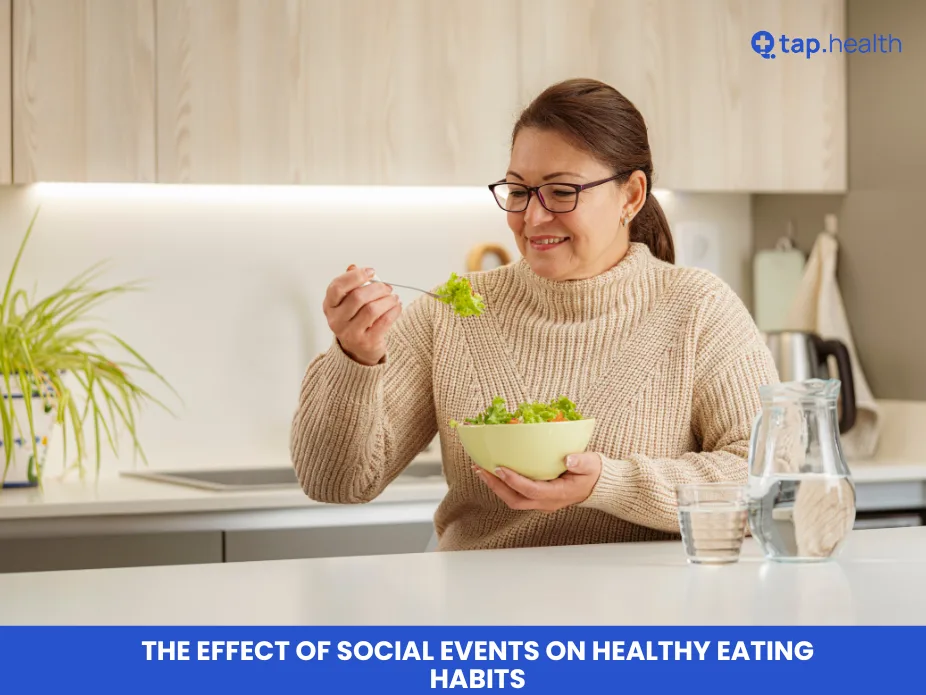
How Social Events Disrupt Healthy Eating Habits
Social gatherings — family dinners, office parties, weddings, or casual hangouts — are fun but often become the biggest threat to healthy eating. Tempting desserts, fried snacks, sugary drinks, and alcohol make it easy to abandon balanced meals, portion control, and mindful eating. The result? Unwanted weight gain, energy crashes, and bigger challenges for people managing diabetes or blood sugar levels.
Why Do Parties and Gatherings Lead to Poor Food Choices?
- Peer Pressure & Social Norms When everyone is reaching for cake or second helpings, it’s hard not to follow. In many cultures, refusing food feels impolite, so people eat more than planned just to “fit in.”
- Abundance of Unhealthy Options Buffets are usually loaded with high-calorie, high-carb, and high-fat foods. These items are placed front and center, while salads or vegetable platters are often hidden or limited.
- Alcohol Lowers Inhibitions Drinking reduces self-control and increases cravings for salty, fried, or sweet snacks — a double hit to blood sugar stability.
- Emotional & Celebration Eating Joy, stress, or boredom at events triggers emotional eating. Food becomes the center of celebration instead of conversation or activities.
- Broken Routine Late-night parties, skipped meals “to save calories,” and irregular timings throw off normal hunger cues and meal planning.
Practical Strategies to Maintain Healthy Eating at Social Events
- Eat Before You Go Have a high-protein, high-fiber snack or light meal (Greek yogurt, nuts, veggies + hummus) so you arrive satisfied, not starving.
- Scout & Prioritize Healthier Plates Fill 50–70% of your plate with vegetables, lean protein, and whole grains first. Treat desserts as a small taste, not the main event.
- Stay Hydrated Drink water or sparkling water between every alcoholic beverage or soda. Thirst is often mistaken for hunger.
- Practice Mindful Eating Eat slowly, chew well, and check in with your fullness after every few bites. Put your fork down while talking.
- Bring a Healthy Dish Contribute a big salad, grilled vegetable platter, fruit skewers, or cauliflower bites. You guarantee at least one diabetes-friendly option exists.
- Use the “One-Plate Rule” Allow yourself only one trip to the buffet and one small dessert plate. This simple boundary prevents mindless grazing.
- Politely Say No A simple “Thank you, it looks delicious, but I’m full” works every time. No explanation needed.
Turn Social Events into Healthy Eating Opportunities
Choose or host active gatherings: hiking, dancing, sports days, or walking dinners. Movement burns extra calories and shifts focus away from food.
Encourage health-conscious menus: more grilled items, fresh salads, veggie trays, and sugar-free drinks. As wellness awareness grows, many hosts happily accommodate.
Real-Life Example
You’ve been eating clean for weeks. At a wedding, friends keep pushing cake and late-night pizza. Without a plan, it’s easy to overeat 1,500+ extra calories in one night and spike blood sugar dramatically. With the strategies above, you enjoy a small slice, dance it off, and wake up feeling great.
Expert Insight
Research shows people consume 30–50% more calories when eating in groups versus alone. For individuals with diabetes, these events can cause dangerous blood sugar swings. Dietitians emphasize pre-event protein meals, portion awareness, and returning to routine the next day — one event never ruins long-term progress.
Can Social Events Support Diabetes Management and Healthy Living? (TapHealth)
Yes! With planning, mindful choices, and smart swaps, social gatherings can become part of a sustainable healthy lifestyle — even when managing diabetes. Tools like TapHealth continuous glucose monitoring help you see exactly how different foods and alcohol affect your body in real time, so you learn what works for you at every party, festival, or family dinner. Enjoy the people, savor the moments, and keep your health goals intact.