
Irritable Bowel Syndrome (IBS) is a common digestive disorder that affects millions of people worldwide. It is characterized by symptoms such as abdominal pain, bloating, diarrhea, and constipation, which can significantly impact a person’s quality of life. While conventional treatments like medications often provide short-term relief, many individuals are turning to natural and holistic approaches to manage IBS symptoms. One such approach is Ayurvedic medicine, an ancient system of healing from India that focuses on balancing the body, mind, and spirit to achieve optimal health.
In this article, we will explore how Ayurvedic medicine can help manage IBS, including the key herbs, remedies, and lifestyle changes that are recommended for those seeking natural relief. By the end, you’ll have a clearer understanding of how Ayurveda can be integrated into your wellness routine to improve digestive health.
What Is Irritable Bowel Syndrome (IBS)?
Irritable Bowel Syndrome (IBS) is a chronic gastrointestinal condition that affects the large intestine. It is not a life-threatening disease, but its symptoms can be disruptive and uncomfortable. The exact cause of IBS is unknown, but several factors contribute to its development, including stress, diet, hormonal changes, and gut microbiota imbalances.
Common Symptoms of IBS
- Abdominal pain or discomfort
- Diarrhea or constipation (or alternating between the two)
- Bloating and gas
- Mucus in the stool
- Feeling of incomplete bowel evacuation
While IBS can be a lifelong condition, the severity and frequency of symptoms can vary. Some people experience symptoms occasionally, while others face them daily. Managing IBS requires a multifaceted approach, and this is where Ayurveda can offer valuable insights.
What is Ayurveda?
Ayurveda, which translates to “the science of life,” is an ancient system of medicine that has been practiced in India for thousands of years. It focuses on achieving balance in the body through natural treatments, including herbs, diet, meditation, and lifestyle changes. Ayurveda emphasizes the interconnectedness of the body, mind, and spirit and believes that physical ailments are often the result of imbalances in these areas.
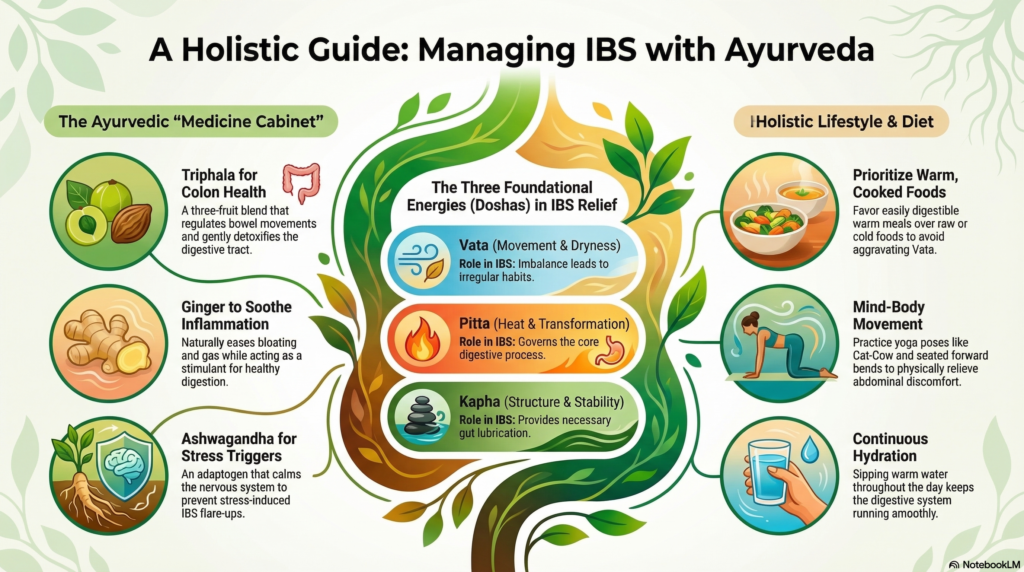
In Ayurveda, the body is composed of three primary energies or doshas—Vata, Pitta, and Kapha. Each person has a unique combination of these doshas, and an imbalance in them can lead to health problems, including digestive disorders like IBS.
- Vata is associated with movement, dryness, and cold.
- Pitta governs heat, digestion, and transformation.
- Kapha is related to structure, lubrication, and stability.
For those suffering from IBS, Ayurveda seeks to identify the underlying imbalances in these doshas and restore harmony through personalized treatments.
How Ayurvedic Medicine Helps in Managing IBS
Ayurvedic medicine offers a holistic approach to managing IBS by focusing on the root causes of the disorder rather than merely masking the symptoms. The primary goals of Ayurvedic treatment for IBS are:
- Balancing the Doshas: Ayurveda seeks to balance Vata, Pitta, and Kapha to restore digestive health.
- Improving Digestion: Strengthening the digestive fire (Agni) is central to Ayurvedic practices, as proper digestion is the foundation of good health.
- Addressing Stress: Ayurveda acknowledges the impact of stress on digestion and includes mental wellness practices such as meditation and yoga.
- Detoxification: Ayurveda promotes gentle detoxification through natural methods, such as herbal teas and cleansing diets, to clear the digestive system.
By incorporating these principles, Ayurveda aims to provide lasting relief from the uncomfortable symptoms of IBS and improve overall digestive health.
Key Ayurvedic Herbs for Irritable Bowel Syndrome
Several Ayurvedic herbs have been used for centuries to treat digestive disorders like IBS. These herbs are known for their soothing, anti-inflammatory, and digestive-enhancing properties. Below are some of the most commonly used Ayurvedic herbs for managing IBS:
1. Amla (Indian Gooseberry)
Amla is a powerful antioxidant that is known to support digestive health. It helps in balancing all three doshas and improves digestion. Amla is also rich in vitamin C, which helps strengthen the immune system and reduce inflammation in the gut.
- Benefits: Reduces acidity, improves bowel movement, and strengthens digestive enzymes.
- How to Use: Amla can be consumed as a powder, juice, or supplement.
2. Ginger
Ginger is widely known for its ability to soothe the digestive system. It has anti-inflammatory properties and can help reduce bloating, gas, and nausea—common symptoms of IBS. Ginger is also a natural stimulant for the digestive system, promoting healthy bowel function.
- Benefits: Eases bloating, reduces nausea, and improves digestion.
- How to Use: Fresh ginger can be consumed in tea, or you can take ginger capsules or powder.
3. Fennel (Saunf)
Fennel seeds are a well-known Ayurvedic remedy for digestive issues. They help alleviate gas, bloating, and indigestion, making them particularly effective for people with IBS. Fennel also has mild laxative properties, which can aid in constipation.
- Benefits: Relieves bloating, reduces gas, and promotes regular bowel movements.
- How to Use: Chew fennel seeds after meals or steep them in hot water to make fennel tea.
4. Triphala
Triphala is a combination of three fruits—Amla, Haritaki, and Bibhitaki—that are widely used in Ayurveda to promote digestion and detoxification. It is particularly effective in balancing the bowel movements and reducing constipation.
- Benefits: Supports healthy bowel function, detoxifies the colon, and regulates digestion.
- How to Use: Triphala is commonly taken in powder form, either mixed with water or honey, before bedtime.
5. Ashwagandha
Ashwagandha is an adaptogen herb known for its stress-reducing and mood-stabilizing properties. Since stress can be a major trigger for IBS, Ashwagandha can help calm the nervous system and reduce the impact of stress on digestion.
- Benefits: Reduces stress, balances hormones, and supports gut health.
- How to Use: Ashwagandha can be taken as a powder, capsule, or in tea.
6. Turmeric
Turmeric is a powerful anti-inflammatory herb that can help calm inflammation in the digestive system. It contains curcumin, which has been shown to reduce pain and swelling in conditions like IBS.
- Benefits: Reduces inflammation, alleviates pain, and improves gut motility.
- How to Use: Add turmeric to food, or take it in supplement form.
Ayurvedic Dietary Recommendations for IBS
Diet plays a crucial role in managing IBS, and Ayurveda provides guidelines to help individuals balance their digestive system through food. Here are some dietary tips for IBS management:
1. Eat Warm, Cooked Foods
Ayurveda recommends eating warm, cooked foods that are easy to digest. Raw and cold foods, such as salads and ice-cold beverages, can aggravate Vata and cause bloating or gas.
2. Incorporate Soothing Spices
Spices like cumin, coriander, fennel, and ginger are gentle on the digestive system and help in balancing the doshas. These spices can stimulate digestion and reduce discomfort.
3. Avoid Processed Foods
Processed and fried foods can disrupt the digestive fire (Agni) and contribute to digestive issues. Opt for whole foods, such as fruits, vegetables, and grains.
4. Stay Hydrated
Ayurveda emphasizes the importance of staying hydrated for proper digestion. Drinking warm water throughout the day can help keep the digestive system running smoothly.
Lifestyle Practices to Complement Ayurvedic Treatment for IBS
In addition to herbal remedies and dietary changes, Ayurveda recommends certain lifestyle practices to help manage IBS effectively. These practices focus on balancing the body and mind to promote overall well-being.
1. Yoga and Meditation
Yoga and meditation are essential in Ayurveda for calming the mind and reducing stress. Stress is a major contributor to IBS, and regular practice of yoga and meditation can help ease anxiety and promote better digestion.
- Recommended Poses: Poses like the cat-cow pose, downward dog, and seated forward bend can help relieve digestive discomfort.
- Breathing Exercises: Deep breathing exercises such as Pranayama can help reduce stress and promote relaxation.
2. Abhyanga (Oil Massage)
Abhyanga is an Ayurvedic practice of self-massage with warm oil, which helps balance the doshas and stimulate digestion. Regular oil massage can promote better circulation, relieve tension, and support overall digestive health.
3. Adequate Rest
Getting sufficient sleep is crucial for digestive health. In Ayurveda, sleep is considered vital for restoring balance and maintaining healthy digestion. Aim for at least 7-8 hours of restful sleep every night.
When to See a Doctor
While Ayurvedic remedies can provide effective relief for many people with IBS, it’s important to seek medical advice if:
- You experience severe or persistent symptoms.
- You notice blood in your stool or have unexplained weight loss.
- You experience a sudden change in bowel habits.
A healthcare provider can help rule out other conditions and work with you to develop a comprehensive treatment plan.
Real-Life Scenario
A 30-year-old patient with IBS experiences frequent bloating, gas, and irregular bowel movements. After consulting an Ayurvedic practitioner, they start taking Triphala powder before bedtime, drink warm ginger water in the morning, and follow a Vata-pacifying diet. Over a few weeks, the patient notices reduced bloating, better bowel regularity, and improved overall comfort.
Expert Contribution
Ayurvedic practitioners stress that IBS is often caused by Vata imbalance, which leads to irregular digestion and bowel habits. Herbs like Triphala gently cleanse the digestive tract, while Licorice and Fennel soothe the gut lining. Experts also highlight the importance of mind-body practices such as yoga and meditation to reduce stress, a known trigger for IBS flare-ups.
Recommendations Grounded in Proven Research and Facts
- Herbal Support: Triphala, Amla, Ginger, and Fennel can improve digestion and relieve IBS symptoms.
- Dietary Adjustments: Favor warm, cooked foods over raw, cold, or processed foods; avoid excessive caffeine, spicy, and oily foods.
- Lifestyle Practices: Incorporate yoga, pranayama, and stress management techniques to calm Vata and support gut health.
- Routine & Consistency: Regular meal timings and sleep patterns improve digestive efficiency.
- Medical Consultation: Always consult a qualified Ayurvedic practitioner before starting herbal remedies, especially if on other medications.
Frequently Asked Questions (FAQ) on Ayurvedic Medicine for Irritable Bowel Syndrome
1. Can Ayurvedic medicine completely cure IBS?
Ayurvedic medicine can significantly help manage and alleviate IBS symptoms, but it may not offer a complete cure. A combination of dietary changes, herbs, and lifestyle practices can help control symptoms and promote better digestion.
2. Is Ayurveda safe for IBS treatment?
Ayurveda is generally safe when followed under the guidance of a qualified Ayurvedic practitioner. However, it’s essential to consult your doctor before starting any new herbal treatments or making significant lifestyle changes.
3. How long does it take to see results from Ayurvedic treatments for IBS?
The time it takes to see results from Ayurvedic treatments can vary. Some people may experience relief within a few weeks, while others may require several months to notice significant improvements.
4. Can I use Ayurvedic medicine along with conventional IBS treatments?
Yes, Ayurvedic medicine can be used alongside conventional treatments, but it’s important to discuss this with your healthcare provider to avoid any interactions or contraindications.
5. What diet should I follow for IBS in Ayurveda?
In Ayurveda, a balanced diet focusing on warm, cooked foods, fresh fruits, and vegetables, along with soothing spices like cumin, fennel, and ginger, is recommended for IBS management. Avoid processed, fried, or cold foods.
Incorporating Ayurvedic remedies into your routine can provide a holistic approach to managing IBS. By balancing the doshas, improving digestion, and addressing stress, Ayurveda offers a comprehensive method for restoring digestive health. Always consult with a healthcare provider before starting new treatments, and be patient as natural remedies may take time to show results.