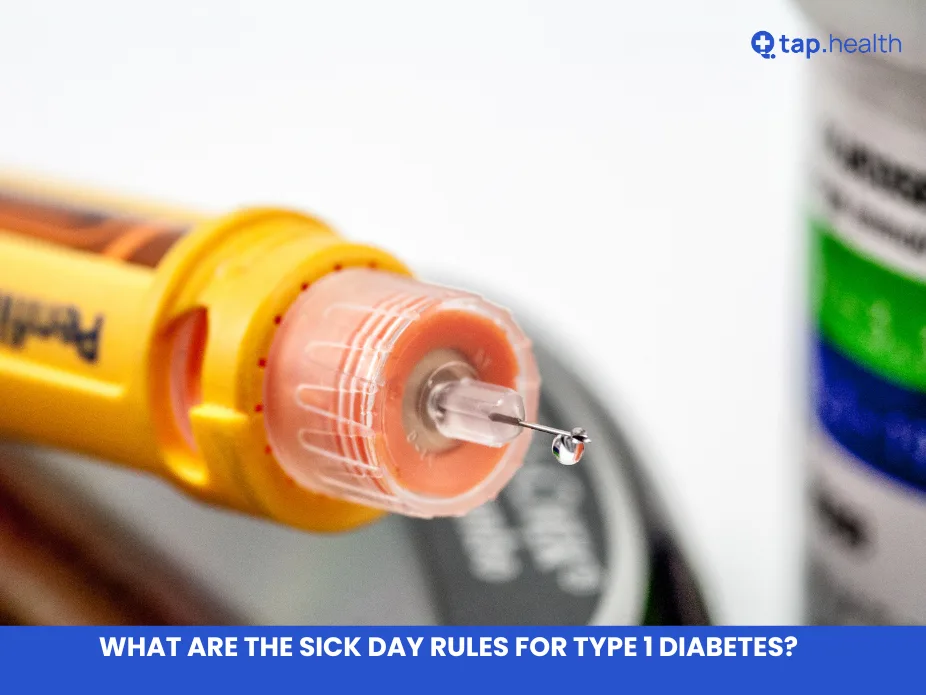
Managing type 1 diabetes during illness is critical because sickness triggers stress hormones that raise blood sugar levels dramatically. Without proper sick day management, even a simple cold or flu can quickly lead to hyperglycemia, dehydration, or diabetic ketoacidosis (DKA). These proven sick day rules help you stay in control and avoid hospital visits.
Why Illness Is Dangerous for Type 1 Diabetes Patients
When you’re sick, your body releases counter-regulatory hormones like cortisol and adrenaline. These hormones make cells resistant to insulin and cause the liver to release extra glucose. The result? Blood sugar can skyrocket even if you’re eating less or vomiting. Skipping or reducing insulin during illness is one of the most common and dangerous mistakes.
Core Sick Day Rules for Type 1 Diabetes
1. Never Skip or Stop Insulin
Even if you can’t eat, your body still needs basal insulin. In fact, most people need more insulin when sick. → Continue long-acting insulin as usual → Be ready to give extra correction doses of rapid-acting insulin if blood sugar stays high
2. Check Blood Glucose Every 2–4 Hours
Illness makes blood sugar unpredictable. → Test at least every 3–4 hours (or more often if >250 mg/dL) → Set an alarm through the night if needed
3. Test for Ketones When Blood Sugar >250 mg/dL
Ketones appear when the body breaks down fat for fuel due to insufficient insulin. → Use urine strips or a blood ketone meter → Any trace or higher ketones + high glucose = contact doctor immediately
4. Stay Aggressively Hydrated
Dehydration worsens hyperglycemia and speeds up ketone production. → Aim for 200–250 ml of sugar-free fluid every hour while awake → Best choices: water, electrolyte drinks without sugar, broth, sugar-free ice lollies → Avoid caffeine and sugary drinks
5. Keep Taking in Carbohydrates if Possible
Low intake + continued insulin can cause severe hypoglycemia. → If you can’t eat meals, sip 15 g fast-acting carbs every hour (juice, glucose tabs, regular soda, etc.) → If vomiting persistently, use anti-nausea medication (prescribed) and consider glucose gel
6. Know When to Seek Urgent Help
Go to emergency or call your doctor if:
- Vomiting or diarrhea >6 hours
- Moderate/large ketones for >12 hours
- Blood glucose >300 mg/dL despite extra insulin
- Difficulty breathing, fruity breath, confusion, extreme drowsiness
- Blood ketones ≥1.5 mmol/L (or urine large)
Quick Sick Day Checklist (Keep on Fridge)
- Glucose meter + extra strips
- Ketone strips or blood ketone meter
- Sugar-free fluids & electrolyte powder
- Easy carbs (juice, glucose tablets, honey)
- Thermometer
- Doctor & emergency contact numbers
- Anti-nausea medication (if previously prescribed)
Frequently Asked Questions
Q: Can I reduce my insulin when I’m not eating?
A: No. Most people need the same or more insulin when sick.
Q: How much water should I drink on a sick day?
A: At least 200–250 ml every hour you’re awake, more if fever or vomiting.
Q: What if I’m vomiting and can’t keep anything down?
A: Use anti-nausea medication, try tiny sips every 10–15 min, and contact your doctor urgently—IV fluids and injectable anti-nausea drugs are often needed.
Q: Are over-the-counter cold medicines safe?
A: Many contain sugar or decongestants that raise blood sugar. Always check labels and choose sugar-free versions.
How Can TapHealth Help with Diabetes Sick Day Management?
TapHealth 24/7 virtual diabetes clinic lets you consult certified endocrinologists and CDEs within minutes, get instant sick-day insulin adjustment advice, order ketone strips with same-day delivery, and track everything in one app. Perfect for those sudden fever nights when you need expert guidance fast.
Stay prepared, follow these sick day rules for type 1 diabetes religiously, and you’ll sail through illnesses with minimum disruption. Your body is already fighting the bug—don’t let uncontrolled glucose add to the battle.