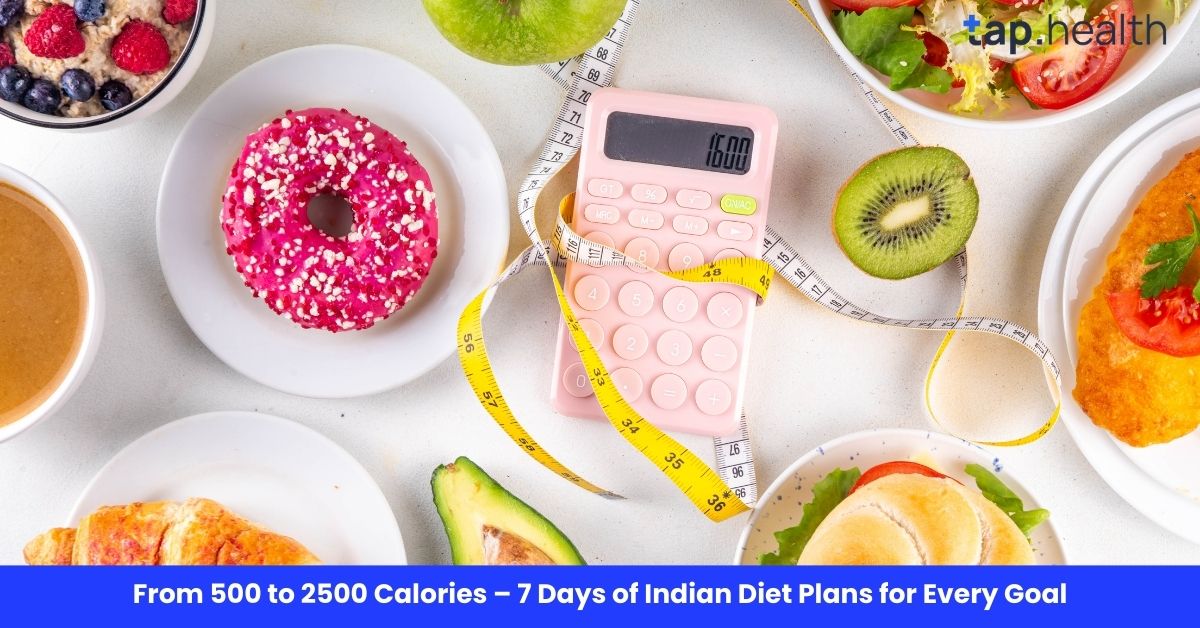
Indian cuisine is known for its variety, flavor, and nutritional diversity. Whether you’re aiming to lose weight, build muscle, or maintain your current weight, Indian food has something for everyone. In this guide, we’ll explore a comprehensive week-long Indian diet plan that can be adjusted to various calorie needs—from 500 to 2500 calories. These meal plans will help you achieve your fitness goals while still enjoying the delicious tastes of Indian cuisine.
Disclaimer: These diet plans are suggestions and should be personalized based on individual health needs, preferences, and physical activity levels. It’s always best to consult a healthcare professional or nutritionist before starting any new diet regimen.
Why Calorie Counts Matter
Before diving into specific diet plans, it’s important to understand why calorie intake is so critical.
- Calories for Weight Loss: If you’re trying to shed pounds, you need to create a calorie deficit. This means consuming fewer calories than your body burns throughout the day. A deficit of 500-1000 calories per day can result in a safe and sustainable weight loss of 0.5-1 kg per week.
- Calories for Maintenance: To maintain your current weight, your calorie intake should match the number of calories you burn. This is typically referred to as your Total Daily Energy Expenditure (TDEE).
- Calories for Muscle Gain: If your goal is to gain muscle mass, you need to consume more calories than you burn. A surplus of 300-500 calories per day can provide your body with the extra energy needed for muscle repair and growth.
Each goal—whether it’s weight loss, maintenance, or muscle gain—requires a tailored approach. The following 7-day meal plans for varying calorie counts will help you get started.
7-Day Indian Diet Plan for 500 Calories
A 500-calorie diet is considered very low and should only be followed for a short period of time, typically under medical supervision. This type of diet is meant for extreme weight loss. Be sure to include plenty of hydration and avoid nutrient deficiencies.
Day 1: Morning
- Breakfast: Green tea + 2 boiled egg whites (scrambled or boiled).
- Lunch: Spinach soup with minimal oil or butter.
- Snack: Cucumber sticks or carrot sticks (low-calorie and hydrating).
- Dinner: Grilled chicken breast (skinless) with a side of steamed vegetables.
Day 2: Morning
- Breakfast: Black coffee or green tea (no sugar) + 1 boiled egg.
- Lunch: Cabbage stir-fry with a pinch of turmeric and minimal oil.
- Snack: A handful of almonds (8-10 pieces).
- Dinner: Clear vegetable soup (no added cream, low-calorie).
Day 3: Morning
- Breakfast: Fresh coconut water (unsweetened) + 1 boiled egg.
- Lunch: Cauliflower rice (cauliflower sautéed with olive oil and cumin).
- Snack: A small serving of papaya (low-calorie fruit).
- Dinner: Grilled paneer tikka (minimal oil, no cream).
Day 4: Morning
- Breakfast: Herbal tea + 1 boiled egg and 1 small apple.
- Lunch: Methi (fenugreek) leaves sautéed with cumin and minimal oil.
- Snack: 1 boiled egg.
- Dinner: Clear vegetable broth with lemon.
Day 5: Morning
- Breakfast: Green tea + 2 boiled egg whites (no oil).
- Lunch: Cucumber and tomato salad (with lemon and pepper, no dressing).
- Snack: A small portion of Greek yogurt (unsweetened, low-fat).
- Dinner: Grilled fish (lightly seasoned with lemon and pepper).
Day 6: Morning
- Breakfast: Black coffee or green tea (no sugar) + 1 boiled egg.
- Lunch: Lightly grilled vegetables (zucchini, carrots, mushrooms).
- Snack: A handful of walnuts (small portion).
- Dinner: Clear lentil soup (light, with no added oil).
Day 7: Morning
- Breakfast: Green tea + 1 boiled egg.
- Lunch: Light vegetable soup (without added cream or oil).
- Snack: 1 orange (for natural sweetness).
- Dinner: Grilled tofu with steamed broccoli.
7-Day Indian Diet Plan for 1200 Calories
This calorie count is better suited for moderate weight loss, ensuring that your body still receives adequate nutrition while maintaining a calorie deficit.
Day 1: Morning
- Breakfast: 1 boiled egg + 1 slice whole wheat toast.
- Lunch: Moong dal (yellow lentils) with 1 small chapati.
- Snack: Apple slices with 1 teaspoon peanut butter (unsweetened).
- Dinner: Grilled chicken with a side of steamed vegetables (spinach, zucchini, and carrots).
Day 2: Morning
- Breakfast: Oats porridge made with skim milk and topped with almonds (10-12 pieces).
- Lunch: Vegetable salad with cucumbers, tomatoes, and a squeeze of lemon juice.
- Snack: Fresh coconut water (natural and hydrating).
- Dinner: Masoor dal (red lentils) with a small serving of brown rice.
Day 3: Morning
- Breakfast: Smoothie made from 1 banana, spinach, and almond milk (unsweetened).
- Lunch: Cabbage stir-fry with 1 small chapati.
- Snack: A handful of mixed nuts (unsweetened).
- Dinner: Tandoori chicken with sautéed spinach.
Day 4: Morning
- Breakfast: Poha (flattened rice) made with minimal oil, peanuts, and peas.
- Lunch: Grilled fish with cucumber and tomato salad.
- Snack: 1 small apple.
- Dinner: Paneer tikka with a small serving of rice.
Day 5: Morning
- Breakfast: Green tea + 1 boiled egg + 1 slice of avocado.
- Lunch: Vegetable dal with quinoa.
- Snack: Carrot sticks with hummus (homemade or store-bought with no added sugar).
- Dinner: Grilled tofu with mixed vegetables.
Day 6: Morning
- Breakfast: Whole wheat toast with a slice of low-fat cheese.
- Lunch: Chana masala (chickpeas curry) with 1 small chapati.
- Snack: A handful of pistachios (small portion).
- Dinner: Chicken soup with mixed veggies (low-calorie, with herbs).
Day 7: Morning
- Breakfast: Green smoothie (spinach, banana, almond milk).
- Lunch: Baked salmon with a small side of quinoa.
- Snack: 1 orange.
- Dinner: Vegetable stir-fry with tofu.
7-Day Indian Diet Plan for 2000 Calories
A 2000-calorie plan is typically meant for people with moderate activity levels who want to maintain their weight or lose it at a slower pace. This plan includes balanced meals with a good mix of macronutrients.
Day 1: Morning
- Breakfast: Masala omelette with vegetables + 1 slice whole wheat toast.
- Lunch: Vegetable biryani with a side of raita.
- Snack: Mixed fruit bowl (apple, banana, pomegranate).
- Dinner: Grilled chicken with a side of steamed broccoli and carrots.
Day 2: Morning
- Breakfast: Oats porridge with berries and chia seeds.
- Lunch: Tofu stir-fry with mixed vegetables and brown rice.
- Snack: A handful of cashews.
- Dinner: Chana masala with a side of 1 small chapati.
Day 3: Morning
- Breakfast: Idli with sambar and coconut chutney.
- Lunch: Palak paneer with 1 chapati.
- Snack: Yogurt with honey.
- Dinner: Baked fish with sautéed greens.
Day 4: Morning
- Breakfast: Poha with peas and peanuts.
- Lunch: Grilled chicken salad with cucumbers, tomatoes, and lemon dressing.
- Snack: A handful of almonds.
- Dinner: Mixed vegetable curry with brown rice.
Day 5: Morning
- Breakfast: Whole wheat toast with avocado and a boiled egg.
- Lunch: Vegetable and lentil curry with 1 small chapati.
- Snack: Apple slices with peanut butter (unsweetened).
- Dinner: Grilled shrimp with a side of quinoa and steamed veggies.
Day 6: Morning
- Breakfast: Paratha with yogurt and pickles.
- Lunch: Rajma (kidney beans) with 1 small serving of rice.
- Snack: Carrot and cucumber sticks with hummus.
- Dinner: Paneer curry with a side of brown rice.
Day 7: Morning
- Breakfast: Smoothie bowl with berries, chia seeds, and granola.
- Lunch: Dosa with sambhar and coconut chutney.
- Snack: A handful of walnuts.
- Dinner: Grilled chicken with a side of roasted vegetables.
7-Day Indian Diet Plan for 2500 Calories
A 2500-calorie plan is perfect for those looking to build muscle or for individuals with a higher energy expenditure. These meals are more calorie-dense and nutrient-packed.
Day 1: Morning
- Breakfast: Whole wheat toast with avocado and scrambled eggs.
- Lunch: Chicken curry with basmati rice.
- Snack: Mixed nuts and dried fruits.
- Dinner: Paneer tikka with a side of mixed vegetables.
Day 2: Morning
- Breakfast: Oats porridge with banana, almonds, and honey.
- Lunch: Vegetable pulao with raita.
- Snack: Smoothie with almond milk, protein powder, and spinach.
- Dinner: Grilled fish with a side of quinoa.
Day 3: Morning
- Breakfast: Masala dosa with coconut chutney and sambhar.
- Lunch: Chicken biryani with a side of yogurt.
- Snack: Greek yogurt with honey and granola.
- Dinner: Lamb curry with a side of roti.
Day 4: Morning
- Breakfast: Poha with peanuts and a boiled egg.
- Lunch: Dal makhani with steamed rice.
- Snack: A handful of pistachios.
- Dinner: Grilled shrimp with vegetable stir-fry.
Day 5: Morning
- Breakfast: Paratha with curd and pickle.
- Lunch: Rajma chawal with raita.
- Snack: Carrot sticks with hummus.
- Dinner: Grilled chicken with a side of quinoa and veggies.
Day 6: Morning
- Breakfast: Whole wheat toast with scrambled eggs and avocado.
- Lunch: Chana masala with basmati rice.
- Snack: Smoothie with banana, almond butter, and protein powder.
- Dinner: Baked fish with sautéed spinach.
Day 7: Morning
- Breakfast: Egg bhurji with paratha.
- Lunch: Tofu curry with a side of brown rice.
- Snack: A handful of almonds and walnuts.
- Dinner: Grilled chicken with mixed vegetable salad.
How to Choose the Right Plan for You
Here’s a guide:
- Want to lose weight? Try 1000–1500 calorie plans.
- Want to maintain weight? 1800–2000 works well.
- Want to gain? Choose 2200–2500 plan.
- Workout daily? Prefer 2000+ calories for energy.
Benefits of a Calorie-Based Indian Diet Plan
- Easy to adjust to your goal
- Uses simple home food
- Affordable and sustainable
- Includes carbs, protein, fat, fiber
Common Mistakes to Avoid
- Skipping meals: Leads to overeating later
- Too low calories for too long: Slows metabolism
- No exercise at all: Less muscle, more fat
- No variety in food: Causes nutrition gaps
Quick Tips for Better Results
- Drink 2–3 liters of water daily
- Add fiber like fruits and salad
- Avoid fried food and sugary snacks
- Stick to home-cooked food
- Track your meals and weight
Real-Life Scenario
Riya, a 28-year-old office worker, wanted to lose weight before her wedding. She started with a 1200-calorie Indian diet plan, focusing on dal, sabzi, rotis, and salads. Within 2 months, she lost 6 kg without feeling deprived. On the other hand, Arjun, a gym enthusiast, followed a 2500-calorie plan with more rice, paneer, nuts, and chicken to build muscle. Both achieved their goals by sticking to calorie-appropriate Indian meals.
Expert Contribution
Dietitians explain that calorie requirements depend on age, gender, activity level, and health goals. For example:
- 500–800 calories/day: Only under medical supervision.
- 1200–1500 calories/day: Common for safe weight loss.
- 1800–2000 calories/day: Ideal for maintenance in moderately active adults.
- 2200–2500 calories/day: Recommended for athletes, gym-goers, or people with physically demanding jobs.
Experts also emphasize that the quality of calories matters. Eating 1500 calories of junk food won’t provide the same results as 1500 calories of balanced Indian meals.
Recommendations Grounded in Proven Research and Facts
- Calculate your calorie needs using BMI, BMR, and activity level before choosing a plan.
- Prioritize nutrient-dense foods like dals, whole grains, vegetables, fruits, and lean proteins.
- Avoid crash diets of 500–800 calories unless advised by a doctor.
- Space meals throughout the day to maintain steady energy and prevent overeating.
- Stay hydrated with water, buttermilk, or coconut water instead of sugary drinks.
- Combine diet with exercise for sustainable weight management.
FAQs on 7-Day Indian Diet Plans Based on Calories
Q1. Can I follow a 500-calorie diet plan for more than a day?
No, it’s not safe to follow a 500-calorie plan long-term. It can lead to weakness and vitamin loss. Only follow under a doctor’s advice.
Q2. What Indian foods are best for weight loss diets?
Simple options like dal, roti, brown rice, curd, fruits, and steamed veggies work best. Avoid fried, oily, and sugary foods.
Q3. Is it okay to eat roti or rice every day on a diet?
Yes. Both are good when eaten in the right amount. Use whole wheat roti and brown or basmati rice for better nutrition.
Q4. What if I feel hungry on a low-calorie plan?
Choose high-fiber foods like salads, fruits, and buttermilk to stay full. Drink water and eat slowly.
Q5. Can I use these plans if I have diabetes or thyroid issues?
You must talk to your doctor or dietitian first. Some foods may need to be replaced for medical reasons.
Q6. Can I lose weight just by following a diet plan?
Diet is 70% of the game, but add light exercise like walking or yoga for faster and healthy results.
Final Words
Whether you want to lose, gain, or maintain your weight, this guide gives you Indian diet plans from 500 to 2500 calories for 7 days. Stick to natural, home-cooked food, drink enough water, and be consistent.
Start slow, listen to your body, and make small changes each week. That’s the best way to reach your goal.