In Indian households, “Rajgira” or “Ramdana” is often seen as a fasting food. When Navratri or Shravan rolls around, we swap our regular wheat rotis for Rajgira puris or laddus. It has a reputation for being pure, light, and healthy. But recently, this ancient grain has caught the attention of the global health community, labeled as a “superfood.”
However, if you are living with diabetes or insulin resistance, “superfood” labels are not enough. You need hard numbers. You need to know how it affects your blood sugar. You are likely asking: What is the amaranth glycemic index? Is it actually low, or is it a hidden sugar bomb waiting to explode?
It is a confusing topic because the answer isn’t a simple “yes” or “no.” Amaranth is unique. It behaves differently depending on how you cook it—whether it is popped, boiled, or ground into flour.
In this detailed guide, we are going to strip away the complex medical jargon. We will explore the amaranth glycemic index and load, compare it to other grains like quinoa and millet, and give you the practical knowledge you need to decide if Rajgira deserves a place on your plate.
What Exactly Is Amaranth?
Before we dive into the numbers, let’s clarify what we are talking about. Amaranth (technically Amaranthus) is a group of more than 60 different species of plants.
In India, we use it in two main forms:
- The Seeds (Grain): Known as Rajgira or Ramdana. These are tiny, pale yellow seeds used to make laddus, kheer, or flour (Atta).
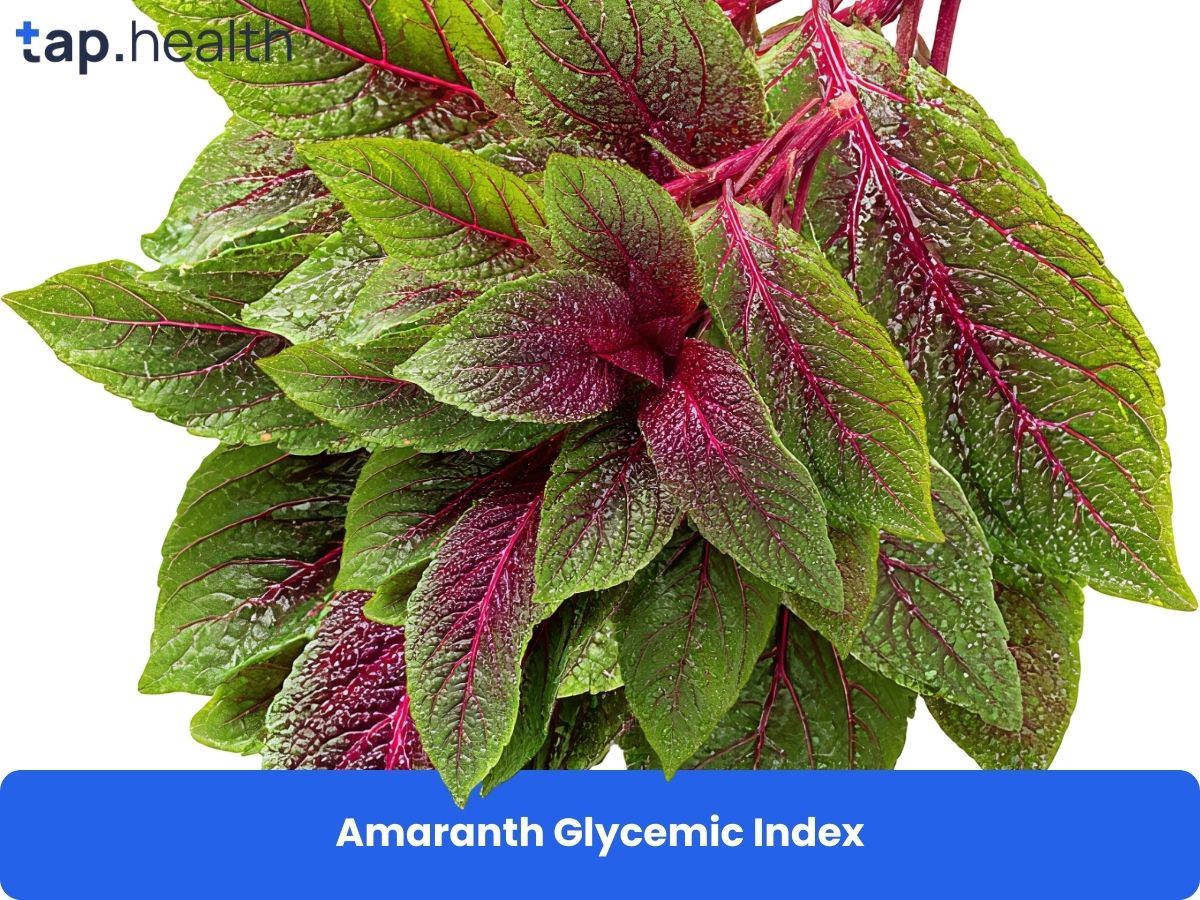
- The Leaves (Vegetable): Known as “Chaulai” or “Red Spinach.” These are leafy greens often cooked with potatoes or lentils.
While the seeds are technically “pseudo-cereals” (like quinoa and buckwheat), they are cooked and eaten just like grains.
Understanding the Glycemic Index (GI)
To understand the amaranth grain glycemic index, we first need a quick refresher on the Glycemic Index (GI).
Think of GI as a speedometer for sugar. It measures how fast a carbohydrate food raises your blood glucose levels on a scale of 0 to 100.
- Low GI (0–55): Slow and steady energy. (Good for diabetics)
- Medium GI (56–69): Moderate speed.
- High GI (70+): Fast spike. (Risk of sugar rush)
Pure Glucose is the benchmark at 100.
The Amaranth Glycemic Index: The Numbers Revealed
Here is where things get interesting—and a little tricky. Unlike pulses which are almost always Low GI, the amaranth glycemic index changes drastically based on how you prepare it.
1. Cooked / Boiled Amaranth Grain
- GI Score: Approximately 97 to 107.
- Verdict: High GI.
- Context: Yes, you read that right. The cooked amaranth glycemic index can be as high as pure glucose. When you boil these tiny seeds, the starch gelatinizes (swells up) and becomes very easy for your body to digest, leading to a quick spike.
2. Popped / Puffed Amaranth
- GI Score: Approximately 85 to 90.
- Verdict: High GI.
- Context: The popped amaranth glycemic index or puffed amaranth glycemic index is also high. The popping process expands the surface area of the grain, making it instantly digestible. This is why Rajgira laddus give you instant energy during a fast.
3. Amaranth Flour (Rajgira Atta)
- GI Score: Approximately 66 to 75 (depending on the grind and mixture).
- Verdict: Medium to High GI.
- Context: The amaranth flour glycemic index is lower than the whole grain if eaten as a flatbread (roti) with fat (ghee), but it is still higher than whole wheat.
4. Amaranth Leaves (Chaulai)
- GI Score: Very Low (Below 20).
- Verdict: Excellent for diabetics.
- Context: The amaranth leaves glycemic index is totally different from the grain. The leaves are fibrous vegetables with almost no carbohydrates. They are perfect for blood sugar control.
The Paradox: Why Is High-GI Amaranth Considered Healthy?
If the amaranth glycemic index is so high (over 90!), why do nutritionists call it a superfood? Why do we see articles recommending rajgira for diabetes?
The answer lies in a concept called Glycemic Load (GL).
While GI tells you how fast the sugar enters your blood, Glycemic Load tells you how much sugar is actually in a standard serving.
- Amaranth is nutrient-dense. It is packed with protein, fibre, magnesium, and iron.
- Because it has so much fibre and protein, you don’t eat a massive amount of “available carbs” in a normal serving compared to a bowl of white rice.
- The glycemic load of amaranth Atta or grain is often considered Medium (around 15–20 for a serving).
So, while it spikes sugar fast, the total impact on your body is buffered by the high nutrients—provided you eat small portions.
Amaranth vs. Other Grains: The Showdown
To make the best choice, we need to compare Rajgira with other popular healthy grains. Let’s look at amaranth vs quinoa glycemic index and others.
| Grain | Estimated GI | Key Feature |
| Amaranth (Grain) | 95+ (High) | High protein, calcium-rich. |
| Quinoa | 53 (Low) | Quinoa glycemic index is much lower. Better for strict sugar control. |
| Buckwheat (Kuttu) | 49–55 (Low) | Buckwheat glycemic index is safe. Great for fasting. |
| Millet (Jowar/Bajra) | 54–60 (Low/Med) | Millet glycemic index varies, but generally lower than Amaranth. |
| Ragi (Finger Millet) | 55–65 (Med) | Ragi glycemic index is good due to high calcium and fiber. |
| Sabudana (Tapioca) | 85+ (High) | Sabudana glycemic index is high with zero protein. Amaranth is better than Sabudana. |
| Barley (Jau) | 28 (Very Low) | The best for diabetics. |
The Comparison:
- Amaranth vs. Quinoa: Quinoa wins on blood sugar control. Amaranth wins on protein and iron content.
- Amaranth vs. Sabudana: Both are High GI, but Amaranth is nutritious, while Sabudana is empty starch. Always choose Amaranth over Sabudana during fasting.
- Amaranth vs. Wheat: Amaranth roti glycemic index can be similar to or slightly higher than wheat, but it is gluten-free.
Different Forms of Amaranth Explained
Let’s break down the specific keywords users search for regarding the forms of this grain.
1. Amaranth Flour (Rajgira Atta)
When you make a glycemic index of rajgira roti, the GI is influenced by what you add. Since Rajgira is gluten-free, it is hard to roll. We often add boiled potatoes or wheat flour to bind it.
- Warning: Adding potato increases the GI further.
- Tip: Mix amaranth atta glycemic index impact by adding psyllium husk (Isabgol) or flaxseed powder to increase fibre and lower the sugar spike.
2. Red Amaranth vs. Yellow Amaranth
Is there a difference in red amaranth glycemic index?
Usually, “Red Amaranth” refers to the leafy vegetable variety. As mentioned, the leaves are very low GI. If you find red amaranth grains, nutritionally they are very similar to the yellow ones, and the GI remains high.
3. Popped Amaranth (The Breakfast Cereal)
The popped amaranth glycemic index is high, but it is very light. A bowl of popped amaranth weighs very little, so you are consuming fewer carbs by weight than a bowl of dense oats. It is a good crunchy topping for yoghurt, which lowers the overall meal GI.
Real-Life Scenario: The Fasting Mistake
Let’s look at a common situation in India during Navratri.
The Scenario:
Mrs. Mehta has Type 2 diabetes. During her fast, she avoids wheat and rice. Instead, she eats “Sabudana Khichdi” for lunch and “Rajgira Puri” with potato bhaji for dinner.
The Outcome:
Her blood sugar shoots up to 250 mg/dL. She is shocked because she thought she was eating “fasting superfoods.”
The Analysis:
- Sabudana is pure starch (High GI).
- Rajgira Puri is fried flour (High GI) paired with potatoes (High GI).
- She essentially ate a double dose of high-sugar foods.
The Fix:
Next time, Mrs. Mehta changes her menu:
- She swaps Sabudana for Buckwheat (Kuttu) Khichdi (Lower GI).
- She eats Amaranth Roti (not Puri) paired with Paneer or Curd (Protein).
- The protein from the Paneer slows down the absorption of the Amaranth starch.Result: Her sugar stays stable at 150 mg/dL.
Expert Contribution
We consulted with holistic nutritionists to understand the amaranthus glycemic index paradox.
Dr. S. Iyer, Functional Medicine Practitioner:
“I often see patients scared of the cooked amaranth glycemic index. They see the number ‘100’ and run away. But you have to look at the whole package. Amaranth has Lysine, an amino acid missing in most grains. It helps absorb calcium. For a diabetic, I don’t ban Amaranth. I say: Don’t eat it alone. Don’t eat it as a porridge. Eat it as a grain bowl mixed with lots of fibrous vegetables and healthy fats like ghee. The fat blunts the spike.”
Benefits of Rajgira for Diabetes (Why Eat It?)
If the GI is high, why is rajgira for diabetes still a recommendation in many diet charts?
- Gluten-Free: Many diabetics also have inflammation or gut issues. Amaranth is naturally gluten-free.
- Complete Protein: It is one of the few plant sources that is a “complete protein,” containing all 9 essential amino acids. Protein keeps you full and stops you from snacking on biscuits later.
- Heart Health: It contains oils and phytosterols that help lower cholesterol.
- Manganese Boost: Just one serving provides your daily need for manganese, which is crucial for metabolizing carbohydrates.
Who Should Avoid Amaranth?
While healthy, it is not for everyone.
- Kidney Stones: Amaranth (especially the leaves) contains oxalates. If you have a history of calcium-oxalate kidney stones, you should limit your intake or cook it well to reduce oxalate levels.
- Severe Insulin Resistance: If your HbA1c is very high (above 8 or 9), you might want to stick to lower GI grains like Quinoa, Barley (Jau), or broken wheat (Dalia) until your levels are under control. The boiled amaranth glycemic index might be too aggressive for you right now.
Recommendations Grounded in Proven Research and Facts
If you want to include Amaranth in your diet safely, follow these evidence-based tips:
1. The “Pairing” Rule
Never eat Amaranth alone.
- Bad: A bowl of soft-boiled Amaranth porridge with sugar.
- Good: Amaranth grain glycemic index is lowered when mixed with high-fiber veggies (beans, carrots) and fat (olive oil/ghee).
2. Choose the Form Wisely
- Best: Amaranth Leaves (Chaulai Saag). Eat this freely.
- Okay: Amaranth Roti (made with added flaxseed powder).
- Limit: Popped Amaranth bars (Chikki) which are often bound with jaggery (sugar).
3. Portion Control
Treat Amaranth like rice, not like vegetables. Keep your portion to half a cup of cooked grain.
4. Cooling Effect
Just like with potatoes and rice, if you cook Amaranth and then cool it down (e.g., in a salad), some of the starch turns into “Resistant Starch.” This lowers the cooked amaranth glycemic index.
Key Takeaways
- The Number: The amaranth glycemic index is High (typically 90–107 for cooked grain).
- The Exception: Amaranth leaves are very Low GI and excellent for health.
- The Comparison: It has a higher GI than Quinoa, Buckwheat, and Millet.
- The Secret: Despite high GI, it is nutritious. Eat it in small portions paired with protein (dal/paneer) and fat (ghee) to manage the blood sugar spike.
- The Verdict: It is a “Yellow Light” food for diabetics—proceed with caution, but don’t stop completely if you balance the meal.
Frequently Asked Questions (FAQ) on Amaranth Glycemic Index
What is the glycemic index of Rajgira Roti?
The glycemic index of rajgira roti is generally in the Medium to High range (66–75). However, because rotis are usually eaten with ghee and vegetables (sabzi), the overall impact on blood sugar is moderate. To make it safer, mix the flour with psyllium husk or seeds.
Who should avoid amaranth?
People with a history of kidney stones should be careful with amaranth (especially the leaves) due to high oxalate content. Also, diabetics with uncontrolled blood sugar spikes might want to avoid boiled amaranth or popped amaranth until their levels stabilize, opting for lower GI grains like Barley instead.
What is the glycemic load of amaranth Atta?
While the GI is high, the glycemic load of amaranth Atta is typically Medium (around 15-20 per serving). This is because of the high fiber and protein content which “dilutes” the carbohydrate impact slightly compared to refined wheat flour (Maida).
Is popped amaranth good for diabetics?
Popped amaranth glycemic index is high (85+), so it causes a quick sugar rise. However, it is better than processed cereals like cornflakes. If a diabetic wants to eat it, they should have a small portion mixed with nuts and seeds to slow down digestion.
How does amaranth compare to millet for diabetes?
Generally, the millet glycemic index (like Jowar or Bajra) ranges from 54 to 60, which is lower than Amaranth (90+). Therefore, Millets are technically better for strict blood sugar control. However, Amaranth millet glycemic index blends (using both flours) offer a great balance of protein and slow-release energy.
What is the glycemic index of Jau Atta?
What is the glycemic index of Jau Atta? Jau (Barley) has a very low Glycemic Index, typically around 25–30. It is one of the best grains for diabetics, far superior to Amaranth regarding blood sugar control.
Can I eat Rajgira everyday?
If you are healthy, yes. If you are diabetic, eating amaranth bread glycemic index friendly meals everyday might keep your baseline sugar slightly elevated due to the high GI. It is better to rotate grains: have Amaranth one day, Quinoa the next, and Barley the day after.
Is cooked amaranth high in sugar?
Cooked amaranth glycemic index is high, meaning it converts to sugar in the blood quickly. It does not contain “added sugar,” but its starch is rapidly digested. This is why portion control is essential.
References
- Harvard Health Publishing: Glycemic index for 60+ foods
- Journal of Food Science and Technology: Nutritional and functional properties of Amaranth
- American Diabetes Association: Grains and Starchy Vegetables
- National Institute of Nutrition (India): Nutritive Value of Indian Foods
- The University of Sydney: GI Search Database