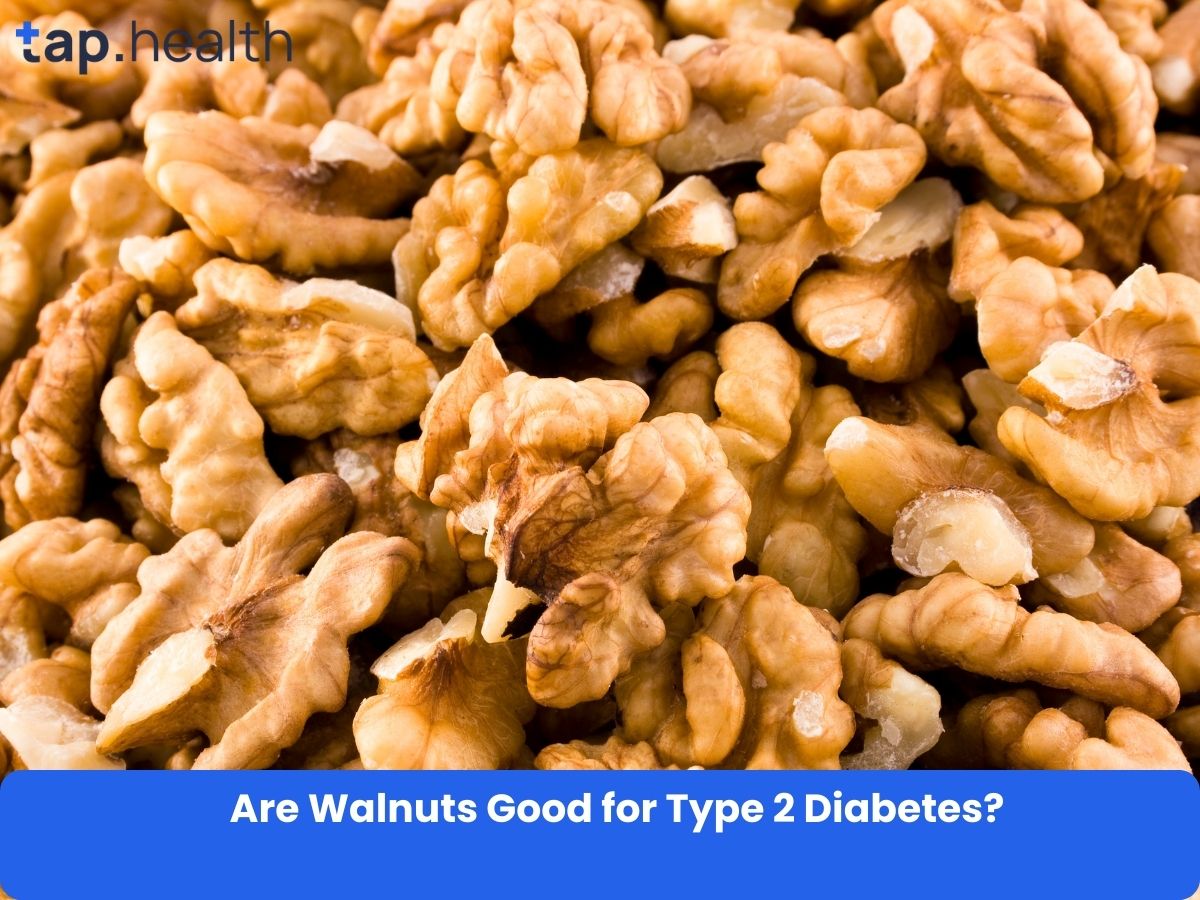
In almost every Indian home, there is a special box kept in the kitchen or the living room. It is the “Dry Fruit Box,” filled with almonds (Badam), cashews (Kaju), raisins (Kishmish), and the uniquely shaped Walnut (Akhrot).
We treat these nuts as precious gifts. We give them at weddings, serve them at Diwali, and our grandmothers insist we eat them to “sharpen our brains.” But if you have been diagnosed with Type 2 Diabetes, your relationship with food changes instantly. You start looking at every bite with suspicion.
You know that nuts are oily. You know they are high in calories. And you have been told to lose weight to manage your sugar. So, a confusing question pops up in your mind:
“Is this fatty nut actually safe for me?”
“Will eating walnuts spike my sugar or clog my heart?”
“Are walnuts good for Type 2 diabetes, or should I avoid them?”
If you are looking for clarity, you have come to the right place. The short answer is a resounding YES. In fact, walnuts are not just “allowed”; they are considered a superfood for diabetics.
We will explore why the specific fats in walnuts act like medicine for your insulin, exactly how many you should eat to avoid weight gain, and the best way to consume them for maximum benefit.
Short Answer – Are Walnuts Safe and Beneficial for Type 2 Diabetes?
Yes, walnuts are exceptionally safe and beneficial for people with Type 2 Diabetes.
Here is the quick summary for those in a rush:
- No Sugar Spike: Walnuts have almost zero carbohydrates. They will not raise your blood sugar levels.
- Insulin Helper: They are rich in Omega-3 fatty acids, which help reduce inflammation and improve how your body uses insulin (insulin sensitivity).
- Heart Protector: Since diabetics are at high risk for heart attacks, walnuts help by lowering bad cholesterol (LDL).
The Verdict: You can—and should—eat walnuts daily. However, because they are calorie-dense, you must stick to a specific limit (about 7 whole walnuts) to get the benefits without the weight gain.
Nutritional Profile of Walnuts
To understand why Akhrot is a hero for diabetes, we need to look at what is packed inside that crinkly brown kernel. Unlike cashews (which have some carbs) or raisins (which are pure sugar), walnuts are built differently.
Here is the nutritional breakdown for a standard serving of 28 grams (approx. 7 whole walnuts or 14 halves):
| Nutrient | Amount | Why It Matters for Diabetes |
| Calories | 185 kcal | High. This is why portion control is vital. |
| Total Fat | 18.5 g | Healthy Fat. Mostly polyunsaturated fat (PUFA). |
| Omega-3 (ALA) | 2.5 g | The Superstar. Fights internal inflammation. |
| Carbohydrates | 3.9 g | Very Low. Minimal impact on blood sugar. |
| Dietary Fibre | 1.9 g | Slows down digestion and keeps you full. |
| Protein | 4.3 g | Helps with satiety (feeling full). |
| Magnesium | 45 mg | Helps insulin work more effectively. |
The “Omega-3” Secret
The most important line in that table is Omega-3 (ALA). Walnuts are the only tree nut that is an excellent source of Alpha-Linolenic Acid (ALA).
- Why do you need it? Type 2 Diabetes is often driven by inflammation in the body. Omega-3 is like a fire extinguisher that cools down this inflammation, protecting your heart and kidneys.
Glycaemic Index and Glycaemic Load of Walnuts
If you manage your diabetes by the numbers, you will love walnuts.
Glycaemic Index (GI)
The GI scale measures how fast a food spikes your blood sugar (0 to 100).
- Walnut GI: 15 (Very Low).
- Context: Anything under 55 is considered low. At 15, walnuts are rock bottom.
Glycaemic Load (GL)
The GL measures the real-world impact of a serving on your blood sugar.
- Walnut GL: 0 (Zero).
- Meaning: Because walnuts have so few carbs and so much fiber/fat, a standard serving has virtually no immediate impact on your blood glucose reading.
For a diabetic, foods with a GL of zero are “Free Foods” in terms of blood sugar management. You don’t need to take extra insulin to cover them.
How Walnuts Affect Blood Sugar Levels
You might be wondering: “If they don’t lower sugar directly like a tablet, how do they help?”
Walnuts work in the background to improve your body’s machinery.
- The “Slow-Down” Effect:
- If you eat a slice of white bread, your sugar spikes fast.
- If you eat that same bread with walnuts, the healthy fat and fiber in the walnuts act like a speed breaker. They slow down the digestion of the bread, leading to a gentle rise in sugar instead of a sharp spike.
- Improving Insulin Sensitivity:
- In Type 2 Diabetes, your cells have a “rusty lock.” Insulin is the key, but it can’t open the door to let sugar in.
- The healthy fats and magnesium in walnuts help “oil” this lock. Over time, your cells become more responsive to insulin, allowing them to absorb sugar from the blood more efficiently.
- Reducing Fasting Insulin:
- Regular consumption has been linked to lower fasting insulin levels, which means your pancreas doesn’t have to work as hard.
Benefits of Walnuts for People with Type 2 Diabetes
Why should you spend your hard-earned money on expensive Akhrot? Here are four scientifically proven benefits specifically for diabetics.
Blood Sugar Control (HbA1c)
While walnuts won’t drop your sugar instantly like insulin, long-term consumption helps lower HbA1c (your 3-month average sugar).
- A study showed that people who included nuts in their diet had better glycemic control than those who ate muffin-based snacks, even when the calories were the same.
Heart Health (The Cholesterol Cutter)
This is arguably the biggest benefit.
- The Risk: Diabetics are 2 to 4 times more likely to die from heart disease or stroke. High blood sugar damages blood vessels.
- The Walnut Solution: Walnuts lower LDL (Bad Cholesterol) and improve the flexibility of your arteries (endothelial function). The Omega-3s prevent plaque buildup, keeping your heart pumping strong.
Weight Management
It sounds contradictory. How can a fatty nut help you lose weight?
- Satiety: The combination of protein, fiber, and fat signals your brain that you are full. If you eat walnuts as a snack, you are less likely to binge on biscuits or namkeen later.
- The “Lost Calorie” Effect: New research suggests that our bodies don’t absorb 100% of the calories in nuts. About 10-20% of the fat gets trapped in the fiber and passes out of the body undigested. So, you get the fullness without all the calories.
Gut Health and Inflammation
Your gut health is linked to your blood sugar.
- Walnuts act as a Prebiotic. They feed the “good bacteria” in your stomach (like Lactobacillus).
- A healthy gut lining prevents inflammation-causing toxins from leaking into your blood, which helps improve overall insulin resistance.
How Many Walnuts Can a Person with Type 2 Diabetes Eat Daily?
“Too much of a good thing is bad.” This old saying applies perfectly here.
The Magic Number: 28 to 30 grams per day.
- In Whole Walnuts: 7 whole walnuts (shells removed).
- In Halves: 14 halves (kernels).
- In Hand: One small closed fistful (Mutthi).
Why limit it?
- Calories: 7 walnuts contain roughly 185 calories. This is equivalent to two small rotis.
- If you eat 7 walnuts, it is healthy.
- If you eat 20 walnuts (~530 calories), you are adding a third meal to your day. This will lead to weight gain, which worsens diabetes.
The Strategy: Do not add walnuts on top of your current diet. Swap them. Instead of eating 4 Marie biscuits with tea, eat 4 walnuts.
Best Time and Best Way to Eat Walnuts for Diabetes
In India, we have many traditions about how to eat dry fruits. Let’s see what science says.
The “Soaking” Tradition
Our grandmothers were right.
- Recommendation: Eat Soaked Walnuts.
- Why: Walnuts contain Phytic Acid and Tannins (that bitter taste in the brown skin). Phytic acid binds to minerals like Zinc and Iron, preventing your body from absorbing them.
- How: Soak 2-3 walnuts in water overnight. In the morning, the water turns brown (tannins removed). The nut becomes softer, sweeter, and easier to digest.
The Best Time
- Early Morning (Empty Stomach): Eat your soaked walnuts first thing. This kickstarts your metabolism with healthy fats.
- Mid-Morning Snack (11 AM): This is when sugar levels often drop or hunger strikes. Walnuts keep you stable until lunch.
- Evening Tea (4 PM): Replace the rusk/biscuit habit with walnuts.
Raw vs Roasted Walnuts – Which Is Better for Diabetics?
You will see packets of “Roasted Salted Walnuts” in the supermarket. Are they okay?
Winner: Raw (or Soaked) Walnuts.
- The Problem with Roasting: High heat can damage the delicate healthy fats (polyunsaturated fats) in walnuts. It can also destroy some of the antioxidants.
- The Problem with Salt: Most roasted nuts are heavily salted. Diabetics often have high blood pressure (Hypertension). Excess salt is dangerous for your kidneys and heart.
- The Problem with Sugar/Honey: “Honey-glazed” or “Chocolate-coated” walnuts are essentially candy. Avoid them completely.
Advice: Buy plain, raw walnuts with the shell on (or vacuum-packed kernels) and soak them yourself.
Walnuts vs Other Nuts for Type 2 Diabetes
How does Akhrot compare to its cousins like Badam and Kaju?
| Nut | Best Feature | Diabetic Verdict |
| Walnut | Omega-3 Fats | #1 Choice. Best for heart & inflammation. |
| Almond (Badam) | Vitamin E & Calcium | Excellent. Close second. Great for skin/bones. |
| Pistachio | Lowest Calorie | Good. But avoid the salted ones. |
| Cashew (Kaju) | Creamy Texture | Limit. Higher in carbs than others. |
| Peanut | Cheap Protein | Good. But calorie-dense. |
Expert Tip: You don’t have to choose just one. A mixed handful (3 walnuts + 4 almonds) is a great way to get a variety of nutrients.
Real-Life Scenario
Meet Mr. Sharma (55, Businessman from Delhi):
Mr. Sharma has a busy schedule. He travels frequently and has Type 2 Diabetes. His biggest weakness was his 5 PM hunger pangs. Every evening at the office, he would order Samosas or eat a packet of Bhujia with his tea.
His HbA1c was stuck at 7.8%, and his cholesterol was creeping up.
The Intervention:
His doctor gave him a simple rule: “Keep a jar of raw walnuts on your desk. When you feel hungry at 5 PM, eat 5-6 walnut halves slowly, chewing them well.”
The Result:
- Week 1: Mr. Sharma missed the spicy Bhujia, but he noticed that the walnuts made him feel full very quickly.
- Month 1: He lost 1 kg because he cut out the fried snacks (Samosa).
- Month 3: His fasting sugar dropped, and his “Bad Cholesterol” reduced by 10 points.
Why it worked: He replaced “empty carbs” (maida in samosa) with “nutrient-dense fats” (walnuts).
Expert Contribution
We consulted Dr. R. Kapoor, a Senior Endocrinologist & Nutrition Specialist, about the role of walnuts.
“I consider walnuts a ‘prescription food’ for my vegetarian patients. Vegetarians in India often lack Omega-3 fatty acids because they don’t eat fish. This deficiency leads to higher inflammation and insulin resistance.
I tell my patients: Think of walnuts as a daily supplement. You wouldn’t skip your medicine, right? Don’t skip your 7 walnuts. But remember, the brown skin is where 90% of the antioxidants are. Don’t peel it off just because it tastes slightly bitter. Soak it to reduce the bitterness, but eat the skin!”
When Walnuts May Not Be Ideal
While they are fantastic, there are specific situations where you need to be careful.
Portion Size Concerns
We cannot stress this enough: Walnuts are calorie bombs.
If you eat a whole bowl while watching cricket, you might consume 600+ calories. This will lead to weight gain, which makes Type 2 Diabetes harder to control. Treat them like medicine, not like popcorn.
Nut Allergies or Digestive Sensitivity
- Allergies: Tree nut allergies are real. If you feel itching in your mouth, swelling of lips, or difficulty breathing after eating them, stop immediately and see a doctor.
- Digestion: Walnuts are high in fiber and fat. If you have a sensitive stomach or IBS (Irritable Bowel Syndrome), eating too many raw walnuts can cause gas, bloating, or loose motions.
- Fix: Soaking the walnuts usually solves the digestion issue.
Recommendations Grounded in Proven Research and Facts
According to major health organizations and studies:
- The “Walnut Study”: A study published in Diabetes Care found that consuming 2 ounces (approx. 56g) of walnuts daily significantly improved endothelial function (blood vessel health) in people with Type 2 Diabetes.
- Gut Bacteria: Research from Penn State University showed that adding walnuts to the diet increased beneficial gut bacteria, which may contribute to heart health benefits.
- American Heart Association: Recommends 4 servings of unsalted nuts a week to lower the risk of heart disease.
Conclusion: Key Takeaways
So, let’s summarize the answer to “Are Walnuts Good for Type 2 Diabetes?”
- YES, they are a Superfood: They do not spike sugar and help lower long-term HbA1c.
- The Secret Weapon: They are the best vegetarian source of Omega-3, which fights the inflammation causing your diabetes complications.
- The Magic Number: Stick to 7 Whole Walnuts (28g) per day.
- The Best Method: Eat them soaked in the morning or as a raw snack to replace biscuits.
- The Warning: Do not overeat them, and avoid the sugary/salted versions.
Walnuts are a delicious, crunchy way to protect your heart and stabilize your sugar. So go ahead, crack open a shell, and enjoy the goodness of Akhrot guilt-free!
Frequently Asked Questions (FAQ) on Are Walnuts Good for Type 2 Diabetes?
1. Can walnuts lower blood sugar immediately?
No. Walnuts are not insulin; they won’t drop your sugar instantly. However, they prevent spikes. If you eat walnuts with a meal (e.g., alongside rice), the fat and fiber slow down the absorption of the rice, leading to a much lower post-meal sugar reading than eating rice alone.
2. Is it better to eat walnuts soaked or raw for diabetes?
Soaked is better. Soaking walnuts overnight reduces the heat (Taseer) and breaks down phytic acid, making the nutrients easier for your body to absorb. It also makes them softer and easier to chew, which is helpful for elderly diabetics with dental issues.
3. How many walnuts should a diabetic eat per day?
The recommended safe limit is 28 grams, which is approximately 7 whole walnuts (or 14 halves). This amount provides all the heart and sugar benefits without adding excessive calories that could lead to weight gain.
4. Do walnuts increase cholesterol?
No, the opposite is true. While walnuts are high in fat, it is “good fat” (polyunsaturated fat). Regular consumption of walnuts helps lower LDL (bad cholesterol) and increase or maintain HDL (good cholesterol), which is vital for preventing heart attacks in diabetics.
5. Can I eat walnuts at night?
Yes, but in moderation. A few walnuts can be a good bedtime snack because the healthy fats keep you full and can prevent your blood sugar from dropping too low overnight (hypoglycemia). However, don’t eat a large amount right before bed as high-fat foods can be heavy to digest and might cause acidity.
6. Are walnuts better than almonds for diabetes?
Both are excellent, but Walnuts have a slight edge for heart health due to their high Omega-3 content, which almonds lack. Almonds are better for Vitamin E. The best strategy is to eat a mix of both (e.g., 4 almonds + 3 walnuts) daily.
7. Does walnut skin need to be removed?
No! The thin, brown, papery skin of the walnut contains 90% of the antioxidants (phenols). Removing the skin removes most of the health benefits. If you find the skin bitter, soaking the walnut will make the taste milder, but please eat the skin.
References
- American Diabetes Association (ADA): Superfoods for Diabetes
- Harvard Health Publishing: Walnuts and Healthy Aging
- Diabetes Care Journal: Effects of Walnut Consumption on Endothelial Function in Type 2 Diabetes
- National Institutes of Health (NIH): The Role of Tree Nuts in Diabetes Management
Disclaimer: This article is for informational purposes only and does not constitute medical advice. Every individual’s body reacts differently. Always monitor your blood sugar response and consult your doctor or dietician before making significant changes to your diet.