It is a scene straight out of every Indian household. The sky turns dark, thunder rumbles, and the first drops of rain hit the dry earth. Instantly, a craving strikes. It is time for Chai and Pakoras.
But as you reach for the flour container, you pause.
In one jar, you have the pale, white, silky powder known as Maida (Refined Flour).
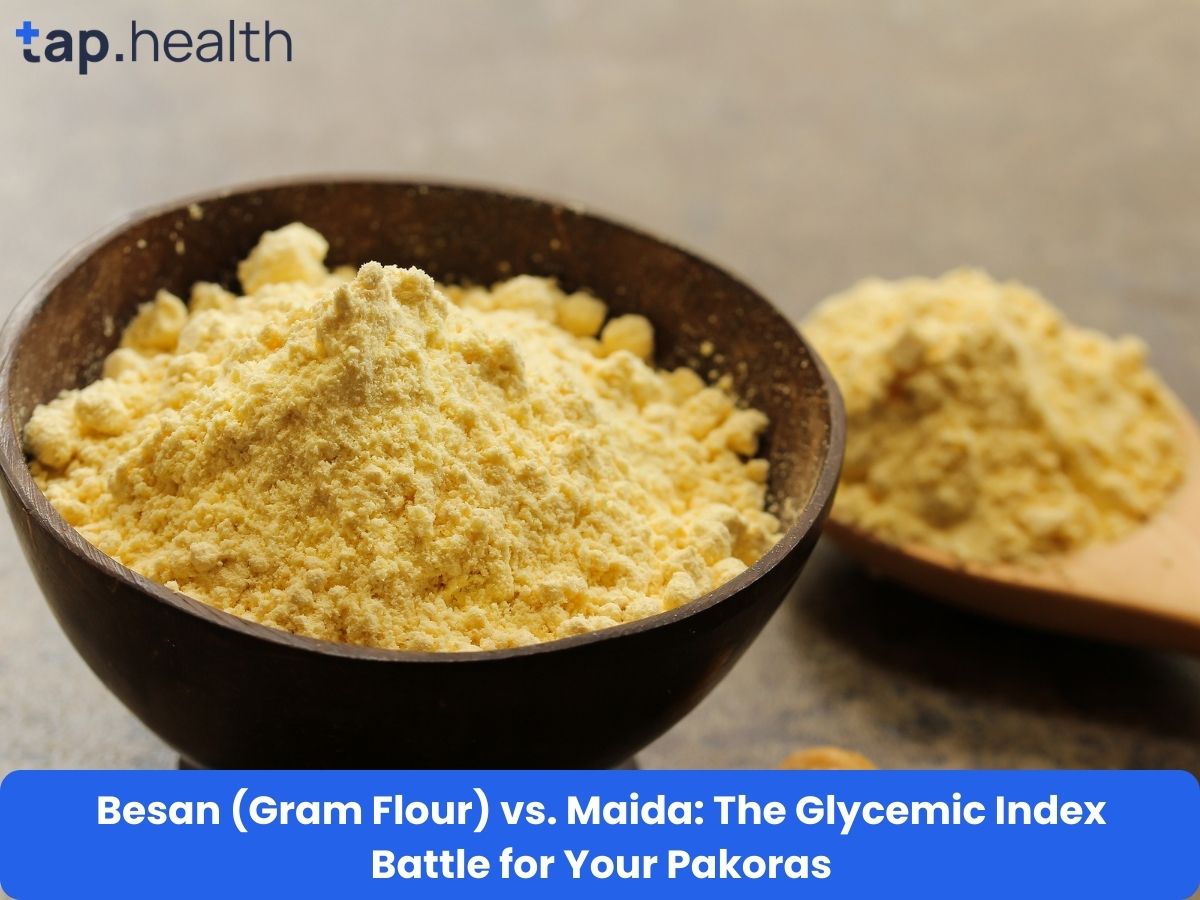
In the other, you have the golden-yellow, slightly coarse powder known as Besan (Gram Flour).
We all know Maida is the villain. We call it “White Poison.” We blame it for our belly fat and high blood sugar. But is Besan really the hero we think it is? Or is it just another carb waiting to spike your insulin?
When you dip that slice of potato or onion into the batter and drop it into hot oil, does the flour choice actually matter?
In this comprehensive guide, we are going to dive deep into the Besan vs. Maida showdown. We will strip away the kitchen myths and look at the hard science. We will compare their Glycemic Index (GI), analyze their nutritional DNA, and reveal whether your rainy-day Pakoras can ever truly be guilt-free.
What Exactly Are We Eating? (The Origins)
To understand how they affect your blood sugar, you first need to understand where they come from. They might look similar—both are powders—but biologically, they are worlds apart.
1. Maida (Refined Wheat Flour)
- The Source: Wheat grain.
- The Process: Think of a wheat grain. It has three parts: the Bran (fiber), the Germ (nutrients), and the Endosperm (starch). Maida is made by stripping away the healthy bran and germ. Only the starchy white center is left.
- The Bleaching: It is then milled and often bleached with chemicals (like Benzoyl Peroxide) to make it stark white.
- The Result: It is pure starch. It has almost zero fiber and very few vitamins.
2. Besan (Gram Flour)
- The Source: Bengal Gram (Chana Dal) or Chickpeas.
- The Process: The chickpeas are dried, roasted (sometimes), and ground into a fine powder.
- The Difference: It is a pulse (legume), not a grain. It retains the natural fiber and protein of the chickpea.
- The Result: It is a nutrient-dense superfood disguised as flour.
The Nutritional Face-Off: Protein, Fiber, and Carbs
Let’s look at the numbers. What happens when you put 100g of Maida next to 100g of Besan?
| Feature | Maida (100g) | Besan (100g) | The Winner |
| Calories | ~364 kcal | ~387 kcal | Maida (Slightly lower) |
| Carbohydrates | ~76g | ~58g | Besan (Lower Carbs) |
| Protein | ~10g | ~22g | Besan (Huge difference) |
| Dietary Fiber | ~2g | ~10g | Besan (5x more fiber) |
| Gluten | High | Zero | Besan (Gluten-Free) |
| Fats | ~1g | ~6g | Maida (Lower fat) |
The Analysis:
Maida is basically a sugar injection. It is high in carbs and low in everything else.
Besan is a powerhouse. It has double the protein and five times the fiber of Maida. This combination is the secret weapon against diabetes.
The Glycemic Index Battle: Who Spikes the Insulin?
This is the most critical section for diabetics and weight watchers. The Glycemic Index (GI) measures how fast a food converts to sugar.
1. The Glycemic Index of Maida
GI Score: ~70 to 75 (High)
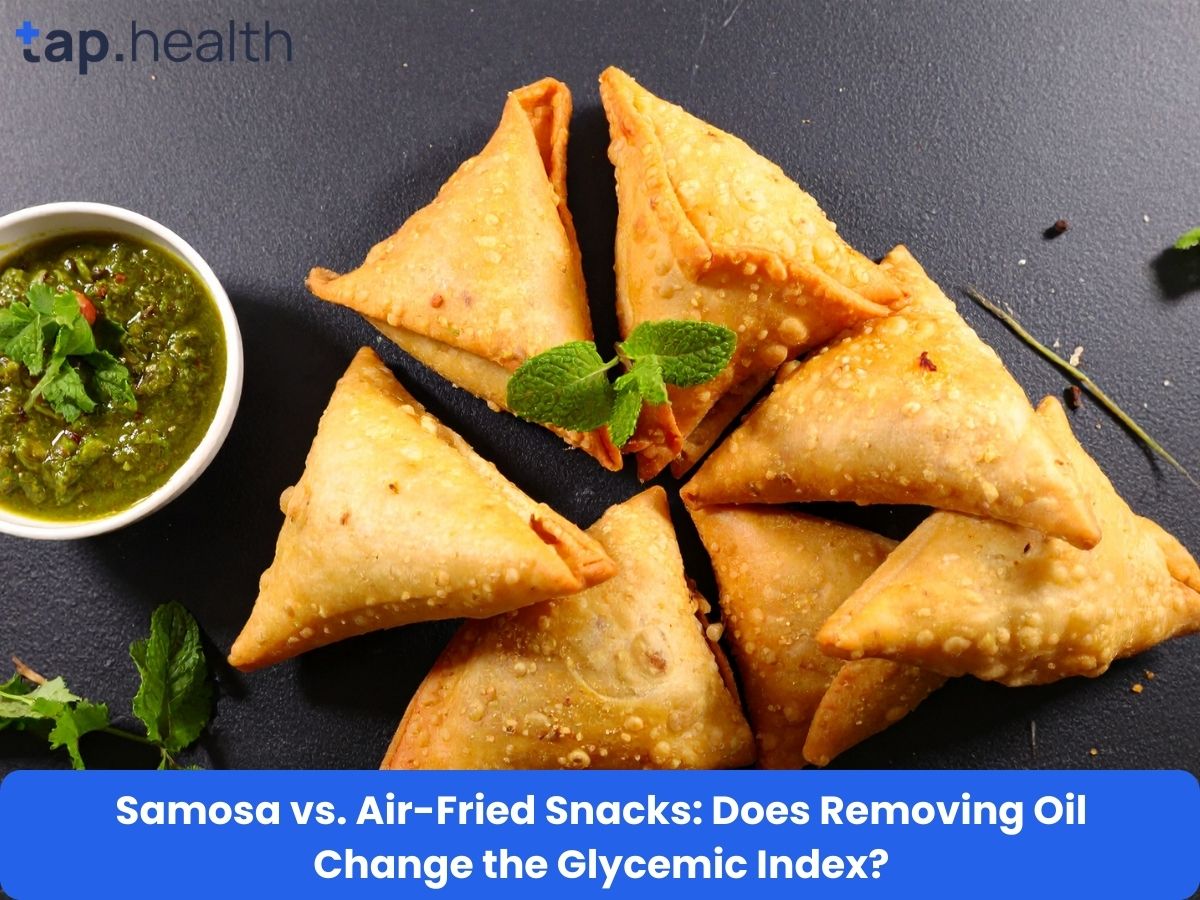
When you eat Maida (in Samosas, Bhaturas, or Biscuits), your body doesn’t have to work hard. The fiber is gone. The enzymes attack the starch instantly.
- The Spike: Glucose floods your bloodstream within minutes.
- The Crash: Your insulin shoots up to handle the sugar, leading to a rapid drop later, making you hungry again quickly.
2. The Glycemic Index of Besan
GI Score: ~35 to 40 (Low)
This is where Besan shines.
- The Complex Carb: The starch in Besan is “Complex.” It is wrapped in fiber and protein.
- The Slow Release: Your stomach takes a long time to break it down. The sugar drips into your blood slowly, rather than rushing in like a flood.
- The Verdict: Besan has roughly half the glycemic impact of Maida.
Does Deep Frying Change the Glycemic Index?
Here is the question every Pakora lover is asking.
“If I take healthy Besan and deep fry it in oil, does it become bad?”
The answer is surprising.
Fat Lowers GI.
Yes, you read that right. Adding fat (oil) to a carbohydrate slows down gastric emptying. Your stomach releases the food into the intestines slower because it has to digest the fat.
- Besan Pakora GI: Lower than plain Besan Roti.
- Maida Samosa GI: Lower than plain Maida Bread.
BUT (The Big Trap):
While the speed of sugar (GI) drops, the Calorie Count explodes.
- The Danger: A low-GI food that is packed with 500 calories of oil will still make you gain weight. Weight gain causes Insulin Resistance.
- The Conclusion: A Besan Pakora won’t spike your sugar immediately, but eating too many will destroy your health in the long run due to visceral fat gain.
Is Besan Gluten-Free and Why Does it Matter?
In recent years, “Gluten-Free” has become a buzzword.
Maida is Gluten-Rich.
Gluten is the protein that makes dough stretchy. It allows Bhaturas and Naan to be fluffy and chewy. However, for many people, gluten causes bloating, lethargy, and inflammation in the gut (“Leaky Gut”).
Besan is Naturally Gluten-Free.
Since it comes from a legume (chickpea), it has no gluten.
- The Usage: This is why you cannot make a fluffy bread with pure Besan. It will crumble.
- The Benefit: For people with Celiac disease, gluten sensitivity, or IBS (Irritable Bowel Syndrome), Besan is a lifesaver. It is light on the stomach and doesn’t cause that “heavy” feeling after eating.
Besan for Weight Loss: Myth or Miracle?
You often hear that “Besan cuts fat.” Is this true?
The Satiety Factor:
Because Besan is rich in protein (22g) and fiber, it keeps you full.
- If you eat 2 Maida Parathas, you are hungry again in 3 hours.
- If you eat 2 Besan Cheelas, you might stay full for 5-6 hours.
The Thermic Effect:
Protein has a high “Thermic Effect of Food” (TEF). Your body burns more calories just trying to digest protein compared to digesting carbs.
So, simply by swapping Maida with Besan, you are naturally burning more calories and eating less food throughout the day.
Can Diabetics Eat Besan Daily?
The short answer is Yes.
Besan is considered a functional food for diabetics.
- Insulin Sensitivity: The magnesium content in Besan helps improve insulin response.
- Cholesterol Control: The soluble fiber helps lower LDL (bad) cholesterol, protecting the heart—a crucial benefit since diabetics are at higher risk for heart disease.
However, watch the preparation:
- Good: Besan Cheela, Besan Roti (Missi Roti), Dhokla (Steamed).
- Bad: Besan Ladoo (loaded with sugar), Besan Sev/Bhujia (deep fried sodium bomb).
Real-Life Scenario
Let’s meet Mr. Sharma, a 52-year-old bank manager from Mumbai.
The Situation:
Mr. Sharma was pre-diabetic. He loved his evening snacks. Every day at 5 PM, he would eat 4-5 Marie biscuits or a Samosa with his tea. His fasting sugar was creeping up to 120 mg/dL.
The Intervention:
His dietitian identified the “Maida Trap.” Even though the biscuits were “light,” they were refined flour. The Samosa crust was pure Maida.
The Switch:
She asked him to swap his snack for a Besan Cheela loaded with spinach and onions.
The Result:
- Week 1: He grumbled that it took time to make.
- Week 2: He noticed he wasn’t hungry for dinner until 9 PM. The protein in the Besan was suppressing his appetite.
- Month 1: His fasting sugar dropped to 105 mg/dL. By removing the Maida spike and replacing it with slow-release Besan energy, his pancreas got the rest it needed.
Expert Contribution
We consulted medical experts to get the professional stance on this flour war.
Dr. R. Mehta, Diabetologist:
“I often tell my patients, ‘If it is white, keep it out of sight.’ Maida is essentially pre-digested sugar. It requires almost no effort from your gut. Besan, on the other hand, makes your gut work. It feeds the good bacteria in your colon. For an Indian diabetic vegetarian, Besan is one of the cheapest and best sources of protein available.”
Nutritionist Perspective:
“Be careful with ‘Besan Ladoo.’ Just because the flour is healthy doesn’t mean the dish is healthy. When you roast Besan in Ghee and add equal parts sugar, you have destroyed the glycemic advantage. The fat slows absorption, but the sugar load is massive. Eat Besan savory, not sweet.”
Recommendations Grounded in Proven Research and Facts
Based on data from the Journal of Food Science and Technology and Harvard Health, here are actionable tips:
- The “Missi Roti” Hack:Never eat pure wheat roti if you have diabetes. Mix 50% Whole Wheat Atta + 50% Besan.
- Why? This drastically lowers the Glycemic Index of your daily bread without compromising too much on taste or texture.
- The Binding Agent Swap:If you are making cutlets or koftas, recipes often call for breadcrumbs or cornflour (Maida derivatives) for binding. Use Roasted Besan instead. It adds a nutty flavor and keeps the carb count low.
- Pakora Strategy:If you must eat Pakoras:
- Use lots of vegetables (Onion, Spinach, Gobhi).
- Ensure the batter is Besan-heavy, not Rice Flour-heavy (rice flour makes it crispy but spikes GI).
- Air Fry or bake them if possible to reduce the calorie load.
- Check the Label:Some cheap “Besan” packets in the market are adulterated with Yellow Peas (Matar) or Maize flour to reduce costs. These alternatives have a different texture and taste. Always buy from a reputable brand or grind your own Chana Dal if possible.
Key Takeaways
- Maida is refined wheat flour with stripped nutrients and a High GI (~70+). It causes rapid sugar spikes and has zero fiber.
- Besan is ground chickpeas with high protein, high fiber, and a Low GI (~35-40). It is diabetes-friendly.
- Fiber King: Besan has 5x the fiber of Maida, which aids digestion and prevents constipation.
- Gluten-Free: Besan is excellent for those with gluten intolerance, unlike Maida which is high-gluten.
- The Verdict: In the battle for your Pakoras, Besan is the undisputed champion. It offers taste, texture, and health benefits that Maida simply cannot match.
Conclusion
So, Besan vs. Maida: Who wins the battle?
The winner is clearly Besan (Gram Flour).
It is rare to find a food that tastes indulgent but is actually nutritious. Besan is that rarity. It allows you to enjoy the crunch of a Pakora or the comfort of a Cheela without assaulting your bloodstream with glucose. Maida, on the other hand, is the “fair-weather friend”—it tastes good in the moment but leaves you crashing and gaining weight later.
Next time the rain falls and the craving strikes, reach for the yellow jar. Whisk up that Besan batter, throw in some fenugreek (methi) leaves, and enjoy a snack that feeds your soul without hurting your body.
Frequently Asked Questions (FAQ) on Besan (Gram Flour) vs. Maida
Is Besan good for weight loss?
Yes. Besan is high in protein and fiber. Protein increases satiety (feeling full) and boosts metabolism because the body burns more calories digesting it. Replacing wheat or refined flour with Besan helps reduce overall calorie intake and cravings.
Can we replace Maida with Besan in cakes?
Not completely. Maida contains gluten, which gives cakes their structure and fluffiness. Besan is gluten-free, so a cake made 100% with Besan will be dense and crumbly. However, you can mix Besan with whole wheat flour or use it in dense desserts like brownies.
Does Besan cause gas or bloating?
It can. Since Besan is made from chickpeas (a legume), it contains complex carbohydrates called oligosaccharides. Some people find these hard to digest, leading to gas. Adding Ajwain (Carom Seeds) or Hing (Asafoetida) to Besan dishes helps neutralize this effect.
Is Sooji (Semolina) better than Besan?
No. Sooji is made from durum wheat and has a higher Glycemic Index than Besan. While Sooji is better than Maida, Besan is superior to both because it has much higher protein and fiber content.
Can I eat Besan Roti at night?
Yes. A Besan Roti (or mixed grain roti) is an excellent dinner option. It digests slowly, preventing high fasting sugar levels the next morning. Just ensure you drink enough water, as the high fiber content requires hydration.
Is store-bought Besan pure?
Not always. To cut costs, some manufacturers mix cheaper flours like refined corn flour or yellow pea flour into Besan. To test purity, add lemon juice to a batter. If it turns reddish, it might be pure. If it stays pale or tastes distinctively bitter, it might be adulterated.
Does Besan absorb more oil than Maida?
Generally, yes. Besan has a texture that can hold onto oil if the batter is too thin or the oil isn’t hot enough. To prevent oily Pakoras, ensure the oil is hot before frying and keep the batter consistency thick.
References:
- Harvard T.H. Chan School of Public Health: Carbohydrates and Blood Sugar. Link
- University of Sydney: GI Search Database. Link
- Journal of Food Science and Technology: Nutritional quality of Chickpea. Link
- Diabetes.co.uk: Flour and Diabetes. Link
- National Institute of Nutrition (NIN): Indian Food Composition Tables. Link
(Disclaimer: This content is for educational purposes only. Always consult your doctor or a certified dietitian before making significant changes to your diet, especially if you have diabetes or kidney issues.)