
If you’re managing diabetes, choosing the right foods is crucial for maintaining balanced blood sugar levels and overall health. One food that often comes up in discussions about a diabetes-friendly diet is oats. But the question remains: can diabetics eat oats every day?
Oats are widely known for their health benefits, but how do they fit into a diabetes management plan? In this comprehensive guide, we’ll explore whether it’s safe for people with diabetes to eat oats daily, the nutritional benefits of oats, potential risks, and how to incorporate them into a balanced diet.
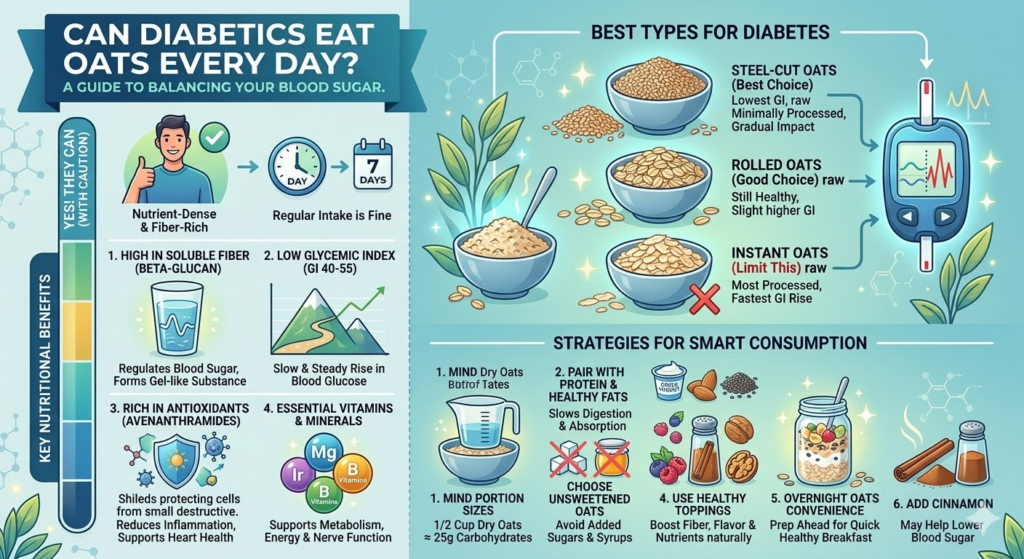
Can Diabetics Eat Oats Every Day?
Yes, diabetics can eat oats every day, but as with any food, moderation and portion control are key. Oats are a nutrient-dense food that can be part of a healthy, diabetes-friendly diet. They are rich in fiber, vitamins, and minerals, and they have a relatively low glycemic index (GI), which makes them a good option for controlling blood sugar levels.
However, it’s important to be mindful of portion sizes and preparation methods, as they can affect how oats impact blood sugar levels. In this article, we will dive deeper into how oats affect blood sugar, their nutritional benefits, and the best ways to enjoy them.
Nutritional Benefits of Oats for Diabetics
Oats are more than just a breakfast staple; they offer a variety of health benefits, particularly for people with diabetes. Here’s a closer look at the key nutrients in oats and how they can support a diabetes-friendly diet:
1. High in Fiber
Oats are an excellent source of soluble fiber, particularly beta-glucan, which is known for its ability to help regulate blood sugar levels. Soluble fiber dissolves in water and forms a gel-like substance in the stomach. This slows down the digestion and absorption of carbohydrates, which helps prevent blood sugar spikes after meals.
Beta-glucan in oats has been shown to improve insulin sensitivity, which is important for people with type 2 diabetes. Consuming fiber-rich foods like oats can also help lower cholesterol levels, supporting heart health—a common concern for people with diabetes.
2. Low Glycemic Index
Oats have a low glycemic index (GI), which means they cause a slower rise in blood sugar compared to foods with a high GI. The GI of oats typically ranges from 40 to 55, depending on the type and preparation method. Foods with a low GI are ideal for people with diabetes because they help maintain steady blood sugar levels throughout the day.
The low GI of oats is due to the soluble fiber content, which slows down the breakdown of carbohydrates into glucose. This makes oats a smart choice for breakfast or as a snack.
3. Rich in Antioxidants
Oats contain several important antioxidants, such as avenanthramides, which are unique polyphenols found in oats. These antioxidants help reduce inflammation in the body and may improve cardiovascular health. For people with diabetes, managing inflammation is important, as chronic inflammation is associated with an increased risk of heart disease and other complications.
4. Packed with Essential Vitamins and Minerals
Oats are a good source of several important nutrients, including:
- Magnesium: Magnesium plays a key role in regulating blood sugar levels. Many people with diabetes have lower magnesium levels, and including oats in the diet can help increase magnesium intake.
- Iron: Iron is important for energy production and overall health. Oats provide a plant-based source of iron, which can be beneficial for those with diabetes.
- B Vitamins: Oats are rich in B vitamins, especially B1 (thiamine) and B5 (pantothenic acid), which help support energy production and metabolism.
5. Promotes Digestive Health
The high fiber content in oats also promotes healthy digestion. Fiber helps regulate bowel movements and can prevent constipation, a common issue for people with diabetes. Additionally, a healthy gut microbiome is essential for overall health, and fiber plays a crucial role in maintaining good gut health.
How Do Oats Affect Blood Sugar Levels?
Oats have a low GI, which means they release glucose into the bloodstream at a slow and steady rate. This can help prevent sharp spikes in blood sugar after meals, which is particularly important for people with diabetes.
1. Steady Blood Sugar Control
The fiber content in oats slows down the absorption of sugar into the bloodstream, providing more controlled blood sugar levels. When oats are consumed as part of a meal, they help maintain more stable blood glucose levels, which is essential for effective diabetes management.
2. Improved Insulin Sensitivity
Eating oats regularly may improve insulin sensitivity in people with type 2 diabetes. The beta-glucan fiber in oats has been shown to enhance the body’s response to insulin, helping to improve blood sugar control.
3. Helps with Weight Management
Oats are filling and help curb hunger, making them an excellent choice for people with diabetes who are also managing their weight. Maintaining a healthy weight is crucial for controlling blood sugar levels, and oats can help promote satiety without contributing to blood sugar spikes.
How Much Oats Can a Diabetic Eat?
While oats are a healthy choice for people with diabetes, portion control is important. A typical serving of oats is around half a cup of dry oats, which cooks up to about 1 cup of oatmeal. This serving provides around 25 grams of carbohydrates, which should be considered within your total carbohydrate allowance for the meal.
Tips for Portion Control
- Measure your servings of oats to avoid overeating.
- Consider pairing oats with protein (like nuts, seeds, or Greek yogurt) to slow the digestion of carbohydrates.
- Be mindful of any sweeteners added to your oats. Avoid excessive amounts of sugar or honey, as they can cause a blood sugar spike.
Best Ways for Diabetics to Eat Oats
Oats can be prepared in many ways, but it’s important to choose recipes that support blood sugar control. Here are some healthy options for including oats in your daily diet:
1. Steel-Cut Oats vs. Rolled Oats
Steel-cut oats are minimally processed and have a lower GI than rolled oats. They take longer to cook but are a great option for those looking for a heartier, more filling meal. Rolled oats are also a healthy choice but have a slightly higher GI.
Tip: Opt for steel-cut oats whenever possible, as they have a more gradual impact on blood sugar.
2. Oats with Healthy Toppings
Add protein, healthy fats, and fiber-rich toppings to your oats for a balanced meal. Some good options include:
- Chia seeds or flaxseeds for omega-3 fatty acids and fiber.
- Nuts like almonds, walnuts, or pecans for protein and healthy fats.
- Berries for antioxidants and natural sweetness.
- Greek yogurt for protein and probiotics.
3. Overnight Oats
Overnight oats are an easy and convenient way to prepare a healthy breakfast. Simply mix oats with your choice of milk (dairy or plant-based), add some chia seeds and berries, and let the mixture sit overnight. In the morning, you’ll have a ready-to-eat, nutritious breakfast.
4. Oatmeal with Cinnamon
Cinnamon is a great spice to pair with oats, as it may help lower blood sugar levels and improve insulin sensitivity. Sprinkle cinnamon on your oatmeal for added flavor and health benefits.
Risks of Eating Oats for Diabetics
While oats are generally safe and healthy for people with diabetes, there are some risks to consider:
1. Portion Control
Eating large portions of oats can lead to an excessive intake of carbohydrates, which may raise blood sugar levels. It’s important to monitor portion sizes and adjust based on your overall carbohydrate goals for the day.
2. Added Sugar and Sweeteners
Many oatmeal recipes, especially store-bought packets, contain added sugars and artificial sweeteners. These can cause a rapid increase in blood sugar and counteract the benefits of oats. Always choose unsweetened oats or make your own oatmeal from scratch to avoid unnecessary sugars.
3. Oats May Not Be Suitable for Everyone
While oats are a healthy food for most people with diabetes, some may have sensitivities or allergies to oats or gluten (in the case of non-gluten-free oats). It’s important to listen to your body and consult a healthcare provider if you have any concerns.
Frequently Asked Questions (FAQs) on Can Diabetics Eat Oats Every Day?
1. Can diabetics eat oats every day?
Yes, diabetics can eat oats every day, but it’s important to manage portion sizes and pair them with other foods to keep blood sugar levels stable.
2. What is the best type of oats for diabetics?
Steel-cut oats are the best option for diabetics, as they have a lower glycemic index compared to rolled oats and are minimally processed.
3. How much oats should a diabetic eat?
A typical serving size of oats for diabetics is around half a cup of dry oats, which provides about 25 grams of carbohydrates. Portion control is key to maintaining balanced blood sugar levels.
4. Can oats help lower blood sugar?
Yes, oats can help lower blood sugar due to their high fiber content, particularly beta-glucan, which improves insulin sensitivity and helps regulate blood glucose levels.
5. Are instant oats good for diabetics?
Instant oats are more processed and have a higher glycemic index than steel-cut oats or rolled oats. While they are still a better option than sugary cereals, they should be consumed in moderation, especially if you’re closely monitoring your blood sugar.
Conclusion
In conclusion, oats can be a healthy and nutritious food choice for people with diabetes when eaten in moderation and prepared in a diabetes-friendly way. Their high fiber content, low glycemic index, and rich supply of vitamins and minerals make them an excellent addition to a balanced diet. By keeping portion sizes in check, choosing unprocessed oats, and pairing them with protein and healthy fats, you can enjoy the health benefits of oats while managing your blood sugar effectively.