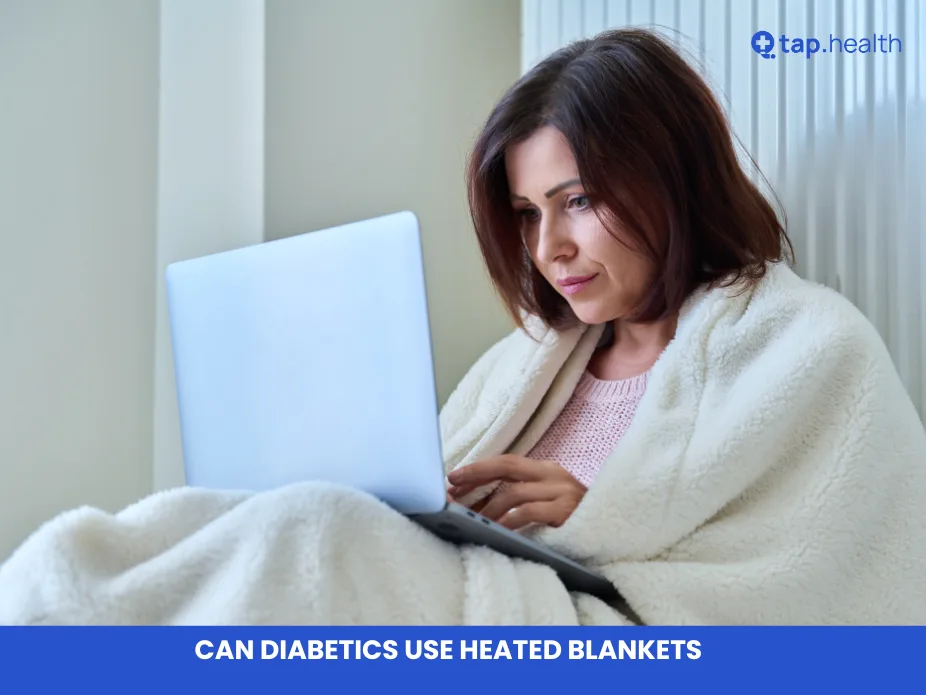
Living with diabetes doesn’t mean giving up comfort on cold nights. Many people ask: “Can diabetics safely use heated blankets?” The clear answer is yes — but only with strict precautions. Due to diabetic neuropathy and reduced circulation, the risk of low-temperature burns increases significantly. This comprehensive guide covers everything you need to know in 2025.
Why Diabetes Increases Burn Risk with Heated Blankets
Diabetic peripheral neuropathy damages nerves, reducing sensation in feet and legs. Poor blood circulation further delays healing. Combined, these factors mean you may not feel when a blanket becomes dangerously hot.
Key risks include:
- Low-temperature burns (even at 44°C prolonged exposure can burn)
- Skin ulcers that heal slowly
- Dehydration from excess sweating
- Overnight overheating if auto shut-off fails
Are Electric Heated Blankets Safe for People with Diabetes?
Modern electric blankets are safer than older models thanks to:
- 10-hour auto shut-off
- Precise temperature controls
- Overheat protection
- UL/ETL safety certification
Still, the American Diabetes Association and Mayo Clinic advise extra caution for anyone with neuropathy or circulation problems.
Proven Benefits of Heated Blankets for Diabetics (When Used Correctly)
- Better sleep quality → stable blood glucose
- Relief from diabetic nerve pain and stiff joints
- Improved peripheral blood flow with gentle warmth
- Lower stress and cortisol levels
- Energy bill savings compared to room heaters
Essential Safety Rules Every Diabetic Must Follow
- Always consult your diabetologist first
- Use only LOW or MEDIUM settings (never high)
- Pre-warm the bed for 20–30 minutes, then turn OFF before sleeping
- Place a cotton sheet between skin and blanket
- Choose blankets with 2–10 hour auto shut-off
- Inspect skin daily for redness, blisters, or irritation
- Keep skin moisturized — dry skin burns faster
- Stay hydrated — drink water before bed
- Never fold or bunch the blanket while on
- Replace blanket every 5–7 years or if wires feel stiff
Best Heated Blankets for Diabetics in 2025 (Recommended Features)
Look for:
- Dual controls (for couples with different needs)
- 10-hour auto shut-off minimum
- Machine-washable
- Low-voltage models (safer than 12–24V)
- Preheat-only mode
Top trusted brands: Sunbeam, Beautyrest, Biddeford, SoftHeat (low-voltage)
Real-Life Example: Safe Usage Story
Ramesh, 62, from Bangalore, has type 2 diabetes and severe neuropathy in his feet. His doctor approved a low-voltage heated blanket. He preheats on low for 30 minutes, turns it off, and sleeps with a regular blanket on top. Result: better sleep, reduced leg pain, zero burns in 3 years.
Expert Opinion – Diabetologist View (2025)
Dr. Priya Sharma, Senior Diabetologist, Apollo Hospitals, says: “Patients with intact sensation can use heated blankets safely on low settings. Those with neuropathy should either avoid all-night use or switch to heated mattress pads with very low voltage and mandatory auto shut-off. Regular foot examination remains non-negotiable.”
Heating Pad vs Heated Blanket for Diabetics – Which Is Safer?
| Feature | Heated Blanket | Heating Pad |
|---|---|---|
| Coverage | Full body | Targeted area |
| Burn risk | Higher if left on all night | Lower (smaller area) |
| Best for | Overall warmth | Foot or back pain |
| Recommended for neuropathy | With extreme caution | Usually safer choice |
Many doctors prefer heating pads for diabetic patients because risk is localized.
Frequently Asked Questions (People Also Ask)
Q1. Can diabetics sleep with electric blanket on all night?
No. Experts recommend turning it off before sleep or using only models with proven 100% reliable auto shut-off.**
Q2. What is the safest temperature for diabetics?
Keep surface temperature below 37–38°C (98.6–100.4°F). Most “low” settings stay around 30–35°C.
Q3. Are low-voltage heated blankets safer for neuropathy patients?
Yes. They operate at 12–24 volts instead of 120V, drastically reducing shock and burn risk.
Q4. Can heated blankets raise blood sugar levels?
Indirectly — only if overheating causes sweating and dehydration, which can spike glucose. Proper use has no direct effect.
Q5. My feet are always cold due to diabetes — what’s the best solution?
Try heated socks (low-voltage), foot warmers, or a heated mattress pad instead of full blanket.