We have all been there. You are standing in the kitchen, about to bake a cake or sweeten your morning oats, and you pause. You look at that jar of white sugar and think, “This isn’t good for me.” You want something natural. Something healthy.
Then you hear about dates. They are nature’s candy, right? But then the confusion sets in. You start Googling “dates sugar glycemic index” or “is date sugar safe for diabetics,” and suddenly you are drowning in numbers. Some say it is great; others say it is full of carbs.
If you are confused, you are not alone.
In this guide, we are going to strip away the complex medical jargon. We will look at the hard facts about the dates sugar glycemic index, compare it to your regular table sugar, and find out if this ancient fruit is actually the superfood sweetener we have been waiting for. Whether you are managing diabetes, watching your weight, or just trying to eat cleaner, this article is for you.
What Exactly Is Date Sugar?
Before we talk about numbers, let’s be clear about what we are eating.
When you buy “Date Sugar” from the market, you are not buying a processed extract like white sugar or even date syrup.
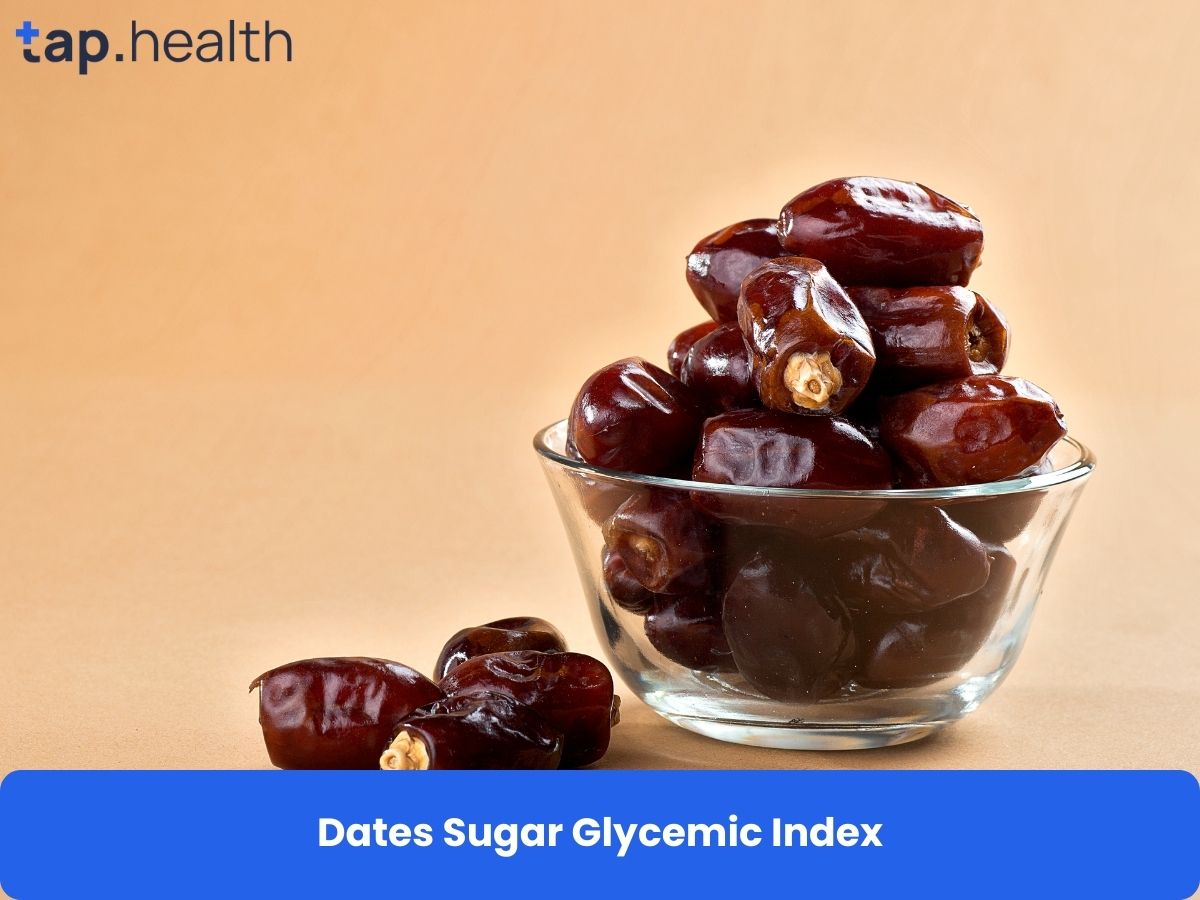
Date sugar is simply dried dates ground into a fine powder.
That’s it. It is a whole food. Unlike white sugar, which is stripped of all nutrients during processing, date sugar contains every single vitamin, mineral, and—most importantly—fibre found in the original fruit. It is literally just dust made from dates.
What Is the Glycemic Index (GI)?
To understand why the dates sugar glycemic index matters, we need a quick refresher on the Glycemic Index (GI).
Think of the GI as a race track for sugar in your blood.
- High GI (70–100): These foods are like Ferraris. They zoom into your bloodstream instantly, causing a massive sugar spike. (Example: White bread, glucose).
- Medium GI (56–69): These are the sedans. They move at a moderate pace.
- Low GI (0–55): These are the tortoises. They move slowly, releasing energy gradually. This is the safe zone.
Our goal is to keep our blood sugar like a calm river, not a stormy sea.
The Dates Sugar Glycemic Index Revealed
So, where does date sugar land on this race track?
The glycemic index of date sugar is generally considered Low to Low-Medium, typically falling between 42 and 55.
Compare this to other sweeteners:
- Pure Glucose: 100 (The danger zone)
- White Sugar (Sucrose): ~65 (Medium-High)
- Date Sugar: ~42–55 (Low)
Why is it lower?
The secret weapon is fibre. Because date sugar is made from the whole fruit, it retains the fibre. Fibre acts like a speed bump in your gut. It slows down digestion, meaning the sugar enters your blood slowly rather than all at once. White sugar has zero fibre, so it has no speed bumps.
Glycemic Index of Different Dates (Medjool vs. Ajwa vs. Others)
If you are eating whole dates instead of date sugar powder, the variety matters. Users often search for specific types like medjool dates glycemic index or ajwa dates glycemic index. Here is the breakdown:
1. Medjool Dates
- Glycemic Index: ~55.
- Verdict: Borderline Low/Medium.
- Details: Medjool dates are the “Kings of Dates.” They are large, soft, and caramel-like. Because they are softer and sweeter, their GI is slightly higher than drier varieties, but still acceptable in moderation.
2. Ajwa Dates
- Glycemic Index: ~30–42.
- Verdict: Very Low.
- Details: The ajwa dates glycemic index is impressive. These small, dark dates from Saudi Arabia are not just lower in sugar impact; they are packed with antioxidants. Studies suggest they have a much milder effect on blood sugar compared to other varieties.
3. Deglet Noor Dates
- Glycemic Index: ~40–45.
- Verdict: Low.
- Details: These are the standard “semi-dry” dates you often find in supermarkets. Their firmer texture often correlates with a lower glycemic response.
4. Khalas Dates
- Glycemic Index: ~35–39.
- Verdict: Low.
- Details: A popular variety in the Middle East, often eaten daily with coffee.
The “GI 103” Myth
You might stumble upon old internet articles claiming “dates glycemic index 103”. This is an outdated myth based on a flawed study from decades ago. Modern science has repeatedly corrected this. Dates are not a High GI food.
Comparison: Dates vs. Other Sweeteners
Let’s look at the dates vs sugar glycemic index battle side-by-side, along with other popular alternatives.
| Sweetener | Glycemic Index (GI) | Nutrients? | Fibre? | Verdict |
| Date Sugar | 45–55 | High | Yes | Winner |
| Coconut Sugar | 35–54 | Medium | Trace | Good |
| Honey | 55–60 | Low | No | Okay |
| Maple Syrup | 54 | Low | No | Okay |
| White Sugar | 65 | None | No | Avoid |
| Pure Glucose | 100 | None | No | Avoid |
Coconut Sugar vs Dates Glycemic Index:
People often ask about coconut sugar vs dates glycemic index. They are very similar (both around 50). However, date sugar wins on nutrition because it is a whole fruit powder, whereas coconut sugar is extracted sap (processed).
Is Date Sugar Safe for Diabetics?
This is the million-dollar question: “Is date sugar low glycemic enough for diabetics?”
The Answer: Yes, but with a big “Caution” sign.
While the glycemic index of dates vs sugar is lower, date sugar is still… sugar. It is still a carbohydrate.
- The Good: It won’t spike your blood sugar as aggressively as white sugar.
- The Bad: It still contains a lot of natural fructose and glucose. If you eat three spoons of date sugar, your blood sugar will go up.
Expert Rule for Diabetics: Treat date sugar as a “better bad choice.” If you must have something sweet, date sugar is safer than white sugar, but you must strictly control the portion.
Real-Life Scenario: The Baking Experiment
Let’s imagine Mrs. Sharma, a home baker who loves making cakes for her grandchildren.
The Problem: Her husband has pre-diabetes, and she feels guilty using white sugar.
The Experiment: She decides to make carrot cake.
- Attempt 1: She uses 1 cup of white sugar. Her husband eats a slice, and his sugar spikes to 180 mg/dL rapidly. He feels tired afterwards.
- Attempt 2: She swaps the white sugar for 1 cup of Date Sugar.
- Texture: The cake is darker and a bit denser because date sugar absorbs liquid.
- Result: Her husband eats a slice. The sweetness is rich and caramel-like. His blood sugar rises, but slower—peaking at 145 mg/dL instead of 180. The fibre in the dates helped buffer the spike.
The Lesson: The switch didn’t “cure” the sugar spike, but it flattened the curve significantly.
How to Use Date Sugar (It’s Not Like White Sugar!)
Because date sugar is just ground-up fruit, it behaves differently. You cannot just swap it blindly in every recipe.
- It Does Not Dissolve: If you put date sugar in your coffee or tea, you will end up with a sludge of date particles at the bottom. It is not good for drinks.
- Great for Baking: It works beautifully in cakes, muffins, and cookies. It adds a lovely brown colour and keeps baked goods moist.
- Toppings: Sprinkle it over oatmeal, dahi (yoghurt), or fruit salad for a crunch.
- Substitution: You can generally use a 1:1 ratio. If a recipe calls for 1 cup of brown sugar, use 1 cup of date sugar.
Expert Contribution
We consulted with holistic nutritionists to understand the benefits beyond the dates gi index.
Dr. R. Kapoor, Functional Medicine Nutritionist:
“The obsession with just the GI number often misses the point. The reason I prefer date sugar isn’t just because the glycemic index of dates is lower. It is because of the antioxidants. Dates are loaded with polyphenols that fight inflammation. When you eat white sugar, you are creating inflammation. When you eat date sugar, you are getting sweetness plus anti-inflammatory compounds. It is a functional food.”
Recommendations Grounded in Proven Research and Facts
Based on nutritional science, here is how to use date sugar safely:
- The “Pairing” Rule: Even though the dates sugar glycemic index is low, pair it with fat or protein. If you bake cookies with date sugar, add walnuts or almond flour. The added fat further lowers the glycemic load.
- Watch the Moisture: Date sugar is hygroscopic (it attracts water). If you bake with it, you might need to add a little extra milk or oil to your batter to prevent it from drying out.
- Check the Label: Ensure the ingredients list says “100% Dates.” Some brands mix it with oat flour or flow agents. You want pure dates.
- Don’t Fear the Fruit: If you don’t have date sugar, just blend whole Medjool dates into a paste. The medjool dates glycemic index effect is similar to the powder.
Myths vs. Facts
Myth: “Date sugar is sugar-free.”
Fact: False. It is roughly 70-80% sugar by weight. It is natural sugar, but it is still sugar.
Myth: “Dates have a high GI because they are so sweet.”
Fact: False. The glycemic index of dates fruit is Low (42-55) due to fibre. Sweetness does not equal GI.
Myth: “Date syrup and date sugar are the same.”
Fact: False. Date syrup is boiled and strained, removing most of the fibre. Date sugar is whole and ground, keeping the fibre. Date sugar is healthier than date syrup.
Conclusion
So, is date sugar the holy grail of sweeteners?
It is certainly one of the best options we have. With a dates sugar glycemic index of around 45–55, it beats white sugar hands down. It offers fibre, minerals like potassium and magnesium, and a rich flavour that chemical sweeteners can’t match.
However, remember the golden rule: Natural sugar is still sugar.
If you are diabetic or insulin resistant, date sugar is a safer bridge than white sugar, but it should still be crossed with caution. Use it for your birthday cakes, your occasional treats, or your morning oats—but don’t eat it by the spoonful thinking it is a vegetable.
Key Takeaways:
- The Number: Date sugar has a GI of 42–55 (Low/Medium).
- The Difference: It retains fibre, which slows down sugar absorption.
- The Varieties: Ajwa dates have the lowest GI (~30-40); Medjool are slightly higher (~55).
- The Usage: Perfect for baking and toppings; bad for coffee (doesn’t dissolve).
- The Myth: It is not a high GI food (ignore the “103” myth).
So, go ahead and bake that cake. Just make it with dates.
Frequently Asked Questions (FAQ) on Dates Sugar Glycemic Index
Is date sugar safe for diabetics?
Yes, date sugar is generally safer than white sugar for diabetics because it has a lower dates sugar glycemic index (around 50) and contains fibre that prevents rapid blood sugar spikes. However, it is still high in carbohydrates, so strict portion control is essential.
Does date sugar possess a lower glycemic index than white sugar?
Absolutely. The glycemic index of dates vs sugar comparison shows that date sugar (GI ~42–55) is significantly lower than white table sugar (GI ~65). This means it releases energy more slowly into the bloodstream.
What is the glycemic index of Medjool dates?
The medjool dates glycemic index is typically around 55. This places them on the border of Low and Medium GI. They are slightly higher than drier dates because they are naturally sweeter and softer, but they are still a healthy choice in moderation.
Can I use date sugar in my tea or coffee?
You can, but you might not like it. Date sugar is made of ground-up dried dates, so it does not dissolve like white sugar. It will leave a fibrous residue at the bottom of your cup. It is best used for baking or sprinkling on oatmeal.
Which dates have the lowest glycemic index?
Ajwa dates are often cited as having one of the lowest glycemic indices, ranging between 30 and 42. They are also incredibly rich in antioxidants. Other firm, dry varieties like Khalas or dried Deglet Noor also tend to have lower GI scores than soft dates.
Is date sugar better than coconut sugar?
They are very similar in terms of GI (both around 50). However, date sugar is technically healthier because it is a “whole food” (ground fruit) containing fibre, whereas coconut sugar is a processed extract (sap) with less fibre.
Is the “dates glycemic index 103” true?
No, this is a myth. An old study once gave dates a GI of 103, but this was likely due to an error in methodology or specific variety testing. Modern, accurate testing consistently places the dates gi index between 42 and 55.
Does date sugar have a high glycemic load?
Date sugar has a moderate glycemic load. While the GI is low, the carbohydrate density is high. This means if you eat a large amount, the “load” on your body is still significant. This is why you cannot eat it in unlimited quantities.
References
- Glycemic Index Research: University of Sydney GI Database
- National Institutes of Health (NIH): Effects of Dates on Blood Glucose
- Cleveland Clinic: Health Benefits of Dates
- American Diabetes Association: Smart Sugar Substitutes
- Journal of Nutrition: Antioxidant & Glycemic Properties of Ajwa Dates