You wake up in the middle of the night, your tongue stuck to the roof of your mouth. You reach for water constantly. You Google your symptoms, and the first result screams: DIABETES.
Panic sets in. You rush to the lab, get your HbA1c checked, and wait. The result comes back: Normal. You don’t have diabetes.
You breathe a huge sigh of relief. But then, a few hours later, that familiar, parched, sandpaper feeling returns to your throat. You are left asking a frustrating question: “If I don’t have diabetes, why is my mouth so dry?”
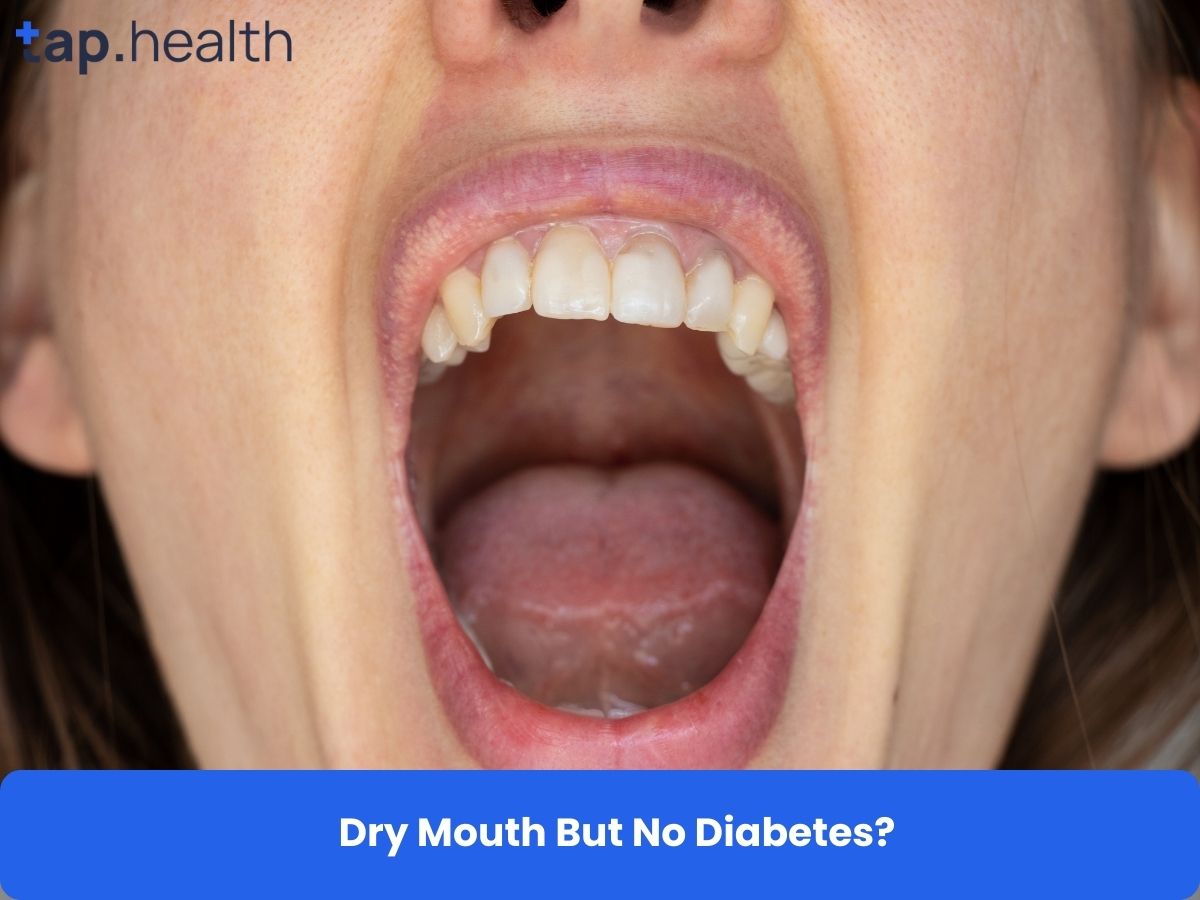
This condition is called Xerostomia. While diabetes is a famous cause, it is far from the only one. In fact, for many people in India, the culprit is often hiding in their medicine cabinet, their sleep habits, or their stress levels.
In this detailed guide, we will look beyond high blood sugar. We will explore the top 7 reasons for dry mouth in non-diabetics, explain the science in simple Indian English, and give you actionable solutions to get your saliva flowing again.
1. The #1 Culprit: Your Medication Cabinet
If you take prescription medicines, there is a very high chance this is your answer. According to the Academy of General Dentistry, over 400 common medications list dry mouth as a side effect.
Drugs work by altering chemical signals in the body. Unfortunately, many of them also accidentally tell your salivary glands to “slow down.”
- Antihistamines: Medicines for colds and allergies (like Cetirizine/Allegra) dry up mucus, but they dry up saliva too.
- Antidepressants & Anti-anxiety pills: These affect the nervous system, often reducing saliva flow.
- Blood Pressure Meds: Diuretics (water pills) work by flushing water out of your body. They don’t distinguish between excess fluid and necessary saliva.
- Painkillers: Certain strong pain relievers can cause severe dryness.
The Fix: Check the leaflet inside your medicine box. If dry mouth is listed, ask your doctor if you can switch to a different brand or adjust the dosage.
2. You Are a “Mouth Breather” (Especially at Night)
Do you wake up with a dry mouth, but feel fine by lunchtime? The problem might be how you sleep.
- The Cause: Saliva needs a closed environment to stay moist. If you snore, have a blocked nose (sinus issues), or suffer from Sleep Apnea, you likely sleep with your mouth open.
- The Effect: The air moving in and out evaporates your saliva instantly, leaving you with a “desert tongue” in the morning.
The Fix: Try sleeping on your side. If you snore heavily, see an ENT specialist to rule out Sleep Apnea. Using a humidifier in the bedroom can also keep the air moist.
3. Stress and Anxiety (The “Fight or Flight” Response)
Have you ever noticed your mouth going dry right before a job interview or a public speech?
- The Science: When you are stressed, your body enters “Fight or Flight” mode. Your brain decides that digestion (eating) is not a priority right now, so it shuts down the digestive system—including your salivary glands.
- Chronic Stress: If you are constantly anxious or stressed, your body stays in this mode, leading to persistent dryness.
4. Dehydration (It’s Not Always Obvious)
In a hot country like India, we lose fluid rapidly through sweat, even if we aren’t exercising.
- The Trap: You might think drinking tea or coffee counts as hydration. It doesn’t. Caffeine is a diuretic, meaning it makes you pee more, actually losing fluid.
- The Sign: If your urine is dark yellow, you are dehydrated, and dry mouth is your body’s frantic cry for water.
5. Sjogren’s Syndrome (The Autoimmune Link)
If your dry mouth is accompanied by dry, gritty eyes (feeling like sand is in them), this is a major red flag.
- What is it? Sjogren’s (pronounced SHOW-grins) Syndrome is an autoimmune disease where your immune system mistakenly attacks your moisture-producing glands (tear and saliva glands).
- Who gets it? It is much more common in women, especially over 40.
- Action: This requires a specific blood test. See a rheumatologist if you have both dry eyes and dry mouth.
6. Nutritional Deficiencies
Your oral health is a mirror of your nutrition. A lack of certain vitamins can affect the health of your mucous membranes.
- Iron Deficiency (Anemia): Very common in Indian women. It can cause a burning sensation and dryness in the mouth.
- Vitamin B Deficiency: Specifically Riboflavin (B2) and B12. A lack of these can cause a swollen, dry tongue.
7. Lifestyle Habits (Tobacco and Alcohol)
- Smoking/Chewing Tobacco: Tobacco damages salivary glands permanently. It also irritates the soft tissue.
- Alcohol: Alcohol is a desiccant (drying agent). Frequent drinking, or even using an alcohol-based mouthwash (like standard Listerine), can strip moisture from your mouth.
Real-Life Scenario
Meet Anjali (34, Software Engineer): Anjali was worried. She had severe dry mouth for months. She tested for diabetes twice—both negative. She drank 3 litres of water a day, but the dryness persisted.The Clue: Anjali mentioned she had seasonal allergies (dust) and took a pill (Cetirizine) every night before bed to sleep better.The Discovery: Her doctor explained that antihistamines are notorious for drying out secretions.The Solution: She stopped the daily antihistamine and used a saline nasal spray instead. She also started using a “dry mouth mouthwash.” Her symptoms vanished in 3 days.
Expert Contribution
We consulted Dr. P. Rao, an Internal Medicine Specialist, on this issue.
“Patients often get tunnel vision about diabetes. They forget that saliva is complex. I often see ‘dry mouth’ in young professionals who drink 5 cups of coffee a day and are under high stress. We call this ‘Lifestyle Xerostomia.’ Before you panic about rare diseases, look at your coffee cup and your stress levels.”
Recommendations: How to Get Relief at Home
If you have ruled out diabetes, try these steps to stimulate saliva:
- Chew to Flow: Chewing stimulates glands. Use Sugar-Free Gum (look for Xylitol as an ingredient) or chew on fennel seeds (saunf) after meals.
- The “Sip” Strategy: Don’t gulp water. Take small sips every 15 minutes to keep tissues wet.
- Oil Pulling: An ancient Ayurvedic remedy. Swishing a tablespoon of coconut or sesame oil in your mouth for 10 minutes can soothe dry tissues and reduce bacteria (spit it out, don’t swallow).
- Avoid Irritants: Stop using mouthwashes that contain alcohol. Switch to “moisturising” mouthwashes specifically for dry mouth (like Biotene).
- Papaya and Pineapple: These fruits contain enzymes (papain and bromelain) that can help clean the mouth and reduce sticky saliva.
Read this: Is Dry Throat a Symptom of Diabetes?
When to See a Doctor?
You should seek medical help if:
- You have dry eyes and dry mouth together (Sjogren’s risk).
- You have difficulty swallowing or tasting food.
- You notice lumps or swelling in your neck/cheek (salivary stones).
- Your tongue is burning, red, or has white patches.
Key Takeaways
- Check Meds: Antihistamines, BP pills, and antidepressants are top causes.
- Check Sleep: Mouth breathing and snoring dry you out overnight.
- Check Stress: Anxiety shuts down saliva production.
- Check Eyes: Dry eyes + dry mouth could be an autoimmune issue.
- The Fix: Hydrate, chew sugar-free gum, and avoid alcohol/caffeine.
FAQ: Frequently Asked Questions
Can stress cause dry mouth?
Yes, absolutely. Stress triggers the body’s “fight or flight” response, which redirects energy away from digestion. This causes your salivary glands to stop producing saliva, leaving your mouth feeling dry and sticky.
Is dry mouth a sign of kidney problems?
It can be. In advanced kidney disease, dehydration and chemical imbalances (urea) can cause dry mouth and a metallic taste. However, you would likely have other symptoms like fatigue, swelling, or changes in urination first.
What vitamin deficiency causes dry mouth?
Deficiencies in Iron (Anemia), Vitamin B12, and Vitamin A can lead to dry mouth. Vitamin B2 (Riboflavin) deficiency specifically can cause cracked lips and a dry, swollen tongue.
How do I stop mouth breathing at night?
First, clear your nose using steam or saline drops before bed. Try sleeping on your side or using an extra pillow to elevate your head. If you snore loudly, see a doctor to check for sleep apnea.
Does lemon water help with dry mouth?
Lemon is sour, so it naturally triggers your glands to produce saliva. However, lemon is also acidic. If you use it too often, it can erode your tooth enamel. It’s better to use it sparingly or rinse your mouth with plain water afterwards.
References
- Mayo Clinic: Dry mouth: Symptoms and causes
- Sjogren’s Foundation: Understanding Sjogren’s Symptoms
- Cleveland Clinic: Xerostomia (Dry Mouth)
- National Institute of Dental and Craniofacial Research: Dry Mouth
- Academy of General Dentistry: Medications and Dry Mouth
Disclaimer: This article is for educational purposes only. If dry mouth persists, consult your doctor or dentist to identify the underlying cause.