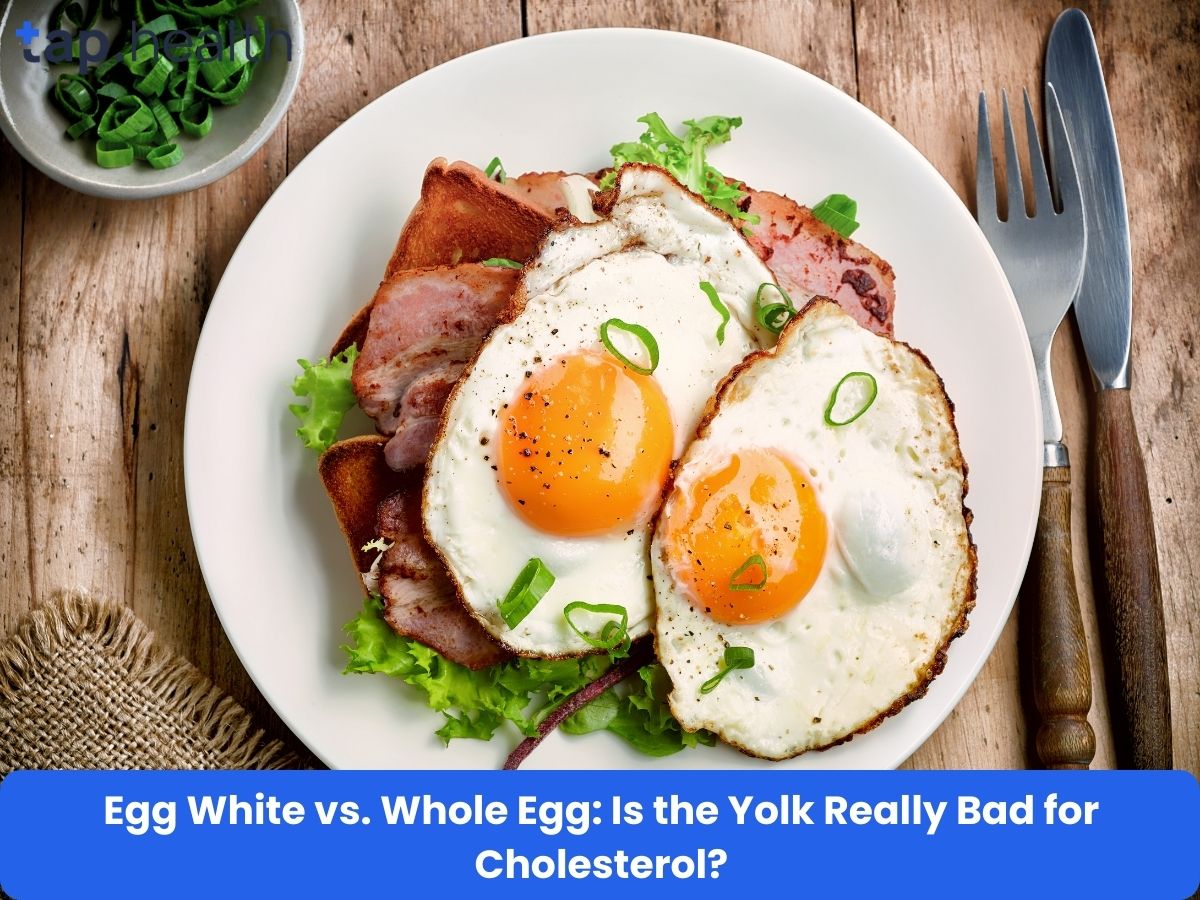
You are standing in your kitchen at 8:00 AM, cracking eggs into a pan.
You crack the first one. Out comes the clear liquid and the bright, sunny-yellow Yolk.
You hesitate. You remember a news headline from ten years ago: “Eggs cause heart attacks!” You remember your gym trainer saying: “Throw away the yellow; only eat the whites for lean muscle.”
So, you carefully separate the yolk, watching it slide down the kitchen sink. You feel a sense of “health-conscious” pride. But then you notice the yolk—the part you just threw away—is where all the color, the flavor, and the creaminess lived.
Was that “liquid gold” really a poison for your arteries?
Or have we been throwing away the most nutritious part of the egg based on outdated science?
Is the Egg White really the “clean” hero, or is it just an incomplete protein without its partner?
In this comprehensive guide, we are going to crack open the truth about Egg White vs. Whole Egg. We will dive into the cholesterol data, analyze the vitamin profiles, and reveal whether you should be eating the yolk or flushing it down the drain.
The Contenders: The Protein Shell vs. The Nutrient Core
To understand the debate, we have to look at what an egg actually is. An egg is designed to grow a living creature (a chick). Therefore, it must contain every single building block of life.1
1. The Egg White (Albumen)
- The Role: It acts as a protective shield for the yolk and provides a high-quality protein source.
- The Profile: It is 90% water and 10% pure protein. It contains almost zero fat, zero carbs, and zero cholesterol.
- The Vibe: The “Safe” choice for bodybuilders and heart patients.
2. The Egg Yolk (The Golden Center)
- The Role: It is the “fuel tank.” It contains the energy and nutrients required for growth.2
- The Profile: It contains all the fat, all the cholesterol, and—surprisingly—90% of the vitamins and minerals in the entire egg.
- The Vibe: The “Flavor” choice that has been historically demonized.
Nutritional Face-Off: Where are the Vitamins?
Let’s compare one large egg white vs. one large whole egg.
| Feature | One Egg White | One Whole Egg | The Winner |
| Calories | ~17 kcal | ~72 kcal | Egg White (Lower Calorie) |
| Protein | ~3.6g | ~6.3g | Whole Egg |
| Fat | 0.0g | ~4.8g | Whole Egg (Healthy Fats) |
| Cholesterol | 0mg | ~186mg | Egg White (Zero Cholesterol) |
| Vitamin B12 | 0% RDA | ~10% RDA | Whole Egg |
| Vitamin D | 0% RDA | ~11% RDA | Whole Egg |
| Choline | 0mg | ~147mg | Whole Egg |
The Analysis:
- The Protein Surprise: Nearly half of the protein of an egg is actually in the yolk. If you only eat the white, you are throwing away 40% of the protein you paid for.
- The Vitamin Void: Egg whites have almost zero vitamins. The yolk contains Vitamin A, D, E, K, and B12, plus essential minerals like Selenium and Zinc.
- Choline: The yolk is one of the best sources of Choline in the world, which is vital for brain health and memory.3
The Cholesterol Myth: Why the Yolk was “Bad”
For 50 years, doctors told us: “Eating cholesterol raises your blood cholesterol.”
It sounds logical, right? If you put yellow fat in your mouth, it ends up in your arteries.
The Correction:
Modern science has proven that for 75% of the population, dietary cholesterol has very little impact on blood cholesterol.
- The Liver’s Job: Your liver produces about 1,000mg to 2,000mg of cholesterol every day because your body needs it for hormones (Testosterone/Estrogen) and cell membranes.
- The Feedback Loop: If you eat more cholesterol from eggs, your liver simply produces less. Your body keeps itself in balance.
The Real Villain:
What actually raises blood cholesterol and causes heart disease is Saturated Fat combined with Sugar and Trans Fats (like the oil used to fry the egg, or the white bread eaten with it).
Who Should Avoid the Yolk? (The “Hyper-Responders”)
While 75% of people are fine, about 25% of the population are what we call “Hyper-responders.”
- These individuals have a genetic makeup where eating dietary cholesterol does cause a significant rise in blood LDL (bad cholesterol).
- Diabetics: Some studies suggest that for people with Type 2 Diabetes, high egg consumption (more than 7 per week) might increase heart disease risk.4
The Verdict: If you are a healthy individual with a normal lipid profile, 1-2 whole eggs a day is perfectly safe. If you have existing heart disease or diabetes, consult your doctor about your specific limit.
Muscle Building: White vs. Whole
If your goal is a “six-pack” or big biceps, you might think egg whites are better because they are “pure.”
The Study:
A famous study published in the American Journal of Clinical Nutrition compared muscle growth in two groups:
- One group ate 18g of protein from egg whites after a workout.
- The other group ate 18g of protein from whole eggs.
The Result:
The “Whole Egg” group had a 40% higher muscle-building response.
- Why? The healthy fats and micronutrients in the yolk help the body utilize the protein more efficiently.5 The yolk acts as a “biological switch” that tells your muscles to grow.
Weight Loss: The Satiety Factor
If you are on a strict 1,200-calorie diet, you might be tempted by egg whites because they are so low in calories. You can eat 10 egg whites for the same calories as 2 whole eggs.
The Trade-off:
- Egg Whites: You get volume, but you don’t get Satiety. Without fat, your brain doesn’t get the “I’m full” signal. You will be hungry again in an hour.
- Whole Eggs: The fat in the yolk triggers the release of fullness hormones. Two whole eggs with a bowl of vegetables can keep you full for 4 hours.
Winner: For long-term fat loss, Whole Eggs win because they prevent overeating later in the day.
Real-Life Scenario
Let’s meet Aryan, a 25-year-old fitness enthusiast.
The Old Way:
Aryan used to eat a 6-egg-white omelet every morning. He felt “clean,” but he was often tired by 11 AM and had brain fog during work. He was also taking a Vitamin D supplement.
The New Way:
He switched to 2 Whole Eggs + 2 Egg Whites.
- The Result: The calories remained similar, but he was now getting natural Vitamin D, Choline for his brain, and healthy fats.
- Health Check: His energy levels stabilized. His “brain fog” vanished because of the Choline in the yolks. His cholesterol levels remained perfectly normal at his next check-up.
Expert Contribution
We consulted medical experts to crack the code.
Dr. K. Sharma, Cardiologist:
“The ‘Egg Scare’ was one of the biggest mistakes in nutritional history. For most people, eggs are a heart-healthy food. They contain HDL (good cholesterol) which actually helps clear the bad cholesterol. I tell my patients: Don’t fear the egg; fear the paratha fried in vanaspati that you eat with the egg.”
Nutritionist Perspective:
“The yolk contains Lutein and Zeaxanthin.6 These are antioxidants that literally live in your eyes and prevent blindness (macular degeneration). When you throw away the yolk, you are throwing away your eye protection.”
Recommendations Grounded in Proven Research
Based on data from the American Heart Association (AHA) and Harvard Health, here are actionable tips:
- The “Golden Ratio”:If you need high protein but want to watch calories, use a 1:2 ratio.
- For every 1 Whole Egg, add 2 Egg Whites.
- This gives you the nutrients and flavor of the yolk with the protein boost of the whites.
- The Cooking Oil Matters:Don’t ruin a healthy egg by frying it in refined vegetable oil or butter.
- Best: Poached, Boiled, or cooked in a tiny bit of Olive Oil/Ghee.
- The Pairing:Eat your eggs with Fiber.
- A whole egg omelet with spinach, onions, and tomatoes is a metabolic powerhouse. The fiber in the veggies further helps manage cholesterol levels.
- Storage Tip:Don’t leave cracked eggs or yolks open in the fridge. The cholesterol in the yolk can oxidize when exposed to air for too long, and oxidized cholesterol is what actually damages arteries.
Key Takeaways
- Cholesterol: For 75% of people, egg yolks do not raise blood cholesterol.
- Nutrients: The yolk contains 90% of the vitamins, minerals, and healthy fats.
- Protein: 40% of an egg’s protein is in the yolk; eating only whites is wasteful.
- Muscle: Whole eggs are 40% more effective at muscle protein synthesis than whites alone.7
- Verdict: Unless you have a specific medical condition or are a genetic “hyper-responder,” eat the whole egg.
Conclusion
So, Egg White vs. Whole Egg: Is the yolk really bad?
The answer is a resounding No.
The egg yolk is one of nature’s most perfect foods. It is a multivitamin in a shell. By throwing it away, you are losing out on brain-building choline, eye-protecting antioxidants, and the healthy fats that make the protein actually work.
The “Egg White Only” trend was born out of fear and incomplete science. Unless you are eating 10 eggs a day or have been specifically told by a cardiologist to limit cholesterol, put the yolk back in the pan. Your brain, your muscles, and your taste buds will thank you.
Frequently Asked Questions (FAQ)
How many whole eggs can I eat per day?
For a healthy adult with no history of heart disease or diabetes, 1 to 2 whole eggs per day is considered safe and beneficial by most health organizations.
Does the color of the yolk matter?
Yes, slightly. A darker, orange yolk usually comes from hens that have eaten a diet rich in carotenoids (often pasture-raised).8 These yolks often contain higher levels of Omega-3s and antioxidants compared to pale yellow yolks from caged hens.9+1
Is it okay to eat raw eggs like Rocky?
No. First, there is a risk of Salmonella (food poisoning). Second, raw egg whites contain a protein called Avidin, which binds to Biotin (a B-vitamin) and prevents your body from absorbing it.10 Cooking the egg deactivates avidin and makes the protein more digestible.11+1
Why do some people get “smelly gas” after eating eggs?
Eggs are rich in sulfur-containing amino acids.12 When these are broken down by gut bacteria, they can produce hydrogen sulfide gas. If this happens often, try eating fewer eggs at one time or pairing them with ginger to aid digestion.
Are brown eggs healthier than white eggs?
No. The color of the eggshell is determined by the breed of the hen. It has zero impact on the nutritional value, taste, or quality of the egg inside.
References:
- American Journal of Clinical Nutrition: Whole eggs vs Egg whites for muscle growth. Link
- Harvard Health: Eggs and Cholesterol. Link
- American Heart Association: Dietary Cholesterol and Cardiovascular Risk. Link
- Journal of Nutrition: Egg consumption and Choline levels. Link
- Mayo Clinic: Eggs – Are they good or bad for my cholesterol? Link
(Disclaimer: This content is for educational purposes only. Always consult your doctor or a certified cardiologist before making significant changes to your diet, especially if you have familial hypercholesterolemia or Type 2 Diabetes.)