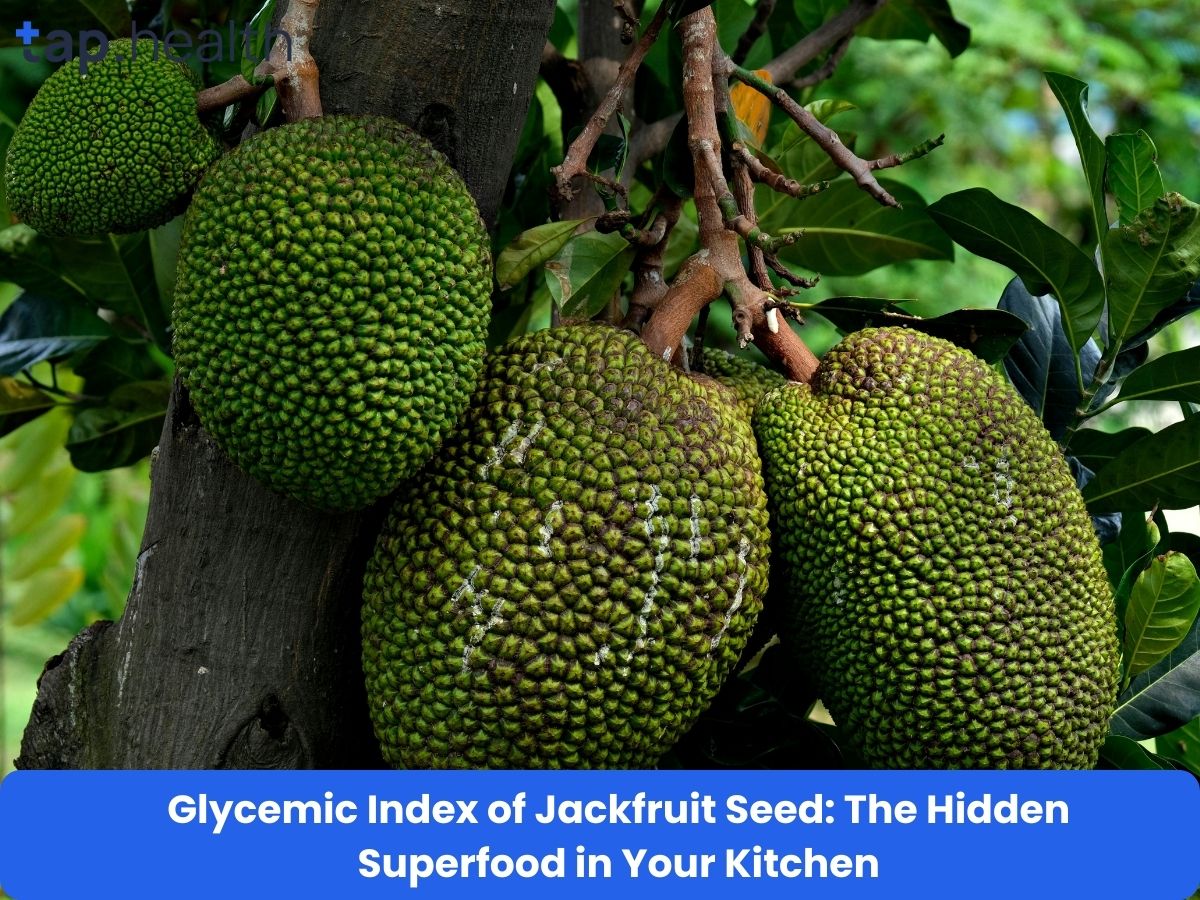
Summer in India brings the massive, spiky, and distinctively aromatic Jackfruit (Kathal or Chakka). We all know the drill: the ripe yellow flesh is sweet and sticky, while the raw green fruit makes for a delicious “vegan meat” curry. But what about the seeds?
For generations, grandmothers have insisted on saving those creamy, white seeds to boil or roast. But in today’s world, where every carbohydrate is scrutinised, many people with diabetes or weight concerns hesitate. You might be asking: Are these starchy seeds safe? What is the glycemic index of jackfruit seed?
Often discarded as waste, these seeds are actually nutritional powerhouses. But do they spike your blood sugar? In this comprehensive guide, we will peel back the layers of the jackfruit seed. We will explore its glycemic index (GI), compare it with the famous “jackfruit flour,” and give you the clear, scientific facts you need to decide if they belong on your plate.
What Are Jackfruit Seeds? A Nutritional Overview
Before we dive into the numbers, let’s understand what we are eating. Jackfruit seeds are encased inside the sweet yellow bulb of the ripe fruit. Once cleaned and cooked, they have a texture similar to a chestnut or a potato, with a milky, nutty flavour.
They are not just “empty starch.” Jackfruit seed nutritional value per 100g is impressive. They are rich in:
- Dietary Fibre: Essential for digestion.
- B-Complex Vitamins: Specifically Thiamine and Riboflavin.
- Resistant Starch: A type of carbohydrate that acts like fibre and feeds healthy gut bacteria.
- Protein: A surprising amount for a seed.
But because they are starchy, the immediate fear for a diabetic is the sugar spike. This brings us to the Glycemic Index.
Understanding the Glycemic Index (GI)
To evaluate if a food is “diabetes-friendly,” we use the Glycemic Index (GI). Think of GI as a speedometer for glucose. It measures how fast a food raises your blood sugar on a scale of 0 to 100.
- Low GI (0–55): Slow digestion, steady energy (The Tortoise).
- Medium GI (56–69): Moderate rise (The Jogger).
- High GI (70+): Rapid spike and crash (The Hare).
Glycemic Index of Jackfruit Seed: The Numbers
So, what is the score?
The Glycemic Index of Jackfruit Seed is approximately 63.
This places it in the Medium GI category.
Wait, don’t panic. While 63 might seem higher than leafy greens, it is significantly lower than white rice (GI ~73) or baked potatoes (GI ~85).
However, the story changes depending on how you eat it.
- Glycemic Index of Boiled Jackfruit Seeds: Boiling creates a soft texture. The starch gelatinises, making it easier to digest. The GI hovers around 60–65.
- Roasted Seeds: Roasting can sometimes lower the digestible starch slightly, keeping the GI closer to 60.
The Key takeaway: Jackfruit seeds are not a “free food” like spinach, but they are a “better carb” than refined flour or white rice.
Glycemic Index of Jackfruit Flour: The Diabetes Game Changer
While the seeds have a medium GI, jackfruit flour has taken the medical world by storm. This flour is not made from the seeds alone; it is typically made from the raw, unripe green jackfruit (flesh and seeds ground together).
The Glycemic Index of Jackfruit Flour is roughly 50 to 52.
This places it in the Low GI category.
Why is the flour lower than the seed?
- Unripe State: The raw fruit has not yet developed its natural sugars.
- Fibre Load: The flour is extremely dense in pectin and fibre.
Doctors now frequently recommend adding a tablespoon of green jackfruit flour to wheat flour (atta) or idli batter. This simple addition lowers the overall glycemic load of the meal, making your regular roti or idli much safer for blood sugar control.
Is Jackfruit Seed Good for Diabetic Patients?
This is the most frequently searched question: “Is jackfruit seed good for diabetic patients?”
The answer is Yes, in moderation.
Here is why it works for diabetes management despite having a medium GI:
1. The Resistant Starch Factor
Jackfruit seeds contain high amounts of resistant starch. This type of starch passes through the small intestine without being digested. It does not turn into glucose immediately. Instead, it travels to the colon, where it ferments and improves insulin sensitivity.
2. High Fibre Content
Fibre acts like a speed breaker in your gut. Even though the seed has carbs, the fibre ensures that sugar is released slowly into the bloodstream.
3. Protein Boost
Jackfruit seed protein per 100g is roughly 7 grams. Protein slows down carbohydrate absorption.
Precaution: Portion size matters. Eating 5-6 seeds is a healthy snack. Eating a whole bowlful (like a curry) might load you up with too many carbs at once.
Jackfruit Glycemic Index and Load: The Bigger Picture
To get the full picture, we must look at Glycemic Load (GL). While GI tells you how fast sugar rises, GL tells you how much sugar is entering your system based on serving size.
- Formula: GL = (GI x Carbohydrates in the portion) / 100
- Jackfruit Seed GL: If you eat a small portion (about 50g), the glycemic load is moderate.
Is jackfruit high in glycemic index?
- Ripe Fruit: Yes (High GI ~65-70+ depending on sweetness).
- Seeds: Medium (GI ~63).
- Raw Fruit/Flour: Low (GI ~50-52).
Therefore, diabetics should avoid the sweet yellow bulbs but can safely consume the raw vegetable and the boiled seeds in limited quantities.
Jackfruit Seed Nutritional Value Per 100g
If you are counting calories or macros, here is the breakdown for boiled/cooked jackfruit seeds (approximate values):
| Nutrient | Amount per 100g |
| Calories | ~185 kcal |
| Carbohydrates | ~38 g |
| Protein | ~7 g |
| Fat | ~0.7 g |
| Fibre | ~1.5 – 2 g |
| Potassium | High |
Jackfruit seed calories per 100g are lower than many other starchy snacks, making them a decent option for weight management if you don’t add too much oil or coconut while cooking.
Raw Jackfruit Is Good for Diabetes: Flesh vs. Seed
There is often confusion between the raw fruit and the seed.
- Raw Jackfruit (Kathal): This is the unripe vegetable. Raw jackfruit is good for diabetes because it has a very low caloric density and mimics the texture of meat. It is 60% lower in carbs than rice.
- Jackfruit Seed: This is denser in carbs.
The Strategy: A curry made of 80% raw jackfruit chunks and 20% seeds is a perfect diabetic meal. It balances the low-calorie vegetable with the energy-dense seed.
Does Jackfruit Increase Blood Sugar? Myths vs. Facts
Let’s bust some common myths surrounding glycemic index of jack fruit.
Myth 1: Jackfruit is a fruit, so diabetics can never eat it.
- Fact: Diabetics should avoid the sweet, ripe fruit bulbs. However, the raw green fruit and the boiled seeds are safe and nutritious portions.
Myth 2: Jackfruit seeds are just gas and starch.
- Fact: While they can cause gas in some people (due to resistant starch), they are packed with iron (good for haemoglobin) and Vitamin A (good for eyes).
Myth 3: Jackfruit flour cures diabetes.
- Fact: Food cannot “cure” diabetes. However, glycemic index of jackfruit flour is low enough that it helps manage blood sugar levels effectively when used as a replacement for rice or wheat.
Real-Life Scenario
Let’s meet Mr. Menon, a 55-year-old retired bank manager from Kerala.
- The Problem: Mr. Menon loved his rice. His post-lunch blood sugar was consistently touching 190 mg/dL. He felt sleepy and lethargic.
- The Change: His daughter read about the benefits of jackfruit. She didn’t stop his rice completely but replaced 30% of his rice portion with a side dish of boiled jackfruit seeds and raw jackfruit curry (Thoranas).
- The Result: The extra fibre and protein from the seeds kept Mr. Menon fuller. He ate less rice naturally.
- The Impact: After three months, his HbA1c dropped by 0.5%. He wasn’t starving himself; he was just substituting a High GI food (Rice) with a Medium/Low GI food (Jackfruit seeds/flesh).
Expert Contribution
We consulted with clinical dieticians to get the medical perspective.
“The Jackfruit seed is an underdog in Indian nutrition,” says Dr. S. Rao, a metabolic health specialist. “We see patients spending money on expensive quinoa or imported seeds. But the humble jackfruit seed, which we throw in the bin, has an excellent starch profile. The resistant starch acts as a prebiotic, feeding good gut bacteria. A healthy gut is crucial for managing blood sugar.”
Experts also highlight the flour:
“For my patients who cannot give up Roti, I advise mixing 1 tablespoon of green jackfruit flour into their dough. The glycemic index of jackfruit flour is low enough to bring down the overall glycemic load of the chapati,” adds Dr. Rao.
Recommendations Grounded in Proven Research and Facts
Based on the jackfruit glycemic index and load data, here are practical ways to include this superfood in your diet:
- Boil, Don’t Fry: The healthiest way to eat seeds is boiled with a pinch of turmeric and salt. Deep-frying them destroys nutrients and adds unnecessary fats.
- Combine with Vegetables: Do not eat a bowl of seeds alone. Mix them with green beans or drumsticks (moringa) in a curry. The greens lower the overall GI of the meal.
- Portion Control: Stick to 8-10 seeds per serving. This gives you the nutrient boost without overloading on carbs.
- Try the Flour: If you struggle with high fasting sugar, try substituting 30% of your rice or wheat batter with green jackfruit flour. Clinical studies have shown this can reduce glucose levels.
- Listen to Your Gut: Jackfruit seeds can be hard to digest for some. Drink plenty of water to help the fibre move through your system.
Key Takeaways
- Medium GI: The glycemic index of jackfruit seed is roughly 63. It is better than rice but higher than green veggies.
- Low GI Flour: Glycemic index of jackfruit flour (from raw fruit) is lower (~50-52) and is excellent for fortifying rotis and idlis.
- Nutrient Dense: Seeds provide protein (7g/100g), iron, and resistant starch.
- Diabetes Safe: Is jackfruit seed good for diabetes? Yes, as a snack or part of a meal, but avoid the ripe sweet fruit bulbs.
- Gut Health: The resistant starch in seeds promotes healthy digestion and better insulin sensitivity.
Frequently Asked Questions (FAQ)
What is the exact glycemic index of jackfruit seed?
The glycemic index of jackfruit seed is generally calculated to be around 63. This classifies it as a Medium Glycemic Index food. It digests slower than white rice but faster than leafy vegetables.
Is jackfruit seed good for diabetic patients?
Yes, is jackfruit seed good for diabetic patients? Absolutely. The seeds contain high amounts of dietary fibre and resistant starch, which prevent sudden blood sugar spikes. However, portion control is key—stick to a small handful.
Does jackfruit increase blood sugar?
The ripe yellow fruit is high in natural sugars and will increase blood sugar. However, the raw green fruit and the boiled seeds have a much lower impact. The glycemic index of raw jackfruit flour is low enough to actually help control sugar levels.
What is the glycemic index of jackfruit flour?
The glycemic index of jackfruit flour (made from green, unripe fruit and seeds) is approximately 50 to 52. This is considered Low GI. It is clinically proven to help reduce blood glucose when mixed with rice or wheat.
How much protein is in jackfruit seeds?
Jackfruit seed protein per 100g is approximately 7 grams. This is a significant amount for a vegetable source, making it a great addition to vegetarian and vegan diets.
Is raw jackfruit good for diabetes?
Yes, raw jackfruit is good for diabetes. It has a low glycemic load and is often used as a meat substitute. It is rich in soluble fibre and has a much lower carbohydrate density compared to grains like wheat or rice.
Can I eat boiled jackfruit seeds daily?
Yes, you can eat boiled jackfruit seeds, but moderation is important. Since they are calorie-dense (approx 185 calories per 100g), eating too many might lead to weight gain. A small portion as a snack or in curry is ideal.
What is the difference between GI of ripe and raw jackfruit?
There is a big difference. Glycemic index of jack fruit (ripe) is High (~65-70+). Glycemic index of raw jackfruit is Low (~50-55). Diabetics should always choose the raw, savory version over the sweet, ripe dessert version.