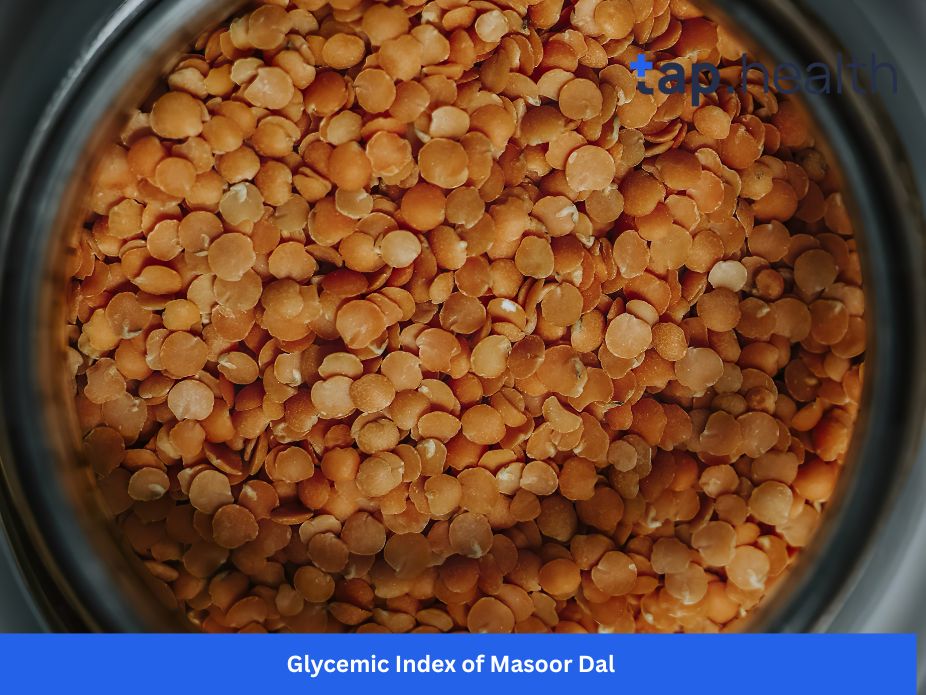
If you grew up in an Indian household, Masoor Dal (Red Lentil) was likely a comfort food staple. Whether it was a simple Dal Tadka with rice or a thick, spicy soup with rotis, this pinkish-orange lentil is a favorite across the country.
But if you or a loved one has recently been diagnosed with diabetes, every meal brings a question: “Is this safe for my blood sugar?”
You might have heard that dals are healthy, but you’ve also heard that carbohydrates spike insulin. Where does Masoor Dal fit in? Is it a superfood, or should you avoid it?
The answer lies in understanding the glycemic index of masoor dal.
In this comprehensive guide, written in simple Indian English, we will break down the science of Masoor Dal. We will look at its GI score, its “Glycemic Load” (which is even more important), and how you can cook it to ensure it keeps your sugar levels stable.
What Is the Glycemic Index of Masoor Dal?
Let’s get straight to the numbers.
The glycemic index (GI) measures how fast a food raises your blood sugar on a scale of 0 to 100.
- Low GI: 0 to 55 (Good for diabetics)
- Medium GI: 56 to 69 (Eat in moderation)
- High GI: 70 and above (Avoid or limit)
So, what is the glycemic index of masoor dal?
- Whole Masoor Dal (Sabut/Brown): ~25 to 30 (Low GI)
- Split Washed Masoor Dal (Red/Pink): ~32 to 45 (Low GI)
The Verdict: Masoor Dal falls comfortably into the Low GI category. This means it releases sugar slowly into your bloodstream, preventing those dangerous spikes that diabetics fear.
Why Is It So Low?
Unlike white rice or maida (refined flour), Masoor Dal is packed with fiber and protein.
- Fiber acts like a net in your stomach, slowing down digestion.
- Protein takes longer to break down than carbs.Together, they ensure that the glucose from the dal enters your blood at a steady, manageable pace.
Glycemic Load: The Real Number You Should Watch
While GI tells you the speed of the sugar spike, Glycemic Load (GL) tells you the amount of the spike based on portion size.
- Formula: (GI x Carbohydrates in a serving) ÷ 100
- Low GL: Under 10
- Medium GL: 11 to 19
- High GL: 20+
Glycemic Load of Masoor Dal (1 cooked cup / ~150g):
- Approx GL: 6 to 8
This is fantastic news! It means that a standard bowl of cooked Masoor Dal has a very low impact on your blood sugar load. You can enjoy a bowl without guilt, provided you watch what you eat with it (looking at you, white rice!).
Masoor Dal Nutritional Value (Per 100g Cooked)
To understand why this dal is a superstar, let’s look at its profile.
| Nutrient | Amount (Approx) | Benefit for Diabetics |
| Calories | 116 kcal | Low calorie helps weight management. |
| Carbohydrates | 20g | Moderate carbs, but complex ones. |
| Protein | 9g | High protein increases satiety (fullness). |
| Fiber | 8g | Slows sugar absorption. |
| Fat | 0.4g | Negligible fat, heart-healthy. |
| Glycemic Index | 25-30 | Very Low. |
Key Takeaway: It is high in protein and fiber but low in calories. This “high satiety” factor stops you from snacking on unhealthy foods later in the day.
Is Masoor Dal Good for Diabetics? (5 Key Benefits)
If you are asking, “is masoor dal good for diabetics,” the answer is a resounding YES. Here is why:
1. Prevents Sugar Spikes
Thanks to its low GI and high fiber content, Masoor Dal doesn’t cause the rapid insulin surge that potatoes or rice do. It provides steady energy.
2. High Fiber for Heart Health
Diabetics are at higher risk for heart disease. The soluble fiber in Masoor Dal binds to bad cholesterol (LDL) and removes it from the body.
3. Weight Loss Weapon
Is masoor dal good for weight loss? Absolutely. Protein and fiber make you feel full. If you eat a bowl of dal for lunch, you are less likely to crave biscuits or namkeen at 4 PM. Maintaining a healthy weight is crucial for reversing Type 2 diabetes.
4. Potassium Power
Masoor Dal is rich in potassium, which counteracts the effects of sodium and helps lower high blood pressure—a common companion of diabetes.
5. Easy to Digest
Unlike Chana Dal or Rajma, which can cause heavy gas and bloating in some people, Masoor Dal (especially the split red variety) is lighter on the stomach.
Whole Masoor vs. Split Red Masoor: Which Is Better?
You will find two types in the market:
- Sabut Masoor (Whole Brown): Brown skin is intact.
- Masoor Dal (Split Red): Skin removed, pink/orange color.
Which has a better glycemic index?
- Whole Masoor (Brown) is slightly better. The brown skin is pure insoluble fiber. This lowers the GI further (closer to 25).
- Split Red Masoor digests faster because the fiber-rich skin is gone. Its GI is slightly higher (closer to 30-32), but still very safe.
Recommendation: If you have severe diabetes, try to cook Sabut Masoor more often. It has a deeper, earthy taste and keeps you full longer.
Comparing Glycemic Index of Indian Dals
How does Masoor stack up against other kitchen favorites?
| Dal Type | Glycemic Index (Approx) | Rating |
| Chana Dal | 8 | Extremely Low (Best) |
| Whole Moong | 29 | Low |
| Masoor Dal | 25-30 | Low |
| Urad Dal | 43 | Low-Medium |
| Toor Dal | 48 | Low-Medium |
| Rajma | 29 | Low |
Winner: While Chana Dal technically has the lowest GI, Masoor Dal is often preferred because it cooks much faster and causes less gas.
Masoor Dal Side Effects (Precautions)
Is it safe for everyone? Generally, yes. But keep these in mind:
1. Kidney Stones (Uric Acid)
Masoor Dal contains compounds called purines. If you suffer from gout or high uric acid, or if you have advanced kidney disease, your doctor might ask you to limit dal intake.
2. Gas and Bloating
While lighter than Rajma, it can still cause gas in sensitive stomachs.
- Fix: Always add a pinch of Heeng (Asafoetida) and Jeera (Cumin) while cooking to aid digestion.
3. The “Carb” Trap
Even though it is healthy, it does contain carbohydrates. You cannot eat unlimited bowls. Portion control is still key.
Read this: Glycemic Index of Pulses: Why Dal Is the Secret Weapon for Diabetics
Real-Life Scenario
Meet Rahul (45, IT Professional):
Rahul was diagnosed with pre-diabetes. He loved his white rice and dal lunch. He thought cutting out rice meant he would starve.
The Change: His dietician told him to switch the ratio. Instead of “Lots of Rice + Little Dal,” he switched to “2 Bowls of Thick Masoor Dal + ½ Bowl of Rice.”
The Result: He felt fuller because of the extra protein in the dal. His post-meal sugar spike (PP) dropped by 30 points because the fiber in the dal slowed down the rice digestion.
How to Eat Masoor Dal for Lowest Blood Sugar
You can lower the GI of your meal even further with these expert cooking hacks:
- Don’t Overcook It: If you cook the dal until it becomes a soup/paste, it digests faster (higher GI). Try to keep some texture to the lentils.
- Add Fat: Adding 1 teaspoon of Ghee or Olive Oil slows down gastric emptying, further reducing the sugar spike.
- Combine with Veggies: Add spinach (Palak) or bottle gourd (Lauki) to the dal. This adds volume and fiber without carbs.
- Pair Wisely: Instead of white rice, eat Masoor Dal with Bajra Roti, Quinoa, or Cauliflower Rice.
Expert Contribution
We consulted Dr. S. Gupta, a Diabetologist, about lentils.
“I tell my patients that ‘Dal is the poor man’s meat’ but the ‘rich man’s medicine.’ The problem isn’t the dal; it’s what we eat with it. Masoor Dal itself has a GI of 25. But if you eat it with a mountain of white rice (GI 70+), the meal becomes unhealthy. Eat the dal like a soup, with a spoon, and minimize the grains on the side.”
Recommendations Grounded in Proven Research and Facts
According to the American Diabetes Association and Harvard Health:
- Portion Size: A standard serving is 1/2 cup to 1 cup of cooked lentils.
- Frequency: Eating pulses (dals/beans) daily is recommended for heart health and blood sugar control.
- Preparation: Sprouting the whole masoor dal before cooking increases its protein availability and lowers the GI even further.
Conclusion: Key Takeaways
So, what is the verdict on the glycemic index of masoor dal?
- It is Low GI: At ~25-30, it is one of the safest carb sources for diabetics.
- It is Nutrient-Dense: Packed with protein, fiber, and potassium.
- Best Form: Whole Brown Masoor is slightly better than Split Red, but both are excellent.
- How to Eat: Cook it with veggies and moderate fat (ghee/tadka) for the best results.
Don’t banish dal from your diet. Embrace it. It is the steady, reliable friend your blood sugar needs.
FAQ:Glycemic Index of Masoor Dal
What is the glycemic index of cooked masoor dal?
The glycemic index of cooked masoor dal ranges from 25 to 30. This is considered Low GI, making it very safe for diabetics as it releases energy slowly.
Is masoor dal good for diabetics?
Yes, absolutely. Its high fiber and protein content help stabilize blood sugar levels, preventing spikes. It also supports heart health by lowering cholesterol.
Glycemic index of whole masoor dal vs red masoor dal?
Whole Masoor Dal (Brown) has a slightly lower GI (~25) because the fiber-rich skin is intact. Split Red Masoor Dal has a slightly higher GI (~30-32) because the skin is removed, but it is still considered low and safe.
Can we eat masoor dal daily?
Yes, daily consumption is generally safe and healthy. It provides essential protein for vegetarians. However, if you have high uric acid or kidney stones, consult your doctor first.
Does masoor dal increase blood sugar?
No, it does not typically cause a spike. Because of its low GI, it causes a slow, gradual rise in blood sugar, which is exactly what diabetics want. However, if you eat it with a large amount of white rice, the rice will spike your sugar.
Is masoor dal keto friendly?
Not strictly. While it is healthy, lentils contain carbohydrates (~20g per cup cooked). On a strict Keto diet (under 20-50g carbs/day), a bowl of dal might take up too much of your daily allowance. It is better for “Low Carb” diets than strict Keto.
Is masoor dal good for weight loss?
Yes. It is low in calories (approx 116 kcal per cup) and very high in protein and fiber. This combination keeps you full for hours, reducing overall calorie intake.
Which dal has the lowest glycemic index?
Chana Dal (Bengal Gram) has the lowest GI at around 8. However, Masoor Dal and Moong Dal are also very low (under 30) and are often easier to digest.
References
- Harvard Health Publishing: Glycemic index for 60+ foods
- American Diabetes Association: Beans and Diabetes
- Medical News Today: Lentils: Benefits and Nutrition
- Tata 1mg: Health Benefits of Masoor Dal
Disclaimer: This article is for informational purposes only and does not constitute medical advice. Always consult with a doctor or dietician before making drastic changes to your diet.