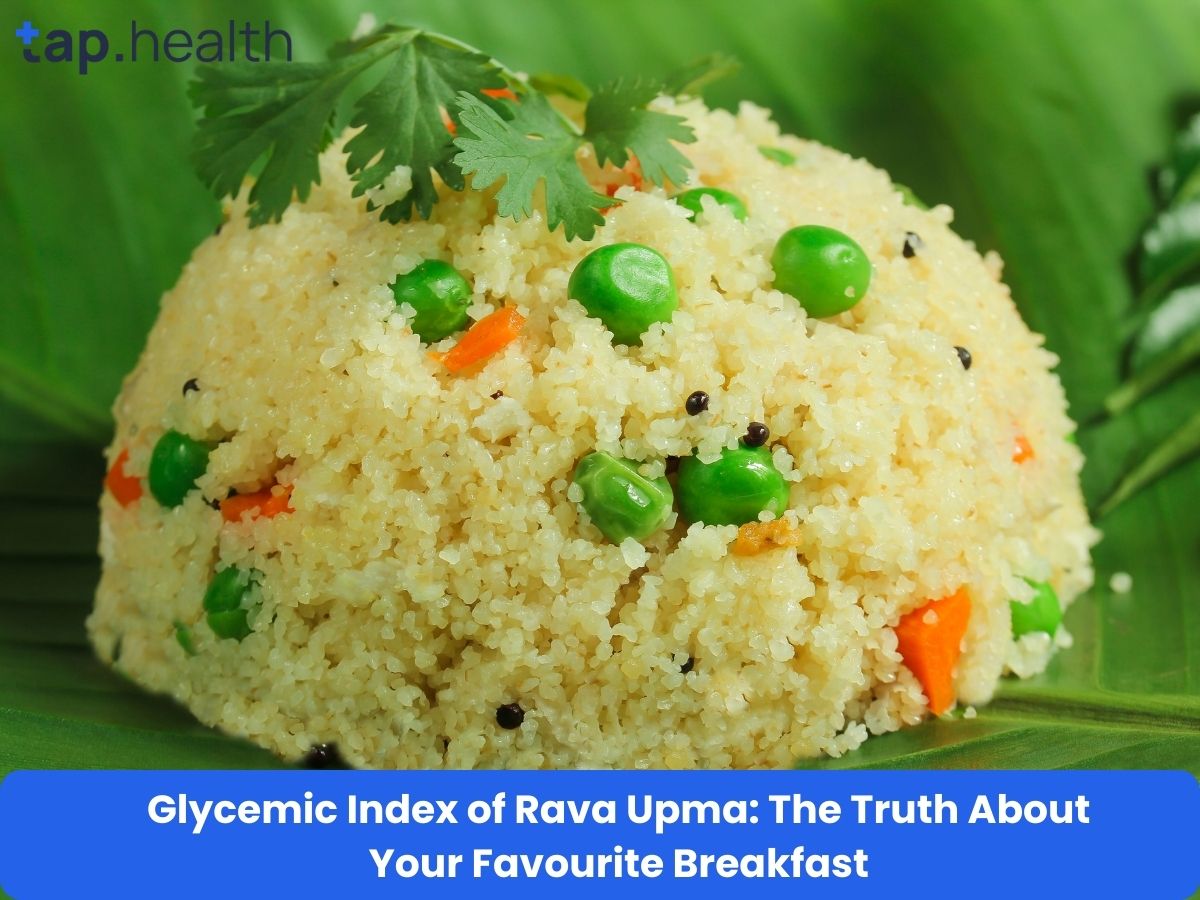
It is a busy weekday morning. You are rushing to get ready for work, and the smell of roasted mustard seeds and curry leaves fills the kitchen. A hot plate of Upma is waiting. It is quick, tasty, and satisfying. But as you pick up your spoon, a thought crosses your mind: Is this actually good for my blood sugar?
If you are one of the millions of Indians managing Type 2 Diabetes or pre-diabetes, navigating breakfast options can feel like walking through a minefield. You have probably heard mixed advice: “Upma is light and healthy” vs. “Rava is just refined wheat, avoid it!”
So, what is the reality? What is the glycemic index of rava upma, and does the type of rava you use—Bombay Rava, Bansi Rava, or Wheat Rava—make a difference?
In this comprehensive guide, we will break down the science of Upma. We will look at the numbers, compare different varieties of rava, and give you the expert-backed facts you need to enjoy your breakfast without the guilt.
What is Rava Upma? Understanding the Ingredient
To understand the health impact, we first need to look at the main ingredient: Rava (also called Suji or Semolina).
Most standard Upma is made from “Bombay Rava.” This is granulated wheat. It is not whole wheat; it is the endosperm of the wheat kernel, stripped of the bran and germ. Essentially, it is a refined carbohydrate, similar to Maida but with a coarser texture.
However, not all Rava is the same.
- Bombay Rava (Suji): Refined, white, fine granules.
- Wheat Rava (Godhuma Rava): Broken whole wheat, brownish, high fibre.
- Bansi Rava: Made from a specific variety of wheat, slightly coarser and golden.
The glycemic index of rava changes significantly depending on which one you choose.
Understanding the Glycemic Index (GI)
Before we reveal the scores, let’s quickly refresh what the Glycemic Index (GI) means. It is a speedometer for your blood sugar, ranked from 0 to 100.
- Low GI (0–55): Slow digestion. Good for diabetes.
- Medium GI (56–69): Moderate rise. Eat in moderation.
- High GI (70+): Fast spike. Best avoided.
Glycemic Index of Rava Upma: The Numbers
So, where does a standard plate of Upma stand?
The Glycemic Index of Rava Upma (made with white Suji) is approximately 68 to 71.
This places it on the border of Medium to High GI.
While it is generally better than white bread (GI ~75), standard rava upma gi index is high enough to cause a blood sugar spike if eaten in large quantities or without vegetables. The refined nature of Suji means the body breaks it down into glucose relatively quickly.
Glycemic Index of Wheat Rava Upma (Godhuma Rava)
Now, let’s look at the healthier cousin.
- The Score: The glycemic index of wheat rava upma is lower, typically around 55 to 62.
- Why? Because Godhuma Rava retains the bran. The fibre in the bran slows down digestion.
- Verdict: If you are asking “wheat rava upma is good for diabetes,” the answer is Yes—it is much better than white Suji Upma.
Glycemic Index of Suji Upma vs. Bansi Rava
- Suji (White): High GI (~70). Low fibre.
- Bansi Rava: Medium GI (~60-65). Slightly better structure.
- Samba Rava: Low-Medium GI (~50-58). Excellent fibre content.
When comparing which rava is good for diabetes, Samba or broken wheat (Dalia) always wins over white Suji.
Can Diabetic Patient Eat Rava Upma?
This is the most common question: “Can diabetic patient eat rava upma?” or “Is rava upma good for diabetic patient?”
The answer is: It depends on how you make it.
If you make Upma with just Suji, oil, and salt, it is a carb-heavy meal that will likely spike your sugar. However, you can transform it into a diabetes-friendly meal with these three tricks:
- The Veggie Rule: Your Upma should be 50% vegetables. Add peas, carrots, beans, and onions. The fibre from the veggies lowers the overall glycemic index of upma significantly.
- Add Protein: Throw in a handful of roasted peanuts, cashew nuts, or eat it with a side of coconut chutney. Protein and fat slow down sugar absorption.
- Switch the Grain: Swap white Suji for Bansi Rava, Oats, or even Quinoa.
Comparing Breakfasts: Upma vs. Idli, Dosa, and Poha
To make the best choice, we need to see how Upma stacks up against other Indian breakfast staples.
1. Glycemic Index of Rava Idli
- Score: ~70–75 (High).
- Why: Glycemic index of rava idli is high because it is steamed white rava, often with very little fat or fibre to slow digestion. Standard rice idli is usually lower (~60) than rava idli.
2. Glycemic Index of Rava Dosa
- Score: ~70+ (High).
- Why: Rava dosa is made from refined flour (Maida) and Suji. It is delicious and crispy but metabolically similar to eating white bread.
3. Glycemic Index of Poha
- Score: ~70 (White Poha) vs. ~50 (Red Poha).
- Comparison: Standard white poha and white rava upma are very similar in their blood sugar impact. Both are processed carbs. Red Poha is superior to both.
4. Samba Rava Glycemic Index
- Score: ~50–55 (Low).
- Winner: If you make Upma with Samba Rava (broken emmer wheat), it becomes one of the healthiest breakfast options available, beating white rice items easily.
Which Rava Is Good for Diabetes? The Ultimate Ranking
If you are shopping for groceries, which packet should you pick? Here is the ranking from Best to Worst for blood sugar control:
- Samba Rava / Broken Wheat (Dalia): Best. High fibre, slower digestion.
- Bansi Rava: Good. Better texture and lower GI than white suji. Is bansi rava good for diabetes? Yes, in moderation.
- Bombay Rava (White Suji): Avoid/Limit. Highly refined, fast absorption.
Real-Life Scenario
Let’s meet Mrs. Iyer, a 60-year-old retired teacher from Bangalore.
- The Habit: She ate white Rava Upma three times a week. Her post-breakfast sugar (PP) was consistently around 190 mg/dL.
- The Advice: Her nutritionist didn’t ban Upma. She simply asked Mrs. Iyer to switch to Godhuma Rava (Wheat Rava) and add a bowl of boiled green peas to it.
- The Result: Mrs. Iyer found the wheat rava chewier and more filling. She couldn’t eat as much volume.
- The Numbers: Two weeks later, her PP sugar dropped to 155 mg/dL. The switch from white to wheat, plus the added fibre from peas, changed the glycemic index of wheat rava upma meal entirely.
Expert Contribution
We spoke to certified diabetes educators to get the medical verdict.
“We often see patients who think ‘homemade’ automatically means ‘healthy’,” says Dr. V. Patel, a Diabetologist. “White Rava Upma is essentially refined wheat. It digests very fast. I tell my patients: If you can see the white granules, it’s sugar waiting to happen. Switch to the brown, broken wheat varieties. The glycemic index of godhuma rava upma is much gentler on your pancreas.”
Experts also suggest a portion hack:
“Never eat Upma alone. Pair it with Sambar (lentils) rather than just pickle. The protein in the dal blunts the spike,” adds Dr. Patel.
Recommendations Grounded in Proven Research and Facts
Based on the rava upma gi index data, here are the Golden Rules for eating Upma safely:
- Avoid Instant Mixes: Ready-to-eat Upma mixes are often full of preservatives, sodium, and sometimes hidden sugars. Always cook from scratch.
- The 1:1 Ratio: For every 1 cup of Rava, use 1 cup of chopped vegetables. This is non-negotiable for diabetics.
- Use Ghee: Don’t fear fat. A teaspoon of ghee lowers the GI of the meal. Dry, fat-free upma will actually spike your sugar faster!
- Try “Oats Rava”: You can buy “Oats Rava” or simply mix 50% rolled oats with your suji to boost the beta-glucan fibre content.
Key Takeaways
- Medium-High GI: Standard white glycemic index of rava upma is around 68-71, which can spike blood sugar.
- Wheat is Better: Glycemic index of wheat rava upma is significantly lower (~55-60) due to higher fibre.
- Veggies are Key: Adding vegetables is the best way to lower the GI of any Upma dish.
- Avoid Rava Idli/Dosa: These are often made with refined flours and have a high glycemic load compared to whole grain alternatives.
- Choose Samba: For the best diabetes management, choose Samba Rava or Bansi Rava over Bombay Suji.
Frequently Asked Questions (FAQ) on Glycemic Index of Rava Upma
What is the glycemic index of suji (semolina) upma?
The glycemic index of suji upma typically ranges from 68 to 71. This is considered Medium to High. It means that white suji digests relatively quickly and can cause a rapid rise in blood sugar levels if not balanced with fibre or protein.
Is wheat rava upma good for diabetes?
Yes. Wheat rava upma is good for diabetes because it is made from whole broken wheat (Dalia). It retains the bran and fibre, which white suji lacks. The glycemic index of wheat rava upma is lower (around 55-60), making it a safer breakfast choice.
Can a diabetic patient eat Rava Dosa?
It is best to avoid it or eat it rarely. Glycemic index of rava dosa is high because it is usually made with Maida (refined flour) and Suji for crispiness. It lacks fibre and is often high in calories due to the oil required to make it crisp.
How does the glycemic index of poha compare to upma?
They are quite similar. White Poha has a GI of roughly 70, similar to white Rava Upma. However, Red Poha (GI ~50) and Wheat Rava Upma (GI ~55) are the healthier versions of each dish.
Which rava is best for diabetics: Bansi or Bombay?
Is bansi rava good for diabetes? Yes, Bansi rava is better than Bombay rava. Bansi rava is made from a harder wheat variety and is less refined than the ultra-fine Bombay suji, leading to a slightly lower glycemic index and better satiety.
What is the glycemic index of Rava Idli?
The glycemic index of rava idli is generally high (70+). Unlike rice idli which is fermented (improving gut health), rava idli is instant and made of refined wheat. It is not the ideal choice for strict blood sugar control.
Is Samba Rava low glycemic?
Yes. Samba rava glycemic index is in the low-to-medium range. It is rich in fibre and minerals. Switching from white rava to samba rava is one of the most effective changes a diabetic can make to their breakfast routine.
Does adding ghee to Upma increase blood sugar?
No, it actually helps. Pure fat (like ghee) has zero glycemic index. Adding a moderate amount of ghee to Upma slows down the digestion of the carbohydrates, which can actually help reduce the immediate blood sugar spike.