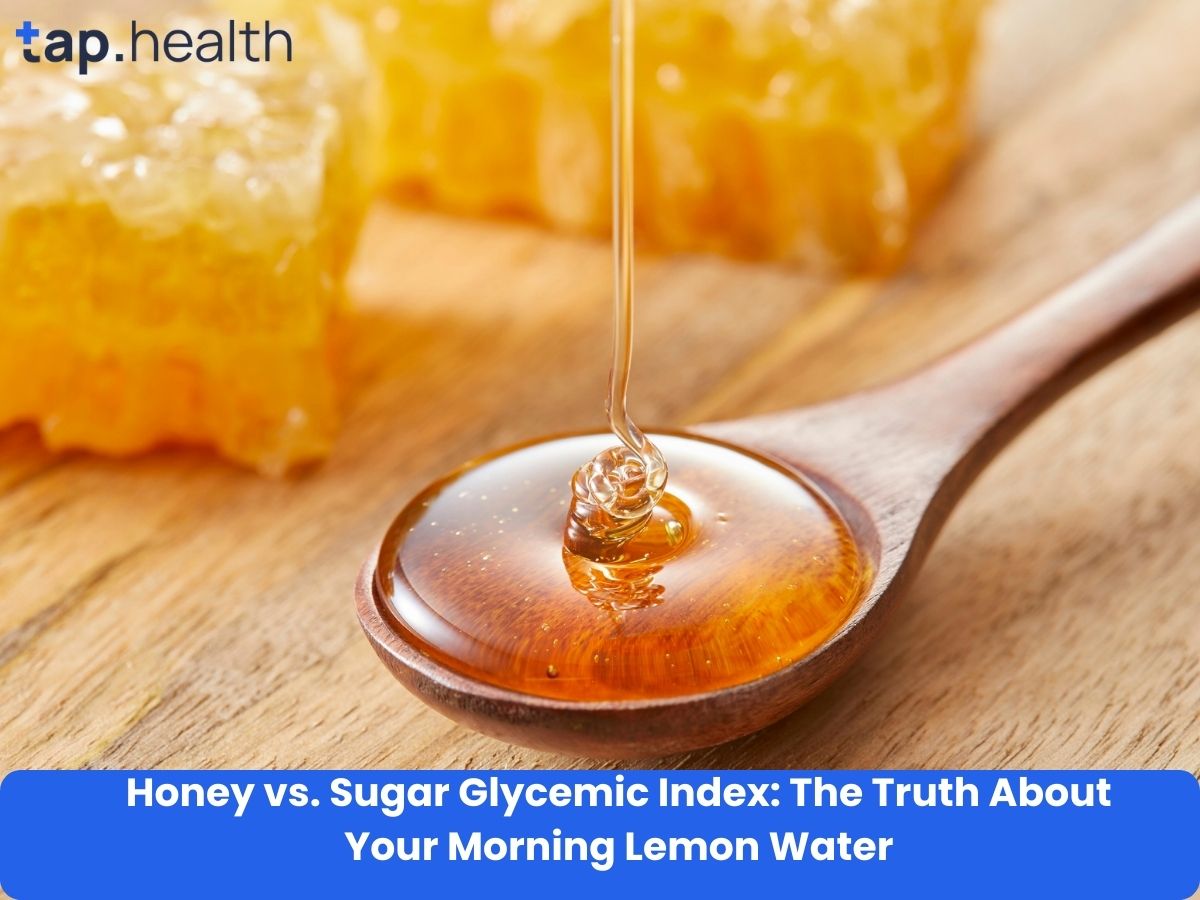
It is the most popular morning ritual in India. Before the chai, before the breakfast, and often before brushing teeth, millions of us walk to the kitchen. We heat a glass of water, squeeze half a lemon, and stir in a spoonful of golden Honey.
Why do we do it? Because we have been told it melts fat. Because we believe it detoxes the liver. Because it is the ultimate “healthy start.”
But for those of us watching our weight or managing diabetes, a tiny doubt lingers. Honey is sweet. Sugar is sweet. Are they really that different?
When you stir that spoon of honey into your water, are you fueling your body with a superfood, or are you just drinking a glass of sugar syrup on an empty stomach?
In this comprehensive guide, we are going to investigate the Honey vs. Sugar debate. We will look beyond the “natural” marketing hype and analyze the Glycemic Index (GI). We will explore the chemistry of that morning drink and reveal whether it is a weight-loss miracle or a blood-sugar trap.
The Morning Ritual: Myth vs. Reality
First, let’s address the elephant in the room. Does lemon-honey water actually melt fat?
The Myth: “Honey burns fat.” The Reality: Honey does not burn fat. No food “burns” fat. Losing weight is a result of a calorie deficit. However, warm water aids digestion, and lemon provides Vitamin C. The honey? It provides energy. But if you are diabetic, that energy comes at a cost.+2
To understand the cost, we need to compare the two sweeteners.
The Contenders: The Crystal vs. The Nectar
1. Table Sugar (The villain)
- Scientific Name: Sucrose.
- Source: Sugarcane juice that is boiled, crystallized, bleached, and refined.
- Composition: 50% Glucose + 50% Fructose bound together.
- Nutrition: Zero. It is 100% carbohydrate. No vitamins, no minerals. Just energy.
2. Honey (The Hero?)
- Source: Flower nectar collected and processed by bees.
- Composition: Roughly 40% Fructose + 30% Glucose + Water + Minerals (Trace amounts).
- Nutrition: Contains small amounts of antioxidants, enzymes, amino acids, pollen, and vitamins.
- The “Natural” Tag: Because it is made by bees, not factories, we assume it is safe.
Understanding Glycemic Index (GI)
To judge the winner, we use the Glycemic Index (GI).
Think of GI as a speedometer for your blood sugar. It measures how fast a food converts into glucose and hits your bloodstream on a scale of 0 to 100.
- Low GI (0-55): Digests slowly. Safe.
- Medium GI (56-69): Moderate rise.
- High GI (70+): Dangerous spike.
1. The Glycemic Index of Sugar
The Glycemic Index of Table Sugar is approximately 65.
This places it in the Medium category. Because sugar is refined, your body breaks the bond between glucose and fructose very easily. The glucose rushes into your blood, causing an insulin spike. The fructose goes to your liver.
The Danger: If you drink sugar water on an empty stomach, your blood sugar shoots up rapidly because there is no fiber or protein in your stomach to slow it down.
2. The Glycemic Index of Honey
Here is where it gets complicated.
The Glycemic Index of Honey varies from 45 to 64.
- Average GI: ~58.
Why the variation? It depends on the flower.
- High Fructose Honey: Some flowers produce nectar with more fructose. Fructose digests slower. These honeys have a lower GI.
- Processed Honey: Commercial honey is often heated and filtered, which breaks down enzymes and raises the GI.
The Comparison:
- Sugar GI: ~65
- Honey GI: ~58
The Verdict: Honey is slightly better. It enters the bloodstream a little slower than sugar. But let’s be clear: 58 is not Low. It is still very close to the Medium/High border. For a diabetic, a GI of 58 is still enough to cause a spike if consumed on an empty stomach.
The “Natural” Trap: Is It Really Different?
People often say, “But honey is natural sugar, so the body processes it differently.”
The Truth: Your body is a biological machine. It doesn’t care if the glucose molecule came from a bee or a sugarcane plant. Once it enters your blood, Sugar is Sugar.
- Insulin Response: Both honey and sugar trigger the pancreas to release insulin.
- Calorie Count:
- 1 tsp Sugar = 16 Calories.
- 1 tsp Honey = 21 Calories.
- Shocking Fact: Honey is actually more calorie-dense than sugar because it is denser!
So, if you are drinking honey water to lose weight, you are technically drinking more calories than if you used sugar.
The Adulteration Nightmare: Are You Eating Real Honey?
In India, this is a massive problem. A recent investigation found that many major brands of “Pure Honey” sold in supermarkets were adulterated with Rice Syrup or Chinese Sugar Syrup.
The Impact on GI:
- Pure Raw Honey: GI ~58 (Okay).
- Adulterated Honey (Sugar Syrup): GI ~70+ (Bad).
If you are buying cheap honey, you are likely just eating flavored sugar syrup. In that case, the “health benefits” are zero, and the GI is just as high as regular sugar.
Ayurveda’s Warning: The “Toxic” Honey
Modern science talks about GI, but Ayurveda talks about Ama (Toxins).
According to ancient Ayurvedic texts (Charaka Samhita): “Honey should never be heated.”
When honey is mixed with boiling hot water, its chemical structure changes. It becomes a glue-like substance that is hard to digest and creates toxins in the body.
- The Rule: Honey should only be added to Lukewarm water (water you can comfortably put your finger in).
- The Mistake: Most people squeeze lemon into boiling water and stir in honey immediately. This destroys the enzymes and raises the glycemic load.
Real-Life Scenario
Let’s meet Mrs. Mehra, a 42-year-old teacher from Delhi.
The Routine: Mrs. Mehra was pre-diabetic. Determined to get healthy, she started the “Lemon-Honey-Water” ritual. Every morning, she drank a large glass with one tablespoon of honey. She believed it was “detoxing” her diabetes.
The Problem: After 3 months, her HbA1c (average sugar) actually went up. She gained 1 kg.
The Diagnosis: Her dietician analyzed her diet.
- Empty Stomach Spike: That tablespoon of honey (approx 17g sugar) on an empty stomach was causing a massive sugar spike first thing in the morning.
- Calorie Surplus: She hadn’t changed her diet; she just added 60 calories of honey every morning.
The Fix: She switched to Lemon Water with Chia Seeds (no honey).
- The Result: Her sugar stabilized, and the fiber from chia seeds actually helped her digestion.
Expert Contribution
We consulted medical experts to get the professional stance.
Dr. R. Gupta, Endocrinologist: “I call the morning honey water the ‘Diabetic Trap.’ Patients think they are doing something good. But for a diabetic, starting the day with liquid sugar is the worst possible strategy. It sets you up for a day of sugar cravings. I advise my patients: Drink lemon water, add a pinch of salt, add chia seeds, but skip the honey.”
Nutritionist Perspective: “Honey contains antioxidants, yes. But you would have to eat a bucket of honey to get the same amount of antioxidants found in one cup of spinach. Do not eat honey for vitamins. Treat it as a sweetener. If you must have it, take just half a teaspoon, not a tablespoon.”
Recommendations Grounded in Proven Research and Facts
Based on data from the University of Sydney GI Database and Ayurvedic Guidelines, here are actionable tips:
- For Diabetics: Avoid the morning honey ritual. The slight GI advantage (58 vs 65) is not enough to justify drinking liquid sugar on an empty stomach. Stick to plain lemon water or lemon water with salt.
- For Weight Loss: Calories matter. If you love the taste, reduce the quantity to 1 teaspoon (5g). Do not use a tablespoon. That single change saves you 40 calories a day.
- The Temperature Rule: Never add honey to boiling water. Let the water cool down until it is lukewarm. This preserves the raw enzymes and prevents the formation of toxins.
- The Purity Check: Buy Raw, Unfiltered Honey from a local beekeeper if possible. It will look cloudy and might crystallize (which is a sign of purity!). Clear, runny supermarket honey is often high-GI syrup.
Key Takeaways
- Sugar has a GI of ~65 and provides empty calories.
- Honey has a GI of ~58, which is only slightly better. It is NOT a low-GI food.
- Honey has more calories per spoon than sugar.
- Morning Spike: Drinking honey water on an empty stomach can spike insulin levels, which is harmful for diabetics.
- Ayurveda says: Never heat honey. Use lukewarm water only.
- The Verdict: Lemon water is healthy. The honey is just for taste. If you have diabetes, skip the honey.
Conclusion
So, Honey vs. Sugar: The Truth About Your Morning Lemon Water.
Is Honey better than Sugar? Yes, marginally. It has trace minerals and a slightly lower glycemic index. Is Honey safe for diabetics to drink freely? No.
The morning lemon-honey water is not a magic potion. For a diabetic or someone with insulin resistance, it is essentially a glass of sugar water. It might taste refreshing, but your pancreas has to work hard to handle it.
If you are serious about health, keep the lemon, keep the warm water, but maybe leave the honey for a rare Sunday treat. Your blood sugar will thank you.
Frequently Asked Questions (FAQ)
Is honey good for diabetics?
In strictly limited amounts. While honey has a slightly lower GI than sugar, it still spikes blood sugar levels. A diabetic should not exceed 1 teaspoon per day, and it should ideally be consumed with a meal (fiber/protein) rather than on an empty stomach.
Does lemon juice lower the GI of honey?
Yes, slightly. Lemon juice is acidic. Acid slows down stomach emptying, which can slightly reduce the rate at which the sugar from the honey enters the bloodstream. However, it does not turn honey into a “Low GI” food.
Can I use Jaggery (Gur) instead of Honey?
Jaggery is very similar to sugar. It has a Glycemic Index of roughly 84 (High), which is often higher than sugar! While it aids digestion and has iron, it is not a safe alternative for blood sugar control.
How do I check if my honey is pure?
The Water Test: Put a drop of honey into a glass of water. Pure honey will settle at the bottom as a lump. Adulterated honey (sugar syrup) will start dissolving immediately. Also, pure honey tends to crystallize in winter; fake honey often stays runny.
Will honey lemon water break my fast?
Yes. Honey contains calories and carbohydrates. If you are doing Intermittent Fasting, drinking honey water will trigger an insulin response and break your fast. Stick to plain water, black coffee, or lemon water with salt.
Is Manuka honey better?
Yes, but it’s expensive. Manuka honey from New Zealand has a lower GI and potent antibacterial properties. However, for the average consumer, raw local honey is a sufficient and affordable alternative.
References:
- University of Sydney: GI Search Database. Link
- National Institute of Health (NIH): Honey vs. Sucrose. Link
- Ayurvedic Institute: The toxicity of heated honey. Link
- Centre for Science and Environment (CSE): Honey Adulteration Investigation. Link
- Diabetes.co.uk: Honey and Diabetes. Link
(Disclaimer: This content is for educational purposes only. Always consult your doctor or a certified dietitian before making significant changes to your diet, especially if you have diabetes.)