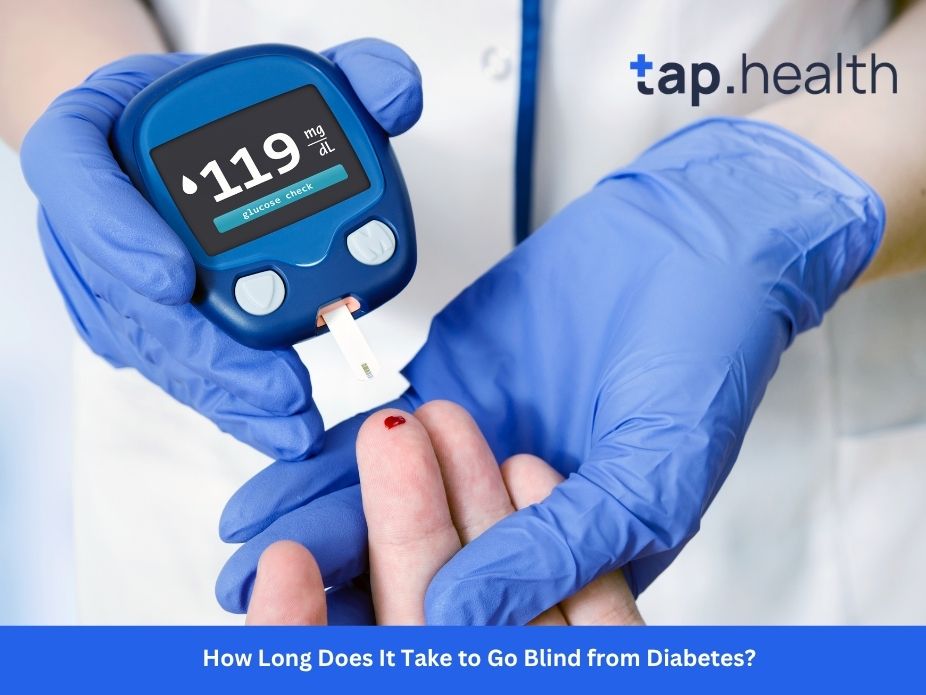
If you or someone you love is living with diabetes, you have probably asked this scary question at least once: How long does it take to go blind from diabetes? It is a valid worry. After all, nobody wants to imagine losing their sight. The good news is that blindness is not inevitable for people with diabetes. In fact, with proper care and early detection, most people keep their vision throughout their lives.
Let us walk through what really happens to your eyes when you have diabetes, how much time it takes for damage to occur, what warning signs to watch for, and most importantly, how you can protect your sight starting today.
What Is Diabetic Eye Disease?
When someone asks, “Can you go blind from diabetes?” the answer is yes, but it does not happen overnight. Diabetes affects the tiny blood vessels in your retina, which is the light-sensitive tissue at the back of your eye. This condition is called diabetic retinopathy, and it is the leading cause of blindness among working-age adults.
High blood sugar levels over time damage these delicate blood vessels. They can swell, leak, or even close off completely. In some cases, abnormal new blood vessels grow on the retina, which can cause serious vision problems. But here is the critical point: this damage happens gradually over years, not weeks or months.
How Long Does It Take to Go Blind from Diabetes?
This is the question that brings most readers here. The honest answer? It varies significantly from person to person. For some, significant eye damage might develop within 5 to 10 years of poorly controlled diabetes. For others, even after 20 or 30 years of living with the condition, their vision remains relatively stable.
Research from the NHS and Diabetes UK suggests that about 40% of people with Type 1 diabetes and 20% of those with Type 2 diabetes develop some form of diabetic retinopathy during their lifetime. However, only a small percentage of these cases progress to total blindness—especially when caught early.
How fast do you lose vision with diabetes? The speed depends on several factors:
- Blood sugar control: Consistently high HbA1c levels accelerate damage
- Blood pressure: Hypertension worsens retinopathy
- Duration of diabetes: The longer you have had diabetes, the higher the risk
- Smoking: Tobacco use significantly increases progression speed
- Genetics: Some people are simply more prone to eye complications
Typically, if diabetes remains uncontrolled, noticeable vision changes might begin within 5 to 15 years. However, complete blindness usually takes decades to develop and is largely preventable with modern treatments.
The Stages of Diabetic Retinopathy
To understand the timeline better, you need to know how this condition progresses. Diabetic retinopathy moves through distinct stages, and knowing these helps answer how long does it take to go blind from diabetic retinopathy specifically.
Background or Non-Proliferative Retinopathy
This is the earliest stage. Small areas of balloon-like swelling occur in the retina’s blood vessels. These are called microaneurysms. At this point, you might not notice any vision changes at all. Many people live in this stage for years without realising anything is wrong. Regular eye screenings usually catch it during routine diabetes check-ups.
Maculopathy
The macula is the central part of your retina that gives you sharp, detailed vision. When fluid leaks into this area—a condition called diabetic macular oedema (DME)—your central vision becomes blurry. Reading, driving, and recognising faces become difficult. This stage can develop anywhere from a few years to over a decade after diabetes onset.
Proliferative Retinopathy
This is the advanced stage and the most dangerous. The retina starts growing new, abnormal blood vessels because the old ones are not supplying enough oxygen. These new vessels are fragile and bleed easily. If they bleed into the eye (vitreous haemorrhage) or pull the retina away from the back of the eye (retinal detachment), you risk severe vision loss or blindness.
The progression from early background changes to proliferative retinopathy typically takes several years, sometimes up to 10 to 15 years, but aggressive cases can move faster.
Can You Go Blind from Type 2 Diabetes?
Many people wonder if Type 2 diabetes carries the same blindness risk as Type 1. The reality is that both types can cause vision loss, but Type 2 diabetes often goes undiagnosed for years—sometimes up to a decade.
During this “silent” period, high blood sugar quietly damages blood vessels, including those in your eyes. This means some people with Type 2 diabetes already have retinopathy by the time they receive their diagnosis. That is why eye screening is crucial immediately upon diagnosis for Type 2, whereas Type 1 screening usually begins five years after diagnosis.
How long does it take to go blind from type 2 diabetes? Because of this delayed diagnosis factor, the timeline can feel compressed. Someone diagnosed with Type 2 at age 50 might show retinal changes within a few years, whereas someone with Type 1 diagnosed at age 10 might have 15 or 20 years before similar damage appears.
How Do You Go Blind from Diabetes?
Understanding the mechanics helps demystify the fear. You do not simply wake up blind one morning. Instead, vision loss from diabetes follows specific patterns:
Leakage and Swelling: Damaged blood vessels leak fluid into the macula, causing it to swell. This blurs your central vision first.
Bleeding: Fragile new blood vessels burst, filling the eye with blood and blocking light from reaching the retina.
Scar Tissue: As abnormal vessels heal, they form scar tissue that can pull the retina away from its normal position, causing detachment.
Glaucoma: Diabetes increases your risk of glaucoma by 40%, a condition where pressure builds up inside the eye, damaging the optic nerve.
Cataracts: People with diabetes develop cataracts at younger ages and progress faster than those without diabetes.
The combination of these factors gradually reduces vision until, in untreated cases, blindness occurs. But remember—each of these complications is treatable if caught early.
Early Warning Signs You Should Never Ignore
Vision loss from diabetes often creeps up silently. However, your eyes do send signals when trouble is brewing. Never ignore these symptoms:
- Blurred or wavy vision that does not clear with new glasses
- Difficulty reading or seeing fine details
- Seeing floaters or dark spots that move across your vision
- Flashes of light or sudden appearance of many floaters
- Trouble seeing at night or in low light
- Colours appearing faded or yellowish
If you experience any of these, book an eye appointment immediately. Sudden vision changes require urgent medical attention.
Can Diabetic Blindness Be Cured?
Here is hopeful news: Blindness caused by diabetes can often be prevented, and sometimes vision can be partially restored. The key word is prevention. Once the optic nerve is severely damaged or the retina has detached completely, restoration becomes impossible. However, modern medicine offers several effective treatments:
Laser Treatment (Photocoagulation): This seals leaking blood vessels and shrinks abnormal ones. It has been the standard treatment for decades and remains highly effective.
Anti-VEGF Injections: Medicines like ranibizumab (Lucentis) and aflibercept (Eylea) are injected into the eye to stop abnormal blood vessel growth. These have revolutionised diabetic eye care since the early 2000s.
Steroid Implants: Slow-release steroid implants help reduce macular swelling in some patients.
Vitrectomy: For advanced cases where blood has filled the eye or retinal detachment has occurred, surgical removal of the vitreous gel (vitrectomy) can restore some vision.
Can blindness caused by diabetes be cured completely? If caught in the early or moderate stages, treatments can halt progression and sometimes improve vision significantly. However, once profound vision loss occurs, it is usually permanent. This is why regular screening matters more than treatment.
Real-Life Scenario
Let us consider Rajesh, a 52-year-old businessman from Mumbai diagnosed with Type 2 diabetes ten years ago. For the first five years, he managed his condition well, but work stress led to neglected blood sugar checks. He skipped his annual eye screenings for three consecutive years, assuming his vision felt fine.
One morning, Rajesh noticed a dark shadow in the corner of his left eye. Within weeks, straight lines appeared wavy, and reading became difficult. His ophthalmologist diagnosed proliferative diabetic retinopathy with diabetic macular oedema. The doctor explained that had Rajesh come in two years earlier, simple laser treatment would have sufficed. Now, he required monthly anti-VEGF injections and faced a 50% chance of needing surgery within the year.
Rajesh’s story illustrates a crucial truth: you can have severe eye damage without noticeable symptoms. His timeline—from diagnosis to threatening vision loss—spanned roughly eight to nine years of fluctuating glucose control. Today, after two years of intensive treatment and strict glucose management, Rajesh has retained functional vision in both eyes, though his left eye remains slightly blurred. He now volunteers with diabetes support groups, emphasising that blindness is not about how long you have had diabetes, but how well you manage it.
Expert Contribution
Dr. Priya Menon, a consultant ophthalmologist at a leading Delhi hospital, explains: “We see patients who believe blindness from diabetes is inevitable. This myth causes dangerous complacency. In my 20 years of practice, I have witnessed patients maintain perfect vision for 40 years with diabetes, while others face complications within five years due to neglect.”
Dr. Menon emphasises the importance of HbA1c levels: “Keeping your HbA1c below 7% reduces your risk of retinopathy by 76%. That is not a small number—it is life-changing. When patients ask me how fast can you go blind from diabetes, I tell them it depends entirely on their commitment to comprehensive diabetes care, not just sugar levels, but blood pressure and cholesterol too.”
She also notes that mental health plays a role: “Depression and diabetes burnout lead to poor self-care. We must treat the whole patient, not just the blood sugar readings.”
Recommendations Grounded in Proven Research and Facts
Scientific evidence provides clear guidance on protecting your vision:
Strict Glycaemic Control: The landmark Diabetes Control and Complications Trial (DCCT) and the UK Prospective Diabetes Study (UKPDS) definitively proved that intensive blood glucose control dramatically reduces retinopathy risk. Every 1% reduction in HbA1c lowers microvascular complication risk by 35%.
Blood Pressure Management: The UKPDS showed that controlling blood pressure (below 130/80 mmHg) reduces diabetes-related deaths by 32% and vision complications significantly.
Regular Screening: The Royal College of Ophthalmologists recommends annual screening for all diabetics over 12 years old. Some high-risk groups need screening every six months.
Smoking Cessation: Smokers with diabetes are three times more likely to develop retinopathy than non-smokers. Quitting immediately slows progression.
Physical Activity: Moderate exercise improves insulin sensitivity and blood flow, though intense straining exercises should be avoided if you already have advanced retinopathy.
Dietary Choices: Diets rich in leafy greens, omega-3 fatty acids, and low in refined carbohydrates support both blood sugar control and eye health. The Mediterranean diet pattern shows particular promise for diabetic eye health.
Key Takeaways
Understanding how long does it take to go blind from diabetes requires accepting that the timeline is largely within your control. Blindness does not happen suddenly; it is the result of years of uncontrolled blood sugar damaging delicate retinal vessels. Whether you have Type 1 or Type 2 diabetes, whether you have had the condition for one year or thirty, the principles remain identical:
- Blindness is preventable, not inevitable
- Damage typically takes 5 to 15 years to become vision-threatening, but can be much slower with good control
- Regular dilated eye exams catch problems before you notice symptoms
- Modern treatments can halt or reverse many changes if applied early
- Your daily choices—food, exercise, medication adherence, and smoking—directly determine your visual future
Do not let fear paralyse you into inaction. Instead, let awareness motivate vigilance. Your eyes are worth the effort of good diabetes management.
Frequently Asked Questions on How Long Does It Take to Go Blind from Diabetes?
How long does it take to go blind from diabetes reddit communities suggest?
Online discussions on platforms like Reddit vary widely because individual experiences differ so much. Some users report vision complications within 5 to 7 years of diagnosis, while others with 30+ years of diabetes maintain 20/20 vision. Medical consensus aligns with the latter—blindness is not inevitable and usually takes decades to develop without proper care. Reddit threads often highlight that those who attend regular screenings and maintain HbA1c below 7% rarely face severe vision loss.
How fast do you lose vision with diabetes?
Vision loss speed depends heavily on control factors. With excellent blood sugar management, you might never lose significant vision. With poor control, noticeable vision decline can occur within 5 to 10 years. Rapid vision loss usually signals an acute complication like vitreous haemorrhage or retinal detachment requiring emergency treatment.
Can diabetic blindness be cured?
Early and moderate diabetic retinopathy can be treated effectively with laser therapy, injections, or surgery, often restoring or preserving useful vision. However, once the optic nerve is severely damaged or the retina has detached completely, vision loss becomes permanent. Prevention and early intervention remain the only “cures” for blindness.
Can diabetes send you blind even if you feel fine?
Absolutely. This is the insidious nature of diabetic eye disease. By the time you notice symptoms like blurriness or floaters, significant damage may already exist. This is why annual dilated eye exams are essential regardless of how good your vision feels.
How long does it take for diabetes to damage eyes?
Subtle changes can begin within 3 to 5 years of diabetes onset, particularly if blood sugar runs high consistently. However, vision-threatening damage typically requires 10 to 15 years of poor control. Remember that Type 2 diabetes often exists undiagnosed for years, meaning some people already have eye damage at diagnosis.
Does diabetes cause blindness in every patient?
No. While diabetes increases blindness risk significantly, statistics show that only about 2% of people with diabetes develop severe vision impairment, and less than 0.5% become totally blind. These numbers continue dropping as screening programmes and treatments improve.
How long does it take to go blind from diabetic retinopathy specifically?
Untreated proliferative diabetic retinopathy can lead to blindness within months to a few years once it reaches the advanced stage. However, progression through earlier stages usually spans many years. With modern anti-VEGF treatments, even advanced cases can be managed to preserve useful sight for decades.
Can you go blind from having diabetes if you control it perfectly?
Even with perfect control, a small percentage of people develop retinopathy due to genetic predisposition. However, perfect control makes severe vision loss extremely unlikely. Most people who lose vision from diabetes have a history of missed appointments, poor glucose control, or untreated high blood pressure.
References
For further reading and verification of the information presented above, please consult these authoritative sources:
- NHS: Diabetic Retinopathy
- Mayo Clinic: Diabetic Retinopathy
- Diabetes UK: Eye Screening Guide
- Harvard Health: Diabetes and Eye Disease
- WHO: Blindness and Vision Impairment Prevention
- Diabetes Control and Complications Trial Research Group
- Royal College of Ophthalmologists Diabetic Retinopathy Guidelines