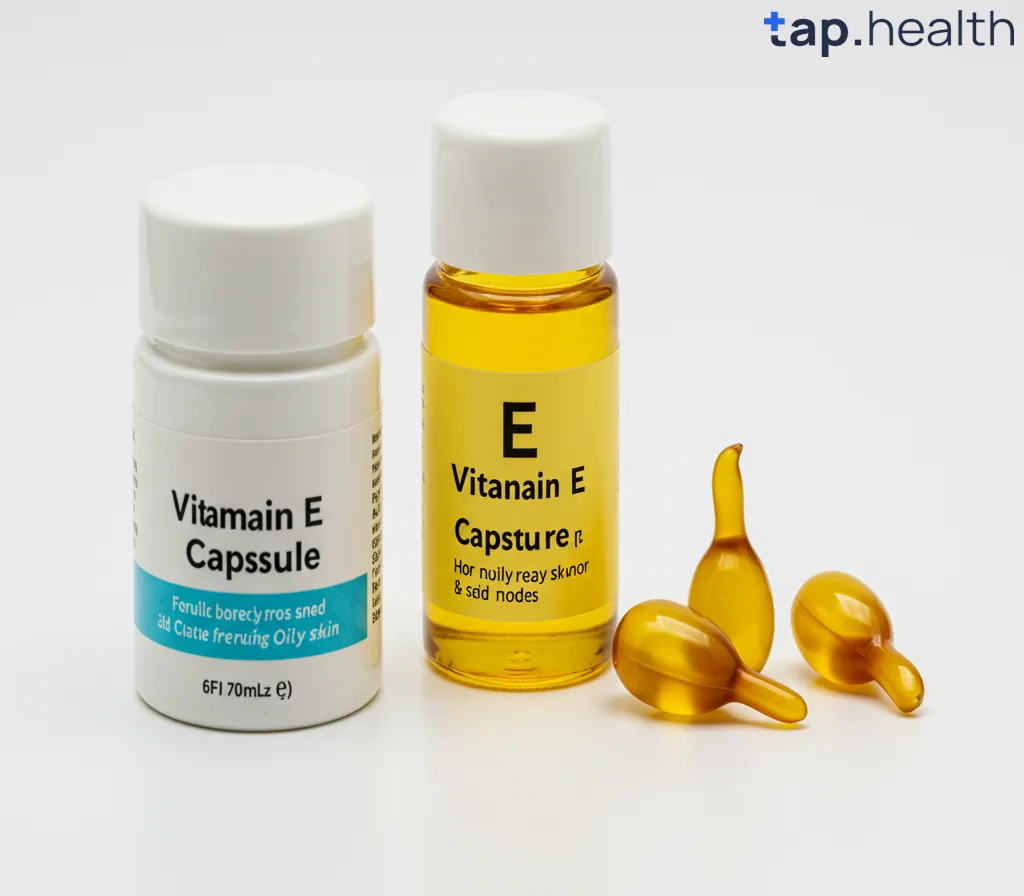
You’ve probably seen people pop open a vitamin E capsule and dab the oil on their face. Maybe you’ve even tried it, hoping it would clear up your shine, reduce acne, or give you glowing skin.
But if you have oily skin, you might be asking: Can I really use vitamin E capsules on my face? Will it make my skin even oilier? Or could it actually help?
The short answer: It’s complicated.
While vitamin E is a powerful antioxidant that helps protect your skin, using the oil from a supplement capsule directly on oily skin is not always a good idea—and can sometimes make things worse.
In this guide, we’ll answer every question you might have about using vitamin E capsules for oily skin. We’ll cover:
- What vitamin E does for your skin
- Why it can be risky for oily or acne-prone skin
- The best (and worst) ways to use it
- Safer alternatives
- Common myths
- Dermatologist-approved tips
All explained in simple, everyday language—no confusing jargon. Just honest, science-backed facts from trusted sources like the American Academy of Dermatology, Mayo Clinic, WebMD, and Harvard Health.
Let’s get into it.
What Is Vitamin E and Why Is It Used in Skincare?
Vitamin E is a fat-soluble vitamin and a strong antioxidant. That means it helps protect your skin from damage caused by pollution, UV rays, and free radicals.
It’s naturally found in foods like nuts, seeds, spinach, and vegetable oils. It’s also added to many skincare products because it:
- Moisturizes dry patches
- Soothes irritation
- Helps heal scars and wounds
- Protects against sun damage (when combined with sunscreen)
Because of these benefits, vitamin E is common in lotions, serums, and night creams.
But here’s the catch: just because it’s good for skin doesn’t mean squeezing a supplement capsule onto your oily face is safe or effective.
Let’s dig deeper.
Can You Use Vitamin E Capsule on Oily Skin?
Technically, yes—you can apply it.
But should you? Usually, no.
Here’s why:
Oily skin already produces plenty of natural oils (called sebum). Adding a thick, greasy oil like the one in a vitamin E capsule can:
- Clog pores
- Trigger breakouts
- Increase shine
- Trap dirt and bacteria
Most vitamin E capsules are made for oral use—they’re meant to be swallowed, not applied to the face. The oil inside is highly concentrated and often mixed with carrier oils (like soybean or mineral oil) that are comedogenic, meaning they can block pores.
So while vitamin E itself has benefits, the delivery method (a supplement capsule) is not ideal for oily skin.
What’s Inside a Vitamin E Capsule?
To understand the risk, you need to know what’s actually in that little yellow or red pill.
Most vitamin E capsules contain:
- Tocopherols – The active form of vitamin E
- Carrier oils – Like soybean, sunflower, or mineral oil (to dissolve the vitamin)
- Preservatives or stabilizers
- Sometimes fragrance or other additives
These ingredients are safe to eat, but not always safe for facial use—especially if you have oily or acne-prone skin.
For example:
- Soybean oil is highly comedogenic (rated 3–4 on the comedogenic scale).
- Mineral oil can feel heavy and trap grime.
- High concentrations of pure vitamin E can irritate sensitive skin.
So even if the vitamin E is helpful, the other ingredients in the capsule may cause more harm than good.
Does Vitamin E Help With Acne on Oily Skin?
This is a big myth: “Vitamin E clears acne.”
The truth? No—vitamin E does not treat acne. In fact, it can make it worse.
Why Vitamin E Doesn’t Help Acne
- It doesn’t kill acne bacteria (like benzoyl peroxide or salicylic acid do).
- It doesn’t unclog pores.
- It doesn’t reduce oil production.
- It can clog pores, leading to whiteheads and blackheads.
Some people believe vitamin E helps heal acne scars—but research shows it has little to no effect on scar appearance and may even cause irritation.
A study published in the Journal of the American Academy of Dermatology found that 60% of people who used vitamin E on surgical scars saw no improvement, and some developed rashes or breakouts.
So if you’re struggling with oily skin and acne, vitamin E capsules are not the solution.
Can Vitamin E Reduce Oiliness or Shine?
No—vitamin E does not reduce oil production.
In fact, it does the opposite.
Vitamin E oil is thick and occlusive, meaning it forms a seal on top of your skin. This can:
- Trap your skin’s natural oil
- Prevent your skin from “breathing”
- Make your face look greasy and shiny
If you have oily skin, you want products that control sebum, not add more oil.
Better ingredients for oily skin include:
- Niacinamide – Reduces oil and shrinks pores
- Salicylic acid – Unclogs pores
- Clay or charcoal masks – Absorb excess oil
- Lightweight, oil-free moisturizers
Vitamin E doesn’t belong on this list.
Can Vitamin E Cause Breakouts on Oily Skin?
Yes—it absolutely can.
This is the biggest risk of using vitamin E capsules on oily skin.
How It Causes Acne
- Clogs Pores: The oil in the capsule is heavy and doesn’t absorb well. It sits on your skin and blocks pores.
- Traps Bacteria: When pores are clogged, acne-causing bacteria multiply.
- Leads to Whiteheads and Blackheads: These are common when using comedogenic oils.
- Causes Milia: Tiny white bumps that form under the skin, often around the eyes.
Even if you don’t break out right away, long-term use can lead to buildup, congestion, and chronic acne.
If you’ve started using vitamin E and notice more pimples, it’s likely the culprit.
Is Vitamin E Safe for Combination Skin?
Maybe—but with caution.
If you have combination skin (oily T-zone, dry cheeks), you might think vitamin E could help dry areas without affecting oily zones.
But here’s the problem: once you apply oil to your face, it doesn’t stay in one place. It can spread, migrate, or be rubbed into oily areas.
Even a small amount can trigger breakouts on the forehead, nose, or chin.
If you want to try it:
- Use only on dry patches (like cheeks or jawline)
- Avoid the T-zone
- Use a tiny amount (less than half a capsule)
- Monitor your skin for 3–5 days
Better yet: use a lightweight moisturizer with vitamin E already in it, so you get the benefits without the greasiness.
Can You Use Vitamin E Capsule for Acne Scars on Oily Skin?
Many people use vitamin E hoping to fade acne marks or scars.
But science doesn’t support this.
What Research Says
- Vitamin E does not significantly improve the appearance of scars.
- It may help moisturize healing skin, but it won’t make scars disappear.
- In many cases, it causes contact dermatitis (skin irritation) or worsens scarring.
For acne marks (post-inflammatory hyperpigmentation), better options include:
- Vitamin C serum – Brightens dark spots
- Niacinamide – Reduces redness and oil
- Azelaic acid – Fades marks and treats acne
- Sunscreen – Prevents dark spots from getting worse
Vitamin E isn’t the hero here.
Can Vitamin E Help With Large Pores on Oily Skin?
No—vitamin E does not shrink pores.
Pores appear larger when they’re clogged with oil and dead skin. Vitamin E doesn’t unclog them. In fact, it can make them look bigger by adding more oil.
To minimize the look of pores:
- Use salicylic acid (a beta-hydroxy acid that cleans inside pores)
- Exfoliate 1–2 times a week
- Use niacinamide (proven to reduce pore appearance)
- Keep skin clean and moisturized
Again, vitamin E doesn’t help—and may hurt.
How to Use Vitamin E Capsule Safely (If You Still Want To)
If you’re set on trying vitamin E, there are safer ways to use it—especially for oily skin.
Step-by-Step: Safer Application
- Patch Test First
- Squeeze a tiny drop on your inner arm or behind your ear.
- Wait 24–48 hours.
- If no redness, itching, or bumps appear, it’s probably safe.
- Use a Very Small Amount
- One capsule is way too much for your face.
- Use half or less—mix it with your moisturizer.
- Mix It With a Lightweight Moisturizer
- Blend the oil into an oil-free, non-comedogenic cream.
- This reduces greasiness and spreads it evenly.
- Apply at Night Only
- Less risk of sun exposure or makeup interference.
- Let it absorb for 10–15 minutes before sleeping.
- Avoid the T-Zone
- Skip forehead, nose, and chin if you’re oily.
- Focus on dry areas only.
- Wash Off in the Morning
- Cleanse gently to remove any residue.
- Stop If You See Breakouts
- If you get pimples, stop immediately.
Even better: skip the capsule and use a facial product with vitamin E instead.
Are There Better Alternatives to Vitamin E Capsules?
Yes—many! And they’re safer and more effective for oily skin.
1. Facial Products with Vitamin E
Look for:
- Lightweight serums
- Oil-free moisturizers
- Sunscreens with vitamin E
These are formulated for skin, not digestion. They combine vitamin E with other antioxidants (like vitamin C) and non-comedogenic ingredients.
Examples:
- CeraVe PM Facial Moisturizing Lotion (has niacinamide + vitamin E)
- Neutrogena Hydro Boost Water Gel (lightweight, with antioxidants)
- La Roche-Posay Toleriane Double Repair Face Moisturizer
2. Vitamin E + C Serums
Combining vitamin E with vitamin C boosts antioxidant protection and brightens skin—without clogging pores.
Popular options:
- TruSkin Vitamin C Serum
- Mad Hippie Vitamin C Serum
- Paula’s Choice RESIST Super Antioxidant Concentrate
3. Non-Comedogenic Oils
If you want an oil, choose ones that won’t clog pores:
- Squalane oil (light, mimics skin’s oil)
- Jojoba oil (balances sebum)
- Rosehip oil (rich in natural vitamin E, absorbs well)
These are better than pure vitamin E oil.
Can You Use Vitamin E Capsule Under the Eyes on Oily Skin?
Not recommended.
The skin around your eyes is very thin and sensitive. Using heavy oil can cause:
- Puffiness
- Milia (tiny white bumps)
- Clogged glands
If you want to moisturize under your eyes, use a lightweight eye cream with vitamin E—formulated for that delicate area.
Never use pure capsule oil around the eyes.
Can Vitamin E Help With Sun Protection on Oily Skin?
Only when combined with sunscreen.
Vitamin E is an antioxidant that helps protect skin from free radical damage caused by UV rays. But it does not replace sunscreen.
In fact, using vitamin E without SPF can give you a false sense of security.
The best way to use it:
- Apply a vitamin C + E serum in the morning
- Follow with broad-spectrum SPF 30+
- Reapply sunscreen every 2 hours if outdoors
This combo boosts sun protection and fights aging—without adding oil.
Can You Make a DIY Face Mask with Vitamin E for Oily Skin?
Some people mix vitamin E with honey, lemon, or clay for a “natural” mask.
But DIY doesn’t mean safe.
Risks of DIY Masks
- Lemon juice is highly acidic—can burn or irritate skin
- Honey is sticky and can trap bacteria
- Mixing oils with food ingredients can cause breakouts
- No pH balance or preservation
If you want a mask for oily skin, use a store-bought clay or charcoal mask with salicylic acid.
Skip the vitamin E capsule in your mix.
Who Should Avoid Vitamin E Capsules on Face?
Not everyone should use vitamin E oil—even if their skin isn’t oily.
Avoid it if you:
- Have acne-prone or oily skin
- Are prone to milia or clogged pores
- Have rosacea or eczema (may irritate)
- Use other active ingredients (like retinoids or acids)
- Are allergic to vitamin E or carrier oils
If you’re unsure, talk to a dermatologist.
Can Vitamin E Capsules Be Swallowed for Oily Skin?
Yes—but eating vitamin E won’t clear your acne or reduce oil.
Oral vitamin E supplements are meant to treat deficiency, not skin issues.
And too much vitamin E (over 1,000 mg daily) can be dangerous—it can cause:
- Nausea
- Diarrhea
- Increased bleeding risk
- Liver problems
Unless your doctor says you’re deficient, don’t take vitamin E pills for skin benefits.
Better to get it from food:
- Almonds
- Sunflower seeds
- Spinach
- Avocado
- Olive oil
These give you vitamin E without the risks.
How to Choose a Safe Vitamin E Product for Oily Skin
If you want the benefits of vitamin E without the grease, pick the right product.
What to Look For
- Labeled “non-comedogenic” – Won’t clog pores
- Oil-free or gel-based – Lightweight texture
- Fragrance-free – Less chance of irritation
- Contains vitamin E with other antioxidants – Like vitamin C or ferulic acid
- Packaged in opaque, air-tight containers – Vitamin E breaks down in light and air
Avoid products that feel heavy, greasy, or leave a shiny film.
Can You Use Vitamin E Capsule on Oily Skin During Summer?
No—especially not in hot, humid weather.
In summer:
- Your skin produces more oil
- Sweat mixes with products
- Pores get clogged more easily
Adding vitamin E oil during this time can lead to breakouts, shine, and discomfort.
Stick to lightweight, water-based products in summer.
Save heavy oils for winter—if at all.
Can Vitamin E Help With Skin Glow on Oily Skin?
Some people believe vitamin E gives a “natural glow.”
But real glow comes from:
- Healthy skin cells
- Proper hydration
- Exfoliation
- Sun protection
Vitamin E oil can make your face look shiny, not glowing—especially if you’re already oily.
For true radiance:
- Use a vitamin C serum
- Exfoliate 1–2 times a week
- Drink plenty of water
- Wear sunscreen daily
- Get enough sleep
Vitamin E can support this—but it shouldn’t be the star.
Final Verdict: Should You Use Vitamin E Capsule for Oily Skin?
Here’s the bottom line:
❌ No, you should not use vitamin E capsules directly on oily skin.
✅ Yes, vitamin E in the right form can be part of a healthy routine.
Better Approach:
- Use skincare products with vitamin E, not capsules.
- Focus on non-comedogenic, oil-free formulas.
- Avoid pure oil on acne-prone or oily areas.
- Save the capsules for swallowing—if your doctor recommends them.
Vitamin E is great for skin—just not in the way most people think.
FAQ: How to Use Vitamin E Capsule for Oily Skin
Q1: Can I use vitamin E capsule on my face every day if I have oily skin?
No. Daily use can clog pores and cause breakouts. Not recommended for oily skin.
Q2: Does vitamin E remove acne scars?
No. Research shows it doesn’t improve scars and may irritate healing skin.
Q3: Can vitamin E cause pimples?
Yes. The oil in capsules is comedogenic and can clog pores, leading to whiteheads and blackheads.
Q4: Is it safe to use vitamin E on lips if I have oily skin?
Yes, in small amounts. It can help heal dry, chapped lips. Use a lip balm with vitamin E instead of the capsule.
Q5: Can I use vitamin E with salicylic acid or acne treatments?
Not at the same time. Both can irritate skin. Use acne treatments first, and avoid adding heavy oils.
Q6: Does vitamin E help with oily T-zone?
No. It adds more oil and can worsen shine and clogged pores.
Q7: Can I mix vitamin E oil with aloe vera for oily skin?
Not recommended. Aloe is light, but mixing with oil makes it heavy. Use aloe alone for a soothing gel.
Q8: How long does it take to see results from vitamin E on skin?
If it helps, you might see softer skin in a few days. But for oily skin, results are usually negative (breakouts).
Q9: Can vitamin E help with dark spots on oily skin?
No. Better options include vitamin C, niacinamide, and sunscreen.
Q10: Is natural vitamin E better than synthetic for oily skin?
Natural (d-alpha-tocopherol) is slightly more effective, but in skincare, the delivery system matters more. Choose non-comedogenic products.
Final Thoughts
So, how to use vitamin E capsule for oily skin?
The honest answer: you probably shouldn’t.
While vitamin E has benefits, the oil from a supplement capsule is too heavy, too greasy, and too likely to clog pores for oily or acne-prone skin.
Instead of popping a capsule, choose lightweight, dermatologist-tested products that contain vitamin E in a safe, skin-friendly form.
Your skin doesn’t need more oil—it needs balance, protection, and gentle care.
Skip the shortcut. Your face will thank you.