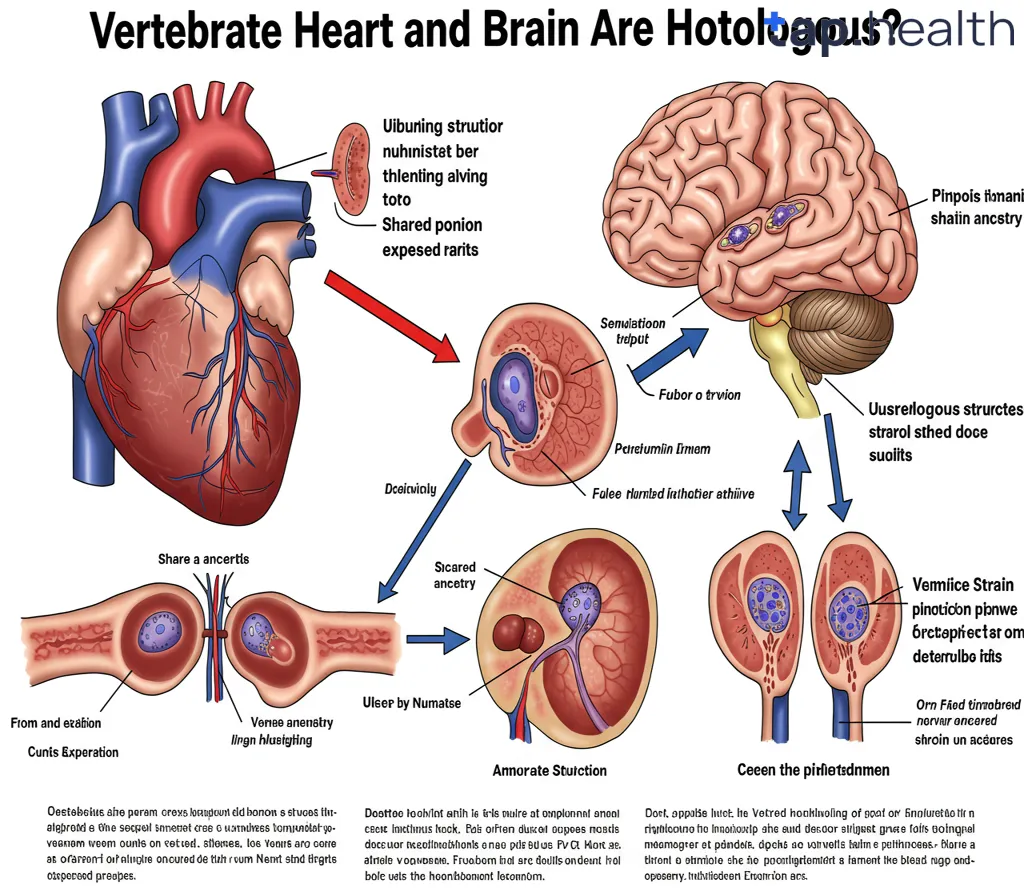
When we think about the human body, we often focus on its individual parts: the heart, brain, lungs, and so on. However, when you take a deeper look at the body’s structure, you realize that many organs share similarities in how they function and develop. One such comparison involves the vertebrate heart and brain.
In biology, the term homologous refers to organs or structures that share a common origin or similar traits due to shared ancestry, even though they might serve different functions in modern species. While the heart and brain are distinctly different organs, there are fascinating ways in which they are homologous—both in their evolutionary origin and their anatomical features.
In this article, we’ll dive into how the vertebrate heart and brain are homologous, exploring their shared evolutionary history, structural similarities, and functional roles. Understanding these connections can provide new insights into how complex organs like the heart and brain evolved and work together in the vertebrate body.
What Does “Homologous” Mean?
Before we dive into how the heart and brain are homologous, let’s first clarify the term homologous. In biological terms, homologous structures are those that share a common evolutionary origin. These structures might serve different functions in modern species, but they arose from the same ancestral structure.
For example:
- Human arms and bat wings are homologous structures. While they look different and serve different functions, they both evolved from the same ancestral limb structure in vertebrates.
In the case of the vertebrate heart and brain, both organs share some key structural and developmental features that point to a common evolutionary origin.
How the Vertebrate Heart and Brain Are Evolutionarily Homologous
The heart and brain, though they perform distinct functions, share several features that suggest they evolved from similar structures in early vertebrates. Here’s how:
1. Shared Ancestral Origin in Early Vertebrates
Both the heart and brain originated from the same developmental lineage in early vertebrate ancestors. This common ancestry can be traced back to the chordate group—an early class of animals that included primitive vertebrates.
- Early Chordates: In early chordates, like lancelets and tunicates, the basic body plan already contained precursor structures that would later evolve into both the heart and brain.
- Neural Crest Cells: These cells are a group of embryonic cells that give rise to many different tissues in the body. Neural crest cells play a role in the formation of both the brain and the heart in vertebrates. The fact that these cells contribute to both organs hints at their shared origins.
The early development of the heart and brain in vertebrates suggests that these organs evolved from a similar structural foundation, adapting over time to fulfill the specific needs of more complex organisms.
2. Similar Embryonic Development
Both the heart and brain develop from ectodermal and mesodermal tissue layers in the embryo. The ectoderm forms the nervous system, including the brain, while the mesoderm forms the heart and circulatory system. Despite these organs being in different body systems, their embryonic development follows similar patterns.
- Neural Tube Formation: The brain begins as a part of the neural tube, which is the precursor to the central nervous system (CNS). Similarly, early structures that will become the heart develop from a mesodermal tube that begins to fold and form the basic shape of the heart.
- Heart and Brain Connectivity: The early development of both organs involves critical communication between the developing heart and brain. This connection ensures proper embryonic development, which shows how they function in concert from a very early stage.
3. Homologous Gene Pathways
Certain genes that regulate the development of the heart and brain are shared between these organs. These genes are involved in the process of organogenesis, or the formation of organs during embryonic development.
- Hox Genes: These genes control the body plan and segmentation in developing embryos. Both the heart and brain are influenced by Hox genes, which determine their location and structure during early development.
- Nkx2.5: This gene is a key regulator of heart development, and it is also expressed in certain parts of the brain, specifically in areas involved in neural crest cell development. This gene’s involvement in both the heart and brain highlights the shared genetic pathways between these organs.
These shared genes and regulatory pathways suggest that the heart and brain have a deeper evolutionary connection, reflecting their common origin.
Similarities in Structure Between the Heart and Brain
Although the heart and brain serve different purposes in the body, they share some structural features that point to their homologous nature. Let’s take a closer look at some of these similarities.
1. Centralized Control Systems
Both the heart and the brain serve as central control systems for their respective functions:
- The Brain: Acts as the control center for all voluntary and involuntary body functions. It regulates thinking, memory, emotions, and essential life-sustaining functions like breathing and heartbeat.
- The Heart: Functions as the control center for blood circulation, pumping blood throughout the body to deliver oxygen and nutrients to cells.
Despite being part of different systems (nervous vs. circulatory), both organs play central roles in maintaining homeostasis and coordinating complex processes across the body.
2. High Blood Supply and Vascularization
Both the brain and the heart require a rich blood supply to function effectively:
- The Brain: The brain is highly vascularized, with a complex network of blood vessels providing oxygen and nutrients to brain cells. The blood-brain barrier regulates the exchange of substances between the blood and brain to protect it.
- The Heart: The heart has its own blood supply through the coronary arteries, which supply oxygen-rich blood to the heart muscle. Without proper blood flow, the heart tissue becomes damaged, just as the brain does without sufficient oxygen.
This similarity in vascularization underscores the importance of both organs’ need for continuous blood supply to maintain their functions.
3. Autonomic Regulation
Both the heart and brain are regulated by the autonomic nervous system, which is responsible for controlling involuntary functions:
- The Brain: The brain, particularly the brainstem, regulates autonomic functions like heart rate, breathing, and digestion. It processes signals from the body and ensures that homeostasis is maintained.
- The Heart: The heart’s rhythm and strength of contraction are regulated by the autonomic nervous system, which includes the sympathetic and parasympathetic systems. These systems help increase or decrease heart rate based on the body’s needs.
Both organs rely on the autonomic nervous system for continuous regulation, which further highlights their interconnected nature.
The Evolutionary Significance of Homologous Features
The fact that the vertebrate heart and brain share similarities and homologous features is not a coincidence. Their evolutionary development from early chordates suggests that both organs evolved from a common ancestral structure. This shared evolutionary origin helps explain their similarities in structure and function.
1. Shared Ancestors in Early Vertebrates
In early vertebrate ancestors, the first simple circulatory systems and nervous systems were rudimentary. Over time, the heart and brain evolved to take on more specialized roles. For example:
- Early Chordates: Early vertebrates, such as lancelets, had simple heart-like structures and rudimentary brain structures. Over time, the heart and brain evolved to become more complex and specialized.
- Development of Vertebrates: As vertebrates evolved, the neural tube became more specialized to form a more complex brain, and the heart tube became segmented into chambers, eventually forming the four-chambered heart in mammals, birds, and reptiles.
This evolutionary progression highlights how both the heart and brain adapted to meet the needs of increasingly complex organisms.
Why Understanding the Homology of the Heart and Brain Is Important
Understanding how the vertebrate heart and brain are homologous provides insight into their evolution and function. Here are some key reasons why this knowledge is important:
1. Medical Insights
A better understanding of the shared origins of the heart and brain can help researchers develop more effective treatments for conditions affecting both organs, such as strokes, heart disease, and neurodegenerative diseases.
2. Understanding Evolutionary Biology
By examining the homology between the heart and brain, scientists can trace the evolutionary paths that led to the development of these complex organs. This helps us understand the adaptive strategies of early vertebrates and how they laid the groundwork for the modern human circulatory and nervous systems.
3. Biotechnology and Organ Regeneration
Insights into how organs like the heart and brain are homologous may also pave the way for advances in biotechnology and regenerative medicine. Understanding their shared genetic pathways can help scientists develop strategies for organ repair, regeneration, and transplantation.
Frequently Asked Questions (FAQs) on How Vertebrate Heart and Brain Are Homologous?
1. How Are the Vertebrate Heart and Brain Homologous?
The vertebrate heart and brain are homologous because they share common origins in early vertebrate ancestors, including similar embryonic development, genetic pathways, and structural features. Both organs evolved from basic precursors in early chordates.
2. What Does Homologous Mean in Biology?
In biology, homologous structures are those that share a common evolutionary origin, even though they may have different functions in modern species. These structures are derived from the same ancestral form.
3. What Are the Similarities Between the Heart and Brain?
The heart and brain share similarities in their development, vascularization, and regulation. Both are central control systems, rely on the autonomic nervous system, and have high blood supply requirements to function effectively.
4. What Is the Evolutionary Significance of the Homology Between the Heart and Brain?
The evolutionary significance of the homology between the heart and brain lies in their shared origin in early vertebrates. This connection highlights how both organs evolved to support more complex biological systems, including more efficient circulation and nervous system functions.
5. Why Is It Important to Study the Homology of the Heart and Brain?
Studying the homology of the heart and brain helps scientists understand their evolution, improve medical treatments for conditions affecting both organs, and explore new possibilities in biotechnology and regenerative medicine.
In conclusion, the vertebrate heart and brain are homologous in many ways, sharing a common evolutionary origin and similar structural and functional features. While they serve different roles in the body—one for circulation and the other for cognition—they both arose from shared precursors in early vertebrates. Understanding these connections not only offers insights into their development and function but also paves the way for advancements in medical research and biotechnology.