It starts as a dull throb behind your eyes. Then it wraps around your forehead like a tight band.
You pop a painkiller, drink a cup of strong chai, and try to push through the afternoon.
But the pain doesn’t go away. In fact, it gets worse—accompanied by a strange dizziness or a sudden sweat.
You ask yourself: “Is this just a migraine? Did I stare at the screen too long? Or is it my sugar?”
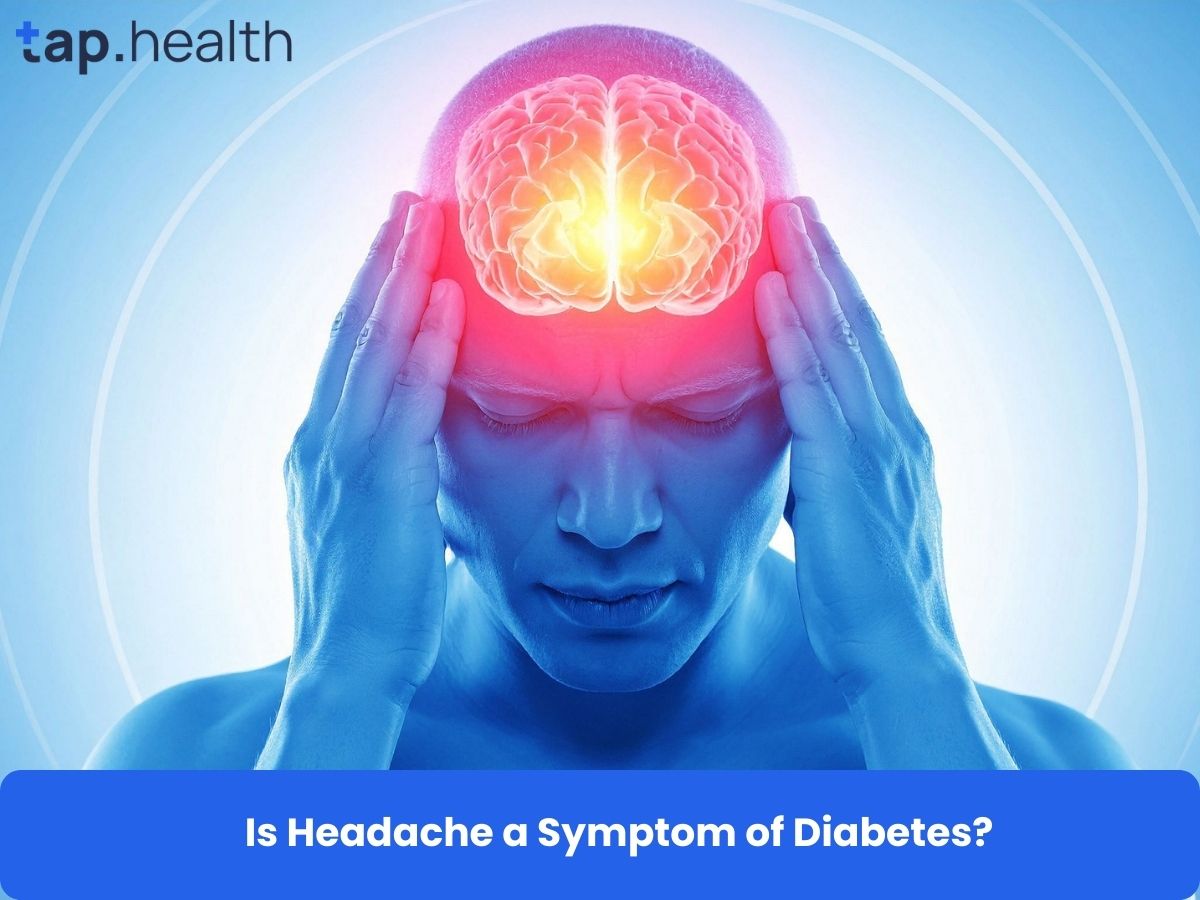
The question is: “Is headache a symptom of diabetes?”
The answer is Yes. But it’s not as simple as “Diabetes = Headache.”
A headache is actually one of the most confusing symptoms because it happens at both extremes. You can get a splitting headache because your sugar is too High (Hyperglycemia), and you can get a pounding headache because your sugar is too Low (Hypoglycemia).
In this comprehensive guide, we are going to decode the “Diabetes Headache.” We will explain the difference between a “High Sugar Ache” and a “Low Sugar Throb,” why dehydration is usually the main villain, and when a headache might be a sign of a serious eye condition like Glaucoma.
The Two Extremes: High vs. Low
Your brain is the biggest consumer of glucose in your body. It needs a steady supply. When that supply fluctuates, your brain complains—loudly.
1. The “High Sugar” Headache (Hyperglycemia)
When it happens: Usually when blood sugar climbs above 200 mg/dL.
- The Cause:
- Dehydration: As we discussed in previous articles, high sugar makes you pee often (Polyuria). This dehydrates your body. When your brain tissue loses water, it shrinks slightly, pulling on the pain-sensitive membranes around it.
- Hormonal Shift: High sugar changes the balance of hormones (like epinephrine), which can constrict blood vessels in the brain, causing a dull ache.
- The Sensation: A slow-building, dull ache. It feels heavy, usually all over the head, and doesn’t go away until your sugar drops.
2. The “Low Sugar” Headache (Hypoglycemia)
When it happens: Usually when blood sugar drops below 70 mg/dL.
- The Cause:
- Starvation: Your brain is literally starving of energy.
- Vascular Dilation: To get more blood to the brain, your arteries widen (dilate) rapidly. This sudden expansion causes a throbbing pain.
- The Sensation: A sudden, sharp, throbbing pain, often felt at the temples. It comes with sweating, shakiness, and blurred vision.
Comparison: Is it a Migraine or Sugar?
People often confuse diabetic headaches with migraines or tension headaches. Here is how to tell them apart.
| Feature | High Sugar Headache | Low Sugar Headache | Standard Migraine |
| Onset | Gradual. Builds up over hours. | Sudden. Hits fast. | Varied (often with aura). |
| Pain Type | Dull, heavy, aching. | Throbbing, pounding. | One-sided, pulsing. |
| Other Signs | Thirst, dry mouth, fatigue. | Sweating, shaking, confusion. | Nausea, light sensitivity. |
| Trigger | Missed meds, heavy meal. | Skipped meal, too much insulin. | Stress, lights, smells. |
| The Fix | Drink water, take meds. | Eat sugar immediately. | Rest in dark room. |
The Red Flag: If you have a headache that doesn’t respond to painkillers (like Paracetamol/Ibuprofen), check your sugar. A chemical headache cannot be cured by pain meds; it needs metabolic balancing.
The Scary Connection: Glaucoma and Neuropathy
Sometimes, the headache isn’t from the sugar levels directly, but from the complications of diabetes.
1. Neovascular Glaucoma
Diabetes damages the blood vessels in the eye. New, abnormal vessels grow and block the fluid drainage in the eye.
- The Pressure: Eye pressure builds up rapidly.
- The Symptom: A severe headache behind the eyes or on the forehead, often with nausea and “halos” around lights.
- Urgency: This is a medical emergency. You can lose vision permanently if not treated.
2. Cranial Neuropathy
Just as diabetes damages foot nerves, it can damage cranial nerves (nerves in the head).
- The Symptom: A sharp, shooting pain behind one eye or on one side of the face. It feels like an electric shock rather than a headache.
Real-Life Scenario
Let’s meet Pooja, a 30-year-old graphic designer.
The Symptom:
Pooja started getting headaches every day at 11:30 AM. It was a pounding pain in her temples. She assumed it was eye strain from her computer. She drank coffee to fix it, but that made her feel shaky.
The Diagnosis:
She wore a Continuous Glucose Monitor (CGM) for a week.
- The Pattern: Her breakfast was just a piece of toast. By 11:30 AM, her sugar was crashing to 65 mg/dL (Hypoglycemia).
- The Headache: Her brain was starving. The coffee (caffeine) masked the tiredness but didn’t give her brain glucose.
The Fix:
- She added two boiled eggs to her breakfast.
- The protein kept her sugar stable.
- The 11:30 AM headache vanished completely.
Expert Contribution
We consulted neurologists to separate the ache from the ailment.
Dr. V. Kapoor, Neurologist:“The ‘Dehydration Headache’ is the most common complaint in my diabetic patients. They come in asking for MRI scans because their head hurts daily. I tell them: ‘Look at your urine color.’ If it’s dark yellow, you don’t need a brain scan; you need water and better sugar control.”
Ophthalmologist Perspective:“Diabetics often ignore brow-ache (pain above the eyebrow). They think it’s sinus. But if you have diabetes, brow pain can be a sign of high eye pressure (Glaucoma). Never ignore a headache that is focused around the eye socket.”
Recommendations Grounded in Proven Research and Facts
If your head is pounding, follow this “Traffic Light” protocol:
- Stop and Test:Never guess.
- If Sugar is <70: STOP. Eat 15g of sugar (juice/candy) immediately. The headache should fade as the brain gets fuel.
- If Sugar is >250: Drink 2 glasses of water immediately. Do NOT eat. Take a short walk if you are feeling well enough, or take your correction insulin dose.
- The “Water Challenge”:If your sugar is normal (100-140) but your head still hurts:
- Drink 500ml of water. Wait 30 minutes.
- If the pain dulls, it was simple dehydration.
- Check Your Blood Pressure:Diabetes and High BP are twins.
- A persistent headache at the back of the head (neck area) is often high blood pressure, not blood sugar. Check your BP.
- Sleep Apnea Check:Do you wake up with a headache every morning?
- This is a classic sign of Sleep Apnea (low oxygen at night). Since many Type 2 diabetics are overweight, this is a very common cause of morning headaches.
Key Takeaways
- Yes, it is a symptom: Headaches happen at both high and low sugar levels.
- High Sugar: Causes a slow, dull ache due to dehydration and thickened blood.
- Low Sugar: Causes a sudden, throbbing pain due to brain starvation.
- Glaucoma Risk: Pain behind the eye could be dangerous eye pressure.
- The Golden Rule: Always check your sugar before taking a painkiller. A painkiller won’t fix a sugar crash.
Frequently Asked Questions (FAQ)
Can I take Disprin or Paracetamol for a diabetic headache?
Yes, it is generally safe. However, if the headache is caused by Low Blood Sugar, the pill won’t help until you eat something. If the headache is caused by High Blood Pressure, painkillers offer only temporary relief. Always treat the cause first.
Why do I get a headache if I skip a meal?
This is a Hypoglycemic Headache. Your brain relies entirely on glucose for energy. It cannot store energy like muscles can. If you skip a meal, your blood glucose drops, and your brain signals distress through pain.
Is migraine more common in diabetics?
Statistically, no. Diabetics don’t get more migraines than the general population. However, the triggers for migraine (dehydration, hunger, stress) are much more common in a diabetic’s life, leading to more frequent attacks.
Can artificial sweeteners cause headaches?
For some people, yes. Aspartame and Sucralose (common in diet sodas) are known migraine triggers for sensitive individuals. If you notice a headache after drinking a diet coke, try switching to Stevia or just plain water.
When should I go to the hospital for a headache?
If you have diabetes and experience a “Thunderclap Headache” (worst headache of your life instantly), sudden vision loss, slurred speech, or if your blood sugar is over 400 mg/dL or under 50 mg/dL and won’t correct, seek emergency help immediately.
References:
(Disclaimer: This content is for educational purposes only. Persistent or severe headaches can be a sign of a stroke or other serious conditions. Consult a doctor immediately if unsure.)