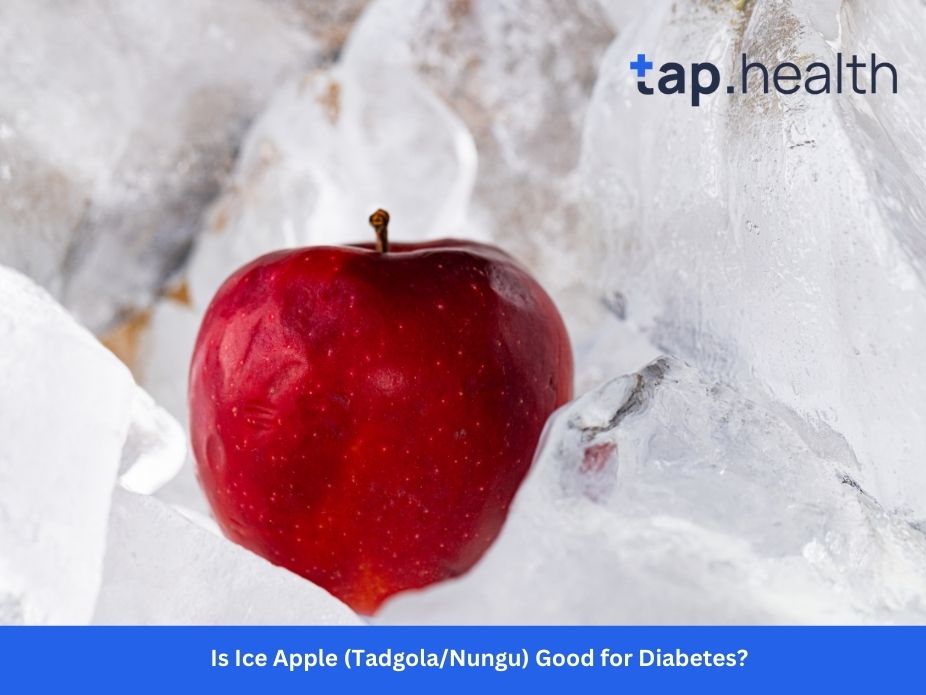
When the harsh Indian summer arrives, street carts fill up with a unique, translucent fruit that looks like a block of ice. Resting on green palm leaves, the ice apple is a seasonal favourite that brings instant relief from the sweltering heat.
If you are living with diabetes, your relationship with sweet summer fruits is often complicated. You know that mangoes and grapes can cause your blood sugar to shoot up. But what about this watery, jelly-like fruit?
You might find yourself asking, “Is ice apple good for diabetes, or is it just another sweet trap?”
Managing your blood sugar does not mean you have to give up all the joys of summer. It just means you need to eat smart. Ice apple is incredibly refreshing, but it does contain natural sugars.
In this comprehensive guide, we will break down exactly how ice apple affects your blood glucose. We will look at its nutritional profile, explain its glycaemic impact, and show you exactly how to enjoy this delicious fruit without causing a sugar spike.
Can Diabetics Eat Ice Apple Safely?
The short answer is yes, people with diabetes can safely eat ice apples.
Unlike dense, sugary fruits, the ice apple is mostly made of water. This means it provides a very low load of carbohydrates per serving. When eaten in moderation, it will not cause a sudden or dangerous spike in your blood sugar levels.
However, the key word here is “moderation.” Because it tastes so light and watery, it is very easy to lose track and overeat. Overeating any fruit will eventually add up to a high sugar load. If you stick to the right portion size, ice apple can be a fantastic, hydrating addition to your diabetic diet.
What Is Ice Apple? (Tadgola / Nungu / Palm Fruit)
Before we talk about blood sugar, let us understand what this fruit is. The ice apple grows on the Palmyra palm tree, a sturdy tree native to South Asia.
When the top of the dark purple palm fruit is sliced off, it reveals translucent, pale-white, jelly-like sockets inside. Biting into one feels like drinking a sweet, fleshy pouch of water.
Common Names Across India
India is a diverse country, and this beloved fruit goes by many names depending on where you live:
- Tadgola: This is what it is called in Maharashtra and most Hindi-speaking regions.
- Nungu: The common term used in Tamil Nadu.
- Taal: Widely used in West Bengal.
- Munjal: The name used in parts of Andhra Pradesh and Telangana.
Why It’s Popular in Summer
Nature provides exactly what our bodies need. The ice apple arrives right when the temperature crosses 40 degrees Celsius.
It is nature’s perfect cooling agent. Packed with water and essential electrolytes like potassium, it cools the stomach, prevents heatstroke, and quenches thirst far better than artificial cold drinks. For anyone braving the Indian summer, it is a seasonal blessing.
Nutritional Profile of Ice Apple (What Matters for Diabetes)
To understand if a food is safe for diabetes, we must look at what is inside it. The ice apple is incredibly light on the stomach, but it does contain nutrients that affect your body.
Water Content and Calories
The most important feature of an ice apple is its moisture. A staggering 85% to 90% of an ice apple is just pure water.
Because it is mostly water, its calorie count is very low. A 100-gram serving (about 3 to 4 peeled pieces) contains roughly 40 to 45 calories. This makes it an excellent snack if you are trying to manage your weight alongside your diabetes.
Carbohydrates and Natural Sugars
Carbohydrates are what directly impact your blood sugar. In a 100-gram serving of ice apple, you will find about 10 to 11 grams of carbohydrates.
Out of these carbohydrates, the natural sugar content is roughly 5 to 7 grams. This is considered a very low sugar profile for a fruit. It provides a mild sweetness without loading your bloodstream with heavy glucose.
Fibre (How Much It Really Helps)
Ice apples contain a modest amount of dietary fibre, which gives the fruit its slightly chewy texture.
While it is not as high in fibre as an apple or a guava, the fibre it does have is highly beneficial. It aids in digestion and helps slow down the rate at which the natural sugars enter your bloodstream, preventing a sudden glucose spike.
Does Ice Apple Raise Blood Sugar?
Any food containing carbohydrates will eventually turn into glucose in your body. The question is not whether it raises blood sugar, but how fast and how much it raises it.
Natural Sugar vs Added Sugar (Packaged Desserts)
The sugar in a fresh ice apple is natural fructose. Your body handles natural fruit sugar much better than refined white sugar because it is packaged with water and nutrients.
However, if you buy canned ice apples or eat ice apple desserts at a restaurant, be warned. These are often soaked in sugar syrup, turning a healthy fruit into a dangerous sugar bomb for a diabetic. Always stick to the fresh, raw fruit.
How Portion Size Changes the Sugar Spike
Portion size dictates everything in diabetes. If you eat two pieces of ice apple, you are only taking in about 3 grams of sugar. Your body can process this easily.
If you sit down and eat ten pieces because they feel “light,” you are now consuming a large load of carbohydrates. This larger volume will overwhelm your insulin response and cause your blood sugar to spike.
Eating on Empty Stomach vs After Meals
Eating fruit on a completely empty stomach causes the sugars to be absorbed very quickly.
If you eat an ice apple first thing in the morning, you might see a sharper rise in your blood sugar. It is much safer to eat it as a mid-morning snack or an hour after your lunch, when your digestive system is already actively processing other foods.
Glycaemic Index and Glycaemic Load of Ice Apple (Practical Explanation)
If you have diabetes, you have probably heard of the Glycaemic Index (GI). It is a scale that ranks foods based on how quickly they raise blood sugar.
Why GI Is Hard to Pinpoint for This Fruit
There is very little official clinical testing on the exact GI number of the Indian ice apple. However, leading nutritionists classify it as a Low to Medium GI food (estimated around 40).
Because of its high water volume and fibre, it does not act like a high-GI food (like white rice or watermelon), which causes rapid sugar spikes.
Why GL + Serving Size Is More Useful
For watery fruits, the Glycaemic Load (GL) is a much better tool. GL factors in the actual portion size you are eating.
Because an ice apple has so few carbs per piece, its Glycaemic Load is extremely low. This means that a standard serving of 2 to 3 pieces will have almost no noticeable impact on your blood sugar levels.
Benefits of Ice Apple for People with Diabetes (When Eaten Right)
When consumed in the right amounts, the ice apple is not just “safe”—it is actually highly beneficial for people managing diabetes.
Hydration Support in Hot Weather
People with diabetes are prone to dehydration. When your blood sugar is slightly high, your kidneys work overtime to flush it out through urine, leaving you dehydrated.
The massive water content in an ice apple replenishes lost fluids and electrolytes, keeping you hydrated and preventing fatigue during the harsh summer months.
Lower-Calorie Sweet Option Compared to Desserts
Summer brings cravings for ice creams, faloodas, and sweet cold drinks. These are terrible for blood sugar.
An ice apple provides a naturally sweet, cooling alternative. It satisfies the brain’s craving for a summer treat for a fraction of the calories and a fraction of the sugar.
May Help Reduce Cravings (If Used as a Swap)
Because it takes some effort to chew the jelly-like flesh, an ice apple forces you to eat slowly. This chewing process, combined with the water volume, sends signals of fullness to your brain. This helps curb the desire to snack on unhealthy, processed biscuits or namkeen later in the day.
Risks and Precautions for Diabetics
While the ice apple is healthy, it is not flawless. There are a few risks every diabetic should keep in mind before indulging.
Overeating = Sugar Load Adds Up
The biggest risk is the illusion of lightness. Because Tadgola feels like eating solid water, people tend to eat too many.
Remember, 10 pieces of ice apple can contain up to 15 grams of sugar. If you overeat, your blood sugar will rise, just as it would with any other carbohydrate-heavy food.
Ice Apple in Milkshakes/Syrups Can Be High Sugar
Many juice centers sell “Nungu Milkshakes” or “Tadgola Sharbat.” These drinks are usually blended with full-fat milk, ice cream, and lots of refined sugar.
For a diabetic, these drinks are a strict no-go. The blending destroys the fibre, and the added sugar will cause an immediate and dangerous glucose spike.
Digestive Sensitivity (Bloating/Loose Motions in Some People)
The specific type of fibre and water in the ice apple has a natural laxative effect.
If you have a sensitive stomach, eating too much can cause bloating, stomach cramps, or loose motions. Diabetics often have slower digestion (gastroparesis), so it is best to introduce it slowly to see how your stomach reacts.
If You’re on Insulin/Sulfonylureas (Low Sugar Risk If Meals Are Skipped)
If you take strong diabetes medications or insulin, you must eat enough carbs to prevent a low sugar crash (hypoglycaemia).
An ice apple is so low in calories that it cannot replace a proper meal. If you skip lunch and only eat ice apples, your blood sugar might drop too low. Always use it as a snack, never as a meal replacement.
How Much Ice Apple Can a Diabetic Eat? (Portion Guidance)
To enjoy the benefits without the risks, you must follow strict portion control.
Safe Serving Size (Segments/Small Bowl Method)
A safe and healthy portion for a diabetic is 2 to 3 individual segments (pieces) per day.
This equals roughly 50 to 60 grams of fruit. This small bowl will give you the cooling effect and the sweetness without tipping your blood sugar over the edge.
How Often per Week Is Reasonable
Since it is a seasonal fruit, you can enjoy it safely 3 to 4 times a week during the summer. You do not need to eat it every single day. Rotate it with other safe fruits like berries, apples, or papayas to get a wide variety of vitamins.
Signs You’re Overdoing It (Post-meal readings)
The best way to know your limit is to use your glucometer. Check your blood sugar two hours after eating ice apples.
If your reading jumps by more than 30 to 40 points from your pre-meal level, you have eaten too much. Reduce the portion to just one or two pieces the next time.
Best Way to Eat Ice Apple for Diabetes
How you eat your fruit is just as important as how much you eat. Here are the smartest ways to consume it.
Eat It Plain (No Added Sugar)
The golden rule: eat it exactly as nature made it. Wash it, peel the thin yellowish skin if you prefer, and eat the translucent flesh raw. Do not sprinkle sugar, jaggery, or chaat masala on it.
Pair It with Protein/Fat (Nuts/Curd)
If you want to make it even safer for your blood sugar, pair it with a healthy fat or protein.
Eat your small bowl of ice apple alongside a handful of soaked almonds or walnuts. The fat and protein in the nuts will slow down the digestion of the fruit sugars, ensuring a completely flat glucose response.
Best Time to Eat (Mid-morning or After Lunch)
The perfect time for this fruit is around 11:00 AM as a mid-morning snack, or around 4:00 PM to beat the afternoon heat. Your body is active during these hours and will easily burn off the mild natural sugars.
Avoid at Night If Your Fasting Sugar Runs High
It is generally best to avoid eating any fruits late at night. Your body’s metabolism slows down when you sleep. Eating ice apples right before bed might leave unprocessed sugars in your blood, resulting in a higher fasting blood sugar reading the next morning.
Ice Apple vs Other Summer Fruits for Diabetes
To see where the ice apple stands, let us compare it to other popular summer fruits in India.
Ice Apple vs Watermelon
Watermelon is the ultimate summer fruit, but it has a high Glycaemic Index (around 72-80). It digests very fast and can cause a quick sugar spike. Ice apple is a much better choice for diabetics because its jelly-like structure digests slower than the watery flesh of a watermelon.
Ice Apple vs Muskmelon
Muskmelon (Kharbuja) is another excellent diabetes-friendly fruit. It is low in carbs and high in hydration. Ice apple and muskmelon are very similar in their sugar impact. You can safely alternate between these two fruits throughout the week.
Ice Apple vs Mango
Mango is the undisputed king of fruits, but it is heavily loaded with sugar and has a higher glycaemic impact. For someone struggling to control their blood sugar, a bowl of ice apple is infinitely safer than indulging in a bowl of ripe mangoes.
Who Should Avoid Ice Apple or Limit It Strictly
While it is a fantastic fruit, there are a few medical scenarios where ice apple should be avoided or heavily restricted.
Uncontrolled Diabetes / Very High HbA1c
If your blood sugar levels are currently erratic and your HbA1c is over 8.5%, your doctor will likely ask you to stop eating all sweet fruits. Until your levels are stable, even the mild sugar in an ice apple can add unnecessary stress to your system.
Diabetes + Kidney Disease (If on Fluid/Potassium Restriction)
Many people with long-term diabetes develop Chronic Kidney Disease (CKD). Ice apple is rich in potassium and consists mostly of water. If your nephrologist has put you on a strict fluid limit or a low-potassium diet, you must avoid ice apple to protect your kidneys.
IBS or Sensitive Digestion
If you suffer from Irritable Bowel Syndrome (IBS) or frequently experience bloating, the specific fibres and high water volume in this fruit might trigger a flare-up. Eat just one piece to test your stomach’s tolerance before eating a full bowl.
Real-Life Scenario
Mr. Sharma, a 58-year-old retired teacher from Chennai, has lived with Type 2 diabetes for eight years. Every May, the heat would leave him exhausted, but he was terrified of drinking fruit juices because they always spiked his blood sugar.
One afternoon, he saw a vendor selling fresh Nungu (ice apple). He craved the cooling sweetness but was hesitant. He decided to buy a few, eating just three pieces alongside a handful of almonds around 11 AM.
Two hours later, he tested his blood sugar. To his delight, his reading was a perfectly stable 138 mg/dL. He had found a way to enjoy a sweet, hydrating summer treat without compromising his health. From that day on, a small portion of Nungu became his favourite guilt-free summer snack.
Read this: Is Ice Apple (Tadgola/Nungu) Good for Gestational Diabetes?
Expert Contribution
Clinical dietitians consistently emphasize the importance of choosing local, watery fruits during the summer months for diabetes management.
A senior diabetes educator notes: “Patients often complicate their diets by searching for expensive, imported low-sugar berries. I always point them back to native options like the ice apple. Its high water-to-sugar ratio makes it an exceptional tool for hydration. As long as the patient eats it in its raw form and sticks to a two-to-three segment portion, it fits perfectly into a diabetic meal plan without causing any glycaemic distress.”
Recommendations Grounded in Proven Research and Facts
According to nutritional data provided by the National Institute of Nutrition (India), fruits from the Palmyra palm family offer significant functional health benefits.
- Hydration Defence: The 85%+ water content aids in deep cellular hydration. This is crucial for diabetics, as elevated blood sugar naturally leads to frequent urination and an increased risk of severe dehydration during summer.
- Electrolyte Balance: The presence of natural sodium and potassium in the fruit helps prevent the fatigue, muscle cramps, and weakness that are commonly associated with both diabetes and hot weather.
- Low Glycaemic Impact: Nutritional observations confirm that highly fibrous, water-dense fruits like the ice apple do not trigger the rapid, dangerous insulin spikes associated with denser, starchier fruits like bananas or chickoos.
Frequently Asked Questions on Is Ice Apple (Tadgola/Nungu) Good for Diabetes?
Is ice apple good for diabetes?
Yes, ice apple is a very good fruit for diabetes. It has a low calorie count, a low glycaemic impact, and high water content. It provides hydration and mild sweetness without causing sharp blood sugar spikes when eaten in moderation.
Will Nungu increase sugar levels?
Nungu (ice apple) will not significantly increase your sugar levels if you eat a small portion (2 to 3 pieces). However, because it contains natural fructose, overeating it can eventually lead to a noticeable rise in blood glucose.
How many ice apples can a diabetic eat in a day?
A person with diabetes can safely eat 2 to 3 segments (pieces) of ice apple per day. This provides roughly 50 to 60 grams of fruit, which keeps the total carbohydrate intake well within safe limits.
Can we eat ice apple at night?
It is generally better for diabetics to avoid eating sweet fruits late at night. Your metabolism slows down during sleep, and eating ice apples before bed could lead to a slightly higher fasting blood sugar reading the next morning.
Does ice apple cause weight gain?
No, ice apple is excellent for weight management. It contains only about 40 to 45 calories per 100 grams and has virtually no fat. Its high water content keeps you full, reducing the urge to snack on high-calorie junk foods.
Is ice apple syrup or juice safe for diabetics?
No. Packaged ice apple juices, syrups, or milkshakes from juice stalls are heavily loaded with refined sugar and preservatives. Diabetics should strictly avoid these and only consume the raw, fresh fruit.
Is Tadgola good for diabetic kidney patients?
If you have Diabetic Kidney Disease and have been advised to follow a low-potassium or strict fluid-restricted diet, you should consult your doctor before eating Tadgola, as it contains potassium and very high water volume.