Many people in India ask the same question: is neem leaves good for diabetes? The honest answer is it may help support blood sugar control in some people, but it is not a cure, not a replacement for diabetes medicines, and not something to use carelessly. The best available human evidence suggests that a specific standardised neem extract may improve fasting blood sugar, post-meal blood sugar, HbA1c, and insulin resistance when used along with regular treatment. But that does not automatically mean fresh neem leaves, homemade juice, or neem water will work the same way.
That difference matters. Diabetes is a long-term condition that can affect the eyes, kidneys, nerves, heart, and blood vessels. WHO and NIDDK both stress that diabetes management is built mainly on healthy lifestyle habits, regular monitoring, and prescribed treatment—not on one herb or home remedy.
So, if you want the simple version: neem leaves may offer supportive benefits for type 2 diabetes, but the research is still limited, the dose is not standard for raw leaves, and the wrong use can increase the risk of low blood sugar or other side effects.
What Are Neem Leaves? (Neem / Azadirachta indica)
Neem comes from the tree Azadirachta indica, which is widely used across South Asia. Different parts of the neem tree—such as the leaves, bark, flowers, seeds, and oil—have been used in traditional medicine and home remedies for many years. Neem is also used for oral care, skin problems, and stomach-related issues.
But one important point is often missed: all neem products are not the same. Fresh leaves, dried powder, capsules, bark extract, and neem oil are very different in strength, composition, and safety. This is why research on one type of neem product cannot be directly applied to every other form.
Can Neem Leaves Help Lower Blood Sugar?
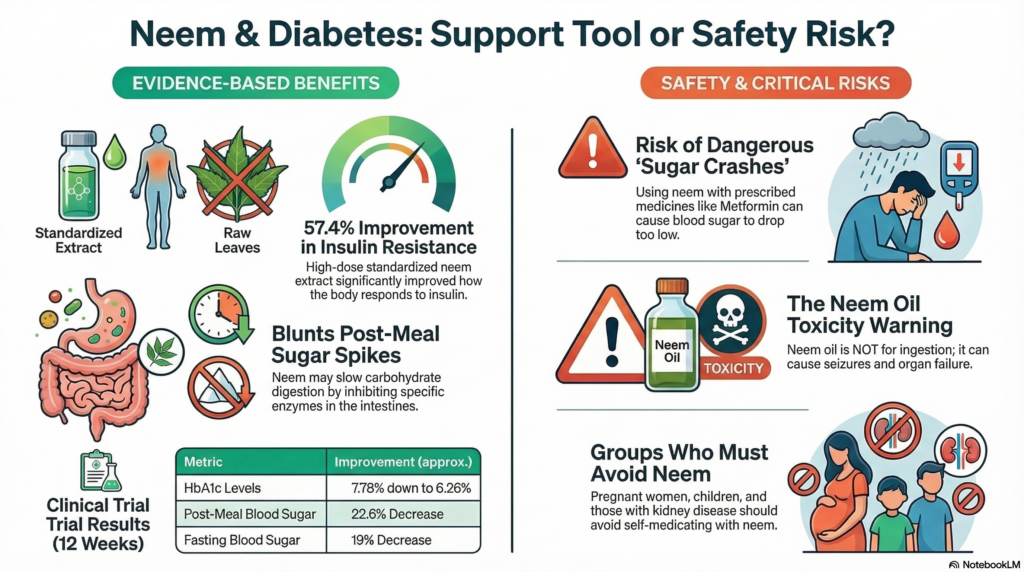
Yes, possibly—but only with caution and realistic expectations. In a randomised, double-blind, placebo-controlled trial, 80 adults with type 2 diabetes already taking metformin were given a standardised aqueous neem extract or placebo for 12 weeks. The neem groups showed improvements in fasting blood sugar, post-prandial blood sugar, HbA1c, and insulin resistance compared with placebo.
At the highest studied dose in that trial, post-meal blood sugar fell by about 22.6%, fasting blood sugar by about 19%, and HbA1c dropped from 7.78% to 6.26% over 12 weeks. That is encouraging. But the study used a specific, standardised extract taken twice daily, not random household amounts of fresh leaves or neem juice.
So the better answer is this: neem may help lower blood sugar, but the strongest evidence is for a tested extract, not for every traditional home use.
Read this : Is Arbi (Taro) Leaves Good for Diabetics?
How Neem Leaves May Help in Diabetes (Proposed Mechanisms)
May Improve Insulin Sensitivity
One of the most interesting findings from the human trial was the drop in HOMA-IR, a common measure used to estimate insulin resistance. In the highest-dose group, HOMA-IR decreased by 57.4% at 12 weeks. That suggests neem may help the body respond better to insulin, at least in the context of that particular extract.
Animal and review data also suggest neem may influence insulin signalling pathways and glucose handling, but these mechanisms still need stronger confirmation in larger human studies.
May Reduce Post-Meal Blood Sugar Spikes
Post-meal sugar spikes are a big problem in diabetes. Neem may help here by slowing the digestion or absorption of carbohydrates. Research on neem compounds has shown alpha-glucosidase and related intestinal enzyme inhibition, which is one possible explanation for lower post-meal readings.
That idea fits the human trial results, where post-prandial blood sugar improved significantly in the neem groups by week 8 and week 12.
Antioxidant and Anti-Inflammatory Effects
Diabetes is not just about sugar. It also involves oxidative stress and chronic low-grade inflammation, both of which contribute to long-term complications. The neem diabetes trial reported improvements in oxidative stress and inflammatory markers, and review papers describe antioxidant effects as an important part of neem’s metabolic action.
This does not prove neem can prevent complications on its own, but it helps explain why researchers remain interested in it.
Possible Support for Lipids and Metabolic Health
Some older lab and animal studies suggest neem may also help with cholesterol, blood pressure, or broader metabolic syndrome features. However, the stronger human diabetes trial found no significant effect on lipid profile over 12 weeks. So this benefit remains uncertain in real-world diabetes care.
Scientific Evidence on Neem Leaves for Diabetes
What Research Suggests
The most useful human evidence we have is the 12-week randomised clinical trial in type 2 diabetes and a similar clinical study in people with metabolic syndrome, where participants also received neem or placebo for 12 weeks. These studies suggest that neem extract may support glycaemic control and insulin resistance markers.
That is stronger than saying “people have used neem for years,” because it moves the conversation from tradition to measured outcomes.
What Is Still Not Proven
Even with those positive findings, several things are still not proven. We do not know whether fresh leaves work the same way as a tested extract, whether neem helps over many months or years, whether it reduces diabetic complications, or whether it allows people to safely reduce medicine doses. NIDDK is clear that there is no clear proof that specific herbs or supplements manage diabetes reliably, and supplements can interfere with medicines.
So neem fits the category of a possible supportive remedy, not a guideline-level treatment.
Why Human Evidence Is Limited
The evidence is limited because the human trials are few, relatively small, and short-term. The diabetes study enrolled 80 participants and lasted 12 weeks, and the authors themselves noted the study’s limitations, including sample size and short duration.
That means the evidence is promising—but not final.
Best Ways to Use Neem Leaves for Diabetes
Chewing Fresh Neem Leaves
This is one of the most common traditional methods. The main problem is that there is no evidence-based standard number of fresh leaves proven to work for diabetes. Leaf size, bitterness, age of the plant, and preparation all change the strength.
Because of that, chewing fresh leaves should be viewed as a traditional practice, not a precisely dosed medical treatment. Anyone already on diabetes medicines should be especially careful.
Neem Leaf Juice
Neem juice is more concentrated than chewing leaves, which means the effect may be stronger—but also more unpredictable. Juice can be harder on the stomach, and when combined with diabetes medicines it may raise the chance of blood sugar dropping too low.
If someone still wants to try neem juice, it should be done only after checking with a doctor and monitoring sugar closely.
Neem Tea / Decoction / Boiled Neem Water
Many people drink boiled neem leaves water or neem tea in the morning. There is no strong human evidence showing that this works better than other forms. In fact, long-term unsupervised use of leaf teas is not ideal, because older reports have linked prolonged leaf-tea use to kidney problems in some cases.
So neem water is not automatically “safe because it is natural.” Dose, duration, and the person’s kidney and liver health still matter.
Neem Powder / Capsules (Caution Section)
Capsules and powders can seem more convenient, but quality varies a lot. A major advantage of the clinical trial was that it used a standardised aqueous extract, taken twice daily after food, with monitored safety. Random powders bought without quality control may not match that.
There is also some evidence of herb-drug interaction potential through CYP enzyme inhibition in vitro, which is another reason not to mix neem supplements casually with prescription medicines.
How Much Neem Leaves Can a Diabetic Take? (Dose Guidance)
The safest evidence-based answer is this: there is no universally accepted daily dose for raw neem leaves for diabetes. The strongest human data come from a standardised extract given at 125 mg, 250 mg, or 500 mg twice daily for 12 weeks—not from “5 leaves,” “10 ml juice,” or “1 cup neem water.”
That means you cannot directly convert the trial dose into a home remedy dose. Fresh leaves, juice, decoctions, and powders vary too much.
Starting Low and Monitoring Sugar
If a doctor still agrees that you can try neem, the practical rule is to start with the smallest amount, use only one form at a time, and keep checking fasting and post-meal sugars. This is especially important if you already take insulin or tablets that increase insulin release.
Frequency and Timing (Morning vs With Meals)
There is no strong proof that taking neem early morning on an empty stomach works better than taking it with meals. In the clinical trial, the studied extract was taken after food, which may also help reduce stomach upset.
So the common belief that “morning empty stomach is always best” is more tradition than proof.
Does Neem Leaves Cause Low Blood Sugar? (Hypoglycaemia Risk)
Yes, it can. WebMD notes that neem may lower blood sugar, and taking it with diabetes medicines may make blood sugar drop too low.
Low blood glucose can cause symptoms such as shaking, hunger, sweating, dizziness, irritability, headache, blurred speech, confusion, or a fast heartbeat. Severe hypoglycaemia can lead to seizures or loss of consciousness, and it needs urgent treatment.
The 12-week neem extract trial did not report hypoglycaemia in participants, but that does not remove the real-world risk. The participants were selected, monitored, and used a specific product under study conditions.
Neem Leaves Side Effects and Risks
Stomach Upset (Nausea, Acidity, Loose Motions)
Digestive side effects are among the most likely problems with oral neem use. In the diabetes trial, two participants reported mild gastrointestinal disturbances. Other neem sources also mention vomiting and diarrhoea, especially with stronger or unsafe preparations.
Allergy or Skin Reactions
Neem can also trigger allergy-related problems. Reports include allergic contact dermatitis, skin irritation, and even allergic stomatitis after ingesting neem leaves in some cases.
Liver/Kidney Safety Concerns (High Dose / Long Use)
This is an area where people should be extra careful. Some sources warn that neem might harm the liver and kidneys, while some animal studies suggest protective effects and others show mixed or unclear results. There are also older reports of renal failure linked to prolonged leaf tea use.
The practical conclusion is simple: if you have liver disease or kidney disease, do not self-medicate with neem.
Unsafe Neem Oil vs Neem Leaves (Important Warning)
This point deserves special attention: neem oil is not the same as neem leaves. Swallowing neem oil has been linked to severe poisoning, including vomiting, drowsiness, seizures, metabolic acidosis, hepatic failure, multiorgan failure, coma, and death—especially in children.
So if you are asking about diabetes support, keep neem oil out of the conversation. Do not take neem oil by mouth.
Who Should Avoid Neem Leaves or Consult a Doctor First
People on Insulin / Sulfonylureas
If you use insulin, sulfonylureas, or other medicines that lower blood sugar strongly, neem can make control unpredictable and increase the chance of hypoglycaemia.
Pregnant or Breastfeeding Women
Pregnancy is a clear caution area. Some oral neem products have been linked with miscarriage risk, and reliable breastfeeding safety data are lacking. A dermatology review also states that neem leaf or oil ingestion is contraindicated in pregnancy and lactation.
People with Autoimmune Conditions
Neem has shown immune-activating or immunomodulatory effects in lab and animal studies. Because of that, people with autoimmune disease or people taking immunosuppressive treatment should speak to their doctor before using it regularly.
People with Liver or Kidney Disease
Because kidney and liver safety remains uncertain in oral self-use, people with existing organ disease should avoid unsupervised neem use.
Children
Oral neem products are not for children, especially because neem oil ingestion has caused serious poisoning. Some reviews also caution against neem leaf or oil ingestion in children under 12.
Neem Leaves vs Other Natural Remedies for Diabetes
Neem vs Karela
Karela, or bitter melon, is another common traditional remedy. NCCIH says that research on herbal supplements such as bitter melon has been limited in number, size, and quality, and has not proven effectiveness overall. Some reviews also call the evidence for bitter melon inconclusive. Neem at least has one small controlled human trial of a standardised extract in type 2 diabetes.
Neem vs Methi
Fenugreek, or methi, probably has more human studies than neem. But NCCIH also notes that many fenugreek studies are not high quality. So methi may have a broader evidence base, while neem has fewer but somewhat more targeted extract trials. Neither should replace proper diabetes care.
Neem vs Jamun Seed
Jamun seed is another popular traditional option, especially in India. But from a modern clinical point of view, jamun—like neem—still belongs in the adjunct-only category, not the “main treatment” category. The bigger lesson is not which herb is “best,” but that major diabetes guidance still prioritises diet, physical activity, monitoring, and medicines where needed.
How to Use Neem Safely Along With Diabetes Medicines
Monitoring Plan (Fasting + Post-Meal)
If a doctor allows you to try neem, keep the plan simple. Record fasting sugar and 2-hour post-meal sugar several times a week at the beginning. Also note symptoms such as sweating, shaking, dizziness, or confusion.
When to Reduce / Stop
Stop neem and seek medical advice if your readings start going too low, if you feel hypo symptoms, or if you develop vomiting, diarrhoea, drowsiness, confusion, or any unusual side effect.
Talking to Your Doctor Before Combining
This is not just routine advice. NIDDK specifically says to talk with a healthcare professional before taking supplements for diabetes, because they can cause side effects or affect how medicines work. Neem also has documented herb-drug interaction potential in laboratory interaction research.
Common Myths About Neem and Diabetes
Myth: Neem Can Cure Diabetes Permanently
False. No major diabetes authority says neem cures diabetes. WHO and NIDDK both emphasise ongoing lifestyle management and, when needed, medicine-based care.
Myth: More Neem Means Faster Control
False. More is not always better. Higher or stronger oral neem use may increase side effects, and neem oil can be dangerous.
Myth: Neem Replaces Medicines
False again. Even the positive neem trial studied neem on top of metformin, not instead of it.
Real-Life Scenario
Imagine a 52-year-old man with type 2 diabetes who is already taking metformin and hears from a neighbour that chewing neem leaves every morning will “control sugar naturally.” The safer path is not to stop medicine and start neem blindly. The safer path is to continue prescribed treatment, speak to a doctor, note fasting and post-meal readings, and only try a small, consistent neem form if approved.
If he starts feeling shaky, hungry, sweaty, dizzy, confused, or unusually weak, or if his readings begin to fall too low, neem should be stopped and medical advice should be taken.
Expert Contribution
From an evidence-based clinical writing perspective, the strongest conclusion is this: neem is promising, but it is still an adjunct, not a frontline diabetes therapy. The trial data are interesting enough to justify further research, especially for standardised extracts, but not strong enough to recommend routine self-treatment with fresh leaves, juices, or decoctions for everyone.
In practical diabetes care, the safest message is to treat neem like a possible support tool, similar to many other complementary remedies: helpful for some, risky for others, and never a substitute for structured diabetes management.
Recommendations Grounded in Proven Research and Facts
- Treat neem as an add-on, not a cure. The evidence is supportive but limited.
- Do not replace metformin, insulin, or other prescribed treatment with neem.
- Avoid oral neem oil completely. It has been linked with severe poisoning.
- There is no standard daily dose for raw neem leaves for diabetes. The best study used a specific extract, not home leaf counts.
- Monitor blood sugar if you use neem with diabetes medicines.
- Pregnant women, breastfeeding women, children, and people with kidney/liver problems should avoid self-use.
When to See a Doctor
Very High Sugar Symptoms
See a doctor if you have symptoms such as extreme thirst, frequent urination, blurred vision, tiredness, or unexplained weight loss, especially if they are persistent or worsening. These are classic diabetes warning signs.
Low Sugar Symptoms
Get urgent help if you develop signs of low blood sugar such as shaking, sweating, dizziness, confusion, fast heartbeat, inability to speak clearly, seizure, or loss of consciousness.
Persistent Side Effects After Neem Use
If neem use causes ongoing vomiting, diarrhoea, drowsiness, visual symptoms, confusion, or other unusual reactions, stop it and get medical advice.
Key Takeaways
So, is neem leaves good for diabetes? The best evidence says it may help support blood sugar control, especially in the form of a standardised extract, but the evidence is still limited and it is not a cure. Fresh neem leaves, juice, and boiled neem water are traditional practices, but they do not have the same level of dosing clarity as a clinical trial product.
For most people, the smart approach is simple: use neem only as a supportive option, never as a replacement, and only with proper monitoring if you already take diabetes medicines.
Frequently Asked Questions on Is Neem Leaves Good for Diabetes?
How to use neem leaves for diabetic patients?
Neem can be used in traditional forms such as fresh leaves, juice, tea, or powder, but there is no standard medically proven home dose for diabetes. The safest approach is to use it only after talking with a doctor and to monitor fasting and post-meal sugar if you are already on medicines.
How much neem leaf should I take daily for diabetes?
There is no universally accepted daily dose for raw neem leaves. The best human trial used a standardised extract taken twice daily, which cannot be directly converted into a fixed number of leaves or a spoon of juice.
Is neem juice good for diabetes?
Neem juice may help some people, but it is more concentrated and less predictable than eating leaves. It may also increase the risk of stomach upset or low blood sugar when taken with diabetes medicines.
Can neem leaves lower blood pressure?
Possibly, but the evidence is not strong enough to recommend neem as a blood pressure remedy. Reviews suggest potential antihypertensive effects, yet human evidence remains limited.
What are the benefits of drinking boiled neem leaves water?
Boiled neem water is traditionally used for blood sugar support, but there is no strong proof that it works better than other forms. Because strength varies and long-term use of leaf tea has raised safety concerns in some reports, it should not be used casually for long periods.
What is the effect of neem leaves on the kidneys?
The kidney story is mixed. Some research suggests protective effects in animals, while other sources warn that neem may harm the kidneys, and there are anecdotal reports linked to prolonged leaf tea use. People with kidney disease should avoid self-treatment with neem.
Can I take neem leaves with metformin?
Do not combine them casually. The main human study used neem along with metformin under monitored conditions, but neem may still increase the risk of low sugar or drug interactions in real life.
Does neem cure diabetes permanently?
No. Neem may support glucose control in some cases, but it does not cure diabetes permanently and should not replace evidence-based treatment.