It is 5 PM. The kettle is whistling, and the aroma of Masala Chai is filling your kitchen. You reach for the sugar jar, but your hand pauses. You remember the news article you read about diabetes. You remember your doctor’s warning about your waistline. Next to the sugar jar sits a small bottle of Stevia drops or a box of green sachets.
You stand there, spoon in mid-air, debating.
“Is this natural leaf really better than the sugar we have used for generations?”
“Will it ruin the taste of my tea?”
“Is it safe, or just another chemical fad?”
The debate of Stevia vs. Sugar is one of the hottest topics in nutrition today. For decades, sugar was the king of the Indian kitchen. It was in our morning tea, our festive mithai, and our evening snacks. But as health consciousness rises—and with India becoming the diabetes capital of the world—people are desperately looking for alternatives.
If you are confused by the conflicting advice, you are not alone. Some say sugar is poison; others say artificial sweeteners are worse. Where does Stevia fit in?
In this comprehensive, we will settle the debate once and for all. We will compare them calorie for calorie, look at how they affect your insulin, discuss the taste factor, and help you decide which white powder deserves a spot in your pantry.
What Is Stevia?
Before we compare, let’s define the challenger. Stevia is often called a “novel sweetener,” but it is actually ancient.
The Origin: Stevia comes from the plant Stevia rebaudiana, a leafy herb native to South America. Indigenous tribes used the raw leaves to sweeten medicines and teas for hundreds of years.
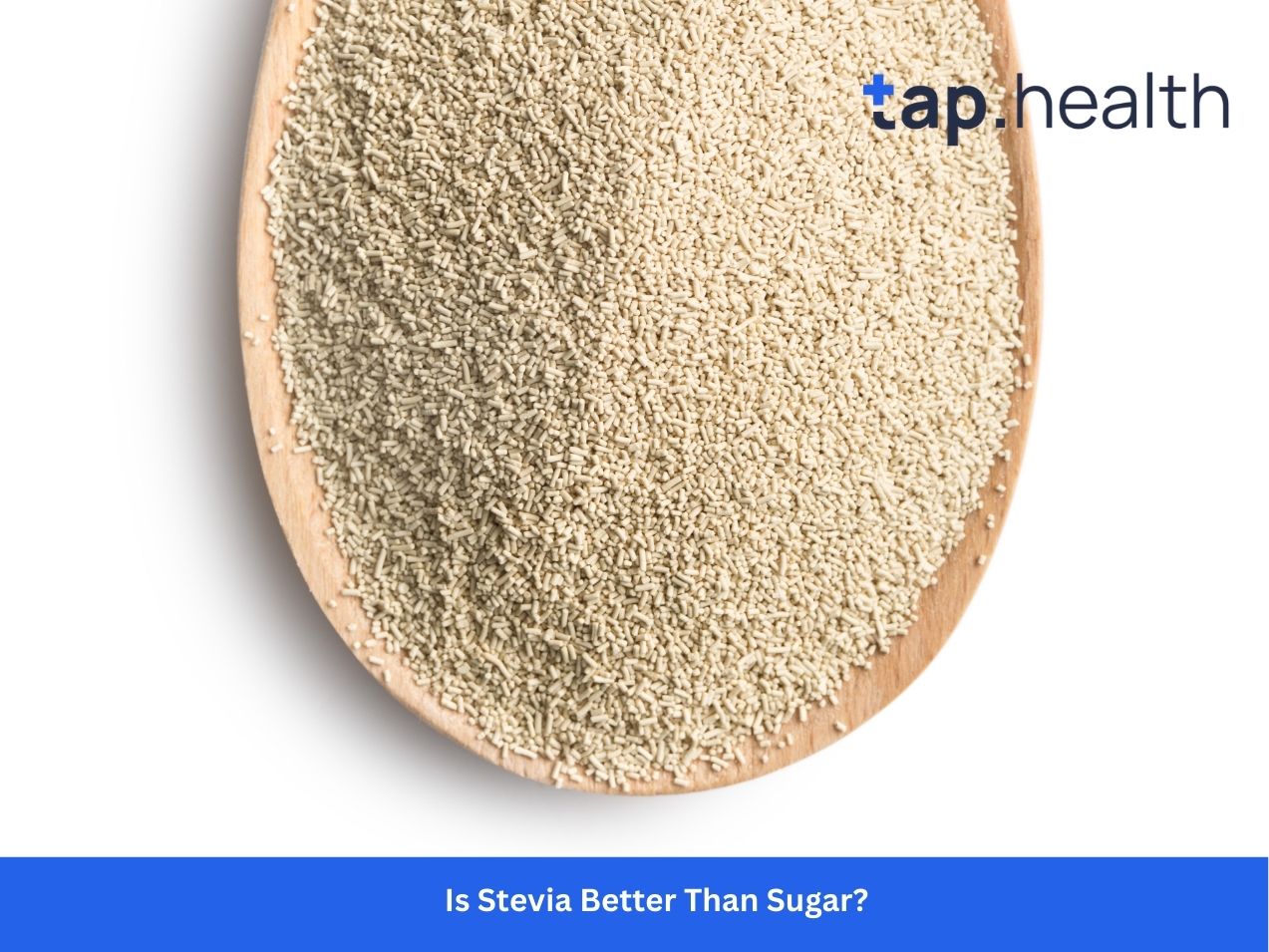
The Science: The sweetness doesn’t come from sugar. It comes from natural compounds in the leaves called Steviol Glycosides. These compounds are incredibly potent—about 200 to 300 times sweeter than table sugar. This means a tiny pinch of stevia equals a whole spoonful of sugar.
The Form: You can find it as:
- Green Leaf Powder: Dried, ground leaves (less processed, slightly grassy taste).
- White Powder/Liquid: Extracted glycosides (highly processed to remove the green colour and bitterness).
What Is Sugar and How Does It Affect the Body?
Now, let’s look at the reigning champion. Table sugar, or Sucrose, comes from sugarcane or sugar beets.
The Energy Source: Sugar is a carbohydrate. When you eat it, your body breaks it down into Glucose and Fructose.
- Glucose: Enters your bloodstream and gives you instant energy.
- Fructose: Goes to the liver to be processed (and often turned into fat).
The Problem: Sugar provides “empty calories.” It gives you energy but zero nutrients—no vitamins, no minerals, no fibre. Furthermore, eating too much of it triggers a cascade of issues: insulin spikes, inflammation, and fat storage.
Is Stevia Healthier Than Sugar?
If we look at the raw data, the answer leans heavily towards YES.
Here is the fundamental difference:
- Sugar is a fuel. It has metabolic consequences.
- Stevia is a “non-nutritive” sweetener. It passes through your body without being used for energy.
For someone trying to manage their weight, blood sugar, or heart health, stevia offers the sensory experience of sweetness without the biological baggage of sugar. However, “healthier” doesn’t always mean “perfect.” We need to dig deeper into specific health categories to see the full picture.
Stevia vs Sugar – Key Differences
Let’s break it down into a simple comparison table to see the stark contrast.
| Feature | Table Sugar (Sucrose) | Stevia (Pure Extract) |
| Source | Sugarcane / Sugar Beet | Stevia Plant Leaves |
| Calories (per tsp) | 16 Calories | 0 Calories |
| Carbohydrates | 4 grams | 0 grams |
| Sweetness | Standard (1x) | Intense (200x – 300x) |
| Glycaemic Index (GI) | 65 (Medium – High) | 0 (Zero) |
| Tooth Decay Risk | High (Feeds bacteria) | None (Bacteria can’t eat it) |
| Aftertaste | Clean, sweet | Can be slightly bitter/licorice-like |
The Verdict on Paper: Stevia wins on almost every nutritional metric. It provides sweetness without the caloric cost.
Does Stevia Raise Blood Sugar Compared to Sugar?
This is the most critical question for millions of Indians.
Sugar:
When you consume sugar, it is rapidly absorbed into the bloodstream. This causes a sharp spike in blood glucose. Your pancreas must rush to release insulin to bring this sugar down. Over time, these constant spikes wear out the pancreas, leading to Insulin Resistance and Type 2 Diabetes.
Stevia:
Stevia is “metabolically inert.”
- It does not contain carbohydrates.
- The human body does not have the enzymes to break down steviol glycosides in the stomach.
- They pass through to the colon, where bacteria break them down, but they are not absorbed as glucose.
Result: Stevia has zero impact on blood sugar levels. It does not trigger an insulin response.
Stevia vs Sugar for Diabetes Management
If you have diabetes (Type 1 or Type 2) or Prediabetes, this comparison is not even close. Stevia is the clear winner.
For a diabetic, sugar is essentially a toxin in large amounts. It requires medication (insulin or tablets) to manage. Stevia, on the other hand, allows a diabetic to enjoy sweet foods without the fear of a glucose spike.
Research Insight:
Some studies even suggest that Stevia might have a beneficial effect on insulin. A 2010 study comparing stevia, aspartame, and sucrose found that participants who consumed stevia had significantly lower post-meal glucose and insulin levels than those who ate sugar. It didn’t just “not raise” it; it helped keep the levels stable.
Calorie Comparison – Stevia vs Sugar
Weight loss is a simple equation of Calories In vs. Calories Out.
- Sugar: A single cup of tea with 2 teaspoons of sugar adds about 32 calories. If you drink 3 cups a day, that is nearly 100 calories just from tea. Over a year, that is enough calories to gain 4-5 kilograms of fat.
- Stevia: It has zero calories.
By simply swapping sugar for stevia in your beverages, you can cut out hundreds of “invisible calories” from your diet without eating less food. This makes stevia a powerful tool for weight management.
Impact on Weight Loss and Metabolic Health
Is it just about calories? Not entirely.
Sugar does something else: it affects your hormones. Fructose (found in sugar) does not suppress the hunger hormone (ghrelin) as effectively as other foods. This means you can drink a sugary soda and still feel hungry. Sugar triggers cravings, leading to a cycle of overeating.
Stevia does not trigger this dopamine-fueled addiction cycle in the same way. While some argue that tasting anything sweet can trigger cravings, stevia does not provide the caloric reward to the brain that reinforces the addiction.
However, a warning:
Do not fall into the “compensation trap.” Some people switch to stevia diet sodas and then think, “I saved calories on the drink, so I can eat an extra samosa.” This defeats the purpose. Stevia helps weight loss only if it is part of a balanced diet.
Stevia vs Sugar for Heart Health
Heart disease is the leading cause of death globally, and sugar is a major culprit.
The Sugar Risk:
Excess sugar consumption raises Triglycerides (fat in the blood), lowers HDL (good cholesterol), and increases blood pressure. It causes chronic inflammation in the arteries, leading to blockages.
The Stevia Advantage:
Stevia is heart-neutral or potentially beneficial.
- It does not raise triglycerides.
- Some studies indicate that certain compounds in stevia (stevioside) might help relax blood vessels and slightly lower blood pressure, though more research is needed to confirm this as a treatment.
For heart health, swapping sugar for stevia is a smart move to reduce inflammation and lipid risks.
Effects on Gut Health and Digestion
This is a newer area of research. We know that sugar feeds bad bacteria and yeast (like Candida) in the gut, leading to bloating and poor digestion.
Does Stevia harm the gut?
There were concerns that non-nutritive sweeteners might alter the gut microbiome.
- The Findings: Current research suggests that stevia has very little impact on the gut microbiome compared to artificial sweeteners like saccharin or sucralose.
- The Caveat: Be careful of Stevia Blends. Many commercial stevia packets are mixed with Erythritol or Maltodextrin. Sugar alcohols like Erythritol can cause gas, bloating, and diarrhea in people with sensitive stomachs (IBS).
Verdict: Pure stevia is generally gut-safe. Sugar is gut-harmful.
Possible Side Effects of Stevia
Is it all good news? Mostly, but there are nuances.
- The Aftertaste: The biggest complaint about stevia is the taste. It can have a bitter, metallic, or licorice-like aftertaste. This depends on the brand and the purity of the extract (Rebaudioside A is the best-tasting part).
- Allergies: Stevia belongs to the Asteraceae family (same as marigolds and ragweed). If you have a severe ragweed allergy, you might react to raw stevia, though it is extremely rare with purified extracts.
- Low Blood Pressure: Because stevia can dilate blood vessels, people on heavy medication for low blood pressure should monitor their levels, although dangerous drops are very rare.
Is it safe?
Yes. The FDA (USA), EFSA (Europe), and FSSAI (India) have all approved high-purity steviol glycosides as safe for consumption.
When Sugar May Be Better in Moderation
Are there times when sugar wins? Yes, in cooking chemistry.
- Baking: Sugar provides bulk, texture, and browning (caramelization). Stevia does not bulk up or brown. If you bake a cake with only stevia, it will be flat and pale. You often need special recipes to use stevia in baking.
- Fermentation: Yeast needs sugar to rise (like in bread or bhatura dough). Yeast cannot eat stevia.
- Hypoglycaemia: If a diabetic is having a low sugar crash (hypoglycaemia), stevia is useless. They need real sugar immediately to save their life.
How to Use Stevia Safely as a Sugar Substitute
If you decide to make the switch, do it smart.
- Start Small: Stevia is potent. If you use it like sugar (spoon for spoon), your tea will be un-drinkably sweet and bitter. Start with a tiny pinch or 1-2 drops.
- Check the Ingredients: Don’t buy “Stevia” that lists Dextrose or Maltodextrin as the first ingredient. These are just fancy words for sugar/starch. You are paying for stevia but eating sugar! Look for “100% Stevia Extract” or “Erythritol and Stevia Blend.”
- Mix it Up: If you hate the aftertaste, try a blend of Stevia and Erythritol. They balance each other out perfectly.
Stevia vs Other Sweeteners (Honey, Jaggery, Artificial Sweeteners)
Let’s look at the Indian favourites.
Stevia vs. Jaggery/Honey:
- The Myth: “Jaggery is healthy because it is natural.”
- The Reality: Jaggery and Honey are 80-90% sugar. They raise blood sugar almost as fast as white sugar. They have trace minerals, but you would have to eat massive amounts of sugar to get any benefit. For diabetics, Jaggery is not a safe alternative. Stevia is.
Stevia vs. Artificial Sweeteners (Aspartame/Sucralose):
- Artificial: Chemicals made in a lab. Some links to gut issues and headaches. Heat unstable (Aspartame).
- Stevia: Natural plant origin. Heat stable (good for cooking). Safer safety profile.
- Verdict: Stevia is superior to artificial sweeteners.
Real-Life Scenario
Meet Rahul (45, IT Professional from Pune):
Rahul loved his evening chai and weekend sweets. At his annual checkup, his doctor warned him: “You are Pre-diabetic. Your HbA1c is 6.1%.”
The Struggle: Rahul tried quitting sugar cold turkey. He drank tasteless tea for a week, hated it, and went back to sugar. He felt defeated.
The Switch: A friend recommended Stevia drops.
- Week 1: Rahul found the taste “weird” and slightly bitter.
- Week 2: He reduced the drops and got used to the new sweetness.
- Month 3: He had replaced all added sugar in his tea and coffee with Stevia. He cut out roughly 150 calories a day effortlessly.
The Result: At his next checkup, his HbA1c dropped to 5.7%. He lost 3 kgs without starving himself. Stevia allowed him to keep his ritual of “sweet tea” without the poison of sugar.
Expert Contribution
We consulted Dt. N. Gupta, Clinical Nutritionist & Diabetes Educator:
“I often see patients replace white sugar with brown sugar or jaggery thinking they are ‘safe.’ They are not. Sugar is sugar.
Stevia is the only true natural alternative that does not spike insulin. However, I tell my patients: Don’t just look for a substitute; look to reduce your addiction to sweetness. Use Stevia as a bridge to lower your sweetness threshold. Eventually, enjoy the natural taste of food. But yes, between Sugar and Stevia, Stevia wins every time for metabolic health.”
Recommendations Grounded in Proven Research and Facts
According to the American Heart Association (AHA) and World Health Organization (WHO):
- Reduce Added Sugars: Men should have no more than 9 teaspoons (36g) of added sugar per day, and women no more than 6 teaspoons (25g). Most Indians exceed this by double. Replacing this with Stevia is an effective strategy to meet these guidelines.
- Safety First: The Acceptable Daily Intake (ADI) for steviol glycosides is 4 mg per kg of body weight. For a 60kg person, that is about 240mg—which is a LOT of sweetener (roughly 40 packets). It is very hard to overdose on Stevia through normal use.
- Label Reading: Always check labels. A product saying “Made with Stevia” might still be full of sugar. Look at the “Total Sugars” line on the nutrition facts.
Conclusion: Key Takeaways
So, is Stevia better than Sugar?
- For Health: YES. It has zero calories, zero glycemic index, and does not rot your teeth.
- For Diabetics: YES. It is a safe way to enjoy sweetness without the spike.
- For Taste: Subjective. Sugar tastes better to most people. Stevia takes getting used to.
- For Cooking: Sugar wins on texture, Stevia wins on health.
The Final Verdict:
If you are healthy, active, and eat sugar sparingly, regular sugar is fine.
But for the vast majority of us—who are sedentary, watching our weight, or managing blood sugar—Stevia is the superior choice. It allows us to have our cake (or chai) and eat it too, without the guilt or the glucose spike.
Make the switch slowly. Find a high-quality brand. Your future self will thank you.
Read this : Stevia Glycemic Index
Frequently Asked Questions on Is Stevia Better Than Sugar?
Is stevia better than sugar for diabetics?
Absolutely. Sugar raises blood glucose rapidly, requiring insulin. Stevia has zero impact on blood sugar and requires no insulin, making it the perfect sweetener for managing diabetes.
Is stevia better than sugar for weight loss?
Yes. Sugar is high in empty calories. Stevia has zero calories. Swapping sugar for stevia creates a calorie deficit, which is essential for weight loss, provided you don’t overeat other foods to compensate.
Why was stevia banned?
Stevia was banned in the US in the early 1990s due to a lack of research regarding its safety. However, after rigorous testing proving its safety, the ban was lifted in 2008. It is now approved by major food safety authorities globally, including FSSAI in India.
Does stevia cause cancer?
No. Extensive toxicological studies have shown that high-purity steviol glycosides are not carcinogenic (cancer-causing). It is considered safe for human consumption.
Is stevia better than aspartame?
Most health experts agree that Stevia is better. Aspartame is a synthetic chemical that breaks down into methanol in the body and is not heat-stable. Stevia is a natural plant extract and is heat-stable for cooking.
Is stevia better than sugar for kids?
Yes, in moderation. It prevents cavities (unlike sugar) and prevents childhood obesity caused by sugary drinks. However, children need energy (calories) for growth, so their diet should not be overly restrictive of healthy carbohydrates like fruits and whole grains.
Does stevia break a fast?
Technically, No. Pure stevia has no calories and does not trigger an insulin response, so it does not break a fast (like Intermittent Fasting). However, some experts argue that the sweet taste alone might trigger a cephalic phase insulin response in some people, so plain water is always safest for strict fasting.
Can I grow stevia at home?
Yes! Stevia is a tropical plant that grows well in Indian climates. You can buy a sapling, grow it in a pot, and use the fresh leaves in your tea. This is the most natural, unprocessed way to consume it.
References
- Healthline: Stevia vs. Sugar: Which Is Healthier?
- Mayo Clinic: Artificial sweeteners and other sugar substitutes
- National Institutes of Health (NIH): Effects of stevia on glycemic control
- American Heart Association: Added Sugars
Disclaimer: This article is for informational purposes only and does not constitute medical advice. Always consult your doctor or dietician before making significant changes to your diet.