It is 9 PM. The dinner plates are cleared. You are settling down on the sofa to watch the latest web series or an IPL match. But as the screen lights up, your stomach grumbles. You don’t want a meal; you want a Snack. You want something crunchy, salty, and munchable.
For decades, the default answer was Popcorn. It is the global king of snacking.
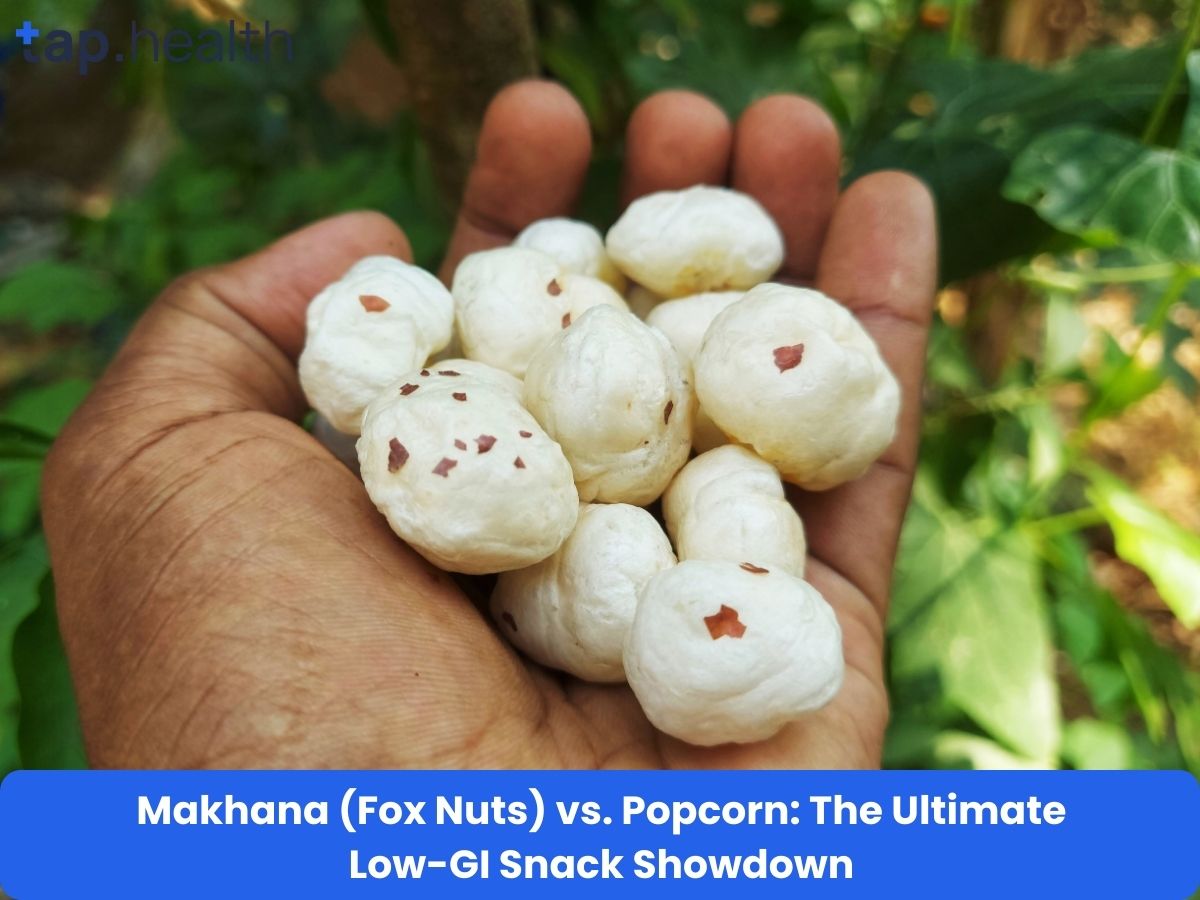
But in recent years, an ancient Indian superfood has made a massive comeback: Makhana (Fox Nuts).
Once reserved for religious fasting (Vrat) or offered as Prasad, Makhana is now sold in fancy packets in supermarkets, costing three times as much as popcorn. It is marketed as the “perfect diabetic snack.”
But is it really better?
Is the humble corn kernel actually unhealthy, or is it just misunderstood?
When you stick your hand into that bowl, which snack will keep your waistline trim and your blood sugar stable?
In this comprehensive guide, we are going to host the ultimate crunch-match: Makhana vs. Popcorn. We will analyze their Glycemic Index (GI), dissect their nutritional profiles, and reveal which of these two white, puffy snacks deserves the title of “The Ultimate Low-GI Champion.”
The Contenders: Corn vs. The Water Lily
To understand their health benefits, we first need to know what we are actually eating.
1. Popcorn (The Whole Grain)
- Source: Maize (Corn) kernels.
- The Science: It is a special variety of corn with a hard shell. When heated, the water inside turns to steam, pressure builds up, and POP!—it turns inside out.
- The Surprise: Popcorn is technically a Whole Grain. It contains the bran, germ, and endosperm. It is unprocessed until you add toppings.
2. Makhana (The Lotus Seed)
- Source: The seeds of the Euryale Ferox plant (often confused with Lotus, but actually a type of Water Lily).
- The Harvest: These seeds are harvested from stagnant ponds (mostly in Bihar, India). They are dried, roasted, and then popped manually with a mallet.
- The Reputation: In Ayurveda, it is prized for being light, digestible, and cooling (Sheeta Virya).
Nutritional Face-Off: The Numbers Game
Let’s compare a standard snacking portion: 30 grams (roughly a medium bowl).
| Feature | Popcorn (Air-Popped, 30g) | Makhana (Plain Roasted, 30g) | The Winner |
| Calories | ~110 kcal | ~100 kcal | Tie (Very close) |
| Carbohydrates | ~22g | ~20g | Makhana (Slightly lower) |
| Protein | ~3g | ~4-5g | Makhana |
| Dietary Fiber | ~4g | ~2.5g | Popcorn (Higher Fiber) |
| Fat | ~1g | ~0.5g | Makhana |
| Magnesium | Moderate | High | Makhana |
| Sodium | Low (if unsalted) | Very Low | Makhana |
The Analysis:
It is a very close fight.
- Popcorn wins on Fiber. Being a whole grain, it is excellent for digestion and gut health.
- Makhana wins on Protein and Micronutrients. It is packed with magnesium, potassium, and phosphorus, making it better for blood pressure management.
The Glycemic Index Battle: The “Pop” Effect
For a diabetic, the texture doesn’t matter; the glucose release does.
1. The Glycemic Index of Popcorn
GI Score: ~55 to 65 (Medium)
This surprises many people. Popcorn is not “Low GI.” It is Medium.
- Why? The popping process gelatinizes the starch. The fluffy white part is easily dissolved by saliva.
- The Volume Trick: However, popcorn is full of air. A bowl of popcorn looks huge but has very few carbs by weight. This means the Glycemic Load (GL) is low (around 6 per serving). You feel full before you eat enough to spike your sugar.
2. The Glycemic Index of Makhana
GI Score: ~50 to 55 (Low)
Makhana edges out the victory here.
- Why? Makhana has a superior protein-to-carb ratio. Protein slows down the absorption of carbohydrates.
- The “Slow” Chew: Makhana (unless deep-fried) often retains a slightly chewy texture if not roasted crisp. This mechanical chewing combined with the protein content results in a slower insulin release compared to the instant-melt texture of popcorn.
The Verdict: Makhana is safer for blood sugar, but Popcorn is not dangerous if eaten plain.
The “Preparation Trap”: Where Health Goes to Die
This is the most critical section. Neither snack is healthy if you cook it wrong.
The Popcorn Trap: Movie Theater Style
The popcorn you buy at the cinema is a nutritional disaster.
- The Fat: It is popped in coconut oil or artificial butter flavor (trans fats).
- The Salt: A tub contains more sodium than a human needs in 3 days.
- The Calories: A large tub can have 1,000+ Calories. That is half your daily requirement!
- Result: A massive spike in cholesterol and blood pressure.
The Makhana Trap: The “Masala” Packet
Store-bought “Peri-Peri Makhana” or “Cheese Makhana” is not innocent.
- The Sodium: Check the back of the packet. The sodium levels are often skyrocketing to make them tasty.
- The Oil: To make the masala stick to the makhana, manufacturers use significant amounts of oil.
- The Result: You are eating a healthy seed wrapped in unhealthy additives.
The Golden Rule: The health benefits of both snacks vanish the moment you buy them pre-packaged. You must roast them at home.
Makhana and Hypertension (High Blood Pressure)
Here is where Makhana delivers a knockout punch.
Diabetes and High Blood Pressure (Hypertension) often go hand-in-hand.
- Popcorn: Even “salted” home popcorn can contribute to water retention if you aren’t careful.
- Makhana: It is naturally low in sodium but extremely high in Potassium and Magnesium.
- Magnesium: Relaxes blood vessels.
- Potassium: Counteracts sodium.
- Benefit: Eating Makhana can actively help lower blood pressure, making it the superior snack for heart patients.
Anti-Aging and Ayurveda
Makhana isn’t just a snack; it’s a medicine.
- Kaempferol: Makhana contains a flavonoid called Kaempferol. This is a potent antioxidant with anti-aging and anti-inflammatory properties. It helps fight the chronic inflammation associated with diabetes.
- Ayurveda: Popcorn is considered “Vata-aggravating” (drying and gas-forming). Makhana is “Tridoshic” (balances all body types) and is considered a kidney tonic.
Real-Life Scenario
Let’s meet Mr. Rao, a 45-year-old cricket fan from Hyderabad.
The Context:
Mr. Rao had high cholesterol and borderline diabetes. During IPL season, his stress levels—and snacking habits—went up. He would eat a bowl of microwave butter popcorn every night during the match.
The Problem:
His cholesterol levels spiked. He felt bloated every morning due to the high sodium in the microwave bags.
The Switch:
His doctor suggested the “Ghee-Roast Makhana” swap.
- Mr. Rao bought raw Makhana.
- He roasted them in 1 teaspoon of Ghee (good fats) with Turmeric (anti-inflammatory) and Black Pepper.
The Result:
- Satiety: The protein in Makhana kept him full with just one bowl.
- Health: The turmeric helped inflammation, and the removal of artificial butter lowered his cholesterol.
- Blood Sugar: His morning fasting sugar remained stable at 110 mg/dL, unlike the spikes he saw with corn.
Expert Contribution
We consulted medical experts to get the professional stance.
Dr. S. Iyer, Cardiologist:
“Popcorn is fine, but Makhana is functional food. The magnesium content in Makhana makes it a ‘Heart-Smart’ snack. I recommend it over popcorn specifically for my patients who have both diabetes and hypertension. The key is roasting it dry or with minimal ghee. Do not deep fry it.”
Nutritionist Perspective:
“Portion control is easier with Makhana. Because it is denser and chewier, you get tired of chewing it faster than popcorn. With popcorn, the ‘melt-in-mouth’ texture tricks your brain into overeating. You can inhale a tub of popcorn, but you rarely inhale a tub of Makhana.”
Recommendations Grounded in Proven Research and Facts
Based on data from the Indian Journal of Traditional Knowledge and USDA, here are actionable tips:
- The “Turmeric” Roast:Roast your Makhana with Turmeric (Haldi) and Black Pepper.
- Why? Turmeric lowers insulin resistance. Black pepper increases the absorption of turmeric. This turns your snack into an immunity booster.
- The Popcorn Hack:If you love popcorn, buy raw kernels and pop them in a pressure cooker with a little Olive Oil. Sprinkle Nutritional Yeast instead of salt. This gives a cheesy flavor without the sodium spike.
- Portion Size:
- Makhana: 1 to 1.5 cups (approx 30g).
- Popcorn: 2 to 3 cups (approx 30g).
- Note: You get more volume with popcorn for the same calories.
- Avoid Microwave Bags:Never use microwave popcorn bags. The lining of these bags often contains chemicals (PFAS) linked to health issues, and the “butter” is usually palm oil.
Key Takeaways
- Makhana has a Low GI (~50-55), high protein, and high magnesium. It is the best choice for blood sugar and blood pressure.
- Popcorn has a Medium GI (~55-65) but is a whole grain rich in fiber. It is great for digestion and volume eating.
- Processing Matters: Air-popped/Roasted is healthy. Cinema style/Fried is dangerous.
- Sodium Warning: Popcorn is often a salt trap. Makhana is naturally low sodium but watch out for flavored packets.
- Verdict: Makhana wins on nutritional density and glycemic control. Popcorn wins on fiber and affordability.
Conclusion
So, Makhana vs. Popcorn: Who is the ultimate champion?
The belt goes to Makhana (Fox Nuts).
While Popcorn is a respectable and healthy snack (when air-popped), Makhana offers a unique combination of low GI, high protein, and medicinal benefits that make it superior for the modern lifestyle plagued by stress and diabetes. It nourishes the body rather than just filling the stomach.
However, let’s be real—Makhana is expensive. Popcorn is cheap.
The Strategy: Make Makhana your daily health snack. Keep Popcorn (homemade) for the weekend movie night. Both can coexist in a healthy diet, as long as you keep the butter and salt shaker far away.
Frequently Asked Questions (FAQ) on Makhana (Fox Nuts) vs. Popcorn
Is Makhana good for weight loss?
Yes, excellent. Makhana is low in calories and saturated fat but high in protein. The protein helps increase your metabolic rate and keeps you feeling full longer, preventing the urge to snack on junk food later.
Can diabetics eat popcorn at night?
In moderation. Popcorn is a carbohydrate. Eating a large bowl at night can lead to higher fasting blood sugar the next morning. If you eat it, keep the portion small (1 cup) and eat it at least 2 hours before bed.
Why is Makhana so expensive compared to popcorn?
Labor intensity. Makhana harvesting is a difficult, manual process. Farmers have to dive into muddy ponds to collect the seeds, then clean, roast, and pop them by hand (or machine). Corn is mass-produced and machine-harvested, making it much cheaper.
Does Makhana produce heat in the body?
No. According to Ayurveda, Makhana has a cool potency (Sheeta Virya). It helps reduce burning sensations and acidity in the body, making it a great summer snack.
Can I eat raw Makhana?
It is difficult. Raw Makhana is chewy and tough (almost like rubber). It is hard to digest. It is always recommended to dry roast or ghee roast it to make it crunchy and digestible.
Is microwave popcorn safe?
Generally, no. Most microwave popcorn bags contain a chemical coating (PFCs) inside the bag to prevent grease leakage. When heated, these can release harmful compounds. It is safer to pop kernels in a glass bowl in the microwave or on the stove.
Which is better for constipation: Makhana or Popcorn?
Popcorn. Popcorn is a whole grain with significantly higher insoluble fiber, which adds bulk to the stool and helps regularize bowel movements. Makhana has fiber, but less than popcorn.
References:
- USDA FoodData Central: Popcorn and Lotus Seeds. Link
- Indian Journal of Traditional Knowledge: Nutritional potential of Makhana. Link
- American Heart Association: The benefits of whole grains (Popcorn). Link
- Glycemic Index Foundation: GI of snacks. Link
- PubMed: Magnesium and Insulin Sensitivity. Link
(Disclaimer: This content is for educational purposes only. Always consult your doctor or a certified dietitian before making significant changes to your diet, especially if you have kidney disease or hypertension.)