It is 8:30 AM. You are staring at your breakfast.
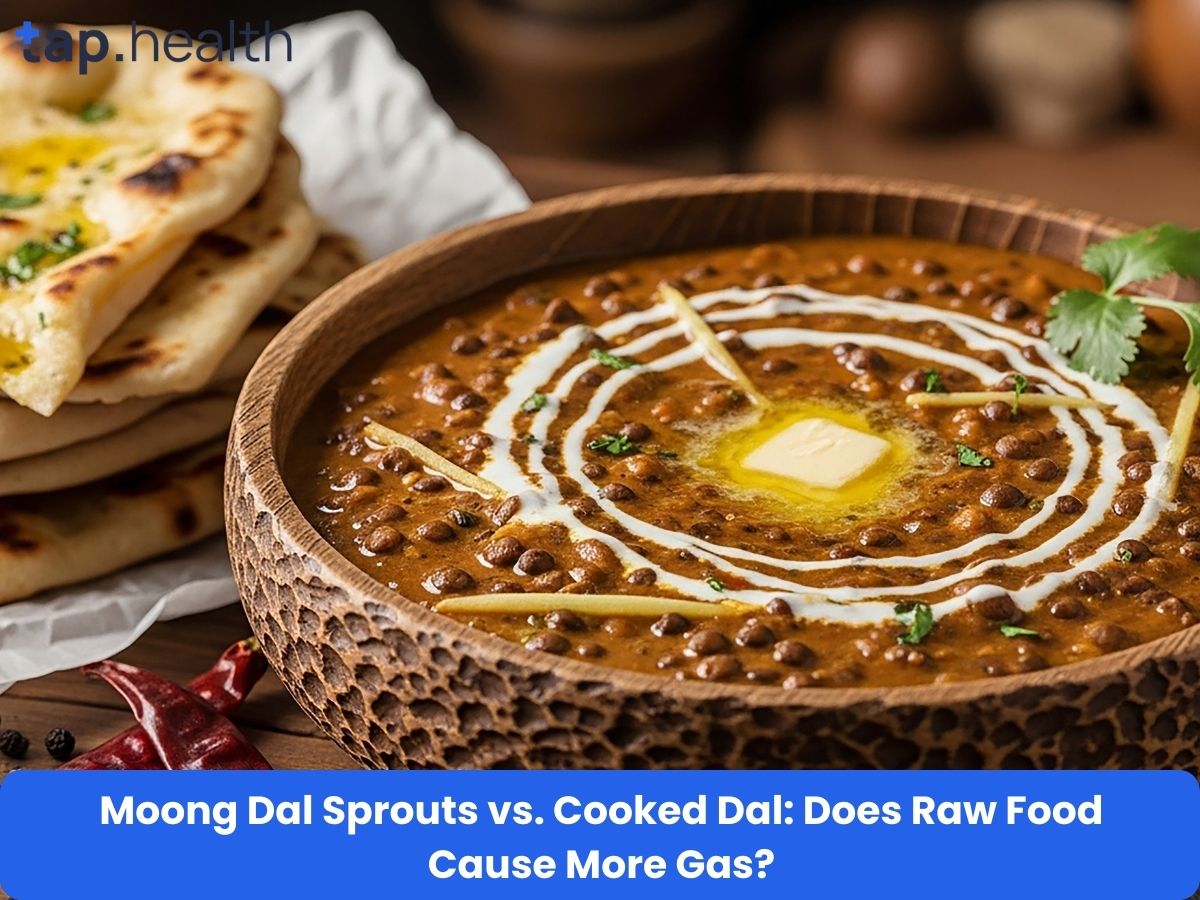
In one bowl, you have a pile of crunchy, fresh Moong Dal Sprouts—the “living food” topped with lemon, onions, and green chilies.1 It feels like the ultimate health move, a bowl of pure life and enzymes.
In the other bowl, you have a warm, comforting Yellow Moong Dal—cooked until soft, tempered with a little ghee and cumin.
You know that Moong Dal is the gentlest of all Indian pulses. But there is a nagging fear.
Last time you ate a big bowl of raw sprouts, your stomach felt like a balloon. You felt bloated, gassy, and uncomfortable for hours. You wonder: “If sprouts are so healthy, why do they make me feel so bad?”
Is the “Raw” trend actually hurting your digestion?
Does cooking destroy all the vitamins we need?
And why does the same bean behave so differently when it’s sprouted versus when it’s boiled?
In this comprehensive guide, we are going to dive into the gut-science of Moong Dal Sprouts vs. Cooked Dal. We will analyze the “Antinutrient” factor, compare their protein availability, and reveal the secret to enjoying sprouts without the embarrassing gas.
The Contenders: The Living Seed vs. The Soft Pulse
To understand the gas, we have to understand the biological state of the bean.
1. Moong Dal Sprouts (The “Awakened” State)
- The Process: Whole green moong beans are soaked in water and left to germinate.2
- The Biology: The seed “wakes up.” It starts producing enzymes to break down its own starch and protein to grow a new plant.3
- The Profile: High in Vitamin C, active enzymes, and living nutrients.4
2. Cooked Moong Dal (The “Processed” State)
- The Process: The bean is split (usually) and boiled at high temperatures until the fibers soften.
- The Biology: Heat breaks down the complex cellular structure and neutralizes “defense chemicals” the plant uses to protect itself.
- The Profile: Easy to digest, warm, and comforting for the gut.
Nutritional Face-Off: The Numbers Game
Let’s compare 100g of Sprouts vs. 100g of Cooked Dal.
| Feature | Moong Sprouts (Raw, 100g) | Cooked Moong Dal (100g) | The Winner |
| Calories | ~30 kcal | ~100 – 110 kcal | Sprouts (Lower Calorie) |
| Protein | ~3g | ~7-8g | Cooked Dal (Concentrated) |
| Vitamin C | High | Almost Zero | Sprouts |
| Fiber | High | Moderate | Sprouts |
| Digestibility | Complex | Very Easy | Cooked Dal |
| Antinutrients | Moderate | Very Low | Cooked Dal |
The Analysis:
- Vitamin C: Sprouting increases Vitamin C by nearly 300%. Cooking destroys it.
- Calorie Density: Sprouts are mostly water and air; they are amazing for weight loss. Cooked dal is more calorie-dense and provides more protein per bowl.
- The Gas Factor: Sprouts contain raw fiber and complex sugars that the human stomach struggles to break down.
Why Raw Sprouts Cause Gas: The “Raffinose” Problem
Legumes contain a family of complex sugars called Oligosaccharides (like Raffinose).5
- The Problem: Humans do not have the enzyme (alpha-galactosidase) to digest these sugars in the small intestine.
- The Gas: These sugars travel to the large intestine, where your gut bacteria have a “party” fermenting them. The byproduct of this party? Hydrogen and Methane gas.
Why Cooking Helps:
Heat and water break these complex sugars down into simpler forms. Pressure cooking Moong Dal essentially “pre-digests” the gas-causing compounds before they even enter your mouth.
The “Antinutrient” Factor: Phytic Acid
All seeds have a “shield” called Phytic Acid. This acid binds to minerals like Iron, Zinc, and Calcium, preventing your body from absorbing them.6
- In Sprouts: Germination naturally reduces phytic acid, making the minerals more available than in a raw bean.7
- In Cooked Dal: Soaking and boiling removes up to 80% of phytic acid.
Winner: Cooked Dal is safer for people with anemia or mineral deficiencies because it allows for better mineral absorption.
Real-Life Scenario
Let’s meet Anjali, a 29-year-old software engineer who wanted to be “super healthy.”
The Routine:
Anjali started eating a large bowl of raw moong sprouts for breakfast every morning.
- The Result: By 11 AM, she was bloated and had stomach cramps. She felt “heavy” despite eating “light” food.
The Fix:
Her mother suggested the “Steam & Spice” method.
- Instead of raw sprouts, Anjali started steaming the sprouts for 5 minutes.
- She added Ginger (Adrak) and Asafoetida (Hing).
The Result:
- The steaming broke down the raw fiber and killed any surface bacteria.
- The Hing and Ginger stimulated her digestive enzymes.
- The gas vanished, but she still got the high-protein, low-calorie benefit of the sprouts.
Expert Contribution
We consulted medical experts to settle the “Raw vs. Cooked” debate.
Dr. V. Reddy, Gastroenterologist:
“I see many patients with ‘Healthy Eating Syndrome.’ They eat too much raw food, and their gut cannot handle the cellulose. In Indian conditions, I always recommend cooking or at least blanching sprouts. Raw sprouts can also carry bacteria like E. coli or Salmonella from the damp sprouting process.8 Cooking is a safety measure.”
Ayurvedic Perspective:
“Ayurveda considers raw sprouts as ‘Vata-aggravating’ (producing air/gas).9 They are hard to digest (Guru). For a healthy gut, sprouts should always be cooked with warming spices like Cumin, Black Pepper, and Ginger to balance the ‘cold’ and ‘gassy’ nature of the bean.”10+1
Recommendations Grounded in Proven Research and Facts
Based on data from the Journal of Food Science and Ayurvedic Guidelines, here are actionable tips:
- The “Hing” Necessity:Whenever you eat Moong (sprouted or cooked), always add a pinch of Hing (Asafoetida). It is a scientifically proven carminative that reduces the formation of gas in the GI tract.
- The “Blanch” Strategy:If you love the crunch of sprouts but hate the gas, drop them in boiling water for exactly 2 minutes (blanching).
- This kills bacteria.
- It softens the outer skin.
- It preserves most of the Vitamin C.
- The “Chew” Rule:If you must eat them raw, you must chew each spoonful until it is a liquid paste in your mouth. Digestion of carbs begins in the mouth with saliva.11 Swallowing raw sprouts whole is an invitation for bloating.
- The Timing:Never eat sprouts (especially raw ones) for dinner. Your digestive fire (Agni) is lowest at night. Eat them for breakfast or lunch when your body is active.
Key Takeaways
- Moong Sprouts are higher in Vitamin C and living enzymes but are harder to digest.
- Cooked Moong Dal is much easier on the gut and has fewer antinutrients.
- Gas Factor: Raw sprouts cause more gas due to complex sugars (Raffinose) and raw fiber.
- Safety: Cooking/Steaming sprouts reduces the risk of food poisoning from bacteria.12
- Verdict: Steamed Sprouts are the “Gold Standard.” They give you the best of both worlds—high nutrition and easy digestion.
Conclusion
So, Moong Dal Sprouts vs. Cooked Dal: Does raw food cause more gas?
The answer is Yes. Raw food—especially legumes—is biologically programmed to be difficult to break down. While sprouts are a nutritional “awakening” for the bean, they can be a digestive “nightmare” for a weak gut.
The Final Strategy:
If you have a “strong” stomach, enjoy your sprouts raw but in small portions.
If you have a “sensitive” stomach or suffer from bloating, stick to the warm, comforting yellow Dal.
And if you want to be a “Pro,” simply steam your sprouts. You’ll keep the protein, keep the vitamins, and lose the gas!
Frequently Asked Questions (FAQ)
Are sprouts better for weight loss?
Yes. Sprouts are very low in calories because of their high water and fiber content.13 They provide a lot of “volume,” making you feel full without consuming many calories. However, they only work if you can digest them properly.
Why do some people say sprouts are “toxic”?
Raw sprouts are grown in warm, humid conditions—the perfect breeding ground for bacteria like Salmonella.14 This is why some health agencies warn against raw sprouts for children, pregnant women, and the elderly. Steaming them for 2-5 minutes makes them perfectly safe.
Does adding lemon juice help with gas?
Indirectly, yes. Vitamin C (Lemon) helps in the absorption of the iron found in Moong Dal.15 While it doesn’t stop the gas-producing fermentation in the large intestine, it aids overall digestion and adds acidity that helps break down the meal.
Is Yellow Moong Dal better than Green Moong Dal?
For digestion, yes. Yellow Moong Dal is the green bean with the skin removed.16 Since most of the gas-causing fibers and antinutrients are in the skin, the yellow version is the easiest to digest. This is why Khichdi is made with yellow dal.
Can I eat sprouts daily?
Yes, but watch the portion. Start with 2-3 tablespoons a day and see how your gut reacts. If you don’t experience bloating, you can increase the amount. Always remember to “listen to your gut.”
References:
- Journal of Food Science and Technology: Sprouting and Nutritional Quality. Link
- Harvard Health: Digestion and Gas-forming foods. Link
- USDA FoodData Central: Mung beans. Link
- National Institute of Nutrition (NIN) India: Nutritive Value of Pulses. Link
- Ayurvedic Guidelines for Legume Consumption. Link
(Disclaimer: This content is for educational purposes only. Always consult your doctor or a certified dietitian before making significant changes to your diet, especially if you have chronic IBS or digestive disorders.)