It is the star of every Indian vegetarian feast. Whether it is a wedding, a birthday party, or just a special Sunday lunch, Paneer (Indian Cottage Cheese) is usually on the menu. From creamy Shahi Paneer to spicy Paneer Tikka, we just can’t get enough of it.
But if you or a family member has recently been diagnosed with diabetes, that block of white, creamy goodness might start to look a little scary. You might be asking yourself: “Does paneer raise my blood sugar?” or “Is it safe to eat paneer every day?”
You are not alone. Understanding how different foods affect our body is the first step to staying healthy. The key metric everyone talks about is the Glycemic Index (GI).
In this detailed guide, written in simple Indian English, we will crack the code of the Paneer Glycemic Index. We will explain why this dairy product behaves differently than Roti or Rice, how it affects your insulin, and the best ways to eat it without worrying about a sugar spike.
What Is Glycemic Index (GI)?
Before we dive into paneer, let’s quickly understand what the Glycemic Index actually is.
Imagine your body is a car and food is the fuel.
- High GI Foods (70-100): These are like “nitro boosts.” They digest very quickly and release sugar into your blood instantly. This causes a sudden spike in energy, followed by a crash. Examples: White bread, sugar, white rice, potatoes.
- Medium GI Foods (56-69): These digest at a moderate speed. Examples: Brown rice, honey.
- Low GI Foods (0-55): These are like “slow-burning diesel.” They digest slowly and release sugar gradually. This keeps your energy stable. Examples: Green vegetables, lentils (dal), nuts.
For a diabetic, Low GI foods are the best friends. They prevent those dangerous blood sugar rollercoasters.
Does Paneer Have a Glycemic Index?
Here is a tricky fact: Technically, pure paneer does not even have a Glycemic Index score.
Why? Because the Glycemic Index measures how much a food raises your blood sugar based on its carbohydrate content. To measure GI, a food usually needs to have at least 25 to 50 grams of carbohydrates per serving.
Paneer is almost entirely made of protein and fat. It has very, very few carbohydrates.
- Carbs in 100g Paneer: Only about 1.2 grams.
Since there is hardly any sugar (lactose) or starch in it to measure, scientists don’t usually assign it a number on the traditional 0-100 scale. However, for the sake of dietary planning, it is universally classified as a Very Low GI food.
Paneer Glycemic Index Value
If we had to put a number on it, what would it be?
The Paneer Glycemic Index is estimated to be very low, typically between 0 and 15.
Because it lacks carbohydrates, it does not trigger a rise in blood glucose. This places it in the safest category for diabetics, far below the “Low GI” limit of 55.
Whether you are looking at 100 gm paneer glycemic index or a small cube, the impact remains the same: it is negligible. This makes paneer an excellent “buffer food.” If you eat it along with high-carb foods (like rice), it can actually help lower the overall speed at which that meal digests.
Glycemic Load of Paneer
While GI tells you the speed of the spike, Glycemic Load (GL) tells you the amount of the spike based on the portion size. It is often considered a more accurate measure for real-life eating.
- Formula: (GI x Carbohydrates in a serving) ÷ 100.
Since paneer has almost zero carbs, the math is simple:
The Glycemic Load of Paneer is close to ZERO.
This means that even if you eat a generous bowl of paneer, the actual load of glucose entering your bloodstream is tiny. This answers the popular query about paneer glycemic index and load—both are incredibly low, making it a green-light food for blood sugar management.
Why Paneer Does Not Spike Blood Sugar
You might be wondering, “It comes from milk, and milk has sugar. Why doesn’t paneer spike sugar?”
Excellent question. Here is the science broken down simply:
- The Manufacturing Process: To make paneer, we curdle milk using lemon or vinegar. The milk separates into solids (curds) and liquid (whey).
- Most of the milk sugar (Lactose) goes out with the liquid whey.
- The solid white block (Paneer) is left with mostly Protein (Casein) and Fat.
- The “Fat Barrier”: Fat slows down digestion. When you eat paneer, the fat content ensures that your stomach empties slowly. This means any other food you ate with the paneer also gets digested slower.
- High Protein: Protein requires more energy and time for the body to break down compared to carbs. This keeps your sugar levels stable for hours.
Paneer and Insulin Response
This is a slightly advanced concept, but very important. Just because a food doesn’t spike sugar doesn’t mean it doesn’t affect insulin.
Proteins, especially dairy proteins, are “insulinogenic.” This means they stimulate the pancreas to release insulin, even without a sugar spike.
- Is this bad? Generally, no. In fact, for Type 2 diabetics, a mild insulin response without the sugar spike can be helpful. It helps clear existing sugar from the blood.
- The Benefit: The insulin released helps push the amino acids (from protein) into your muscles for repair.
So, while paneer doesn’t raise your glucose reading on the glucometer, it does help your body manage its hormonal machinery efficiently.
Is Paneer Good for People with Diabetes?
The short answer is: YES.
Paneer is often called a “Diabetic Superfood” in India for several reasons:
- Satiety (Feeling Full): Because it is rich in protein and fat, paneer makes you feel full quickly. This prevents overeating of high-carb foods like Rice or Roti.
- Slow Release Energy: It provides steady energy without the crash.
- Muscle Health: Diabetics are prone to muscle loss. The high-quality casein protein in paneer helps preserve muscle mass.
- Craving Control: Having a savory paneer dish can satisfy cravings that might otherwise lead you to eat sweets or fried snacks.
Paneer vs Other Dairy Products (GI Comparison)
How does our beloved paneer stack up against its dairy cousins?
| Dairy Product | Glycemic Index (Approx) | Why? |
| Milk | 30 – 40 | Contains Lactose (liquid sugar). |
| Curd (Yogurt) | 28 | Fermentation reduces some lactose. |
| Cheese (Cheddar/Mozzarella) | 0 – 10 | Like paneer, mostly fat and protein. |
| Paneer | 0 – 15 | Lowest carb content. |
| Ice Cream | 60 – 80 | Loaded with added sugar. High GI. |
Verdict: Among dairy products, Paneer and Cheese are the safest bets for keeping blood sugar flat.
Real-Life Scenario
Meet Rahul (45, IT Professional from Bangalore):
Rahul was diagnosed with Type 2 Diabetes last year. He loved his food, especially his Sunday Aloo Parathas. But every time he ate them, his post-meal sugar would shoot up to 250 mg/dL. He felt tired and frustrated.
The Switch: His nutritionist advised a small tweak. Instead of two Aloo Parathas (Potato stuffed), she asked him to eat one Paneer Paratha made with whole wheat and a generous stuffing of grated paneer.
The Result:
- Taste: He still enjoyed a stuffed paratha.
- The Sugar Check: His post-meal sugar dropped to 160 mg/dL.
- Why? The paneer paratha glycemic index is lower than aloo paratha because the protein in paneer replaced the high-carb potato, and the fat slowed down the digestion of the wheat cover. Rahul now enjoys his Sunday brunch without the guilt.
Best Ways to Eat Paneer for Blood Sugar Control
Just because paneer is healthy doesn’t mean Paneer Butter Masala with heavy cream and Naan is healthy. The way you cook it changes everything.
Here are the specific GIs of common dishes you search for:
- Raw Paneer or Masala Glycemic Index: This is the absolute best. Eating raw cubes with a sprinkle of chaat masala has a near-zero GI. It is the perfect 4 PM snack.
- Palak Paneer Glycemic Index: Very Low. Spinach is a fiber powerhouse. Combining spinach with paneer makes this one of the healthiest diabetic meals.
- Matar Paneer Glycemic Index: Low to Medium. Peas (Matar) have some starch, but they are high in fiber. This is still a very safe dish.
- Chilli Paneer Glycemic Index: Medium. Be careful here. Indo-Chinese sauces contain cornflour (starch) and sugar. The batter on the fried paneer also adds carbs. This can spike sugar more than a simple curry.
- Paneer Pakora Glycemic Index: Medium to High. The besan (gram flour) batter is okay, but deep frying can increase inflammation. It’s better than a samosa, but eat in moderation.
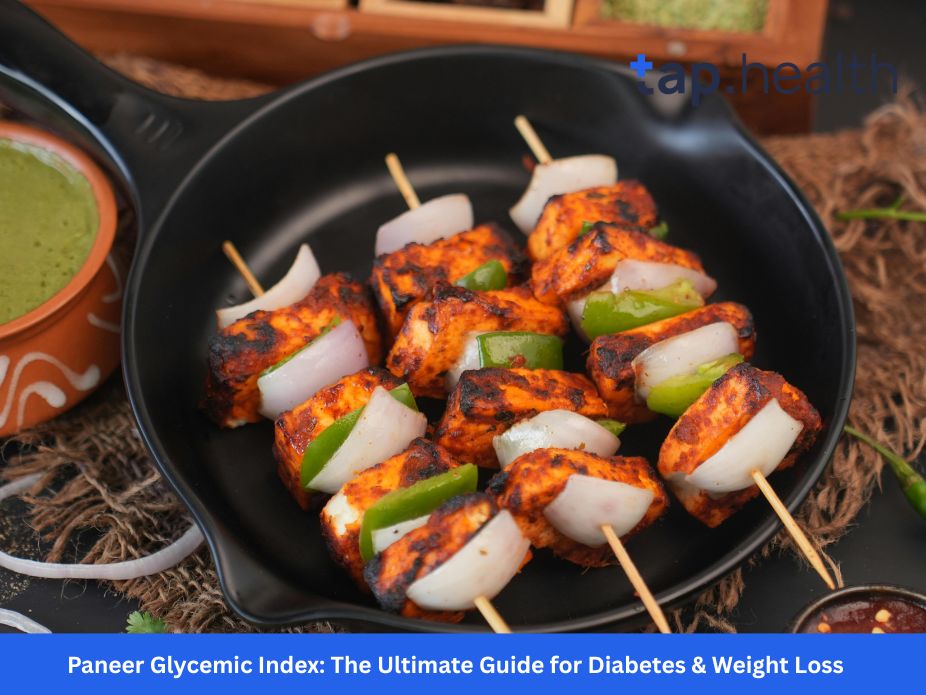
- Paneer Tikka Glycemic Index: Low. Since it is grilled with veggies and spices (no gravy or batter), it is an excellent low-carb appetizer.
Cooking Tips for Diabetics:
- Don’t Deep Fry: Sauté or grill instead.
- Watch the Gravy: Avoid adding sugar, honey, or excessive cashew paste to the gravy.
- Add Veggies: Mix capsicum, onions, and tomatoes to add fiber.
Read this: Can Diabetics Eat Paneer?
How Much Paneer Can Diabetics Eat Daily?
“Too much of a good thing” applies here too.
While paneer won’t spike your sugar, it is high in calories and fat.
- Safe Intake: About 80 to 100 grams per day.
- Why limit it? Paneer is calorie-dense. Gaining excess weight can worsen insulin resistance. Also, it contains saturated fat.
- Frequency: You can eat it 3-4 times a week, or daily in smaller portions (like 50g).
Who Should Be Careful with Paneer Consumption?
Paneer is not for everyone.
- High Cholesterol Patients: Regular paneer is high in saturated fat.
- Solution: Search for “low fat paneer glycemic index”. Low-fat paneer (made from toned milk) has the same low GI but much less fat. It is safer for your heart.
- Lactose Intolerant: Even though paneer has less lactose than milk, it still has some. It can cause bloating or gas in sensitive people.
- Solution: Try Soya Paneer (Tofu).
- Kidney Patients: Paneer is high in protein and phosphorus. If you have kidney issues, your doctor might restrict your protein intake.
Soya Paneer (Tofu) vs Dairy Paneer
You might have seen “Soya Paneer Glycemic Index” in your search. Soya Paneer is simply Tofu.
- Tofu GI: ~15 (Very Low).
- Comparison: Tofu has less fat and fewer calories than dairy paneer. It is plant-based.
- Verdict: If you want to lose weight or have heart issues, Soya Paneer is slightly better. If you want taste and muscle building, Dairy Paneer is better. Both are excellent for blood sugar.
Expert Contribution
We consulted Dr. S. Sharma, a Clinical Nutritionist, about paneer in Indian diets.
“I often see patients quitting all white foods—rice, sugar, maida, and sadly, even paneer. This is a mistake. Paneer is a ‘Class A’ protein. For vegetarians in India, it is the easiest way to lower the overall Glycemic Load of a meal. If you are eating rice, reduce the rice by half and add a bowl of Palak Paneer. You will feel fuller, and your sugar won’t spike. Just remember: Grill it, don’t fry it.”
Recommendations Grounded in Proven Research and Facts
Based on guidelines from the American Diabetes Association and data from the Harvard School of Public Health:
- The “Quarter Plate” Rule: Fill one quarter of your plate with protein. Paneer fits perfectly here.
- Pairing: Always pair paneer with high-fiber vegetables (Saag/Palak, Methi, Capsicum). Fiber + Protein = Rock solid blood sugar control.
- Check the Label: If buying store-bought paneer, check for added starches or preservatives. Fresh, homemade paneer is always the gold standard.
Conclusion: Key Takeaways
So, let’s summarize the Paneer Glycemic Index:
- The Number: Paneer has a Very Low Glycemic Index (0-15) and negligible Glycemic Load.
- The Impact: It does not spike blood sugar levels.
- The Benefit: It is high in protein and fat, which slows down digestion and keeps you full.
- The Catch: It is high in calories. Eat in moderation (approx. 100g).
- Best Choice: Palak Paneer or Paneer Tikka are the healthiest options. Avoid deep-fried or sugary gravies.
For diabetics, paneer is not just “allowed”—it is highly recommended. It is one of the few tasty, comforting foods you can enjoy without guilt. So, go ahead and enjoy that cube of paneer!
FAQs – Paneer Glycemic Index
What is the glycemic index of 100 gm paneer?
The glycemic index of 100 gm of paneer is extremely low, estimated between 0 and 15. Since it contains only about 1.2g of carbohydrates, it does not cause a significant rise in blood sugar.
Is palak paneer good for diabetics?
Yes, Palak Paneer is excellent for diabetics. Spinach (Palak) is low in calories and high in fiber, while paneer provides protein. The combination has a very low glycemic index, making it a safe and nutritious meal.
Does soya paneer (tofu) have a lower glycemic index than dairy paneer?
Both Soya Paneer (Tofu) and Dairy Paneer have very low glycemic indexes (around 15). However, Soya Paneer is lower in saturated fat and calories, making it a slightly better option for diabetics who also need to manage their weight or cholesterol.
Can I eat paneer paratha if I have diabetes?
Yes, but be careful with the flour. A Paneer Paratha made with whole wheat flour (high fiber) and less oil is better than an Aloo Paratha. The protein in the paneer helps lower the overall glycemic impact of the wheat. Avoid using Maida (refined flour).
Is raw paneer better than cooked paneer for diabetes?
Raw paneer is slightly better because it has no added oil or calories from gravies. Sprinkling raw paneer with black pepper or chaat masala is a healthy, zero-sugar snack that keeps insulin levels stable.
What is the glycemic index of paneer tikka?
Paneer Tikka has a low glycemic index because it is grilled and not deep-fried. It is usually marinated in yogurt and spices, which are low carb. It is one of the best appetizers for diabetics.
Is low fat paneer better for the glycemic index?
The glycemic index of low-fat paneer is the same as regular paneer (very low). However, low-fat paneer is better for overall health because it reduces calorie intake and saturated fat, which helps in managing heart health alongside diabetes.
References
- Healthline: Is Cheese Good for Diabetics?
- American Diabetes Association: Protein Foods for Diabetes
- Harvard Health Publishing: Glycemic index for 60+ foods
Disclaimer: This article is for informational purposes only and does not constitute medical advice. Always consult with a doctor or dietician before making significant changes to your diet.