It is breakfast time. You have two slices of toasted whole-wheat bread. You open the fridge and see two jars. In one, you have the golden, creamy, salted Dairy Butter (Makhan)—the taste of childhood, the soul of a Paratha, and the classic toast topper. In the other, you have the thick, nutty, brown Peanut Butter—the modern “fitness” staple, the protein-packed spread that every gym-goer swears by.
Both are called “Butter.” Both are high in fat. Both are delicious. But one comes from a cow, and the other comes from a legume grown in the ground. In our parents’ generation, butter was a symbol of health and strength. In the modern era, it’s often blamed for clogged arteries. Meanwhile, peanut butter is marketed as a “Superfood.”
So, which one should you be spreading on your morning toast? Is Dairy Butter really a “heart attack in a tub”? Is Peanut Butter truly a “healthy fat,” or is it just a calorie-dense trap? And if you are diabetic or trying to lose weight, which “Butter” will help you reach your goals?
In this comprehensive guide, we are going to host the ultimate spread showdown: Peanut Butter vs. Dairy Butter. We will analyze the Good Fats vs. Saturated Fats debate, compare their protein and carb profiles, and reveal which one deserves a permanent spot in your pantry.
The Contenders: The Dairy Classic vs. The Plant Power
To understand their impact, we have to look at how they are made.
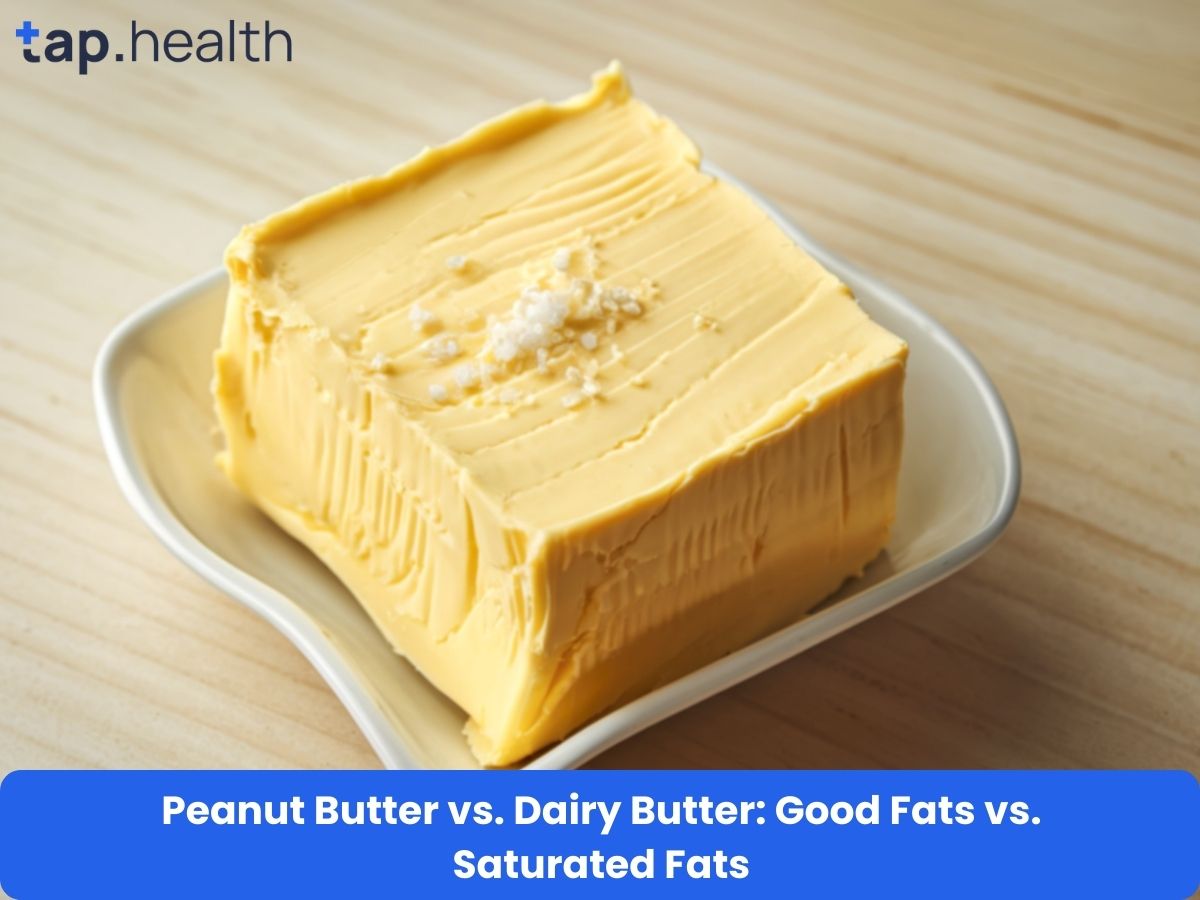
1. Dairy Butter (Makhan)
- The Source: Milk (usually cow or buffalo).
- The Process: Cream is separated from milk and churned until the fat globules stick together, forming a solid mass.
- The Profile: It is almost pure fat (80% fat, 20% water/milk solids). It contains zero fiber and almost zero protein.
2. Peanut Butter
- The Source: Roasted Peanuts.
- The Process: Peanuts are ground into a paste. In natural versions, nothing else is added. In commercial versions, sugar, salt, and oils are added.
- The Profile: It is a Whole Food. It contains fat, protein, fiber, and carbohydrates.
Nutritional Face-Off: The Macros
Let’s compare 1 Tablespoon (approx 15-16g) of both.
| Feature | Dairy Butter (1 Tbsp) | Peanut Butter (1 Tbsp) | The Winner |
| Calories | ~102 kcal | ~94 kcal | Peanut Butter (Lower Calorie) |
| Total Fat | ~11.5g | ~8g | Peanut Butter (Less total fat) |
| Saturated Fat | ~7.2g | ~1.6g | Peanut Butter (Significantly Lower) |
| Protein | ~0.1g | ~4g | Peanut Butter (40x more protein) |
| Carbohydrates | ~0g | ~3g | Dairy Butter (Zero Carbs) |
| Fiber | 0g | ~1g | Peanut Butter |
| Cholesterol | ~30mg | 0mg | Peanut Butter (Plant-based) |
Export to Sheets
The Analysis:
- The Fat Type: Dairy butter is roughly 63% Saturated Fat. Peanut butter is mostly Monounsaturated and Polyunsaturated Fat (the “Heart Healthy” fats).
- The Protein Gap: Dairy butter is just a fat source. Peanut butter is a Protein source.
- Cholesterol: Peanut butter, being a plant product, has zero cholesterol. Dairy butter contains dietary cholesterol.+1
The “Good Fat” vs. “Saturated Fat” Debate
This is the heart of the matter. Why does everyone say Peanut Butter is better for the heart?
1. The Saturated Fat in Dairy Butter: For years, saturated fat was labeled the “enemy.” While modern research says it’s not as bad as once thought, it can raise LDL (Bad) Cholesterol in many people. Dairy butter also contains Butyrate, which is actually good for gut health, but it lacks the cardiovascular protection of plant fats.
2. The Unsaturated Fat in Peanut Butter: Peanut butter is rich in Oleic Acid (also found in olive oil) and Linoleic Acid.
- The Benefit: These fats help lower LDL cholesterol and maintain HDL (Good) cholesterol.
- The “P-S Ratio”: Peanut butter has a high ratio of polyunsaturated to saturated fat, which is the gold standard for a heart-healthy diet.
Winner: Peanut Butter wins for cardiovascular health and cholesterol management.
The Glycemic Index Battle: Stability vs. Spikes
For a diabetic, what you spread on your bread is just as important as the bread itself.
1. The Glycemic Index of Dairy Butter
GI Score: 0 (Zero)
- The Effect: Because it contains no carbohydrates, it does not spike blood sugar.
- The Benefit: Adding butter to a piece of bread actually lowers the GI of the bread. The fat slows down the digestion of the wheat, leading to a slower sugar release.
2. The Glycemic Index of Peanut Butter
GI Score: ~14 (Very Low)
- The Effect: Like dairy butter, it has almost zero impact on glucose.
- The Benefit: Peanut butter has a double-action. The Fat AND the Protein work together to keep blood sugar stable.
- The Study: Research suggests that eating peanut butter for breakfast can help control blood sugar spikes for the rest of the day (the “Second Meal Effect”).
The Verdict: It’s a tie for blood sugar, but Peanut Butter offers more nutritional value (protein/fiber) while doing the same job.
The “Additives” Trap: Natural vs. Commercial
This is where Peanut Butter can become more dangerous than Dairy Butter.
- Dairy Butter: Usually contains just Cream and Salt. It is a “Clean” label.
- Commercial Peanut Butter: Look at the back of the jar. Many brands add Sugar and Hydrogenated Vegetable Oils (Trans Fats) to prevent the oil from separating and make it taste like candy.
The Danger: If your Peanut Butter contains “Hydrogenated Palm Oil” or “Icing Sugar,” it is no longer a health food. It becomes a metabolic disaster.
The Rule: If you buy Peanut Butter, the ingredients should say: “Peanuts, Salt.” That’s it.
Real-Life Scenario
Let’s meet Rahul, a 32-year-old trying to manage his weight and stay active.
The Breakfast Choice: Rahul used to have two toasts with a thick layer of salted dairy butter.
- The Result: He felt sluggish an hour later. He was getting zero protein, just 200 calories of fat and refined flour.
The Switch: He switched to two toasts with 1 tablespoon of Natural Peanut Butter.
- The Result: The 8g of protein (from 2 tbsps) kept him full until lunch. He stopped snacking on biscuits at 11 AM.
- The Weight: Over a month, he lost 1 kg simply because the peanut butter improved his Satiety (feeling of fullness).
Expert Contribution
We consulted medical experts to give the final word.
Dr. S. Kulkarni, Cardiologist: “I don’t tell my patients to quit dairy butter entirely, but it should be a garnish, not a staple. If you have high cholesterol, switch to Peanut Butter. The monounsaturated fats in peanuts are clinically proven to improve heart health. Just ensure there is no palm oil in the jar.”
Nutritionist Perspective: “Peanut butter is a ‘High-Calorie Health Food.’ It is very easy to eat 500 calories of it because it’s so tasty. If you are trying to lose weight, measure your peanut butter with a spoon. Don’t just scoop it out with a knife!”
Recommendations Grounded in Proven Research
Based on data from the American Heart Association and Harvard Medical School, here are actionable tips:
- The “Oil on Top” Rule: When you buy real, natural peanut butter, the oil will separate and sit on top. This is a good sign. It means there are no emulsifiers or trans-fats. Just stir it back in.
- The Pairing Strategy:
- Dairy Butter: Best used for cooking (Sautéing vegetables) because it has a higher smoke point than some unrefined oils.
- Peanut Butter: Best used as a raw spread or in smoothies to add protein and healthy fats.
- The “Desi” Alternative: If you want the benefits of dairy butter without some of the milk solids, use Ghee in moderation. But for heart health, Peanut Butter still wins on the fat-type profile.
- Watch the Salt: Both butters can be high in sodium. If you have high blood pressure, look for “Unsalted” versions of both.
Real-Life Scenario: Real-Life Scenario
Scenario: The Bodybuilder’s Dilemma A fitness enthusiast needs to hit 3000 calories and 150g of protein.
- If they use Dairy Butter, they get the calories but zero protein. They have to eat more chicken/lentils to compensate.
- If they use Peanut Butter, they get the calories plus an extra 20-30g of protein towards their goal.
- Winner for Athletes: Peanut Butter.
Recommendations Grounded in Proven Research and Facts: Recommendations Grounded in Proven Research and Facts
- Choose “Natural” always: Avoid “Reduced Fat” peanut butters. When manufacturers take out the fat, they usually add sugar or corn syrup to maintain the taste.
- Portion Control: 1 tablespoon of either is ~100 calories. Use a measuring spoon.
Key Takeaways
- Peanut Butter is rich in Unsaturated (Good) Fats, Protein, and Fiber.
- Dairy Butter is rich in Saturated Fats and Vitamin A/D/K2 but lacks protein and fiber.
- Heart Health: Peanut butter is superior for lowering LDL cholesterol.
- Diabetes: Both are low GI, but Peanut butter provides more satiety.
- Additives: Peanut butter is often ruined by added sugar and palm oil; read the label.
- Verdict: For daily health, muscle building, and heart protection, Peanut Butter wins. Use Dairy Butter as an occasional flavor enhancer.
Conclusion
So, Peanut Butter vs. Dairy Butter: Which one wins?
If we look at the nutritional “package,” Peanut Butter is the clear winner. It is a complete food that provides healthy fats, protein, and minerals. It protects your heart while keeping you full.
Dairy Butter is a delicious culinary fat. It makes food taste amazing and has a place in a balanced diet, but it doesn’t offer the metabolic “boost” that peanut butter does.
The Final Strategy: Treat Dairy Butter as a condiment (small amounts for taste). Treat Peanut Butter as a nutritional tool (measured amounts for health). Just make sure that peanut jar contains only peanuts, and you’ll be spreading your way to a healthier heart!
Frequently Asked Questions (FAQ)
Is Peanut Butter “fattening”?
Any food is fattening if you eat too much of it. Peanut butter is calorie-dense (94 kcal per tbsp). However, because it is high in protein and fiber, it actually helps with weight loss by keeping you full for longer. The key is portion control (1-2 tablespoons per day).+1
Is Peanut Butter better than Ghee?
For heart health, yes. Ghee is clarified dairy butter; it is 100% fat, mostly saturated. Peanut butter contains unsaturated fats and protein. While Ghee is excellent for cooking at high heat, Peanut Butter is better for your lipid profile.+1
Can I give Peanut Butter to my kids?
Yes, unless they have a nut allergy. It is a fantastic source of energy and protein for growing children. However, pediatricians recommend introducing it slowly to check for allergies and ensuring it’s a smooth variety to avoid choking in very young toddlers.
Does Peanut Butter cause acne?
For some people, yes. Peanuts are high in Omega-6 fatty acids, which can be pro-inflammatory if not balanced with Omega-3s. Some people also react to the “agglutinin” in peanuts. If you break out after eating it, try switching to Almond Butter.
Which is better for a Keto diet?
Both are Keto-friendly. Dairy butter has 0 carbs. Natural peanut butter has ~3g of carbs per tablespoon. On Keto, you can use both, but Dairy Butter is often preferred for hitting high fat macros without the carb count of peanuts.
References:
- American Heart Association: Monounsaturated Fats. Link
- Harvard Health: Ask the doctor: Is peanut butter healthy? Link
- Journal of Food Science and Technology: Nutritional value of Peanuts. Link
- USDA FoodData Central: Butter vs Peanut Butter. Link
- Diabetes Care: Nut consumption and Type 2 Diabetes risk. Link
(Disclaimer: This content is for educational purposes only. Always consult your doctor or a certified dietitian before making significant changes to your diet, especially if you have nut allergies or high cholesterol.)