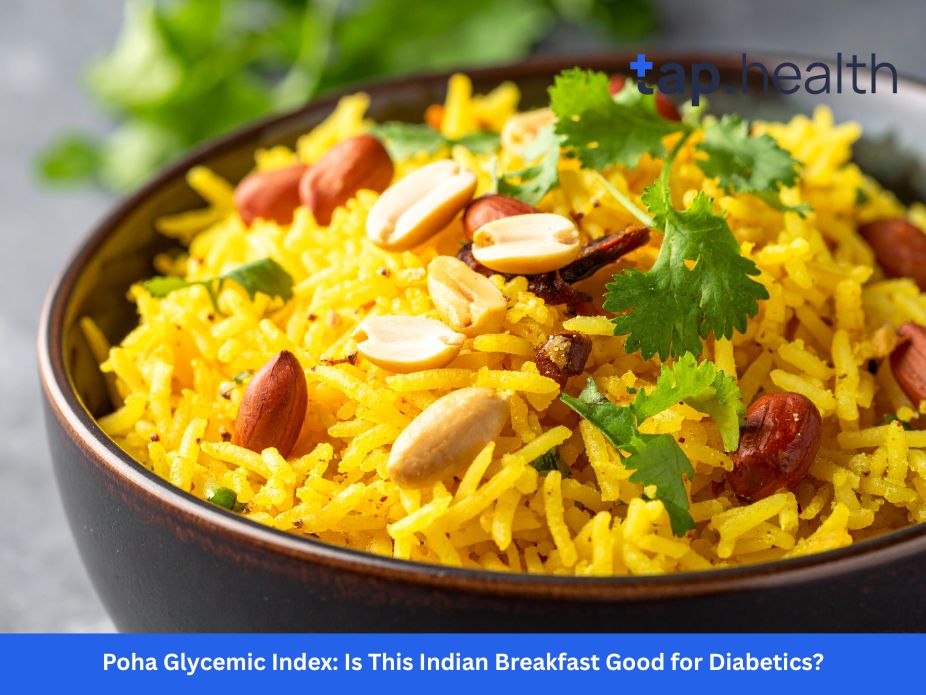
If you live in an Indian household, your morning likely starts with a steaming plate of Poha. It is light, fluffy, yellow with turmeric, and crunchy with peanuts. It feels like the perfect “light” breakfast.
But if you have been diagnosed with diabetes or pre-diabetes, you might be looking at that plate differently. You might be asking, “Is this safe?” or “Will this spike my sugar?”
There is a lot of confusion about Poha. Some people say it is a superfood; others say it is just rice in disguise.
In this guide, we are going to clear up the confusion surrounding the poha glycemic index. We will look at the science, the numbers, and the simple tricks to make your favorite breakfast safer for your blood sugar. We will keep it simple, honest, and easy to understand.
What is the Glycemic Index (GI)?
Before we talk about Poha, let’s quickly understand the measuring stick we are using: the Glycemic Index (GI).
Imagine your body is a car and sugar is the fuel. The Glycemic Index measures how fast that fuel gets dumped into your engine (your bloodstream).
- Low GI (0 to 55): This is a slow drip of fuel. It gives you steady energy without overwhelming the engine.
- Medium GI (56 to 69): This is a faster pour. It’s okay in moderation.
- High GI (70 and above): This is like dumping the whole can of fuel at once. It causes a dangerous spike.
For a diabetic, the goal is always to choose foods that are slow drippers (Low GI).
What is the Glycemic Index of Poha?
This is where things get a little tricky. Unlike an apple, which is always an apple, Poha changes depending on how it is made.
The glycemic index of Poha typically ranges from 57 to 70.
This puts Poha in the Medium to High GI category.
Wait, isn’t Poha supposed to be healthy? Yes, it is healthy, but it is still a form of rice. Poha is made by parboiling rice and then flattening it. Because it is flattened, it is processed. The thinner the flake, the easier it is for your body to digest.
- Thin White Poha: Often has a higher GI (closer to 70) because it digests very quickly.
- Thick Poha: Has a slightly lower GI because the body has to work a bit harder to break it down.
So, if you eat plain Poha without any veggies or nuts, it can spike your blood sugar almost as fast as white rice.
Glycemic Index vs. Glycemic Load
If Poha has a Medium-High GI, why do doctors still let diabetics eat it? The answer lies in the Glycemic Load (GL).
- GI tells you the speed of the sugar.
- GL tells you the total amount of sugar in a serving.
The Glycemic Load of a standard bowl of Poha is roughly 12 to 15. This is considered Medium.
While it isn’t “low,” it is much better than a bowl of plain white rice, which has a much higher load. Because Poha is airy and fluffy, you actually eat fewer grains of rice in a bowl of Poha compared to a bowl of cooked rice. The volume tricks your brain into thinking you are eating more than you actually are.
Can Diabetics Eat Poha?
The short answer is YES, but with conditions.
You cannot eat a mountain of Poha every day and expect your sugar to be fine. But you can definitely include it in your diet if you follow the rules.
Poha is better for you than white bread or cornflakes. It is gluten-free, easy to digest, and rich in iron. But for a diabetic, it is a “carb-heavy” meal. To make it safe, you have to change how you cook it.
The “Carb Trap”
The biggest mistake people make is eating Poha that is 90% rice flakes and 10% garnish. If your plate is mostly white flakes, you will see a sugar spike. You need to flip that ratio.
White Poha vs. Red Poha: The Game Changer
If you really want to lower the poha glycemic index, you need to switch your grain.
Most of us buy the white variety. But have you seen Red Poha? Red Poha is made from red rice. It is slightly coarser and takes a little longer to soak, but it is a superstar for health.
- White Poha: The bran (fiber layer) has been removed. It is mostly starch.
- Red Poha: Retains the bran layer. It is packed with fiber and an antioxidant called anthocyanin.
Red Poha has a significantly lower Glycemic Index than White Poha. The fiber in the red variety acts as a brake, slowing down the absorption of sugar. If you have diabetes, making the switch to Red Poha is the single best thing you can do.
The Secret Health Benefits of Poha
Despite the GI conversation, Poha has some unique benefits that make it worth eating.
1. It is a Probiotic (Sort of)
This surprises many people. To make Poha, the rice is parboiled and then dried. During this soaking process, the rice undergoes a mild fermentation. This retains some of the good bacteria that are excellent for your gut health. A healthy gut is crucial for managing blood sugar.
2. The Iron Boost
Poha is flattened using iron rollers. Interestingly, some of that iron gets transferred to the rice flakes. Poha is surprisingly high in iron. Diabetics often suffer from anemia, so this iron boost is very helpful. Tip: Squeeze a lemon on your Poha. Vitamin C helps your body absorb the iron!
3. Easily Digestible
For diabetics who also have digestive issues or acidity (which is common), Poha is very gentle on the stomach. It doesn’t sit heavy like wheat rotis or oily parathas.
5 Ways to Lower the GI of Your Poha
You don’t have to give up Poha. You just have to “dress it up” to lower its glycemic impact. Use the KISS method to remember these tricks.
1. The 50-50 Rule (Vegetables)
Never make Poha with just onions and potatoes. Potatoes are high GI too! Instead, your bowl should be 50% Poha and 50% green vegetables. Add peas, beans, capsicum, carrots, and cauliflower. The fiber from the veggies will drastically lower the overall GI of the meal.
2. Add Protein (Peanuts & Sprouts)
Carbs need a partner. If you eat carbs alone, they spike sugar. If you eat them with protein, they digest slowly.
- Peanuts: Do not skip the peanuts! They are healthy fats and protein.
- Sprouts: Steam some moong dal sprouts and mix them in.
- Soy Chunks: Add small soy chunks for a protein boost.
3. Use Healthy Fats
Don’t be afraid of a little oil. Using healthy fats like mustard oil, ghee, or coconut oil to cook your Poha actually helps. Fat slows down stomach emptying. When the food leaves your stomach slower, the sugar hits your blood slower.
4. The Lemon Trick
Squeezing fresh lemon juice over your Poha is not just for taste. Acid helps lower the glycemic response of starchy foods. It’s a simple science hack that tastes delicious.
5. Eat it with Curd (Dahi)
In states like Bihar and Odisha, Poha (Chuda) is often eaten with curd. This is actually a very smart diabetic combo. The protein and probiotics in the curd balance out the carbs in the rice flakes.
What to Avoid (The Red Flags)
If you have diabetes, there are certain ways of eating Poha that you must avoid.
- Avoid Sugar: Many recipes (especially Indori Poha) call for adding a spoonful of sugar. This is a big NO.
- Avoid Bhujia/Sev: Topping your Poha with a mountain of fried sev adds unhealthy fats and refined flour. Skip the sev or use roasted chana instead.
- Avoid Potatoes: As mentioned before, Batata Poha (Potato Poha) is a double-carb bomb. Use peas or capsicum instead of potatoes.
A Sample “Low GI” Poha Recipe
Here is how you should make Poha if you want to keep your doctor happy.
Ingredients:
- 1 cup Red Poha (washed and drained)
- 1 cup Mixed Vegetables (Peas, finely chopped beans, carrots, capsicum)
- 1 tbsp Peanuts (roasted)
- 1 tsp Mustard Seeds
- Curry Leaves
- Lemon Juice
Method:
- Heat a little oil. Add mustard seeds, curry leaves, and peanuts.
- Add the cup of mixed vegetables. Cook them until they are soft but still crunchy. Note: We are using a lot of veggies!
- Add the Red Poha, turmeric, and salt. Mix gently.
- Cover and steam for 2 minutes.
- Turn off the heat and squeeze half a lemon over it.
- Serve hot.
By adding a full cup of veggies to one cup of Poha, you have effectively cut the Glycemic Load in half!
Conclusion
So, is the poha glycemic index a dealbreaker? No.
While Poha falls into the Medium GI range, it is still a healthy breakfast option when prepared correctly. The danger isn’t in the Poha itself; it is in how we traditionally eat it—lots of rice, lots of potatoes, and very few nutrients.
If you switch to Red Poha, load it up with vegetables, and add protein like peanuts or sprouts, you can transform this dish into a diabetes-friendly super-meal.
Remember the KISS rule: Make it Green, Keep it Red. (Use green veggies, choose red rice flakes).
Enjoy your breakfast without the guilt!
Frequently Asked Questions (FAQ) on Poha Glycemic Index
1. Is white rice better or Poha better for diabetics?
Poha is definitely better than white rice. Even though both come from the same grain, Poha is fermented and has a lower glycemic load per serving compared to a bowl of polished white rice. It also digests slightly slower due to the processing method.
2. Can I eat Poha daily if I have diabetes?
It is better to rotate your breakfasts. While Poha is safe, eating a high-carb breakfast every single day might make sugar management harder. Try alternating Poha with lower-carb options like Besan Chilla (gram flour pancakes) or Moong Dal Chilla. Eating Poha 2-3 times a week is a safe balance.
3. Does washing Poha reduce its carbohydrates?
No. Washing Poha cleans it and softens it, but it does not remove the carbohydrates. The starch is inside the grain. However, washing Red Poha is important to remove any dust while keeping the fiber layer intact.
4. Which is better: Oats or Poha?
Strictly speaking about blood sugar, Oats (especially steel-cut or rolled oats) have a lower Glycemic Index than Poha and more soluble fiber. Oats are slightly better for strict sugar control. However, Poha is tastier for many Indians and can be just as healthy if you add enough vegetables.
5. Can I eat Poha for dinner?
It is generally recommended to avoid carb-heavy meals for dinner if you have diabetes. Your metabolism slows down at night. Poha is a great breakfast or lunch/snack, but for dinner, you should try to eat more protein and fiber (like salads or dal) rather than rice-based dishes.
6. Does adding potatoes to Poha make it bad for diabetics?
Yes, it makes it risky. Potatoes are high in starch and have a high glycemic index. When you mix Rice (Carb) + Potato (Carb), you create a “carb bomb” that causes a rapid sugar spike. It is best to replace the potatoes with green peas or capsicum.
7. Is “Diet Poha” (Chivda) healthy?
Be careful with store-bought “Diet Chivda” or roasted Poha snacks. While they look healthy, they are often fried and contain high amounts of salt and hidden sugar. It is always better to make fresh, steamed Poha at home where you control the ingredients.
8. Does the thickness of the flake matter?
Yes! Thick Poha (Jada Poha) is better than Thin Poha (Nylon Poha). Thin poha is more processed and digests very quickly, turning into sugar almost instantly. Thick poha takes longer to cook and longer to digest, making it the safer choice.
References
Healthline: Is Poha Good for Diabetes?
Sugar.fit (Medically Reviewed): Poha for Diabetes: Glycemic Index and Benefits
BeatO (Diabetes Care Platform): Can Diabetics Eat Poha?