tap.health logo
  • Diabetes Management
  • Health Assistant
  • About Us
  • Blog
  • Contact Us
Get Plan
  • Diabetes Management
  • Health Assistant
  • About Us
  • Blog
  • Contact Us
  • All Blogs
  • Product
  • Psoriasis Treatment and Diagnosis: How to Effectively Manage and Cure It?

Psoriasis Treatment and Diagnosis: How to Effectively Manage and Cure It?

Product
June 5, 2024
• 4 min read
Yasaswini Vajupeyajula
Written by
Yasaswini Vajupeyajula
ChatGPT Perplexity WhatsApp LinkedIn X Grok Google AI
Psoriasis Treatment and Diagnosis How to Cure it

Psoriasis is a common skin condition that affects millions of people worldwide. Understanding how to diagnose and treat psoriasis can make a significant difference in managing this chronic disease. In this blog post, we will explore the different aspects of psoriasis, including its treatments and diagnosis methods.

What is Psoriasis?

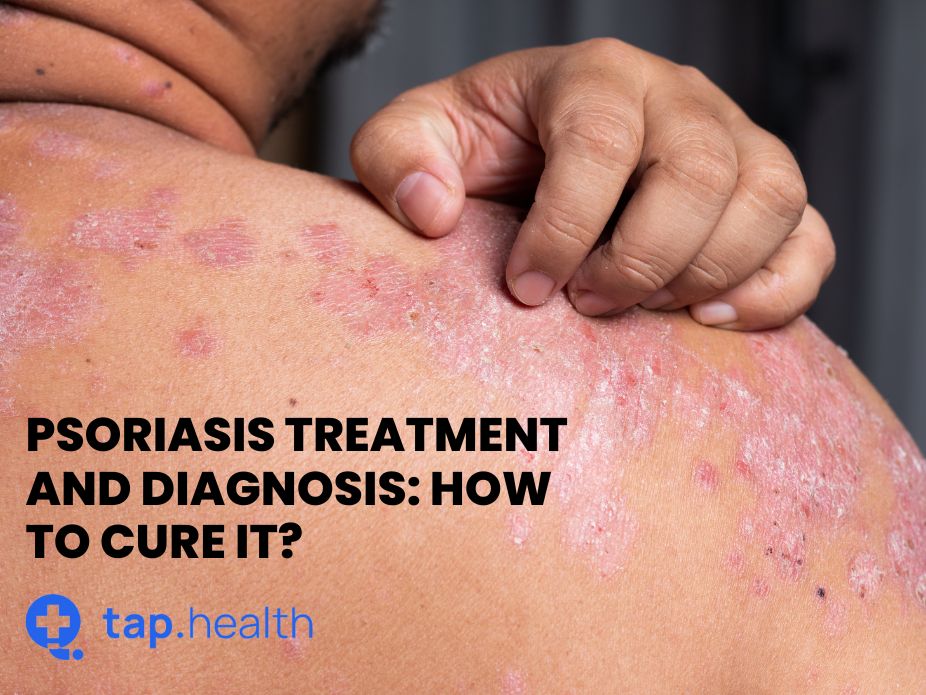
Psoriasis is a chronic skin condition that speeds up the life cycle of skin cells, causing them to build up rapidly on the surface of the skin. These extra skin cells form scales and red patches that can be itchy and sometimes painful. Psoriasis is thought to be related to an immune system problem with T cells and other white blood cells, called neutrophils, in your body. When these cells mistakenly attack healthy skin cells, it causes the skin cell production process to go into overdrive.

Psoriasis can appear anywhere on the body but is most commonly found on the scalp, elbows, knees, and lower back. The severity of psoriasis varies from person to person, ranging from a few spots of dandruff-like scaling to major eruptions covering large areas.

Psoriasis Treatment

Treating psoriasis is crucial for improving the quality of life for those affected. There are several treatment options available, and what works for one person may not work for another. Here are the main categories of psoriasis treatments:

Topical Treatments for Psoriasis

Topical treatments are often the first line of defense in managing mild to moderate psoriasis. These treatments are applied directly to the skin and can help reduce inflammation, slow down skin cell production, and soothe the skin.

  1. Corticosteroids: These are the most frequently prescribed medicines for treating mild to moderate psoriasis. They work by reducing inflammation and slowing down the production of skin cells.
  2. Vitamin D Analogues: Synthetic forms of vitamin D, such as calcipotriene (Dovonex), slow down the growth of skin cells.
  3. Topical Retinoids: Derived from vitamin A, retinoids can help normalize DNA activity in skin cells and decrease inflammation.
  4. Calcineurin Inhibitors: These medications reduce inflammation and plaque buildup. They’re especially useful in areas where the skin is thin, such as around the eyes.

Phototherapy for Psoriasis

Phototherapy, or light therapy, involves exposing the skin to controlled amounts of natural or artificial ultraviolet light. This treatment is typically used for moderate to severe psoriasis.

  1. UVB Phototherapy: Ultraviolet B (UVB) light penetrates the skin and slows the growth of affected skin cells.
  2. PUVA: This treatment combines UVA light with a photosensitizing drug called psoralen to make the skin more receptive to the light therapy.
  3. Excimer Laser: This laser treatment directs a high-intensity beam of UVB light at the psoriasis plaques without affecting the surrounding healthy skin.

Systemic Treatments

Systemic treatments work throughout the entire body and are usually reserved for severe cases of psoriasis that do not respond to topical treatments or phototherapy. They can be taken orally or by injection.

  1. Methotrexate: This drug suppresses the immune system and slows down the production of skin cells.
  2. Cyclosporine: Similar to methotrexate, cyclosporine also suppresses the immune system but is usually only used for short periods due to potential side effects.
  3. Acitretin: A retinoid taken orally, acitretin can help normalize skin cell production and reduce inflammation.

Systemic Biologic Treatments

Biologics are a newer class of systemic treatment that target specific parts of the immune system. They are often prescribed for moderate to severe psoriasis.

  1. TNF-alpha Inhibitors: Drugs like etanercept (Enbrel) and adalimumab (Humira) block a specific protein called tumor necrosis factor-alpha (TNF-alpha) that contributes to inflammation.
  2. IL-12/23 Inhibitors: Ustekinumab (Stelara) targets interleukin-12 and interleukin-23, proteins that play a role in the immune response.
  3. IL-17 Inhibitors: Secukinumab (Cosentyx) and ixekizumab (Taltz) target interleukin-17, another protein involved in the inflammatory process.

Oral or Injected Medications

Oral and injected medications are used when other treatments have not been effective.

  1. Apremilast (Otezla): This oral medication helps reduce inflammation by inhibiting an enzyme called phosphodiesterase 4.
  2. Tofacitinib (Xeljanz): Though primarily used for arthritis, tofacitinib has shown effectiveness in treating psoriasis by interfering with pathways in the immune system.

Also Read: Psoriasis Treatment in Ayurveda

Natural Psoriasis Treatments

While conventional treatments are effective, some people seek natural remedies to manage their psoriasis. These treatments may include lifestyle changes, dietary adjustments, and the use of natural products.

  1. Diet: Eating a balanced diet rich in anti-inflammatory foods like fruits, vegetables, and omega-3 fatty acids can help manage symptoms.
  2. Moisturizers: Regular use of moisturizers can help keep the skin hydrated and reduce scaling.
  3. Aloe Vera: This plant extract is known for its soothing properties and can help reduce redness and scaling.
  4. Apple Cider Vinegar: Some people find that applying diluted apple cider vinegar can help relieve scalp itch.
  5. Oats: Oatmeal baths can help soothe itchy and inflamed skin.

Psoriasis Diagnosis

Diagnosing psoriasis typically involves a physical examination and a review of the patient’s medical history. In some cases, additional tests may be required to confirm the diagnosis.

  1. Physical Examination: A doctor will examine the skin, scalp, and nails for signs of psoriasis. They may also ask about family history, as psoriasis can be hereditary.
  2. Biopsy: If the diagnosis is uncertain, a small sample of skin (biopsy) may be taken and examined under a microscope.
  3. Blood Tests: These are not usually necessary for diagnosing psoriasis but may be done to rule out other conditions with similar symptoms.

FAQ on Psoriasis Treatment and Diagnosis

1: Can psoriasis be cured?

A: There is no cure for psoriasis, but it can be managed effectively with the right treatment plan. Many people achieve significant improvement and even remission of symptoms.

2: Are there any lifestyle changes that can help with psoriasis?

A: Yes, maintaining a healthy diet, managing stress, avoiding triggers, and keeping the skin moisturized can all help manage psoriasis symptoms.

3: Can children get psoriasis?

A: Yes, psoriasis can occur at any age, including in children. Pediatric psoriasis often requires special treatment considerations.

4: How long does it take to see results from psoriasis treatments?

A: The time it takes to see results varies depending on the treatment and the individual. Some people may see improvement within a few weeks, while others may take longer.

5: Are there any side effects of psoriasis treatments?

A: Yes, some treatments can have side effects. It’s important to discuss these with your doctor and weigh the benefits and risks of each treatment option.

6: Can diet affect psoriasis?

A: While diet alone cannot cure psoriasis, certain foods may help reduce inflammation and improve symptoms. A balanced diet rich in fruits, vegetables, and omega-3 fatty acids is generally beneficial.

7: Is psoriasis contagious?

A: No, psoriasis is not contagious. You cannot catch it from or spread it to another person.

Reference Links

  • psoriasis
  • Psoriasis
Tags
A1C test diabetes heart health diabetic retinopathy fruit and blood sugar type 1 diabetes how to lower HbA1c diabetic breakfast ideas post-meal blood sugar Indian diabetes plate foods for diabetes shopping diabetes and alcohol low blood sugar at night diabetes excessive thirst insulin site rotation diabetes curd milk for diabetes can diabetics eat apple why diabetes is considered as a lifestyle disease blood pressure diabetes eye test rice and diabetes type 1 diabetes symptoms fasting sugar normal range PCOS and diabetes blood sugar after food diabetes portion control diabetes kidney tests alcohol blood sugar diabetes diabetes sweating at night diabetes dry mouth insulin lumps tea and coffee in diabetes can diabetics drink milk apple blood sugar Medicine lifestyle diabetes cholesterol diabetes kidney care can diabetics eat rice insulin diabetes high fasting blood sugar PCOS insulin resistance postprandial glucose low glycaemic index foods for diabetes urine albumin diabetes can diabetics drink alcohol diabetes headache frequent urination diabetes diabetes weight gain coffee diabetes best milk for diabetes eggs for diabetes Health type 2 diabetes lifestyle disease living with diabetes diabetic kidney disease diabetes diet India prediabetes diet reverse prediabetes naturally PCOS diabetes risk dawn phenomenon diabetes low GI foods India eGFR diabetes diabetes and dizziness high blood sugar headache diabetes fatigue diabetes and weight gain tea diabetes peanuts for diabetes are eggs good for diabetes Lifestyle exercise and diabetes diabetes habits kidney tests diabetes morning blood sugar prediabetes food prediabetes reversal gestational diabetes diet Indian morning sugar high diabetes low GI diet diabetes and dental problems dizziness diabetes low blood sugar headache diabetes tiredness insulin weight gain roti for diabetes are peanuts good for diabetes egg diabetes Home remedies blood sugar control diabetes management high blood sugar symptoms fasting sugar high lower diabetes risk how to prevent type 2 diabetes pregnancy diabetes diet high fasting sugar in morning diabetes and fatty liver diabetes gum disease low sugar dizziness blood sugar monitoring at home high blood sugar tiredness diabetes swollen feet best roti for diabetes peanuts blood sugar paneer for diabetes Fitness physical activity insulin resistance hyperglycemia symptoms dawn phenomenon diabetes and weight loss insulin resistance diet gestational diabetes meal plan diabetes and cholesterol fatty liver diabetes dry mouth diabetes diabetes leg pain when to check blood sugar diabetes constipation swollen feet diabetes chapati diabetes sweet potato for diabetes is paneer good for diabetes Prevention diabetes foot care insulin sensitivity diabetes warning signs diabetes myths weight loss diabetes Indian foods for insulin resistance diabetic foot ulcer diabetes lipid profile insulin resistance fatty liver diabetes urine infection diabetic leg cramps blood glucose monitoring diabetes and constipation diabetes foot swelling can diabetics eat dates can diabetics eat sweet potato paneer diabetes Hygiene diabetic foot type 2 diabetes risk normal blood sugar levels diabetes facts insulin resistance weight loss improve insulin sensitivity diabetes foot wound cholesterol in diabetes diabetes skin problems frequent UTI diabetes diabetes nerve pain legs metformin for diabetes constipation diabetes can diabetics eat banana dates for diabetes sweet potato blood sugar poha for diabetes Ailments foot health diabetes and sleep fasting blood sugar diabetes misconceptions diabetes medicine safety diabetic neuropathy symptoms diabetic foot ulcer warning signs can diabetics eat mango diabetes itching urinary infection diabetes diabetes slow wound healing metformin side effects diabetes numbness in hands banana for diabetes dates blood sugar jaggery for diabetes is poha good for diabetes Hindi gestational diabetes poor sleep blood sugar HbA1c diabetes symptoms in women diabetes medicines diabetes nerve damage diabetes and blood pressure mango and diabetes dark patches diabetes diabetes stomach problems diabetes wounds metformin safety diabetes tingling hands banana blood sugar papaya for diabetes is jaggery good for diabetes poha blood sugar skin diseases pregnancy diabetes sleep and diabetes diabetes in India women diabetes signs diabetes treatment advice tingling feet diabetes high blood pressure diabetes mango sugar diabetes walking after meals for diabetes diabetic gastroparesis diabetic wound care diabetes ketoacidosis warning signs diabetic neuropathy hands coconut water and diabetes is papaya good for diabetes gur for diabetes sprouts for diabetes acne vulgaris symptoms blood sugar pregnancy diabetes and stress diabetes risk factors India diabetes risk women Indian diabetic diet chart diabetes eye disease diabetes heart kidney risk diabetes reversal vs remission post meal walk diabetes diabetes bloating nausea diabetes yeast infection DKA symptoms fasting with diabetes coconut water for diabetes papaya blood sugar watermelon for diabetes are sprouts good for diabetes AI Search low blood sugar stress blood sugar diabetes prevention India diabetes symptoms in men diabetic meal plan diabetic eye test borderline HbA1c diabetes remission walking lowers blood sugar diabetes sick day rules diabetes fungal infection ketones diabetes diabetes fasting safety can diabetics drink coconut water oats for diabetes can diabetics eat watermelon sprouts blood sugar blood sugar hypoglycemia cortisol diabetes best fruits for diabetes men diabetes signs HbA1c test high protein breakfast for diabetes HbA1c 5.7 to 6.4 reverse type 2 diabetes diabetes grocery list India diabetes during illness diabetes vaginal itching diabetes blurry vision can diabetics fast curd for diabetes oatmeal diabetes watermelon blood sugar fasting glucose diabetes safety diabetes eye care diabetes fruits diabetes risk men HbA1c normal range diabetes breakfast India prediabetes HbA1c diabetes plate method diabetic food list India blood sugar fever infection diabetes night sweats high blood sugar blurry vision insulin injection sites is curd good for diabetes are oats good for diabetes apple for diabetes
More blogs
K. Siva Jyothi
K. Siva Jyothi
• May 30, 2026
• 19 min read

Apple for Diabetes: Blood Sugar Benefits, Best Time to Eat, Portion Size, and Juice Risks

A detailed guide to apple for diabetes, including fibre, blood sugar effects, portion size, apple juice risks, pairing ideas, and glucose monitoring.

Diabetes
Psoriasis Treatment and Diagnosis How to Cure it
Kazima Qureshi
Kazima Qureshi
• May 30, 2026
• 19 min read

Eggs for Diabetes: Blood Sugar Benefits, Cholesterol, Best Cooking Methods, and Meal Ideas

A practical guide to eggs for diabetes, covering blood sugar, protein, cholesterol, heart health, cooking methods, and Indian breakfast ideas.

Diabetes
Psoriasis Treatment and Diagnosis How to Cure it
Naimish Mishra
Naimish Mishra
• May 30, 2026
• 19 min read

Poha for Diabetes: Blood Sugar Impact, Portion Size, Add-Ins, and Healthier Breakfast Tips

A practical guide to poha for diabetes, including flattened rice, blood sugar impact, portion size, vegetables, peanuts, and healthier breakfast tips.

Diabetes
Psoriasis Treatment and Diagnosis How to Cure it
Do you remember your last sugar reading?
Log and Track your glucose on the Tap Health App
All logs in one place
Smart trend graphs
Medicine Reminder
100% Ad Free
Download Now

Missed your diabetes meds

again? Not anymore.

Get medicine reminders on your phone.

✓ Glucose diary and Insights
✓ Smart Nudges
✓ All logs at one place
✓ 100% Ad free
Download Free
tap health
tap.health logo
copyright © 2025
2nd Floor,Plot No 4, Minarch Tower,
Sector 44,Gurugram, 122003,
Haryana, India
  • About Us
  • Blog
  • Doctor login
  • Contact Us
  • Privacy Policy
  • Return / Shipping Policy
  • Terms and Conditions
Get Your Free AI Diabetes Coach