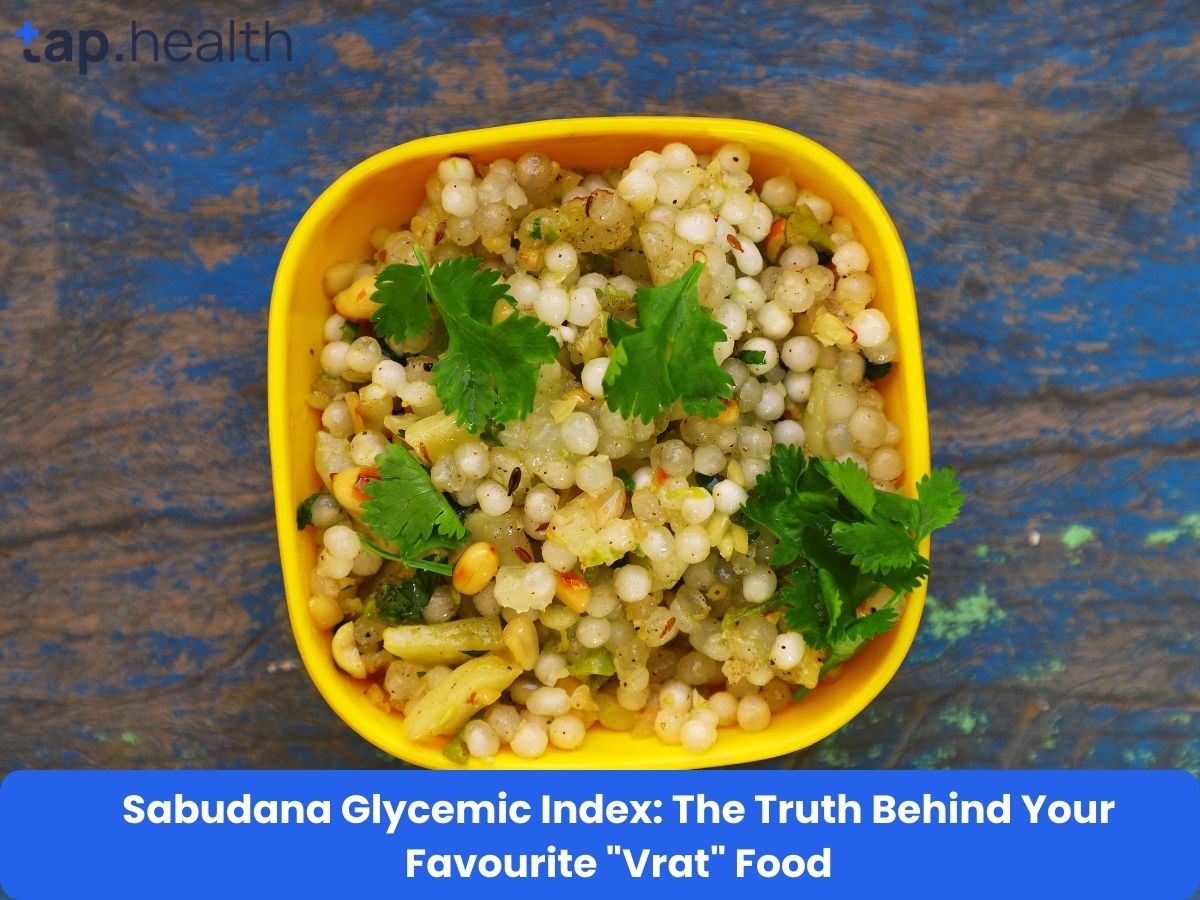
In India, fasting (Vrat or Upvas) is a time for devotion, prayer, and… Sabudana! Whether it is the crispy Sabudana Vada during Navratri, the comforting Sabudana Khichdi for Ekadashi, or a sweet bowl of Kheer, those white pearls are everywhere.
We consider Sabudana to be “light” and “pure.” We eat it believing it is a healthy alternative to grains like wheat or rice during fasting days. But for the millions of Indians managing diabetes, there is a hidden danger in that bowl.
You might have noticed that after a day of fasting and eating Sabudana, your blood sugar levels the next morning are actually higher than on normal days. Why does this happen?
The answer lies in the sabudana glycemic index.
In this comprehensive guide, we are going to break down the science of Sago (Tapioca Pearls). We will look at the numbers, compare it with rice and poha, and answer the burning question: Is Sabudana actually good for diabetics, or is it a sugar trap?
What is Sabudana (Sago/Tapioca)?
Before we look at the sugar spike, let’s understand what we are eating. Sabudana is not a grain. It is not a seed. It is pure starch.
It is made from the roots of the Cassava plant (Tapioca). The roots are crushed, the milk is extracted, and it is processed into tiny white pearls.
- Nutritional Profile: Sabudana is almost 100% carbohydrate. It has negligible protein, almost no fiber, and very few vitamins.
- Energy: It provides instant energy, which is why it was traditionally chosen for fasting days when people needed a quick boost.
But for a diabetic, “instant energy” usually means “instant sugar spike.”
Understanding Glycemic Index (GI)
To judge if Sabudana is safe, we need to look at the Glycemic Index (GI).
Think of GI as a speedometer for your blood sugar. It measures how fast a food raises your glucose levels on a scale of 0 to 100.
- Low GI (0-55): These digest slowly. (Ideal for Diabetics).
- Medium GI (56-69): Moderate rise.
- High GI (70+): These digest instantly, causing a rapid “sugar spike” like rocket fuel.
The Magic Number: Sabudana Glycemic Index
So, what is the sabudana glycemic index?
The Glycemic Index of Sabudana is High, typically ranging from 65 to 85.
Depending on how it is processed and cooked, it sits firmly in the Medium-High to High category.
To put this in perspective:
- Table Sugar: GI ~65
- Sabudana: GI ~65-85
Yes, Sabudana can spike your blood sugar faster and higher than table sugar. Because it is highly processed starch with zero fiber to slow it down, your body converts it into glucose almost immediately.
Sabudana Glycemic Index and Load
We must also look at the Glycemic Load (GL). While GI tells you the speed, GL tells you the amount of the sugar impact based on portion size.
- Sabudana GI: ~65-85 (High)
- Sabudana Carbs per 100g: ~87 grams (Very High)
- Glycemic Load: Very High.
Since Sabudana is dense in carbs, even a small bowl packs a massive glucose punch. This is why does sabudana increase sugar level is a question with a definite “Yes.”
Sabudana Khichdi vs Vada vs Kheer
The GI changes slightly based on how you cook it, but the base remains high.
1. Sabudana Khichdi Glycemic Index
This is the most common preparation.
- The Good: We add peanuts (protein/fat) and ghee. This slows down digestion slightly.
- The Bad: It is still mostly starch.
- Verdict: Can a diabetic eat sabudana khichdi? Only in very small portions, and only if it is loaded with peanuts and vegetables.
2. Sabudana Vada Glycemic Index
- The Problem: Deep frying.
- The Impact: The fat lowers the GI slightly (fat slows sugar absorption), but the calorie count explodes. High calories lead to weight gain and insulin resistance. It is a double-edged sword.
3. Sabudana Kheer Glycemic Index
- The Danger: Sabudana (High GI) + Sugar (High GI) + Milk.
- Verdict: This is a metabolic disaster for a diabetic. It will cause a massive sugar spike. Avoid it completely.
Sabudana vs Rice vs Poha vs Bhagar
Let’s compare Sabudana with other common Indian staples to see where it stands.
| Food Item | Glycemic Index (GI) | Verdict for Diabetics |
| Sabudana | 65 – 85 (High) | Avoid / Limit Strictly |
| White Rice | 70 – 73 (High) | Limit |
| Poha (Flattened Rice) | 38 – 64 (Low/Med) | Better Choice |
| Bhagar (Sama Rice) | ~50 (Low) | Best Fasting Choice |
Sabudana vs Rice Glycemic Index
Sabudana vs rice glycemic index shows they are both villains for blood sugar. However, Sabudana often has less fiber than rice, making it potentially worse.
Glycemic Index of Bhagar (Barnyard Millet)
During fasting, people often choose between Sabudana and Bhagar (Sama ke Chawal).
- Bhagar GI: ~50 (Low).
- Winner: Bhagar is infinitely better for diabetics. It is a millet, rich in fiber, and digests slowly.
Is Sabudana Good for Diabetes?
The query “is sabudana good for diabetes” needs a clear answer: Generally, No.
It offers very little nutritional value other than pure energy (calories). For a diabetic who needs to control blood sugar and weight, Sabudana provides:
- High Carbs: Spikes sugar.
- Low Fiber: No protection against the spike.
- High Calories: Leads to weight gain.
However, if you love it and cannot imagine a fast without it, you can eat it strategically (see recommendations below).
Real-Life Scenario
Let’s meet Mrs. Kulkarni, a 55-year-old housewife from Pune.
The Context:
Mrs. Kulkarni has Type 2 Diabetes. She is very religious and fasts every Ekadashi. On fasting days, she avoids her regular diabetic medicine (Metformin) because she eats less food.
- Her Meal: A big bowl of Sabudana Khichdi for lunch and Sabudana Vada for dinner.
The Problem:
Every time she fasted, she felt dizzy and tired by evening. The next morning, her fasting sugar would be 250 mg/dL (very high). She thought it was because of the “stress” of fasting.
The Solution:
Her doctor explained that her “light” fasting food was actually a “sugar bomb.”
- The Switch: She swapped Sabudana for Bhagar (Sama Rice) and Rajgira (Amaranth) Roti. She added cucumber salad and curd to her meal.
- The Result: Her sugar levels remained stable at 140 mg/dL even on fasting days.
Expert Contribution
We consulted nutritional guidelines to get the professional medical stance.
Dr. S. Joshi, Diabetologist:
“I dread the festive season because my patients’ HbA1c levels always go up. The culprit is often Sabudana. Patients think because it is not ‘grain,’ it is safe. I tell them: Sabudana is to Tapioca what Maida is to Wheat. It is the most refined form of starch. If you must fast, eat fruits, nuts, and dairy. Skip the starch pearls.”
Nutritionist Perspective:
“If you are eating Sabudana, do not eat it alone. The ‘starch-blocker’ effect of protein is real. Add roasted peanut powder generously. Eat it with a bowl of Curd (Dahi). The protein in peanuts and curd will flatten the glucose curve.”
Recommendations Grounded in Proven Research and Facts
Based on the sabudana glycemic index and load data, here are actionable tips if you decide to eat it:
- The “Peanut Ratio”: When making Khichdi, increase the amount of crushed peanuts (Shengdana kut). Aim for a 1:1 ratio. One cup Sabudana needs one cup of peanut powder. This adds healthy fat and protein.
- Add Fiber: Sabudana has zero fiber. Add chopped cucumber, green chillies, and coriander on top. Eat a salad before the Khichdi.
- Portion Control: Treat it like a dessert, not a meal. Eat half a bowl, not a full plate.
- Boiled Tapioca Glycemic Index: If you eat the root (Cassava/Tapioca) boiled, the GI is high (~70-90). However, it is slightly better than processed pearls because it’s less refined. But still, eat with caution.
- The Best Alternative: Switch to Bhagar (Barnyard Millet) or Kuttu ka Atta (Buckwheat) for fasting. Both have much lower GI and are heart-healthy.
Conclusion
The verdict on the sabudana glycemic index is clear: It is High.
Sabudana is delicious, nostalgic, and a huge part of Indian culture. But for a diabetic, it is essentially a bowl of translucent sugar beads. It spikes blood sugar rapidly and offers no nutritional benefits to counterbalance the surge.
You don’t have to ban it forever. But you must change how you see it. It is an occasional treat, not a healthy fasting staple. Next Navratri or Ekadashi, try Bhagar or Rajgira instead. Your faith remains the same, but your health gets a massive blessing.
Frequently Asked Questions (FAQ) on Sabudana Glycemic Inde
Can a diabetic eat sabudana khichdi?
Diabetics should avoid or strictly limit Sabudana Khichdi. Since Sabudana has a high glycemic index, it spikes blood sugar fast. If you eat it, ensure you add lots of peanuts, vegetables, and eat a very small portion accompanied by curd.
Does sabudana increase sugar level?
Yes, significantly. Sabudana is nearly 100% starch with almost no fiber or protein. This means it converts to glucose very quickly, causing a rapid rise in blood sugar levels immediately after eating.
What is the boiled tapioca glycemic index?
The boiled tapioca glycemic index is high, typically around 70 to 90. Even in its root form, tapioca is a pure starch energy source and should be consumed with caution by those with insulin resistance.
Is sabudana good for diabetes?
No. It is low in nutrients and high in carbs and GI. There are far better fasting alternatives like Bhagar (Sama Rice), Buckwheat (Kuttu), or Rajgira (Amaranth) which are rich in protein and fiber.
What is the glycemic index of bhagar (Sama Rice)?
The glycemic index of bhagar (Barnyard Millet) is approximately 50, which is low. It is an excellent substitute for Sabudana during fasting as it digests slowly and keeps blood sugar stable.
Sabudana vs rice glycemic index – which is higher?
Sabudana is generally higher or equal to white rice. While white rice has a GI of ~73, Sabudana can range from 65 to 85. However, rice usually has a tiny bit of protein; Sabudana has virtually none, making the metabolic impact of Sabudana often worse.
Can I eat Sabudana Vada?
Sabudana Vada is deep-fried. The fat lowers the GI slightly but increases calories drastically. For a diabetic, high-calorie fried starch contributes to weight gain and bad cholesterol. It is best to avoid it.
Sabudana carbs per 100g?
Sabudana is very dense. It contains approximately 87 grams of carbohydrates per 100 grams. This is extremely high, which is why the Glycemic Load is also very high.
References:
- Healthline: Is Tapioca Healthy? Link
- Harvard Health Publishing: Glycemic index for 60+ foods. Link
- WebMD: Health Benefits of Sago. Link
- Diabetes.co.uk: Fasting and Diabetes. Link
- National Institute of Nutrition (NIN): Glycemic Index of Indian Foods. Link
(Disclaimer: This content is for educational purposes only. Always consult your doctor or a certified dietitian before making significant changes to your diet, especially if you have diabetes.)