Introduction: Why Boiled Potatoes Cause Confusion
The potato, or aloo, holds a special place in Indian cuisine, serving as an affordable and versatile staple across countless dishes, from comforting curries to popular street chaats. It is much more than just a filler; the potato is a nutritional powerhouse, rich in essential micronutrients like Vitamin C, B vitamins, and high amounts of potassium—often containing more potassium than a banana.1
Despite its extensive nutritional profile, the potato frequently faces criticism and is often labelled as ‘unhealthy’ or even forbidden in diets aimed at managing weight or diabetes. This controversy stems primarily from its high starch content.
The concern revolves around how quickly potato starch is processed by the body. Once consumed, this starch is rapidly converted into glucose (sugar), which can lead to swift and pronounced spikes in blood sugar levels.2 Such rapid fluctuations are precisely what individuals managing conditions like pre-diabetes or Type 2 diabetes strive to avoid.
This detailed report aims to cut through the confusion and demonstrate that the potato’s negative reputation is often oversimplified. By understanding the science of the boiled potato glycemic index and applying simple, research-backed culinary techniques, it becomes possible to transform this humble vegetable into a safe and highly nutritious food that supports stable glucose levels.3
Glycemic Index and Glycemic Load Explained Simply
To understand how potatoes affect blood sugar, it is vital to grasp the two core metrics used by nutritionists worldwide: the Glycemic Index (GI) and the Glycemic Load (GL). These tools help quantify the metabolic impact of carbohydrate-rich foods.
What is the Glycemic Index (GI)? The Carb Speedometer
The GI is essentially a measure of how swiftly a food’s carbohydrate content causes an increase in blood glucose concentration following consumption, compared to a reference food, usually pure glucose, which is assigned a value of 100.4 It acts like a speedometer for carbohydrate digestion.
Foods are ranked on a scale from 0 to 100 based on this absorption rate. Those classified as High GI (70 and higher) are digested quickly, resulting in a rapid surge in blood sugar. This requires a sharp, high demand for insulin to process the glucose.4 Conversely, Low GI foods (1 to 55) are digested slowly, leading to a gentle, gradual release of glucose and a stable energy supply.6
The standard GI categorisations are essential for daily food selection: Low GI is 1–55, Medium GI is 56–69, and High GI is 70 and above.7
Why Glycemic Load (GL) is the Real Picture: Portion Size Matters
Relying solely on the Glycemic Index can be misleading, as GI does not account for the typical portion size consumed. A food might have a very high GI, but if a standard serving contains very few carbohydrates, the overall impact on blood sugar may be small.6 A classic example is watermelon, which has a high GI but contains so little carbohydrate per serving that its real-world effect is minimal.
The Glycemic Load (GL) provides a more accurate, real-life assessment of a food’s impact on blood sugar. It combines both the quality of the carbohydrate (GI) and the quantity of the carbohydrate in a given serving size.4 The GL value is calculated by multiplying the food’s GI by the grams of digestible carbohydrate in a serving and then dividing by 100.6
GL values are categorised as follows: Low GL is 1–10, Medium GL is 11–19, and High GL is 20 or more.7 Health experts often recommend that people concerned with blood sugar control, such as those with diabetes, pay close attention to the GL, as it offers a clearer picture of how much glucose the meal will actually deliver.6
The True Boiled Potato Glycemic Index Value
When assessing the boiled potato glycemic index, it is critical to look beyond the general GI range for potatoes (which can range wildly from 53 to 111 depending on variety and cooking method) and focus specifically on common preparations.3
GI of Freshly Boiled White Potatoes: A High Rating
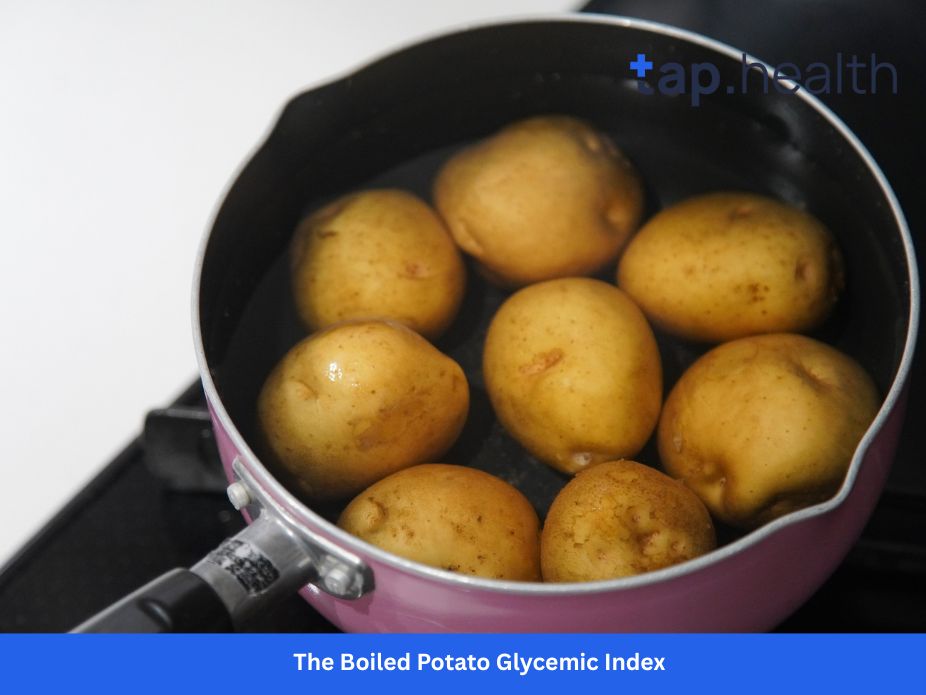
For the typical white potato used in daily Indian cooking, boiling without cooling places it squarely in the High GI category. Various authoritative sources show that freshly boiled potato glycemic index values typically range between 73 and 88.3 A value of 78 is commonly cited for a generic boiled white potato.10
When we translate this high GI into the practical measure of Glycemic Load, the impact becomes clearer. A standard serving of one medium boiled white potato (around 150g) typically carries a GL of 17 (Medium–High) to 25 (High).10 A GL of 25 is considered significantly high, confirming that a generous, hot serving of boiled potato can indeed cause a substantial and rapid blood sugar surge, sometimes even exceeding the metabolic impact of a serving of jelly beans or a doughnut.12 This highlights why portion control is vital when consuming freshly cooked potatoes.
Comparing Boiling to Other Common Cooking Methods
The preparation method plays a dramatic role in how quickly starches are digested. This is because heat and water break down the complex structure of the starch granule, a process known as gelatinisation, making it easily accessible to digestive enzymes.
Baked Russet potatoes represent the extreme end of the glycemic scale. Due to the high heat and dry cooking process, which fully gelatinises the starch, baked potatoes can exhibit GI scores as high as 111, alongside an alarmingly high GL of 33.3 Instant mashed potatoes also rank very high, around 84.9
While boiling and steaming are generally considered healthy cooking methods because they avoid added fat, salt, and sugar, they still often result in high GI scores because the starch is fully gelatinised.13 However, these methods are nutritionally superior to deep-frying, which introduces unhealthy fats that increase cardiovascular risk, a major concern for individuals with diabetes.14
The variation shows that the effect of a potato is complex: the starch content (which differs by potato variety) interacts heavily with the cooking method. Starchy varieties like Russet, when baked, are metabolically very challenging, but boiling and steaming are still preferred over frying due to their low-fat content.13
Table 1: The Glycemic Index and Load of Potatoes by Preparation Method
| Preparation Method/Variety | Average Glycemic Index (GI) | Glycemic Load (GL) (Per Serving) | Key Impact |
| White Potato (Freshly Boiled) | 73 – 88 3 | 17 – 25 10 | Starch breaks down rapidly; requires strict portion control. |
| Cooled Boiled Potato (Potato Salad) | 49 – 69 3 | 10 – 15 7 | Significant GI reduction due to resistant starch formation (RS3). |
| Baked Russet Potato | 85 – 111 3 | 33 12 | Highest recorded values; causes extreme glucose surge. |
| Boiled Sweet Potato (Shakarkandi) | 44 – 61 3 | Low | Recommended low-GI alternative with high fibre. |
The Magic of Resistant Starch: Cooling the Boiled Potato
The single most effective strategy for managing the glycemic impact of the potato is simple: cooling it down after cooking. This harnesses a natural chemical process that dramatically alters the starch structure.
How Cooling Changes the Starch Structure (Retrogradation)
When a potato is boiled, the starch granules absorb water and swell, making the starch easily digestible (gelatinised). This explains the high GI of hot potatoes. However, as the potato cools down, the starch molecules, specifically amylose, begin to reorganise and crystallise back into a tightly packed structure. This process is called retrogradation.15
This newly formed crystalline structure is inaccessible to the human digestive enzymes in the small intestine. It is known as Resistant Starch Type 3 (RS3). Because it resists digestion, it functions much like dietary fibre, passing largely intact into the large intestine.17
The New, Lower GI Score of Cooled Boiled Potatoes
The formation of resistant starch is the key to transforming a high-GI food into a moderate or even low-GI option. Studies consistently show that chilling boiled potatoes dramatically lowers the glycemic impact. Cold storage of boiled potatoes often drops their GI score into the Medium to Low range, typically scoring between 49 and 69.3
This simple technique is highly effective, with research indicating that cold storage can reduce the overall glycemic response by a remarkable 43% compared to eating the same potato freshly boiled.18 Therefore, preparing boiled potatoes in advance and serving them chilled—such as in a potato salad—is an ideal method for maintaining stable glucose levels.19
Health Benefits of Resistant Starch Beyond Glucose Control
The advantages of resistant starch extend far beyond immediate blood sugar control. When RS3 reaches the large intestine, it acts as a powerful prebiotic, providing fuel for the beneficial bacteria that reside there, supporting a healthier gut microbiome.16
This fermentation process yields crucial metabolic by-products, specifically Short-Chain Fatty Acids (SCFAs) like butyrate. Butyrate is fundamental for maintaining the integrity and health of the gut wall lining and has a role in reducing local inflammation.16 Furthermore, continuous intake of resistant starch has been scientifically linked to broader metabolic benefits, including improved insulin sensitivity, which is vital for reducing the risk of Type 2 Diabetes.17 Studies confirm that resistant starch intake can lead to meaningful reductions in postprandial glucose and insulin responses, particularly when consumed long-term.20
Choosing the Right Potato Variety in India
Even before the cooking pot, the choice of potato variety is a determinant of its glycemic impact. The starch composition varies widely between types, influencing how easily the starch gelatinises and subsequently retrogrades. Potatoes with a higher amylose content tend to have a lower GI because amylose forms resistant starch more readily upon cooling.22
Starchy vs. Waxy Potatoes: Why it Matters
Potato varieties are generally categorised into starchy and waxy types, which respond differently to cooking:
- Starchy Potatoes: These include varieties like Russet, Idaho, or many of the Indian staple Kufri Badshah. They are high in starch, resulting in a light, fluffy texture when cooked. Their high-starch structure yields a high GI (70+).3
- Waxy Potatoes: Often called “new potatoes,” these varieties, such as red potatoes or fingerling types, hold their shape well after boiling and have a lower overall starch content. They are inherently lower GI, typically scoring around 59 (Medium GI), and are better suited for blood sugar management.22
Popular Indian Varieties and Their Glycemic Impact
In India, several varieties are cultivated for daily consumption and industrial processing:
- Common High-GI Types: Kufri Jyoti and Kufri Badshah are widely preferred as “table potatoes” for daily cooking.24 Studies suggest that common Indian cultivars like Kufri Jyoti have a high baseline Glycemic Load (GL 13.8), which can further increase significantly if the tubers are poorly stored or infected, potentially rising to GL 23.07.25 This reinforces the high glycemic potential inherent in widely consumed starchy varieties.
- The “Low Sugar” Misnomer: Consumers must be wary of marketing that labels certain high-starch varieties, such as Kufri Jyoti or Chipsona, as “low sugar”.26 The term “low sugar” is technically accurate because potatoes naturally contain very little simple sugar (typically less than 2 grams per 100 grams). However, this label is nutritionally irrelevant because the primary concern for blood sugar stability is the rapid breakdown of starch into glucose, which the GI measures, not the raw sugar content.26 Therefore, focusing on a potato’s scientifically tested GI value is far more critical than relying on unverified “low sugar” claims.
Low-GI Alternatives
For individuals strictly monitoring their blood sugar, opting for alternatives is beneficial. Boiled sweet potatoes (shakarkandi) are an excellent choice, offering a naturally lower GI (44–61). They also provide beneficial fibre and magnesium, which contribute to better insulin response and blood sugar stability.3
Real-Life Scenario
Understanding the science becomes most valuable when applied to typical Indian culinary practices, where meals often combine multiple carbohydrate sources.
Consider a common scenario: a person with diabetes prepares Aloo Matar Sabzi (potato and pea curry) and traditionally eats it piping hot with high-GI white rice. The freshly boiled, high-starch potatoes (GI 78-88) mixed with white rice (GI 73) create a synergistic effect, resulting in a compounded and rapid spike in blood glucose levels.11
To solve this diabetic’s dilemma without eliminating beloved aloo dishes, a practical, science-backed approach is implemented:
- Preparation Change: The individual switches from using hot, starchy potatoes to waxy potatoes that were boiled and cooled completely the previous day, ensuring maximum resistant starch formation.
- Portion and Pairing: Instead of filling half the plate with the curry and rice, the potato portion is strictly limited to one-quarter of the plate, adhering to general diabetic dietary guidelines.13 The meal is paired with a generous serving of Chana Dal (Bengal Gram, which has a remarkably low GI of 8 to 23) and whole wheat roti (Medium GI) instead of white rice.28
- Metabolic Outcome: This strategic balancing act fundamentally changes the meal’s impact. The low GI of the dal and the retrograded starch of the cooled potato act as powerful buffers, significantly slowing the overall digestion rate. The combined presence of protein, fat, and fibre ensures that the potato no longer leads to a rapid glucose spike but provides a slower, more sustained release of energy.19 This illustrates how strategic pairing allows for the safe inclusion of potatoes in a balanced, blood-sugar-friendly diet.
Expert Contribution
Medical researchers and dietitians are unanimous that potatoes should not be simply dismissed as unhealthy. When prepared thoughtfully, potatoes remain valuable nutrient powerhouses rich in fibre, vitamins, and minerals.1
The GI Tool is a Guide, Not a Rule
The Glycemic Index is acknowledged as an extremely helpful measurement, particularly for individuals who need to closely manage their blood sugar levels due to diabetes.8 However, experts advise that it should be used as one tool in a larger dietary strategy, not the sole metric.7 It is important to remember that some foods are low GI primarily due to high fat content (e.g., certain chocolates) and are not healthy choices. Conversely, certain high-GI foods, like a baked potato eaten with its skin, contain beneficial nutrients and fibre.23 Therefore, the nutritional context always matters more than the single GI number.
Risks Associated with Frequent High-GI Consumption
Dietary experts highlight the significant health risks associated with the frequent, unmanaged consumption of high-GI potatoes. A large observational study involving over 70,000 individuals found that for every three servings per week of high-GI potatoes (boiled, mashed, or baked), there was a 4% increase in the risk of developing Type 2 Diabetes.14
The risk is compounded exponentially when potatoes are prepared poorly. For instance, the consumption of fried varieties (such as French fries or chips) was associated with an increase in Type 2 Diabetes risk of up to 19%.14 This severe increase is attributed not just to the starch but also to the high amounts of unhealthy saturated and trans fats found in fried foods, which simultaneously raise the risk of cardiovascular disease—a dual and heightened threat for diabetic patients.14
The Focus on Meal Composition
Dietitians strongly recommend that starchy foods, including potatoes, should never be consumed in isolation, which maximizes the glucose spiking effect.13 Instead, potatoes must always be eaten as part of a well-balanced mixed meal. The inclusion of protein, healthy fats, and non-starchy vegetables along with the potato ensures that the overall digestive speed is moderated, preventing an abrupt blood sugar surge.13 This simple focus on balancing the meal is often more important than the specific GI of the potato itself.
Practical Hacks: 5 Ways to Lower the Boiled Potato GI
Based on decades of nutritional research, here are five highly actionable strategies that consumers can adopt to significantly lower the blood sugar impact of their boiled potatoes.
1. Embrace the Cooling Rule: Essential for Salads and Chaats
This is the most impactful step. After boiling potatoes until they are tender, drain them thoroughly and allow them to cool completely, preferably by refrigerating them overnight.19 This period of chilling maximizes the retrogradation process, generating the beneficial resistant starch (RS3).3 These cold potatoes can then be used in potato salads, or gently reheated for curries, retaining a much lower GI than if they were eaten hot immediately after cooking.30
2. Pairing is Key: Add Fat, Fibre, and Protein
Never consume boiled potatoes alone. To slow down gastric emptying and moderate the glucose absorption rate, always combine them with macronutrients that take longer to digest. Examples include high-protein additions like yogurt, paneer, or eggs, and healthy fats like ghee or cooking oils.19 This is why traditional Indian pairings, such as eating aloo alongside protein-rich dhal, are scientifically sound dietary choices.29
3. The Power of Acid: Using Lemon or Vinegar
Adding an acidic component to boiled potatoes can further enhance blood sugar control. Acids like vinegar or lemon juice, commonly used in aloo chaat, inhibit the amylase enzymes responsible for breaking down starch.31 Studies have shown that adding vinegar to cold-stored potatoes can further reduce the glycemic index by a measurable percentage.18
4. Portion Control and Skin Consumption
Managing the quantity is essential for controlling the Glycemic Load. Consumers should practice strict portion control, ensuring potatoes constitute only a small, reasonable fraction of the meal.19 Additionally, the skin is where most of the dietary fibre resides.1 Cooking and consuming new or waxy potatoes with the skin on provides extra fibre, which naturally slows down the rate of starch absorption, thus improving blood sugar regulation.19
5. Avoiding Pressure Cooking
While pressure cooking is a popular method for quickly boiling vegetables in Indian households, it tends to overcook potatoes severely. This intense cooking process can lead to greater damage and rapid breakdown of the starch structure, resulting in a higher effective GI.26 For optimal GI control and better preservation of starch integrity for later retrogradation, open-pan boiling methods that leave the potato slightly firm are preferable.26
Boiled Potato vs. Indian Staples: Rice, Roti, and Dal
To put the boiled potato glycemic index into proper perspective, it helps to compare it with other carbohydrate staples that form the backbone of the Indian diet.
Potato vs. White Rice
Both freshly boiled white potatoes (GI 73–88) and common cooked white rice (GI 73) fall firmly into the High GI category.11 When eaten hot and in large quantities, both foods carry a similar, high risk of causing rapid blood sugar spikes. Nutritionally, however, a boiled potato with its skin often provides more dietary fibre, potassium, and Vitamin C than white rice.1
It is also worth noting that while some methods of cooking rice involve draining the cooking water, which unfortunately removes some water-soluble nutrients, the process of boiling potatoes generally retains nutrients within the potato flesh, provided the water is not discarded entirely.1
Potato vs. Whole Wheat Roti/Chapatti
Whole wheat roti (chapatti) offers a clear advantage over the freshly boiled potato. Whole wheat products have a more complex structure and higher fibre content, giving roti a lower, Medium GI, typically ranging from 52 to 62.33 This higher fibre and protein content ensures a slower, more sustained release of glucose compared to a hot, boiled potato.28 Dietitians generally favour whole-grain options like roti or brown rice over high-GI potatoes for daily consumption, unless the potato preparation has been modified through cooling.23
The Low-GI Powerhouse: The Role of Pulses (Dal)
The use of pulses (dhal or dal) in traditional Indian meals is a cornerstone of effective blood sugar management. Pulses like Chana Dal (Bengal Gram), with an extremely low GI of 8 to 23, and Masoor Dal (Red Lentils), with a GI of 25, are rich sources of both protein and highly resistant starch (RS1).29
The importance of dal lies in its ability to significantly buffer the overall glycemic impact of a meal. Consuming a low-GI, high-protein food like dal alongside a high-GI food like potato effectively reduces the meal’s composite glycemic effect. This scientifically validated traditional practice provides an essential, effective strategy for enjoying complex carbohydrate staples without sacrificing stable blood sugar.19
Table 2: GI Comparison: Boiled Potato vs. Common Indian Carbs
| Indian Staple Food | Average Glycemic Index (GI) | Classification | Key Implication for Blood Sugar |
| White Potato (Freshly Boiled) | 78 10 | High | Requires specific preparation hacks to moderate impact. |
| White Rice | 73 11 | High | Similar spike risk; less nutritional fibre if skin is removed. |
| Whole Wheat Roti/Chapatti | 52 – 62 33 | Medium | Better daily choice due to superior fibre and protein content. |
| Chana Dal (Bengal Gram) | 8 – 23 29 | Low | Excellent meal component for lowering overall Glycemic Load. |
Recommendations Grounded in Proven Research and Facts
The comprehensive analysis of the potato’s glycemic profile provides clear, research-based guidance for healthy eating. The use of the glycemic index and load is widely recommended by health organisations as a helpful tool for making better dietary choices and managing the risk of metabolic diseases like diabetes and heart disease.7
Best Practices for Potato Consumption
For optimal blood sugar control, it is recommended to always choose waxy, low-starch potato varieties or sweet potatoes whenever possible. The single most effective preparation method is to boil the potato and then thoroughly chill it, ideally in a refrigerator.19 This maximization of resistant starch intake has been clinically demonstrated to improve overall insulin function and reduce postprandial glucose levels.19
Furthermore, individuals should always ensure the potato is consumed within a meal that is balanced with sufficient protein, healthy fats, and high-fibre vegetables. The focus must shift from viewing the potato in isolation to assessing the overall Glycemic Load of the entire meal.
Importance of Gut Health
The benefits derived from resistant starch are increasingly recognized as crucial health interventions beyond simple glucose management. Resistant starch’s role in improving the gut microbiome and fostering the production of butyrate is linked to better metabolic health, reduced inflammation, and improved integrity of the digestive system.16 This means that the simple act of cooling a boiled potato provides tangible, long-term health advantages, making it more than just a dietary trick.
External Trusted Sources
While this report delivers comprehensive, evidence-based data derived from authoritative sources, it is crucial for individuals with existing health conditions, such as diabetes or heart disease, to seek personalized guidance. Consultation with a qualified physician, registered dietitian, or diabetes educator is essential for establishing appropriate portion sizes and meal plans tailored to individual metabolic needs.14 Trusted institutions like the Mayo Clinic, NHS, or WHO provide foundational dietary guidelines that support these findings.
Key Takeaways and Conclusion
The widespread perception of the potato as a universally ‘bad’ carbohydrate is a simplification that overlooks the crucial impact of preparation science. The evidence clearly shows that the GI of a hot, freshly boiled potato glycemic index is indeed high, ranging between 73 and 88, which carries a risk of rapid blood sugar spikes.3
However, this metabolic risk is remarkably easy to mitigate. The critical solution lies in applying the simple hack of cooling the potato after boiling. This cooling process triggers the formation of resistant starch (RS3), effectively lowering the potato’s GI into the safer Medium/Low range (49–69) and simultaneously transforming the potato into a gut-friendly carbohydrate.3
The potato is a highly nutritious, affordable food that deserves a place in a healthy diet. By embracing these simple preparation hacks—cooling, eating the skin for fibre, and pairing it effectively with low-GI Indian staples like dal and protein—consumers can harness its nutritional power while maintaining excellent, stable blood sugar control.
Frequently Asked Questions (FAQ)
Is it safe for a diabetic to eat boiled potatoes every day?
Yes, boiled potatoes can be safely incorporated into a daily diet for diabetics, provided they are consumed in small portions (limited to one-quarter of the plate), prepared by cooling to maximize resistant starch, and served alongside protein and fibre-rich foods.13
Does adding vinegar or lemon juice to boiled potatoes lower the GI?
Adding acidic ingredients such as vinegar or lemon juice helps to further stabilize blood sugar. Acidic components inhibit the digestive amylase enzymes, thereby slowing gastric emptying and boosting the GI-lowering effect already achieved through cooling.18
Which is better for blood sugar: boiled potato or sweet potato?
Boiled sweet potato (shakarkandi) is generally the metabolically safer choice, as its natural glycemic index (44–61) is significantly lower than that of a freshly boiled white potato (73–88).3 Sweet potatoes also offer higher fibre and beneficial micronutrient content.
Can I reheat the cooled potato salad and still keep the low GI?
Yes, gentle reheating is possible without fully reversing the benefit. While the GI may slightly increase upon rewarming, the retrograded resistant starch structure formed during initial cooling remains largely intact, meaning reheated cooled potatoes still have a significantly lower GI than those eaten immediately after boiling.30
Why is the Glycemic Load (GL) important when eating boiled potatoes?
The GL is important because it accounts for the actual quantity of carbohydrates consumed, reflecting the total glucose delivered to the bloodstream.6 For high-GI foods like boiled potatoes, consuming a large portion results in a high GL (20+), which causes a major, sustained blood sugar spike.10
Is consuming the skin of a boiled potato important?
Yes, keeping the skin on is highly recommended, especially for new or waxy varieties. The skin is a natural and significant source of dietary fibre, which helps physically slow down the digestion and absorption of the potato’s starches, thereby improving overall blood sugar regulation.1
How much resistant starch is formed after cooling?
Cold storage of boiled potatoes demonstrably increases resistant starch (RS) content. Research indicates that RS levels typically rise from about 3.3% to 5.2% (starch basis) or potentially higher, depending on the potato variety and the duration of cooling.18 This RS acts as vital prebiotic fibre for the gut.17
Should I choose waxy potatoes or starchy potatoes for better blood sugar control?
For improved blood sugar control, waxy potato varieties (such as red potatoes or fingerlings) are preferred over starchy types (like Russet or Kufri Badshah). Waxy potatoes have a lower starch content and a lower native GI, making them metabolically safer.19
Works cited
- Potatoes vs Rice – HealthXchange.sg, accessed November 27, 2025, https://www.healthxchange.sg/food-nutrition/food-tips/potatoes-vs-rice
- Total and specific potato intake and risk of type 2 diabetes: results from three US cohort studies and a substitution meta-analysis of prospective cohorts | The BMJ, accessed November 27, 2025, https://www.bmj.com/content/390/bmj-2024-082121
- Potato Glycemic Index: Varieties, Values & Smart Eating Tips – Spices – Alibaba.com, accessed November 27, 2025, https://spice.alibaba.com/spice-basics/potato-glycemic-index
- Glycemic Index and Glycemic Load | Linus Pauling Institute | Oregon State University, accessed November 27, 2025, https://lpi.oregonstate.edu/mic/food-beverages/glycemic-index-glycemic-load
- Glycemic index and diabetes: MedlinePlus Medical Encyclopedia, accessed November 27, 2025, https://medlineplus.gov/ency/patientinstructions/000941.htm
- Glycemic index and glycemic load for 100+ foods – Harvard Health, accessed November 27, 2025, https://www.mv5.ca/EWF/docs/glycemic%20index.pdf
- Low-glycemic index diet: What’s behind the claims? – Mayo Clinic, accessed November 27, 2025, https://www.mayoclinic.org/healthy-lifestyle/nutrition-and-healthy-eating/in-depth/low-glycemic-index-diet/art-20048478
- The glycemic index can be a helpful chart, but has its limits – Mayo Clinic Press, accessed November 27, 2025, https://mcpress.mayoclinic.org/nutrition-fitness/the-glycemic-index-can-be-a-helpful-chart-but-has-its-limits/
- Potatoes Compared with Rice in Meals with either Animal or Plant Protein Reduce Postprandial Glycemia and Increase Satiety in Healthy Adults: A Randomized Crossover Study – PMC, accessed November 27, 2025, https://pmc.ncbi.nlm.nih.gov/articles/PMC11522892/
- Potato Glycemic Index: Nutrition Facts, Weight Impact, and Blood Sugar Benefits | Meto, accessed November 27, 2025, https://meto.co/foods/glycemic-index-of-potato
- Glycemic Index Food Chart List of Low and High GI Indian Foods – Redcliffe Labs, accessed November 27, 2025, https://redcliffelabs.com/myhealth/food-and-nutrition/glycemic-index-food-chart/
- Carbs in Potatoes and How They Affect Blood Sugar – WebMD, accessed November 27, 2025, https://www.webmd.com/diabetes/carbs-potatoes-blood-sugar
- Diabetes and potatoes: Safety, risks, diet, and tips, accessed November 27, 2025, https://www.medicalnewstoday.com/articles/323449
- Potatoes and Diabetes: Safety, Risks, and Alternatives – Healthline, accessed November 27, 2025, https://www.healthline.com/nutrition/potatoes-and-diabetes
- Resistant Starch Production and Glucose Release from Pre‐Prepared Chilled Food: The SPUD Project – PMC – NIH, accessed November 27, 2025, https://pmc.ncbi.nlm.nih.gov/articles/PMC7984060/
- POTATOES AND RESISTANT STARCH, accessed November 27, 2025, https://www.powerpackedpotato.com.au/globalassets/aussiepotato/fact-sheets/aussie-potatoes–resistant-starch_final_approved.pdf
- Resistant starch facts – CSIRO, accessed November 27, 2025, https://www.csiro.au/en/research/health-medical/nutrition/Resistant-starch
- Vinegar dressing and cold storage of potatoes lowers postprandial glycaemic and insulinaemic responses in healthy subjects – PubMed, accessed November 27, 2025, https://pubmed.ncbi.nlm.nih.gov/16034360/
- Ways To Consume Potatoes For Diabetic Patients – Apollo 247, accessed November 27, 2025, https://www.apollo247.com/blog/article/can-diabetics-eat-potatoes
- A comparison of the effects of resistant starch types on glycemic response in individuals with type 2 diabetes or prediabetes: A systematic review and meta-analysis – NIH, accessed November 27, 2025, https://pmc.ncbi.nlm.nih.gov/articles/PMC10085630/
- 5 healthy carb swaps for people with prediabetes and diabetes, accessed November 27, 2025, https://timesofindia.indiatimes.com/life-style/food-news/5-healthy-carb-swaps-for-people-with-prediabetes-and-diabetes/articleshow/125468038.cms
- What is the glycaemic index of a potato? • #1 Continuous Glucose Monitoring App Australia, accessed November 27, 2025, https://www.vively.co.uk/post/what-is-the-glycaemic-index-of-a-potato
- Glycaemic index and diabetes, accessed November 27, 2025, https://www.diabetes.org.uk/living-with-diabetes/eating/carbohydrates-and-diabetes/glycaemic-index-and-diabetes
- Top 10 Potato Varieties in India and Their Uses – Vashila Industries, accessed November 27, 2025, https://vashilaindustries.com/top-10-potato-varieties/
- Impact of Fusarium Infection on Potato Quality, Starch Digestibility, In Vitro Glycemic Response, and Resistant Starch Content – PubMed Central, accessed November 27, 2025, https://pmc.ncbi.nlm.nih.gov/articles/PMC10144655/
- The Potato Paradox. Low GI Vs Low Sugar Potatoes, accessed November 27, 2025, https://indianpotato.com/the-potato-paradox-low-gi-vs-low-sugar-potatoes/
- Potatoes vs. Rice: Carbs, Nutrition, and Glycemic Index – Lose It!, accessed November 27, 2025, https://www.loseit.com/articles/carbohydrates-in-rice-vs-potatoes/
- Rice or roti: What is better for diabetics? – The Times of India, accessed November 27, 2025, https://timesofindia.indiatimes.com/life-style/health-fitness/photo-stories/rice-or-roti-what-is-better-for-diabetics/photostory/64822521.cms
- Foods with Low Glycemic Index and Essential Diet Tips – Fitterfly, accessed November 27, 2025, https://www.fitterfly.com/blog/foods-with-lowest-glycemic-index/
- Why Is the Potato Glycemic Index Higher Than Table Sugar? – Verywell Fit, accessed November 27, 2025, https://www.verywellfit.com/why-do-potatoes-raise-blood-glucose-more-than-sugar-2242317
- Doctor suggests 5 easy hacks to eat potatoes without spiking your blood sugar, accessed November 27, 2025, https://www.hindustantimes.com/lifestyle/health/doctor-suggests-5-easy-hacks-to-eat-potatoes-without-spiking-your-blood-sugar-adding-vinegar-to-cooling-before-eating-101747477684096.html
- A glycemic diet improves the understanding of glycemic control in diabetes patients during their follow-up – PMC, accessed November 27, 2025, https://pmc.ncbi.nlm.nih.gov/articles/PMC10072118/
- The ‘Rice vs Roti’ Debate: Which is Worse for Diabetes? – Ryan Fernando, accessed November 27, 2025, https://www.ryanfernando.in/post/the-rice-vs-roti-debate-which-is-worse-for-diabetes