If you’ve heard the word “diabetes,” you probably think of high blood sugar, insulin, and people needing to watch what they eat. That’s true for one kind—diabetes mellitus.
But there’s another condition called diabetes insipidus. It has “diabetes” in the name, but it’s not related to blood sugar at all.
So why do both have the same first name?
And what’s the real difference between diabetes insipidus and diabetes mellitus?
You’re not alone in asking. Many people get confused because of the similar names. But these two conditions are very different—one affects blood sugar, and the other affects how your body handles water.
In this guide, we’ll break it all down in simple, everyday language. No confusing medical terms. No jargon. Just clear, accurate facts so you can finally understand:
- What each type of diabetes really is
- Why they’re named the same
- How their symptoms are similar (and how they’re not)
- What causes them
- How they’re treated
- And whether one is more dangerous than the other
What Does “Diabetes” Mean?
First, let’s clear up the name.
The word diabetes comes from ancient Greek and means “to pass through” or “siphon.” It was used to describe conditions where people urinated a lot.
The term mellitus means “sweet” in Latin. Doctors long ago noticed that the urine of people with high blood sugar tasted sweet (yes, they actually tasted it!). So they called it diabetes mellitus — “the sweet siphon.”
Insipidus means “tasteless” or “bland.” When doctors tested the urine of people with the other form of diabetes, it wasn’t sweet—it was just watery. So they named it diabetes insipidus — “the tasteless siphon.”
So both conditions involve excessive urination, which is why they share the name “diabetes.” But that’s almost the only thing they have in common.
What Is Diabetes Mellitus?
Diabetes mellitus is what most people mean when they say “diabetes.” It’s a long-term condition where your blood sugar (glucose) is too high.
There are two main types: type 1 and type 2.
Type 1 Diabetes
- Usually starts in childhood or young adulthood
- The body’s immune system attacks the insulin-making cells in the pancreas
- Little or no insulin is produced
- Requires daily insulin injections
Type 2 Diabetes
- More common; often develops in adults (but can happen at any age)
- The body becomes resistant to insulin or doesn’t make enough
- Often linked to weight, diet, and lifestyle
- Managed with diet, exercise, pills, or sometimes insulin
There’s also gestational diabetes, which happens during pregnancy and usually goes away after birth.
What Causes High Blood Sugar?
When you eat, your body breaks food down into sugar (glucose). This sugar enters your bloodstream.
Insulin, a hormone made by the pancreas, acts like a key that unlocks your cells so sugar can get in and be used for energy.
In diabetes mellitus:
- Either there’s no key (insulin) — like in type 1
- Or the locks (cells) are rusty and don’t respond — like in type 2
So sugar builds up in the blood, leading to high blood glucose.
Common Symptoms of Diabetes Mellitus
- Extreme thirst
- Peeing a lot (especially at night)
- Feeling very tired
- Blurry vision
- Slow-healing cuts
- Unexplained weight loss (especially in type 1)
- Tingling or numbness in hands or feet
If not managed, high blood sugar over time can damage the heart, kidneys, eyes, and nerves.
What Is Diabetes Insipidus?
Diabetes insipidus (DI) is a rare condition that has nothing to do with blood sugar or insulin.
Instead, it’s about your body’s ability to balance water.
Your kidneys normally filter your blood and make urine. But they also help your body keep the right amount of water.
In diabetes insipidus, your kidneys can’t hold onto water properly. So they make a huge amount of dilute (very watery) urine.
This leads to:
- Extreme thirst
- Needing to pee very often (up to 20 times a day)
- Risk of dehydration
Unlike diabetes mellitus, the urine in DI is not sweet—it’s just full of water.
How Common Is Diabetes Insipidus?
It’s rare. About 1 in 25,000 people have it. It can happen at any age and affects men and women equally.
What Causes Diabetes Insipidus?
It all comes down to a hormone called vasopressin (also known as antidiuretic hormone or ADH).
Vasopressin tells your kidneys to reabsorb water and make less urine.
In diabetes insipidus, something goes wrong with this system. There are four main types:
1. Central Diabetes Insipidus
- Most common type
- Caused by damage to the pituitary gland or hypothalamus
- These parts of the brain make or store vasopressin
- Damage can come from:
- Head injury
- Brain surgery
- Tumors
- Infections (like meningitis)
- Genetic conditions
2. Nephrogenic Diabetes Insipidus
- Kidneys don’t respond to vasopressin, even if it’s present
- Can be caused by:
- Certain medications (like lithium)
- Chronic kidney disease
- High calcium levels
- Genetic disorders
3. Dipsogenic Diabetes Insipidus
- Caused by a problem with the thirst mechanism
- You drink too much water, which suppresses vasopressin
- Often linked to mental health conditions or brain damage
4. Gestational Diabetes Insipidus
- Rare form that happens during pregnancy
- An enzyme made by the placenta breaks down vasopressin
- Usually goes away after delivery
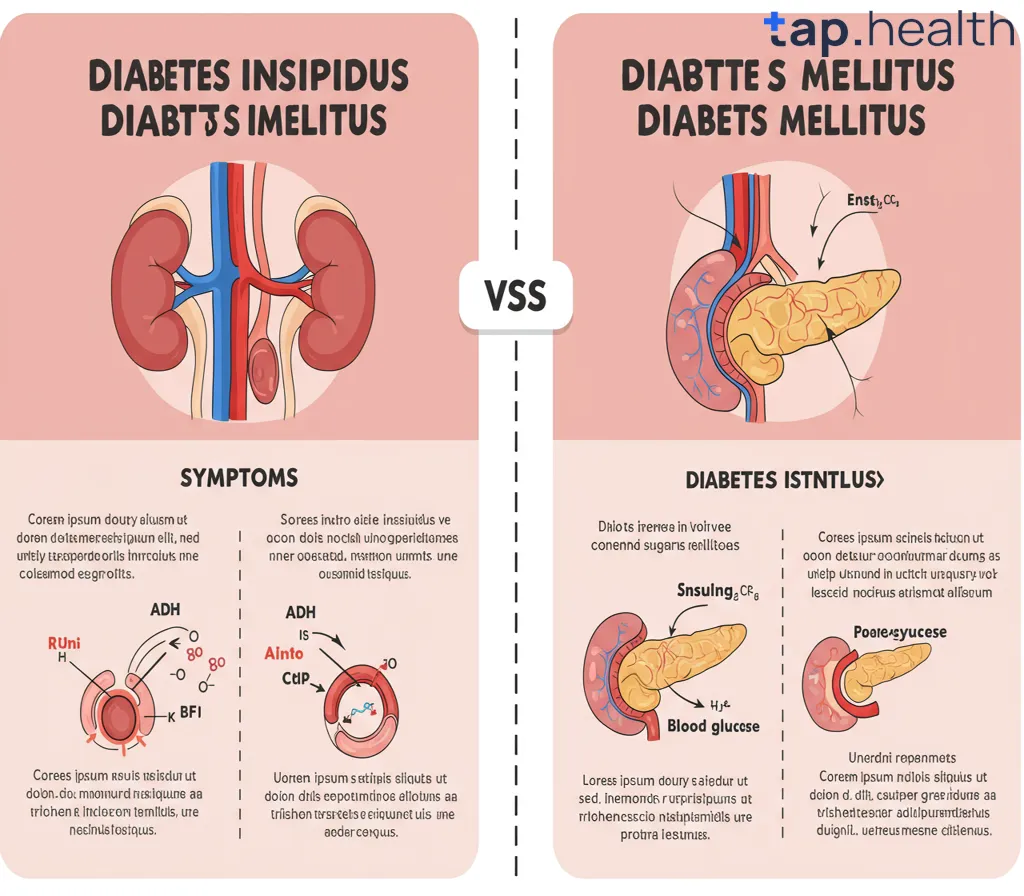
Key Differences Between Diabetes Insipidus and Diabetes Mellitus
Even though both have “diabetes” in the name, they are completely different conditions.
Here’s a side-by-side comparison:
| Main Problem | Body can’t balance water | Blood sugar is too high |
| Hormone Involved | Vasopressin (ADH) | Insulin |
| Urine | Very watery, not sweet | Sweet (has sugar in it) |
| Blood Sugar | Normal | High |
| Cause | Brain/kidney issues, genetics | Insulin deficiency or resistance |
| Common Symptoms | Extreme thirst, peeing a lot | Thirst, peeing a lot, fatigue, weight loss |
| Diagnosis | Water deprivation test, blood/urine tests | Blood sugar, A1C test |
| Treatment | Desmopressin, fluid management | Insulin, diet, exercise, medications |
| Danger if Untreated | Severe dehydration, seizures | Organ damage, coma, heart disease |
Bottom Line:
- Diabetes mellitus = sugar problem
- Diabetes insipidus = water problem
They just happen to share the symptom of peeing a lot.
Why Do They Have the Same Name?
As we said earlier, both conditions were named long before doctors understood hormones or blood sugar.
They both cause:
- Excessive urination (polyuria)
- Extreme thirst (polydipsia)
So early doctors grouped them together under the name “diabetes.”
Later, when they discovered one had sweet urine and the other didn’t, they added “mellitus” (sweet) and “insipidus” (tasteless) to tell them apart.
Today, we know they’re totally different—but the names have stuck.
Can You Have Both Diabetes Insipidus and Diabetes Mellitus?
It’s rare, but yes—someone could have both.
For example:
- A person with type 1 diabetes could also have a brain tumor affecting the pituitary gland, leading to central DI.
- Or someone on lithium for bipolar disorder might develop nephrogenic DI and also have type 2 diabetes.
But having one does not increase your risk of the other. They’re not linked.
Doctors can tell them apart with simple tests.
How Are They Diagnosed?
Testing for Diabetes Mellitus
Doctors use blood tests:
- Fasting blood sugar: Measures sugar after not eating overnight
- A1C test: Shows average blood sugar over 2–3 months
- Oral glucose tolerance test: Checks how your body handles sugar
If blood sugar is high, diabetes mellitus is likely.
Testing for Diabetes Insipidus
Diagnosing DI is trickier. The main test is the water deprivation test.
Here’s how it works:
- You stop drinking fluids for several hours.
- Doctors check your weight, urine, and blood at intervals.
- If you keep peeing a lot and your urine stays very dilute, DI is likely.
- Then, you may get a dose of desmopressin (a synthetic form of vasopressin).
- If urine becomes more concentrated, it’s central DI.
- If it doesn’t change, it’s nephrogenic DI.
Other tests include:
- MRI of the brain (to check pituitary/hypothalamus)
- Blood and urine tests for sodium and osmolality
How Are They Treated?
Treating Diabetes Mellitus
Treatment depends on the type:
Type 1 Diabetes
- Daily insulin (shots or pump)
- Carbohydrate counting
- Blood sugar monitoring
- Healthy eating and exercise
Type 2 Diabetes
- Lifestyle changes (diet, exercise, weight loss)
- Oral medications (like metformin)
- Injectable meds (like GLP-1 agonists)
- Insulin (in later stages)
The goal is to keep blood sugar in a safe range and prevent complications.
Treating Diabetes Insipidus
Treatment depends on the type:
Central Diabetes Insipidus
- Desmopressin (DDAVP): A synthetic hormone that replaces vasopressin
- Can be taken as a nasal spray, pill, or injection
- Very effective
Nephrogenic Diabetes Insipidus
- No response to desmopressin
- Treated by:
- Staying well-hydrated
- Low-sodium diet
- Diuretics like hydrochlorothiazide (yes, a water pill can help reduce urine)
- Treating the underlying cause (e.g., stopping lithium if possible)
Dipsogenic DI
- Harder to treat
- Focus on managing fluid intake
- Address underlying mental health or neurological issues
Gestational DI
- Usually treated with desmopressin
- Goes away after birth
What Happens If They’re Left Untreated?
Untreated Diabetes Mellitus
High blood sugar over time damages organs:
- Eyes: Can lead to blindness (diabetic retinopathy)
- Kidneys: May cause kidney failure
- Nerves: Causes pain, numbness, foot ulcers
- Heart: Increases risk of heart attack and stroke
- Feet: Poor healing, risk of amputation
- Infections: More frequent and severe
In severe cases, very high blood sugar can lead to diabetic ketoacidosis (DKA) or hyperosmolar hyperglycemic state (HHS)—both life-threatening emergencies.
Untreated Diabetes Insipidus
The main danger is dehydration.
Without enough water, your body can’t function properly. Symptoms include:
- Dry mouth
- Rapid heartbeat
- Low blood pressure
- Confusion
- Seizures
- Coma
In infants, untreated DI can cause:
- Irritability
- Poor feeding
- Failure to grow
- High fever
So while DI doesn’t damage organs like diabetes mellitus, it can still be dangerous if fluids aren’t replaced.
Can You Prevent Either Condition?
Can You Prevent Diabetes Mellitus?
- Type 1: No. It’s an autoimmune disease. You can’t prevent it.
- Type 2: Often yes. You can reduce your risk by:
- Maintaining a healthy weight
- Exercising regularly
- Eating a balanced diet (less sugar, more fiber)
- Avoiding smoking
- Getting regular check-ups
The CDC’s National Diabetes Prevention Program shows lifestyle changes can cut the risk of type 2 diabetes by over 50%.
Can You Prevent Diabetes Insipidus?
Most forms can’t be prevented because they’re caused by:
- Brain injuries
- Tumors
- Genetic conditions
- Medications
But you can:
- Avoid head injuries (wear seatbelts, helmets)
- Monitor medications like lithium with your doctor
- Stay hydrated if you’re at risk
Can You Live a Normal Life With Either Condition?
Yes—absolutely.
With proper treatment and management, most people with diabetes mellitus or diabetes insipidus can live full, healthy lives.
Living With Diabetes Mellitus
- Millions of people manage it daily
- Tools like insulin pumps, continuous glucose monitors (CGMs), and smart apps make it easier
- Support groups, dietitians, and diabetes educators help
- Many athletes, celebrities, and leaders live with diabetes
Living With Diabetes Insipidus
- Central DI is usually well-controlled with desmopressin
- People can work, travel, and exercise normally
- Important to always have water and medication on hand
- Regular check-ups help monitor kidney and electrolyte levels
The key is consistency and working with your doctor.
Is One More Serious Than the Other?
Neither is “worse” across the board—it depends on the person and how well it’s managed.
Diabetes Mellitus
- More common
- Can lead to long-term organ damage
- Requires daily management of food, meds, and blood sugar
- Higher risk of heart disease and stroke
Diabetes Insipidus
- Rare
- Doesn’t damage organs directly
- But can cause dangerous dehydration quickly
- Some forms (like nephrogenic) are harder to treat
In short:
- Diabetes mellitus has more long-term complications.
- Diabetes insipidus can be more urgent if fluids aren’t replaced.
Both need medical care, but both are manageable.
Can Kids Get Diabetes Insipidus?
Yes. Children can develop any type of DI.
Symptoms in kids may include:
- Wetting the bed often (even after being potty-trained)
- Drinking large amounts of water
- Irritability or poor growth
- High fevers without infection
- Dehydration signs (dry mouth, sunken eyes)
In newborns, DI can be genetic. Doctors may test urine and blood and do imaging studies.
Treatment is similar to adults—desmopressin for central DI, hydration, and monitoring.
What’s the Role of the Kidneys in Both Conditions?
The kidneys are involved in both, but in different ways.
In Diabetes Mellitus
- High blood sugar damages the tiny blood vessels in the kidneys
- Over time, this can lead to diabetic nephropathy (kidney disease)
- May progress to kidney failure
- Regular urine tests check for protein (a sign of damage)
In Diabetes Insipidus
- The kidneys fail to respond to vasopressin
- They can’t concentrate urine, so they make too much
- But the kidney damage isn’t from sugar—it’s from the hormone issue
So both affect the kidneys, but the cause and outcome are different.
Can You Drink Too Much Water With Diabetes Insipidus?
Yes—and it can be dangerous, especially in dipsogenic DI.
In dipsogenic DI, the brain’s thirst center is broken, so you feel thirsty all the time and drink too much.
But if you take desmopressin (for central DI) while drinking too much water, you can dilute your blood sodium too much.
This is called hyponatremia, and it can cause:
- Headaches
- Nausea
- Confusion
- Seizures
- Coma
So treatment must be balanced: enough water to prevent dehydration, but not so much that it causes low sodium.
Are There Any Natural Remedies?
There are no proven natural cures for either condition.
For Diabetes Mellitus
- Healthy diet and exercise are the best “natural” tools
- Some herbs (like cinnamon or berberine) are studied, but not substitutes for medicine
- Always talk to your doctor before trying supplements
For Diabetes Insipidus
- No natural alternatives to desmopressin
- Staying hydrated is key, but not a cure
- Avoiding triggers (like lithium) may help in some cases
Medication is essential for DI. You can’t manage it with diet alone.
Frequently Asked Questions (FAQ) on What Is the Difference Between Diabetes Insipidus and Diabetes Mellitus?
1. Is diabetes insipidus the same as diabetes mellitus?
No. They are completely different conditions. DI affects water balance; DM affects blood sugar.
2. Can diabetes insipidus turn into diabetes mellitus?
No. They are unrelated. One does not cause or turn into the other.
3. Do both cause frequent urination?
Yes. Both cause polyuria (peeing a lot), but for different reasons.
4. Is diabetes insipidus rare?
Yes. It affects about 1 in 25,000 people. Diabetes mellitus is much more common (over 37 million in the U.S.).
5. Can you have normal blood sugar with diabetes insipidus?
Yes. Blood sugar is completely normal in DI. That’s one way doctors tell them apart.
6. What is the main hormone in diabetes insipidus?
Vasopressin (ADH). It helps the kidneys reabsorb water.
7. How is diabetes insipidus treated?
With desmopressin (for central DI), fluid management, and treating the underlying cause.
8. Can you die from diabetes insipidus?
If untreated and severe, yes—due to dehydration or electrolyte imbalance. But with treatment, it’s manageable.
9. Is diabetes insipidus genetic?
Sometimes. Central and nephrogenic types can be inherited, but most cases are due to injury or illness.
10. Does sugar affect diabetes insipidus?
No. Sugar intake doesn’t impact DI. It’s not related to diet.
11. Can you test for diabetes insipidus at home?
No. It requires medical tests like the water deprivation test and blood work.
12. Is diabetes insipidus an autoimmune disease?
Not usually. Central DI can rarely be autoimmune, but most cases aren’t.
13. Can stress cause diabetes insipidus?
Not directly. But severe stress or trauma (like head injury) could contribute.
14. Do people with diabetes insipidus need insulin?
No. Insulin is for diabetes mellitus. DI has nothing to do with insulin.
15. Can drinking too much water cause diabetes insipidus?
No. But it can mimic or worsen dipsogenic DI. The condition itself is due to hormone or kidney issues.
Final Thoughts: Don’t Let the Name Fool You
The names “diabetes insipidus” and “diabetes mellitus” are confusing—but now you know the truth.
- Diabetes mellitus = a blood sugar disorder
- Diabetes insipidus = a water balance disorder
They share two main symptoms: thirst and frequent urination. That’s why they got the same name centuries ago.
But they are not the same disease. They have different causes, different treatments, and different long-term effects.
If you or someone you love has symptoms like peeing all the time or extreme thirst, see a doctor. A simple blood or urine test can tell which condition (if any) is causing it.
And remember: both are manageable with the right care.
You don’t have to live in fear. With knowledge, treatment, and support, people with either condition can live healthy, active lives.