The human brain is a remarkable organ, and it’s responsible for almost everything we do. It’s the command center of our body, processing sensory information, controlling motor functions, and enabling complex thoughts and emotions. But when we think about “thinking” — such as problem-solving, decision-making, or remembering something — which part of the brain is most responsible for these tasks?
In this article, we’ll explore the main thinking part of the brain, its functions, and how it contributes to our cognitive abilities. We’ll also dive into how this part of the brain interacts with other regions, allowing us to think, reason, and make decisions. By the end, you’ll have a clear understanding of the key brain areas involved in thinking and why they are so important.
What is the Brain’s Role in Thinking?
Before we pinpoint the “main thinking part of the brain,” it’s important to first understand the brain’s role in thinking and cognition.
Thinking and Cognition
Thinking refers to the mental processes involved in gaining knowledge, understanding, making decisions, and using logic. It includes activities such as:
- Reasoning: Making judgments or conclusions based on available information.
- Problem Solving: Finding solutions to complex or difficult situations.
- Memory: Storing and recalling information.
- Decision Making: Choosing between different options based on logical and emotional factors.
These processes are not controlled by one single part of the brain but involve various regions that work together. However, some areas of the brain are particularly critical for these functions.
Which Part of the Brain is Responsible for Thinking?
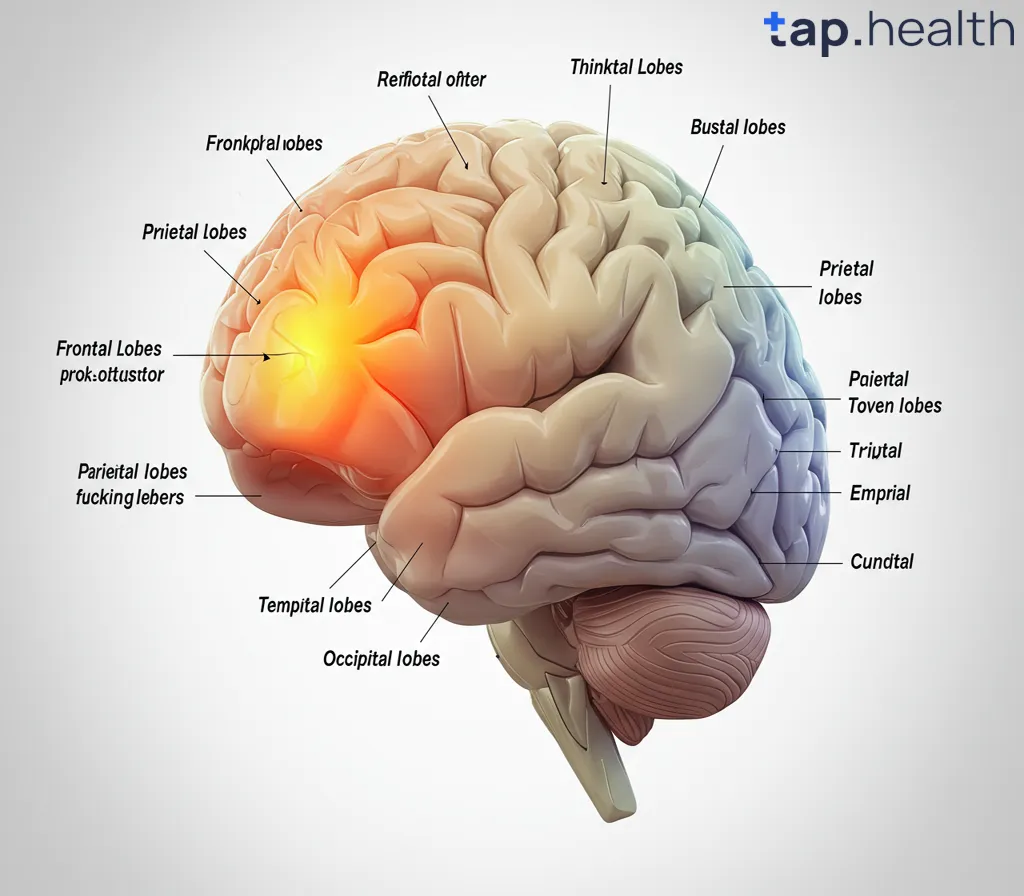
The main thinking part of the brain is the cerebrum, which is the largest part of the brain. It’s responsible for most of our cognitive functions, including thought, memory, decision-making, and voluntary movements. Within the cerebrum, several specific regions are involved in these processes.
Let’s explore the cerebrum in more detail and identify the key areas involved in thinking:
The Cerebrum: The Brain’s “Thinking” Center
The cerebrum makes up about 85% of the brain’s weight and is divided into two hemispheres: the left hemisphere and the right hemisphere. Each hemisphere controls different cognitive functions, and they communicate with each other through a structure called the corpus callosum.
1. Frontal Lobe: The Hub of Thought, Reasoning, and Decision Making
The frontal lobe is often considered the “main thinking part” of the brain due to its involvement in higher cognitive functions. It’s located in the front part of the cerebrum, behind the forehead.
Key Functions of the Frontal Lobe:
- Problem Solving and Decision Making: The frontal lobe is essential for making judgments, considering different perspectives, and finding solutions to problems. It’s the brain’s “CEO,” responsible for planning, decision-making, and reasoning.
- Planning and Organization: The frontal lobe helps us organize thoughts, plan actions, and set goals. It allows us to think about the future and strategize.
- Personality and Behavior: The frontal lobe is also linked to personality, emotional regulation, and social behavior. Damage to this area can affect a person’s ability to control emotions or behave appropriately in social situations.
- Motor Control: The motor cortex, located in the frontal lobe, controls voluntary movement. It is responsible for coordinating actions based on our thoughts and decisions.
2. Parietal Lobe: Integrating Sensory Information
The parietal lobe is located just behind the frontal lobe. While it is not primarily responsible for thinking, it plays an important role in processing sensory information and integrating it with our thoughts and actions.
Key Functions of the Parietal Lobe:
- Spatial Awareness: The parietal lobe helps us navigate our environment and understand the position of our body in space. It allows us to think about and plan movements based on our spatial understanding.
- Sensory Processing: This lobe processes touch, temperature, pain, and other sensory inputs, allowing us to respond appropriately to stimuli.
- Mathematical and Language Processing: The parietal lobe also helps with mathematical reasoning and understanding language, contributing to cognitive tasks like reading and problem-solving.
3. Temporal Lobe: Memory and Language
The temporal lobe, located near the ears, is critical for memory, language, and auditory processing. Although it is more directly linked to memory and emotions, it also contributes to thinking.
Key Functions of the Temporal Lobe:
- Memory: The hippocampus, located in the temporal lobe, is crucial for forming new memories and recalling past experiences. It helps integrate new information with existing knowledge.
- Language: The temporal lobe contains Wernicke’s area, which is responsible for understanding language and processing speech. This region allows us to comprehend and produce meaningful language.
- Auditory Processing: The temporal lobe is responsible for processing sounds and helping us interpret auditory information.
4. Occipital Lobe: Vision and Interpretation
The occipital lobe, located at the back of the brain, is primarily responsible for visual processing. While it’s not directly related to thought or reasoning, it plays a crucial role in interpreting visual information, which is essential for cognitive processes like recognizing objects or navigating the environment.
Key Functions of the Occipital Lobe:
- Visual Processing: The occipital lobe processes visual stimuli, allowing us to perceive and understand the world around us. It helps in interpreting colors, shapes, and motion, which are important for decision-making and problem-solving.
- Visual Memory: It helps store visual memories, allowing us to recall images and other visual information when needed.
The Role of the Prefrontal Cortex in Thinking
One of the most important areas for thinking in the frontal lobe is the prefrontal cortex. This region is located at the front of the frontal lobe and is crucial for executive functions like planning, reasoning, and decision-making.
Key Functions of the Prefrontal Cortex:
- Judgment and Decision Making: The prefrontal cortex helps us weigh options, make decisions, and anticipate the consequences of our actions.
- Impulse Control: It plays a vital role in controlling impulsive behaviors and regulating emotions, helping us make more thoughtful decisions.
- Working Memory: This part of the brain helps us hold and manipulate information in our minds while working on tasks, such as solving problems or remembering instructions.
- Social Behavior: The prefrontal cortex is involved in understanding social cues and making decisions based on societal norms and expectations.
The Limbic System: Emotions and Thinking
While the cerebrum plays a major role in thinking, the limbic system, which is located deep within the brain, also contributes to cognitive processes by integrating emotions with thoughts.
Key Functions of the Limbic System:
- Emotional Responses: The limbic system helps regulate emotions like fear, pleasure, and anger, which can influence our thoughts and decisions.
- Memory Formation: The hippocampus, part of the limbic system, is involved in forming long-term memories, which are essential for learning and thinking.
- Motivation: The limbic system is linked to motivation and goal-directed behavior, driving our thoughts and actions based on emotional responses.
The Interaction Between Brain Areas in Thinking
Thinking is not confined to one specific part of the brain; instead, it’s a network of brain regions working together. For instance:
- The frontal lobe handles high-level cognitive functions such as reasoning, decision-making, and personality.
- The parietal lobe integrates sensory input, helping to plan and execute actions based on spatial awareness.
- The temporal lobe contributes to memory, language, and auditory processing.
- The occipital lobe helps interpret visual information, which is vital for thinking and decision-making.
These areas communicate and work in harmony, allowing us to think critically, make decisions, solve problems, and remember information.
Common Disorders that Affect Thinking
Disruptions to the brain regions involved in thinking can lead to cognitive disorders. Some of the most common conditions affecting the brain’s thinking processes include:
1. Dementia
Dementia, including Alzheimer’s disease, affects the frontal and temporal lobes, leading to memory loss, impaired judgment, and difficulty thinking clearly.
2. Brain Injuries
Traumatic brain injuries can damage specific areas of the brain, including the frontal lobe, impairing decision-making, problem-solving, and social behavior.
3. Stroke
A stroke can damage parts of the brain responsible for thinking, resulting in cognitive deficits such as difficulty with language, reasoning, or memory.
4. Attention Deficit Hyperactivity Disorder (ADHD)
ADHD can affect the prefrontal cortex, leading to difficulties with focus, impulse control, and executive functioning, all of which are vital for thinking.
Frequently Asked Questions (FAQs) on Which is the Main Thinking Part of the Brain?
1. Which Part of the Brain Controls Thinking?
The cerebrum is the main part of the brain responsible for thinking. Within the cerebrum, the frontal lobe, specifically the prefrontal cortex, plays a crucial role in higher cognitive functions such as reasoning, decision-making, and planning.
2. What Is the Role of the Prefrontal Cortex in Thinking?
The prefrontal cortex, located in the frontal lobe, is involved in executive functions like judgment, problem-solving, decision-making, and impulse control. It is essential for managing complex thinking tasks.
3. How Do Different Brain Areas Contribute to Thinking?
Different areas of the brain work together to facilitate thinking. The frontal lobe handles reasoning and decision-making, the parietal lobe integrates sensory input, the temporal lobe is involved in memory and language, and the occipital lobe processes visual information.
4. Can Brain Damage Affect Thinking?
Yes, brain damage, such as from a stroke or traumatic injury, can impair cognitive functions like memory, decision-making, and problem-solving, depending on which part of the brain is affected.
5. What Happens if the Prefrontal Cortex is Damaged?
Damage to the prefrontal cortex can lead to difficulties with decision-making, problem-solving, and impulse control. It may also affect personality, social behavior, and the ability to plan and organize thoughts.
In conclusion, the frontal lobe, especially the prefrontal cortex, is the main thinking part of the brain. It plays a central role in higher cognitive functions such as reasoning, decision-making, and planning. The brain’s different regions work together to process information, helping us think critically, solve problems, and make informed decisions. Understanding how these brain areas work can help us appreciate the complexity of human cognition and how essential these processes are for daily life.