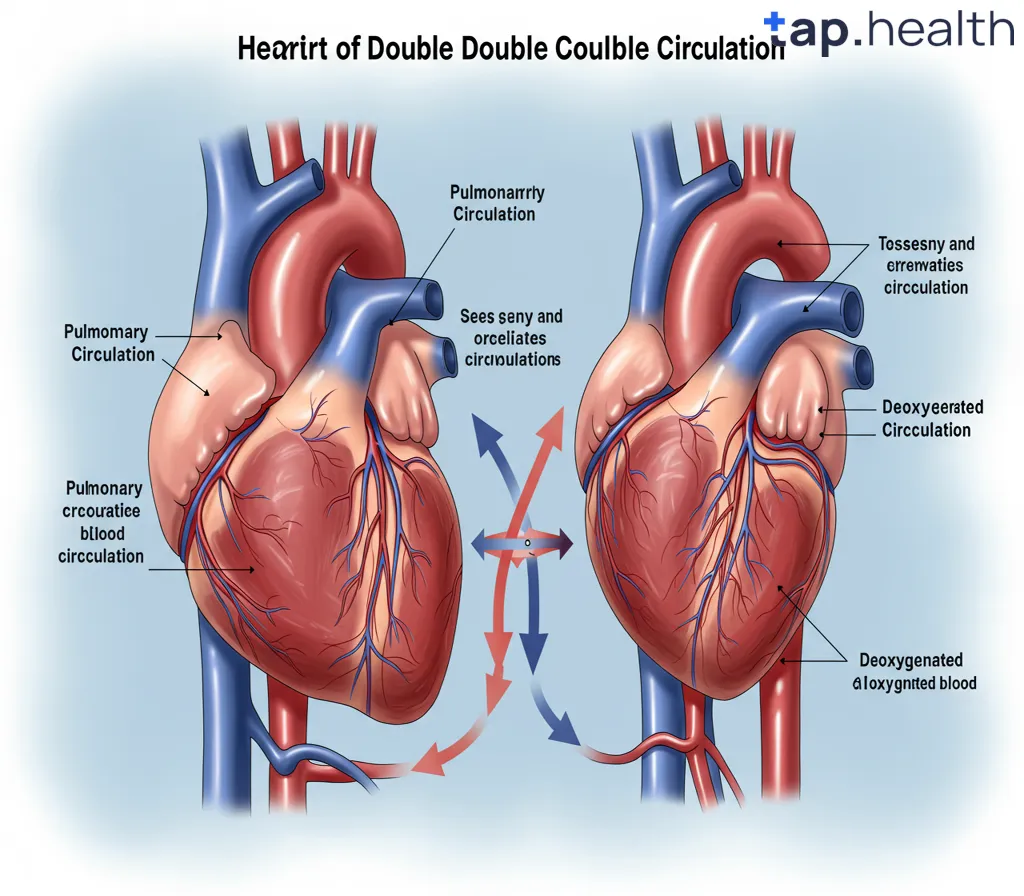
The human heart is an incredible organ that plays a crucial role in maintaining the body’s health. One of the most important aspects of the heart’s function is its ability to circulate blood throughout the body. But have you ever wondered why blood circulation in the human heart is referred to as “double circulation”? This term may sound complex, but once we break it down, it will become much easier to understand.
In this article, we will explore why blood circulation is called double circulation, what it entails, and how this system keeps our bodies healthy. We’ll also answer some of the most common questions related to this topic, giving you a comprehensive understanding of the heart’s circulation system.
What is Double Circulation?
To understand double circulation, we first need to break down the concept of blood circulation itself. The heart pumps blood through two distinct pathways, and each pathway is responsible for a different function. These pathways make up the “double circulation” system. Essentially, double circulation refers to the fact that blood passes through the heart twice before being pumped to the rest of the body.
The Two Circulations: Pulmonary and Systemic
In double circulation, there are two main circulatory routes:
- Pulmonary Circulation
- Systemic Circulation
Let’s dive deeper into each of these circulations.
Pulmonary Circulation
What is Pulmonary Circulation?
Pulmonary circulation is the path blood takes from the heart to the lungs and back. This circulation is vital because it allows the blood to pick up oxygen from the lungs and release carbon dioxide, a waste product of cellular metabolism.
The Pathway of Pulmonary Circulation
- Right Atrium: Deoxygenated blood from the body flows into the right atrium of the heart.
- Right Ventricle: From the right atrium, the blood moves into the right ventricle.
- Pulmonary Arteries: The right ventricle pumps the deoxygenated blood into the pulmonary arteries, which transport it to the lungs.
- Lungs: In the lungs, the blood releases carbon dioxide and picks up oxygen through a process called gas exchange.
- Pulmonary Veins: Oxygenated blood returns to the heart through the pulmonary veins, entering the left atrium.
This completes one half of the double circulation system.
Systemic Circulation
What is Systemic Circulation?
Systemic circulation is the path that blood takes as it travels from the heart to the rest of the body and back. This circulation is responsible for delivering oxygenated blood to tissues and organs, allowing them to carry out their functions.
The Pathway of Systemic Circulation
- Left Atrium: Oxygenated blood returns to the heart from the lungs via the pulmonary veins and enters the left atrium.
- Left Ventricle: The left atrium pumps the oxygen-rich blood into the left ventricle, which is the strongest chamber of the heart.
- Aorta: The left ventricle then pumps the oxygenated blood into the aorta, the largest artery in the body.
- Arteries, Arterioles, and Capillaries: Blood flows from the aorta into smaller arteries, then into arterioles, and eventually into capillaries, where nutrients and oxygen are exchanged with tissues and organs.
- Venules, Veins, and Vena Cava: After the exchange of gases and nutrients, deoxygenated blood returns to the heart via venules and veins, ultimately entering the superior and inferior vena cava, which empty into the right atrium.
This is the second half of the double circulation process.
Why is It Called Double Circulation?
The term “double circulation” refers to the two separate circulatory routes that blood follows within the heart: one through the lungs (pulmonary circulation) and the other through the body (systemic circulation). This system ensures that oxygenated blood is pumped to the body while deoxygenated blood is sent to the lungs for oxygenation.
The Importance of Double Circulation
Double circulation allows the heart to efficiently manage two very different types of blood: oxygenated blood (which provides nutrients and oxygen to the body) and deoxygenated blood (which carries waste products to the lungs for elimination). By having two separate pathways, the heart can maintain a continuous supply of oxygen-rich blood to the organs and tissues, while simultaneously sending carbon dioxide-rich blood to the lungs for removal.
Differences Between Pulmonary and Systemic Circulation
Though both pulmonary and systemic circulation are part of the same double circulation system, they have some important differences in terms of pressure and function.
Pulmonary Circulation vs. Systemic Circulation: Key Differences
| Feature | Pulmonary Circulation | Systemic Circulation |
|---|---|---|
| Pathway | Heart → Lungs → Heart | Heart → Body → Heart |
| Function | Oxygenates blood | Delivers oxygenated blood to body tissues |
| Pressure | Lower pressure, as blood is moving to the lungs | Higher pressure, as blood is pumped to the whole body |
| Oxygen Levels | Blood is low in oxygen and high in carbon dioxide | Blood is rich in oxygen and nutrients |
| Distance | Shorter path (from heart to lungs) | Longer path (from heart to distant body parts) |
How Does the Heart Facilitate Double Circulation?
The heart plays a crucial role in ensuring double circulation occurs smoothly. It is divided into four chambers: two atria and two ventricles. Each chamber has a specific function in the circulation process.
- Right Atrium: Receives deoxygenated blood from the body.
- Right Ventricle: Pumps the deoxygenated blood to the lungs for oxygenation.
- Left Atrium: Receives oxygenated blood from the lungs.
- Left Ventricle: Pumps oxygen-rich blood to the entire body.
The right side of the heart handles pulmonary circulation (blood to and from the lungs), while the left side manages systemic circulation (blood to and from the body). The separation of these two circulations is essential to maintaining an efficient, controlled, and effective blood flow.
The Significance of Double Circulation
Double circulation is essential for maintaining the efficiency and health of the circulatory system. It ensures that oxygen and nutrients are delivered to the body’s tissues while waste products like carbon dioxide are efficiently removed. This separation of oxygenated and deoxygenated blood also allows for higher pressure in the systemic circulation, which is necessary to pump blood over long distances to organs and muscles.
Frequently Asked Questions (FAQs) on Why Blood Circulation in the Human Heart is Called Double Circulation
1. What Does Double Circulation Mean?
Double circulation refers to the two separate routes blood takes in the human heart: the pulmonary circulation (from the heart to the lungs) and the systemic circulation (from the heart to the rest of the body). Blood passes through the heart twice, once for each circulation loop.
2. Why is Double Circulation Important?
Double circulation ensures that oxygenated and deoxygenated blood are kept separate. This is important because it allows oxygen-rich blood to be pumped efficiently to the body while carbon dioxide-rich blood is sent to the lungs to be expelled. It also ensures that the body’s tissues receive a continuous supply of oxygen and nutrients.
3. How Does the Heart Pump Blood Through Double Circulation?
The heart pumps blood through double circulation by using its four chambers:
- The right side of the heart pumps deoxygenated blood to the lungs (pulmonary circulation).
- The left side pumps oxygenated blood to the rest of the body (systemic circulation).
4. What is the Difference Between Pulmonary and Systemic Circulation?
Pulmonary circulation is the flow of blood between the heart and lungs, where blood is oxygenated. Systemic circulation is the flow of blood between the heart and the rest of the body, delivering oxygen and nutrients to tissues and organs.
5. How Does Double Circulation Affect Blood Pressure?
In double circulation, the pressure is lower in the pulmonary circuit because it only needs to send blood a short distance to the lungs. In contrast, the systemic circulation has higher pressure because it needs to pump blood throughout the entire body.
In conclusion, double circulation is a unique and efficient system that ensures the proper flow of blood throughout the body. It plays a crucial role in maintaining the health of organs and tissues by providing them with oxygen and nutrients while removing waste products. Understanding how double circulation works helps us appreciate the complexity and precision of the human heart, ensuring that it functions optimally for overall health.