Imagine waking up one day and not being able to see the faces of your loved ones clearly. Reading your favorite book? Impossible. Driving to the store? Too risky.
This is the reality for millions of people with age-related macular degeneration (AMD)—a leading cause of vision loss in adults over 50.
The good news? You don’t have to just sit back and wait for your vision to fade. There’s strong scientific proof that certain eye vitamins can slow down the damage and help protect your eyes.
But with so many products on the shelf, you’re probably asking: What is the best eye vitamin for macular degeneration?
Let’s cut through the confusion.
In this guide, we’ll explain:
- What macular degeneration really is
- Which nutrients your eyes need most
- The exact formula proven to help
- Top-rated supplements you can trust
- Who should take them and when
- Common myths and mistakes to avoid
We’ll keep it simple, clear, and based on real science from trusted sources like the National Eye Institute, Mayo Clinic, and the American Academy of Ophthalmology.
By the end, you’ll know exactly what to look for—and what to avoid—when choosing the best eye vitamin for macular degeneration.
What Is Macular Degeneration?
Before we talk about vitamins, let’s understand the condition they’re meant to help.
The Macula – The Heart of Your Vision
Your eye is like a camera. At the back, there’s a small but super important part called the macula. It’s in the center of the retina, the layer that captures light and sends images to your brain.
The macula is responsible for:
- Clear, sharp central vision
- Seeing fine details
- Recognizing faces
- Reading, driving, and watching TV
When the macula gets damaged, your central vision blurs or darkens—like a smudge in the middle of a photo.
That’s macular degeneration.
Two Types of Macular Degeneration
There are two main types:
- Dry AMD (Atrophic)
- Most common (about 80–90% of cases)
- Develops slowly over years
- Caused by thinning of the macula and buildup of tiny yellow deposits called drusen
- No cure, but vitamins can slow it down
- Wet AMD (Neovascular)
- Less common but more serious
- Abnormal blood vessels grow under the retina and leak fluid or blood
- Causes rapid vision loss
- Treated with eye injections, but vitamins still play a supportive role
Most people start with dry AMD. Without proper care, it can turn into wet AMD.
Can Vitamins Really Help with Macular Degeneration?
You might be skeptical. Can a simple pill really protect your eyes?
Yes—but only specific ones.
Not all eye vitamins are created equal. In fact, most over-the-counter “eye health” supplements do nothing for macular degeneration.
The key is using the right formula—one that’s been tested in large, scientific studies.
The AREDS and AREDS2 Studies – The Gold Standard
The best evidence comes from two major studies funded by the National Eye Institute (NEI):
- AREDS (Age-Related Eye Disease Study) – Published in 2001
- AREDS2 (AREDS Follow-Up) – Published in 2013
These studies followed thousands of people with moderate to advanced AMD for years. They tested different vitamin combinations to see which ones slowed vision loss.
The results?
- The right mix of vitamins and minerals reduced the risk of AMD progressing to advanced stages by up to 25%.
- It didn’t cure AMD, but it significantly slowed it down.
This formula is now considered the standard of care for people at risk of vision loss from AMD.
What Is the Best Formula for Macular Degeneration?
So, what’s in this magic mix?
The AREDS2 formula is currently the most recommended and up-to-date version. It includes specific doses of antioxidants and minerals proven to support eye health.
Here’s what’s in it:
| Vitamin C | 500 mg | Fights damage from sunlight and aging |
| Vitamin E | 400 IU | Protects eye cells from oxidative stress |
| Zinc (as zinc oxide) | 80 mg | Supports retina function |
| Copper (as cupric oxide) | 2 mg | Prevents zinc from causing copper deficiency |
| Lutein | 10 mg | Filters harmful blue light, protects macula |
| Zeaxanthin | 2 mg | Works with lutein to shield the eye |
Why Lutein and Zeaxanthin Replace Beta-Carotene
In the original AREDS study, beta-carotene (a form of vitamin A) was used. But it had a big downside: it increased the risk of lung cancer in smokers.
AREDS2 replaced beta-carotene with lutein and zeaxanthin—two natural pigments found in the macula. They’re safer and just as effective, even better for non-smokers.
Bonus: Lutein and zeaxanthin are found in leafy greens like spinach and kale—so they’re part of a healthy diet too.
Why Copper Is Added
Zinc is important, but high doses (like 80 mg) can lower copper levels in the body. That can lead to anemia and nerve problems.
That’s why copper (2 mg) is added—to keep your body in balance.
What Is the Best Eye Vitamin Brand for Macular Degeneration?
Now that you know the right formula, which brand should you buy?
Not all supplements labeled “eye health” contain the AREDS2 formula. Some have too little, too much, or the wrong forms of nutrients.
Here are top-rated, trusted brands that follow the exact AREDS2 recipe:
PreserVision AREDS 2 (by Bausch + Lomb)
- Most widely used and studied
- Available in soft gels, capsules, and chewables
- Trusted by eye doctors
- Easy to find at pharmacies and online
Best for: People who want the gold-standard formula with no guesswork.
Science-Based Nutrition (SBN) Eye & Vision Support
- High-quality, no artificial fillers
- Includes additional eye-supporting nutrients like omega-3s (in some versions)
- Popular among integrative doctors
Best for: Those who want a clean, science-backed option.
Ocuvite PreserVision (now part of PreserVision line)
- Same formula, different packaging
- Chewable version available for people who have trouble swallowing pills
Best for: Seniors or anyone who prefers chewables.
TheraVision AREDS 2 with Lutein
- Doctor-formulated
- Free from common allergens
- Often recommended by retina specialists
Best for: People with sensitivities or allergies.
✅ Tip: Look for the words “AREDS2” or “based on the AREDS2 study” on the label. That’s your clue it’s the real deal.
Who Should Take These Eye Vitamins?
You might be wondering: Do I need this?
The short answer: Not everyone.
These vitamins are not for prevention in healthy eyes. They’re meant for people who already have intermediate or advanced AMD.
When Your Doctor Might Recommend It
Your eye doctor (ophthalmologist or optometrist) may suggest AREDS2 vitamins if:
- You have dry AMD in one or both eyes
- You have large drusen (seen during an eye exam)
- You’ve already lost vision in one eye due to AMD
- You’re at high risk of progression
They usually won’t recommend it for:
- Early AMD with no symptoms
- People with only mild drusen
- Those with healthy eyes (no proven benefit)
Do You Need a Prescription?
No. AREDS2 supplements are available over the counter without a prescription.
But you should not start them without talking to your doctor.
Why? Because:
- High-dose zinc can interact with other medications
- Too much vitamin E may increase bleeding risk
- Smokers should avoid beta-carotene (though AREDS2 doesn’t include it)
Your doctor can check your eye health and help you decide if it’s right for you.
Can Diet Replace Eye Vitamins?
You’ve probably heard: “Eat your greens, and you’ll have healthy eyes.”
And that’s true—to a point.
Foods That Support Eye Health
Certain foods are rich in the same nutrients found in AREDS2:
- Lutein & Zeaxanthin: Spinach, kale, collard greens, broccoli, corn, eggs
- Vitamin C: Oranges, strawberries, bell peppers, kiwi
- Vitamin E: Nuts, seeds, avocado, sunflower oil
- Zinc: Oysters, beef, pumpkin seeds, lentils
Eating these foods is great for overall eye health.
But here’s the catch: you can’t eat enough to match the AREDS2 dose.
For example:
- To get 10 mg of lutein, you’d need to eat over ½ cup of cooked kale every day
- Getting 80 mg of zinc from food alone is nearly impossible without supplements
So while a healthy diet helps, it doesn’t replace the high-dose, targeted formula in AREDS2.
What Are the Side Effects of Macular Degeneration Vitamins?
Like any supplement, these vitamins can have side effects—especially at high doses.
Common Side Effects
- Upset stomach or nausea – due to high zinc
- Yellow-orange skin tint – from lutein (harmless, like eating too many carrots)
- Constipation or metallic taste – from zinc
- Headaches or dizziness – in some people
Most side effects go away as your body adjusts.
Serious Risks to Know
- Zinc toxicity: Long-term high zinc can cause nausea, immune problems, and nerve damage
- Copper deficiency: Without copper in the formula, zinc can deplete copper stores
- Bleeding risk: High-dose vitamin E may thin the blood (important if you take blood thinners)
That’s why the exact AREDS2 balance is so important. Don’t mix and match random supplements.
Are There Different Formulas for Smokers?
Yes—and this is critical.
Why Smokers Should Avoid Beta-Carotene
In the original AREDS study, people who smoked and took beta-carotene had a higher risk of lung cancer.
That’s why the AREDS2 formula removed beta-carotene and replaced it with lutein and zeaxanthin—much safer for smokers and former smokers.
If you smoke or used to smoke, make sure your eye vitamin:
- Does NOT contain beta-carotene
- Does contain lutein and zeaxanthin
Most major brands now follow this rule, but always check the label.
How Long Should You Take These Vitamins?
There’s no set end date.
These Are Long-Term Supplements
AREDS2 vitamins are meant to be taken daily, for years, as long as your doctor says it’s safe.
They don’t cure AMD, but they help slow it down over time.
Most people continue taking them unless:
- Their AMD progresses to a point where supplements no longer help
- They experience serious side effects
- Their doctor advises stopping
Regular eye exams (every 6–12 months) are still essential to monitor your condition.
What If You Have Wet AMD?
Even if you have wet macular degeneration, eye vitamins can still help.
Vitamins Are Supportive, Not a Replacement
Wet AMD is usually treated with injections into the eye (like Lucentis, Eylea, or Avastin). These stop leaking blood vessels and can even improve vision.
But vitamins:
- Help protect the other eye (if only one is affected)
- Support overall retinal health
- May reduce the number of injections needed (some studies suggest this)
So yes—many people with wet AMD still take AREDS2 vitamins, along with their prescribed treatments.
Always follow your retina specialist’s advice.
Can These Vitamins Improve Vision?
This is a common hope—but the answer is no, not really.
They Don’t Restore Lost Vision
AREDS2 vitamins won’t reverse damage that’s already been done.
You won’t suddenly be able to read the newspaper again if you’ve already lost central vision.
But what they can do is:
- Slow down further vision loss
- Delay the need for low-vision aids
- Help you keep the vision you still have
Think of them like seatbelts. They won’t prevent every accident, but they greatly reduce the damage if one happens.
What’s the Best Time to Take These Vitamins?
Timing matters for absorption.
Take With a Meal
The fat-soluble nutrients in the formula—vitamin E, lutein, and zeaxanthin—are best absorbed when taken with food that contains fat.
So, take your eye vitamin:
- With breakfast, lunch, or dinner
- Alongside foods like eggs, avocado, nuts, or olive oil
This can boost absorption by up to 30–50%.
Also, taking it with food helps reduce stomach upset from zinc.
Are Generic or Store Brands Safe?
You’ll find cheaper versions at Walmart, CVS, or Amazon.
Some are fine—but not all.
What to Look For in a Generic Brand
Make sure the label shows:
- Exact AREDS2 doses (500mg C, 400 IU E, 80mg zinc, etc.)
- Lutein (10mg) and zeaxanthin (2mg)
- Copper (2mg)
- No beta-carotene (especially if you smoke)
Avoid brands that:
- Use vague terms like “proprietary blend”
- Don’t list full ingredient amounts
- Include unnecessary additives
When in doubt, stick with PreserVision or another doctor-recommended brand.
What About Other Supplements Like Omega-3s or Astaxanthin?
You may see other ingredients marketed for eye health.
Let’s break them down.
Omega-3 Fatty Acids (Fish Oil)
- Found in fatty fish (salmon, mackerel)
- May support retina function
- Not part of AREDS2, but some doctors recommend adding them
- Look for supplements with EPA and DHA
Bottom line: Not proven to slow AMD, but good for overall health.
Astaxanthin
- A powerful antioxidant from algae
- May help with eye strain and inflammation
- Limited evidence for AMD
Bottom line: Interesting, but not a replacement for AREDS2.
Bilberry or Grape Seed Extract
- Often in “eye health” blends
- No strong proof they help with macular degeneration
Bottom line: Skip them. Stick to the science-backed formula.
Can Younger People Take These Vitamins?
Generally, no.
Not for Prevention in Healthy Eyes
AREDS2 was tested on people 50 and older with existing AMD.
There’s no evidence that taking these high-dose vitamins prevents AMD in healthy younger adults.
And because of the risks (like zinc overload), doctors don’t recommend them for prevention.
Instead, younger people should:
- Eat a healthy diet
- Wear UV-protective sunglasses
- Avoid smoking
- Get regular eye exams starting at age 40
What If You’re Vegetarian or Vegan?
Most AREDS2 formulas are vegetarian-friendly, but check the label.
Watch for Gelatin and Omega-3 Sources
- Soft gels often contain gelatin (from animals)
- Look for vegan capsules or tablets
- Some brands offer plant-based versions
Also, lutein and zeaxanthin are usually derived from marigold flowers—so they’re plant-based.
Zinc and vitamins are typically synthetic or mineral-based, so they’re fine for vegans.
Frequently Asked Questions (FAQ) on What Is the Best Eye Vitamin for Macular Degeneration?
What is the best eye vitamin for macular degeneration?
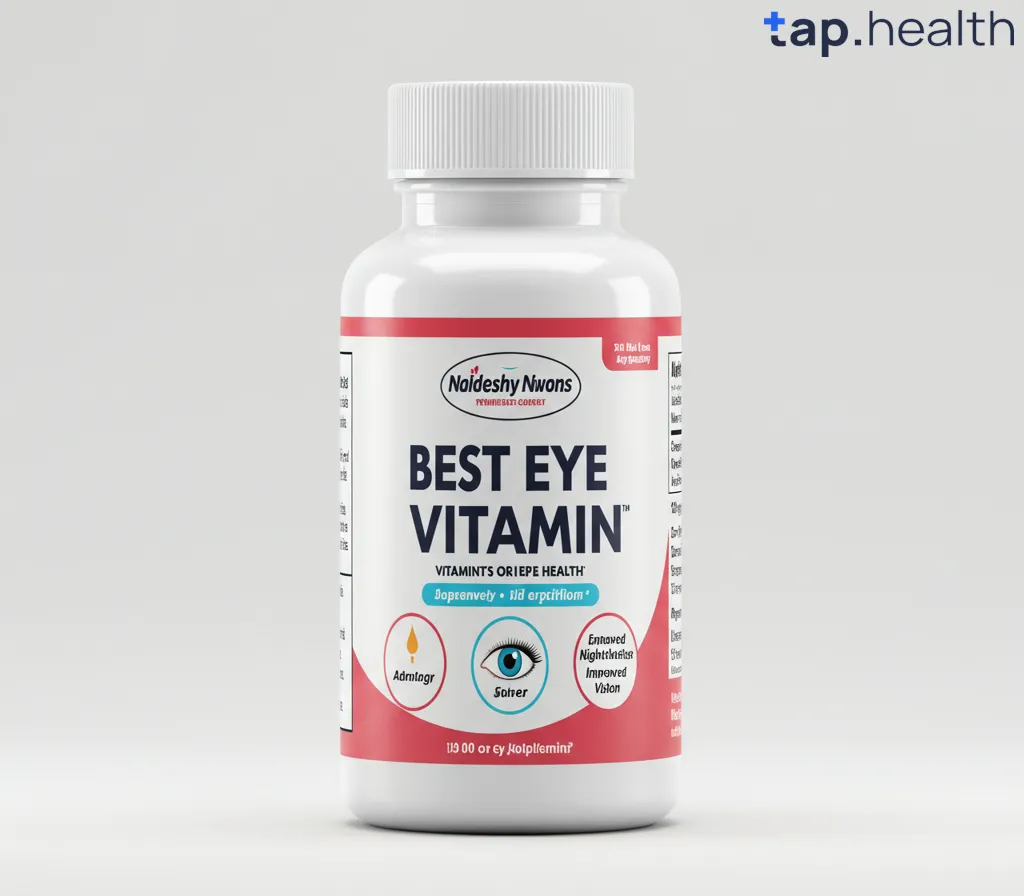
The best eye vitamins are those that follow the AREDS2 formula: 500mg vitamin C, 400 IU vitamin E, 80mg zinc, 2mg copper, 10mg lutein, and 2mg zeaxanthin. Trusted brands include PreserVision, TheraVision, and Science-Based Nutrition.
Do eye vitamins really work for macular degeneration?
Yes, but only the AREDS2 formula has been proven in large studies to slow the progression of intermediate to advanced dry AMD by up to 25%.
Can I take regular multivitamins instead?
No. Regular multivitamins don’t have high enough doses of the key nutrients. You need the specific AREDS2 formula for it to work.
Are there side effects?
Yes. Possible side effects include stomach upset, constipation, or a yellowish skin tint (from lutein). High zinc can also cause copper deficiency if copper isn’t included.
Should smokers take these vitamins?
Yes, but only formulas without beta-carotene. The AREDS2 formula is safe for smokers because it uses lutein and zeaxanthin instead.
How long does it take to work?
You won’t feel a difference right away. These vitamins work over years to slow vision loss. Benefits are seen after 5+ years of consistent use.
Can these vitamins reverse vision loss?
No. They cannot restore lost vision. They only help slow down further damage.
Do I need a prescription?
No, but you should consult your eye doctor before starting. They’ll check your AMD stage and recommend if it’s right for you.
Can I get these nutrients from food?
You can get some (like lutein from spinach), but not in the high doses needed. Supplements are necessary to match the AREDS2 levels.
What’s the difference between AREDS and AREDS2?
AREDS2 replaced beta-carotene with lutein and zeaxanthin (safer for smokers) and tested the effects of omega-3s (which didn’t help). It’s the updated, preferred formula.
Can I take AREDS2 with other medications?
Possibly, but check with your doctor. High-dose vitamin E may interact with blood thinners, and zinc can interfere with some antibiotics.
Are gummies as effective as pills?
Most eye gummies do not contain the full AREDS2 formula. They’re often low in zinc and lack proper dosing. Stick to capsules or tablets.
How often should I have my eyes checked?
If you have AMD, see your eye doctor every 6 to 12 months. Regular monitoring is key to managing the disease.
Can I stop taking the vitamins if I feel fine?
No. AMD can progress without symptoms. Continue taking them as long as your doctor recommends.
Is there a cure for macular degeneration?
Not yet. But treatments like AREDS2 vitamins, eye injections (for wet AMD), and lifestyle changes can help preserve vision.
Final Thoughts: What Is the Best Eye Vitamin for Macular Degeneration?
Let’s bring it all together.
Macular degeneration is a serious condition, but you’re not powerless.
The best eye vitamin for macular degeneration is one that follows the AREDS2 formula—a scientifically proven blend of antioxidants and minerals that can slow vision loss by up to 25%.
It’s not a cure. It won’t give you 20/20 vision again. But it can help you keep the vision you have for longer.
Key takeaways:
- Look for AREDS2 on the label
- Choose trusted brands like PreserVision
- Take it with food for better absorption
- Talk to your eye doctor before starting
- Combine it with a healthy diet and no smoking
Your eyes are priceless. With the right care—and the right vitamin—you can protect them for years to come.