In India, no meal is complete without a bowl of “Dal.” Whether it is the yellow Tadka Dal you enjoy with rice or the rich Makhani Dal you pair with naan, pulses are the heartbeat of Indian cuisine. But if you have recently been diagnosed with diabetes or are trying to lose weight, you might be looking at that bowl of lentils with suspicion. You are probably wondering: Is this safe for me?
Carbohydrates have become the villain in modern diet culture. We are told to cut rice, stop eating bread, and avoid sugar. But where do pulses fit in? They contain carbs, yes, but they also have protein and fibre.
If you have been searching for the glycemic index of pulses or wondering “which dal has low glycemic index,” you can relax. You are about to discover why pulses are not just safe—they are actually one of the most powerful tools you have to fight high blood sugar.
In this comprehensive guide, we will break down the science of pulses, provide a clear pulses glycemic index chart, and explain exactly how to include them in your diet without spiking your glucose levels. We will keep it simple, practical, and 100% human.
What Is the Glycemic Index of Pulses?
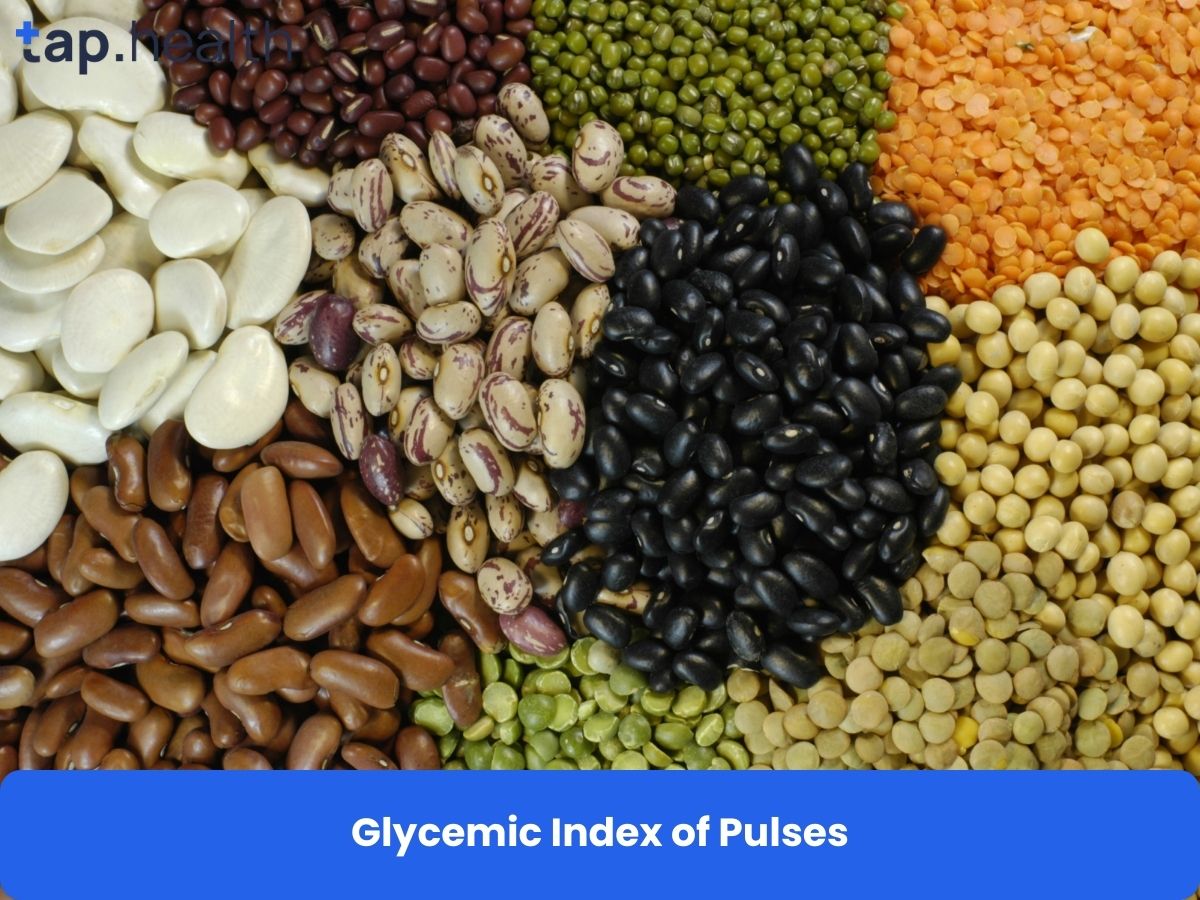
First, let’s look at the numbers. The glycemic index of pulses is generally very low.
While white rice and wheat flour can send your blood sugar soaring (with GI scores of 70+), most pulses sit comfortably in the 20 to 40 range. This is incredibly low.
To put this in perspective:
- Glucose (Sugar): 100 (The danger zone)
- White Bread: 75 (High)
- Pulses (Average): 30 (The safety zone)
This means that when you eat dal, chana, or rajma, the sugar enters your bloodstream at a snail’s pace. There is no sudden spike, no crash, and no panic for your pancreas.
Why Do Pulses Have Such a Low GI?
You might be wondering, “If pulses have carbohydrates, why don’t they spike my sugar?”
The answer lies in their unique structure. Pulses are complex packages of nutrition.
- High Fibre: The outer skin of whole pulses (like whole moong or chana) acts like a physical barrier. Your digestive enzymes struggle to break through this tough fibre, which slows down digestion.
- Protein Barrier: The starch in pulses is trapped within protein structures. Your body has to unwrap the protein to get to the sugar. This takes time.
- Resistant Starch: A significant portion of the carbohydrate in pulses is “resistant starch.” This type of starch resists digestion in the small intestine and goes straight to the colon, where it feeds healthy bacteria instead of raising blood sugar.
This combination makes low gi index pulses the ultimate “slow-carb” food.
Detailed Glycemic Index of Indian Pulses (Chart)
Here is a breakdown of common Indian pulses and their approximate GI values. Use this as your reference when planning meals. This essentially serves as your glycemic index of indian foods pdf summary.
| Pulse Name (English) | Indian Name | Glycemic Index (GI) | Verdict |
| Bengal Gram (Split) | Chana Dal | 8 | Extremely Low |
| Kidney Beans | Rajma | 24–28 | Low |
| Chickpeas | Kabuli Chana | 28 | Low |
| Green Gram (Whole) | Sabut Moong | 30 | Low |
| Green Gram (Split) | Moong Dal | 29 | Low |
| Black Gram | Urad Dal | 43 | Low |
| Lentils | Masoor Dal | 25–30 | Low |
| Black Eyed Peas | Lobia | 38 | Low |
| Pigeon Peas | Toor/Arhar Dal | 29 | Low |
| Soybeans | Soyabean | 16 | Very Low |
Note: These values refer to boiled or pressure-cooked pulses. Frying or canning can change the numbers slightly.
As you can see, almost every item on this pulses glycemic index chart falls well within the “Low” category (under 55). Specifically, Chana Dal is a superstar with a single-digit GI score!
Which Dal Has the Lowest Glycemic Index?
If you are looking for the absolute winner in the glycemic index of indian pulses competition, the crown goes to Chana Dal (Bengal Gram).
With a GI of roughly 8, it has a negligible effect on blood sugar. This is why doctors often recommend Besan (made from Chana Dal) over wheat flour for diabetics. Roti made from a mix of wheat and besan (Missi Roti) is far healthier than plain wheat roti.
Runner Up: Soybeans and Kidney Beans (Rajma) are also excellent choices.
The “Processing” Trap: Whole vs. Split vs. Flour
While the glycemic index of pulses is low, how you prepare them matters.
1. Whole Pulses (Sabut)
- Best for Diabetes. The skin is intact, providing maximum fibre.
- Example: Eating “Sabut Moong” is better than washed Moong Dal.
2. Split Pulses (Dal)
- Still Great. Even without the skin, the protein-starch matrix keeps the GI low.
- Example: Yellow Moong Dal or Toor Dal.
3. Flour (Besan/Sattu)
- Good, but faster. When you grind pulses into powder, you break the physical structure. Digestion becomes faster.
- Note: Besan has a slightly higher GI than whole chana, but it is still much lower than wheat or rice flour.
Pulses vs. Other Foods: The Great Comparison
To understand the value of pulses with low glycemic index, let’s compare them to other common foods people search for, like the glycemic index of chicken or rice.
Pulses vs. Chicken
People often search for “glycemic index of chicken”.
- Chicken GI: 0.
- Pulses GI: ~30.
- Analysis: Chicken has no carbohydrates, so it doesn’t raise blood sugar at all. However, you cannot live on chicken alone. You need energy. Pulses provide that energy (carbs) with a very low spike, plus fibre that chicken lacks. A combination of Chicken + Dal is a powerful diabetic-friendly meal.
Pulses vs. Rice
- White Rice GI: ~70–80.
- Pulses GI: ~30.
- The Indian Problem: We often eat a little bit of dal with a mountain of rice. This defeats the purpose. The high GI of the rice overpowers the low GI of the pulses.
- The Fix: Reverse the ratio. Eat a bowl of thick dal with a small serving of rice.
Real-Life Scenario: The “Rajma Chawal” Dilemma
Let’s look at a classic Sunday lunch scenario in a North Indian home.
The Situation:
Mr. Sharma loves Rajma Chawal. But his doctor told him his sugar levels are too high. He thinks, “Rajma is a pulse, so it is healthy,” and he eats a large plate. Two hours later, his sugar is 200 mg/dL. He is confused. “I thought the glycemic index of pulses was low!”
The Mistake:
Mr. Sharma didn’t check the glycemic index chart indian food properly. The Rajma (GI 28) was fine. The problem was the 300g of white rice (GI 73) underneath it.
The Solution:
Next Sunday, Mr. Sharma changes his strategy.
- He uses Basmati Rice (lower GI than short-grain rice).
- He reduces the rice portion by half.
- He doubles the quantity of Rajma.
- He adds a side of cucumber salad (fibre).The Result: He enjoys his favourite meal, but his blood sugar stays stable at 140 mg/dL.
Expert Contribution
We spoke to certified diabetes educators to understand the role of pulses in a long-term diet.
Dr. R. Gupta, Diabetologist:
“The beauty of the glycemic index of indian pulses isn’t just the low number; it’s the ‘Second Meal Effect.’ Studies show that eating lentils at lunch can actually improve your blood sugar response at dinner! The slow-digesting starch keeps insulin sensitivity high for hours. I advise my patients not to fear carbs, but to choose the right ones—specifically, Chana Dal and Moong.”
Recommendations Grounded in Proven Research and Facts
If you want to use the low glycemic index foods list pdf effectively, here are the evidence-based rules for eating pulses:
- Soak Them: Soaking pulses overnight reduces anti-nutrients (phytates) and makes them easier to digest. Interestingly, some research suggests sprouting further improves nutrient absorption without significantly raising the GI.
- Pressure Cook, Don’t Mash: Over-cooking dal until it becomes a soup breaks down the starch too much. Try to keep the lentils slightly firm or textured to maintain the lowest pulses gi index.
- Pair with Fat: Adding a teaspoon of ghee to your dal isn’t just for taste. Fat slows down stomach emptying, which can further lower the glycemic spike of the meal.
- Mix Your Flours: If you make roti, mix 50% wheat flour with 50% chickpea flour (besan). This drastically lowers the GI of your bread compared to pure wheat.
Myths vs. Facts
Myth: “Pulses cause gas, so they are bad for digestion.”
Fact: Pulses can cause gas because of high fibre and raffinose (a sugar). However, this is actually a sign that your gut bacteria are being fed! To reduce gas, introduce pulses slowly and always soak them well before cooking.
Myth: “Dal is protein, not carbohydrate.”
Fact: This is a common misconception. Pulses are primarily carbohydrates (about 60%) and secondarily protein (about 20-25%). Because they contain carbs, checking the glycemic index of pulses is important. They are not “free” foods like chicken or fish, but they are “smart” carb foods.
Myth: “All pulses are the same.”
Fact: While all are good, Chana Dal (GI 8) is far superior to processed pulse products or instant dal soups which may contain thickeners (cornstarch) that raise the GI.
Conclusion
The glycemic index of pulses is the best news for Indian diabetics. In a diet often dominated by high-GI rice and wheat, the humble Dal is your savior.
Whether it is Chana Dal, Rajma, or Moong, these tiny seeds are nutritional powerhouses. They offer the satisfaction of carbohydrates with the blood sugar stability of fibre and protein. They are affordable, delicious, and versatile.
So, the next time you look for a low glycemic index foods list pdf or a glycemic index chart pdf, make sure pulses are at the very top. They are not just a side dish; they should be the star of your plate.
Key Takeaways:
- Go Low: Most pulses have a GI between 20 and 40.
- The Champion: Chana Dal has the lowest GI (approx 8).
- The Combination: Always pair pulses with lower portions of rice or roti to keep the total meal GI low.
- The Texture: Whole pulses (Sabut) are slightly better than split or powdered versions.
- The Benefit: They create the “Second Meal Effect,” helping control sugar levels later in the day.
Frequently Asked Questions (FAQ) on Glycemic Index of Pulses
Which dal has low glycemic index?
Chana Dal (Bengal Gram) has the lowest glycemic index, often cited as roughly 8. Other excellent low GI options include Moong Dal (Green Gram) and Rajma (Kidney Beans), which generally fall between 25 and 30.
What is the glycemic index of chicken?
The glycemic index of chicken is 0. Since chicken is a pure protein food and contains no carbohydrates, it does not cause a direct rise in blood sugar. However, it is often eaten with carbs (like rice), so the total meal will have a GI score.
Can I get a low glycemic index indian foods list pdf?
While we cannot attach a PDF file here, you can easily copy the chart provided in the “Detailed Glycemic Index of Indian Pulses” section above. Copying that table into a document will give you a perfect glycemic index chart indian food reference for your kitchen.
Which pulse is good for diabetes?
All pulses are good for diabetes, but Chana Dal, Rajma, and Whole Moong are the best. They are rich in fibre and resistant starch, which prevents insulin spikes. They are superior to starchy carbs like potatoes or white rice.
What is the GI of Poha?
What is GI of poha? Poha (flattened rice) has a High GI, typically around 70. Even though it is a popular breakfast, it can spike blood sugar quickly. To make it healthier, add lots of vegetables and peanuts (pulses!) to lower the overall glycemic load.
Is the glycemic index of indian pulses different from western legumes?
No, the biology is the same. Whether you call it “Chickpeas” or “Kabuli Chana,” the GI remains low (around 28). However, Indian cooking methods (like curries with ghee) can actually help lower the GI slightly compared to just boiling them plain, due to the added fats.
What is pulse index?
What is pulse index? This term is sometimes confused with Glycemic Index. In medical terms, “pulse index” might refer to heart rate metrics, but in nutrition, people usually mean the GI of pulses. Pulses are defined as the edible seeds of plants in the legume family.
Where can I find a high glycemic index foods list pdf to avoid?
You should look to avoid foods like white bread, cornflakes, instant noodles, white rice, and sugary drinks. These typically appear on a high glycemic index foods list pdf. Most doctors provide these lists, or you can find them on the American Diabetes Association website.
References
- Harvard Health Publishing: Glycemic index for 60+ foods
- American Diabetes Association: Beans and Diabetes
- The University of Sydney: GI Search Database
- National Institute of Nutrition (India): Dietary Guidelines for Indians
- Mayo Clinic: Low-glycemic index diet: What’s behind the claims?