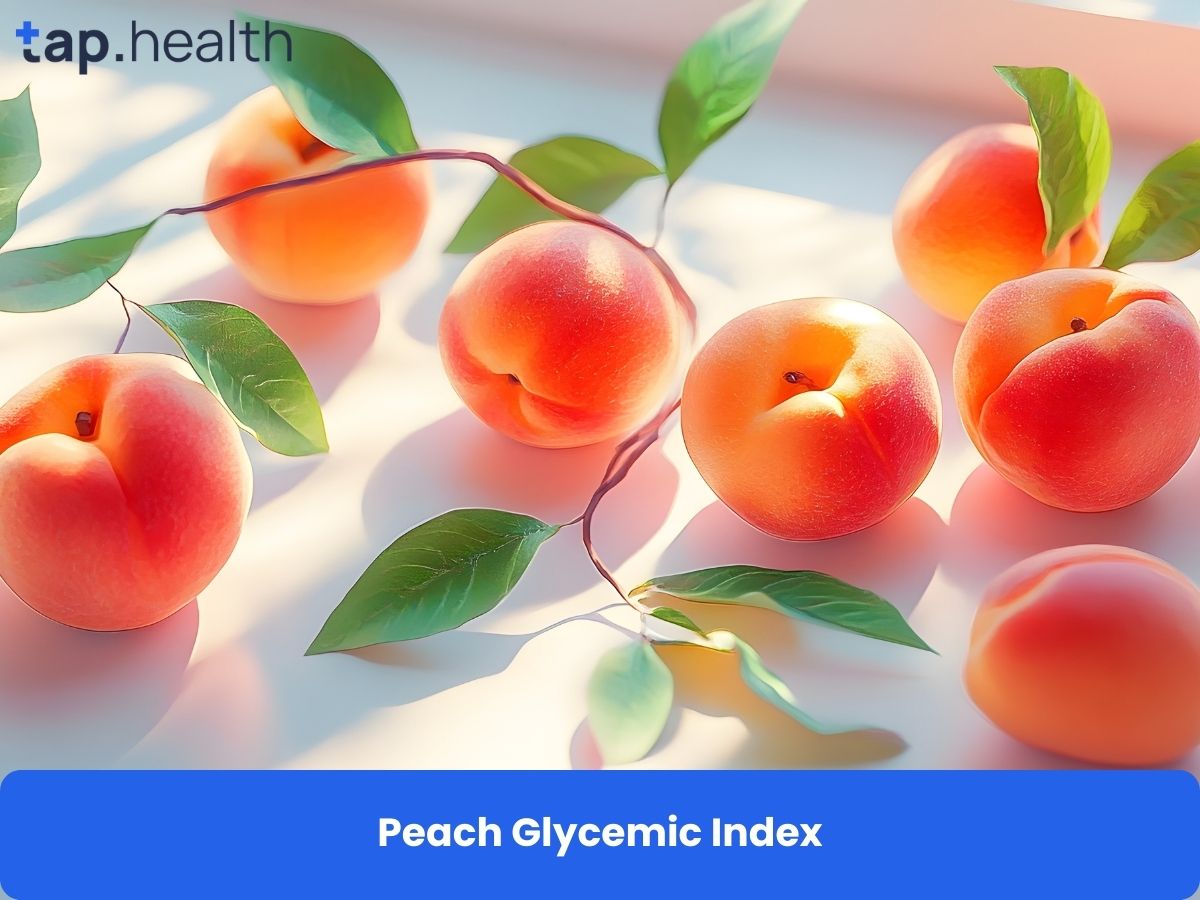
There is nothing quite like biting into a juicy, ripe peach on a hot summer day. The sweet nectar, the soft flesh, the incredible aroma—it is nature’s candy. But if you are managing diabetes, pre-diabetes, or just watching your weight, that sweetness can trigger a moment of panic. You might pause and ask: “Is this safe? Will this spike my sugar?”
We have been told for years that “sweet” equals “bad.” But when it comes to fruit, the story is not that simple. Not all sweet fruits are sugar bombs.
If you have been searching for the peach glycemic index or wondering “do peaches raise blood sugar,” you are in the right place. In this detailed guide, we are going to look beyond the sweetness. We will explore the science, compare fresh vs. canned options, and give you the confidence to enjoy your fruit bowl again. We will keep it simple, clear, and focused on facts you can actually use.
What Is the Glycemic Index (GI)?
Before we can answer if peaches are safe, we need to understand the tool we are using to measure them: the Glycemic Index (GI).
Think of the GI as a speedometer for carbohydrates. It measures how fast a food raises your blood glucose (sugar) levels on a scale of 0 to 100.
- Low GI (0–55): These foods are the “tortoises.” They digest slowly and release sugar gradually into your bloodstream. This is the green zone.
- Medium GI (56–69): The “joggers.” They raise sugar at a moderate pace.
- High GI (70+): The “hares.” They digest instantly and cause a rapid sugar spike.
Pure glucose sits at 100. Our goal is to stay as far away from that number as possible.
What Is the Peach Glycemic Index?
Here is the good news you have been waiting for.
The peach glycemic index is Low.
Specifically, a fresh, medium-sized peach generally has a GI score of 42.
This puts it comfortably in the “Green Zone” (0–55). Even though peaches taste incredibly sweet, their impact on your blood sugar is surprisingly gentle. This makes them one of the safer fruit choices for diabetics, especially when compared to high-sugar tropical fruits.
Why is the number so low?
- Fibre: Peaches are rich in fibre, specifically pectin. Fibre acts like a brake in your digestive system, slowing down the absorption of sugar.
- Fructose: The primary sugar in peaches is fructose, which doesn’t spike insulin as sharply as glucose does (though moderation is still key).
- Water Content: Peaches are over 85% water. This volume fills you up without overloading you with carbohydrates.
Fresh vs. Canned vs. Dried: The Processing Trap
This is where many people make mistakes. The GI of a peach changes drastically depending on how it is processed. Let’s break down the peach glycemic index and load for different varieties.
1. Fresh Peach Glycemic Index
- GI Score: 42 (Low).
- Verdict: Excellent choice.
- Details: Whether you choose a white peach glycemic index or a yellow peach glycemic index, the difference is minimal. Both are safe. Even the trendy donut peach glycemic index (also known as the flat peach glycemic index) falls in this low range. They are just different shapes of the same healthy fruit.
2. Dried Peach Glycemic Index
- GI Score: 35–40 (Low).
- The Trap: While the GI is low, the Glycemic Load (GL) is high.
- Why? When you dry a peach, you remove the water. You are left with a concentrated lump of sugar. It is very easy to eat five dried peaches in two minutes, whereas you would likely stop after one fresh peach.
- Advice: Eat dried peaches sparingly. They are calorie-dense.
3. Canned Peach Glycemic Index
- GI Score: 55 to 90+ (Variable).
- The Trap: This depends entirely on the liquid in the can.
- In Juice: If canned in its own juice, the GI rises slightly (around 50-55) because the fibre is softer and there is more free sugar.
- In Syrup: If canned in heavy syrup, the GI skyrockets. You are essentially eating fruit floating in sugar water. This is not safe for diabetics.
- Advice: Always read the label. Choose “No Added Sugar” or fresh options.
4. Peach Juice Glycemic Index
- GI Score: High.
- The Trap: Juicing removes the fibre—the “brake” we talked about earlier. Without the fibre, the sugar hits your bloodstream instantly. A glass of peach nectar can spike your sugar just as fast as a soda.
Glycemic Load: The Number That Actually Matters
We cannot talk about the peaches glycemic index without mentioning Glycemic Load (GL).
While GI tells you the speed of the sugar, GL tells you the quantity.
Formula: (GI x Carbs per serving) / 100
- Low GL: 10 or less.
- Medium GL: 11–19.
- High GL: 20+.
For a medium Peach:
- GI: 42
- Carbs: roughly 14g
- Glycemic Load: (42 x 14) / 100 = 5.8
This is an incredibly low score! A GL of roughly 6 means that eating one peach has a very minimal impact on your blood sugar levels. This confirms that peaches low glycemic index status is matched by a low load.
Peach vs. Other Fruits: The Comparison Chart
To help you make the best choice at the fruit stall, let’s compare the peach vs apple glycemic index and other common Indian fruits.
| Fruit | Glycemic Index (GI) | Glycemic Load (GL) | Verdict |
| Peach | 42 | 5 | Excellent |
| Apple | 36 | 6 | Excellent |
| Pear | 38 | 4 | Excellent |
| Plum | 40 | 2 | Excellent |
| Strawberry | 41 | 3 | Excellent |
| Orange | 43 | 5 | Good |
| Banana (Ripe) | 51–60 | 11–13 | Medium (Watch portion) |
| Mango | 51–56 | 8–10 | Medium (Enjoy in moderation) |
| Watermelon | 72–76 | 4–5 | High GI (but Low GL due to water) |
Key Comparison:
If you look at the banana glycemic index, it is higher than peaches. Bananas are starchier. The watermelon glycemic index is much higher (72), meaning it spikes sugar faster than a peach. The glycemic index of grapes is roughly 59, which is also higher than peaches.
So, if you are choosing between a banana and a peach, the peach is the safer bet for blood sugar control.
Nectarine vs. Peach: Is There a Difference?
Users often ask about the nectarine vs peach glycemic index.
- Botanically: They are almost identical. A nectarine is just a peach without the fuzz.
- Nutritionally: They are virtually the same.
- GI Score: Nectarines have a GI of roughly 43.
- Verdict: You can swap them freely. If you dislike the fuzzy skin of a peach, a nectarine is a perfect low-GI alternative.
Real-Life Scenario: The Evening Snack Dilemma
Let’s look at a typical situation.
The Scenario:
Mr. Singh, who has Type 2 Diabetes, feels hungry at 5 PM. He usually eats a packet of biscuits with his chai. His post-snack sugar is usually high. He wants to change this habit but needs something sweet.
The Choice:
He considers eating a peach cobbler or a fresh peach.
- Peach Cobbler: He checks the peach cobbler glycemic index. It is full of refined flour, butter, and added sugar. The GI is likely over 70. This is a bad idea.
- Fresh Peach: He checks the fresh peach glycemic index. It is 42.
The Outcome:
Mr. Singh eats a sliced fresh peach topped with a few almonds.
- The peach provides sweetness.
- The almonds add protein and fat, which further slows down sugar absorption.
- His blood sugar remains stable, and he feels full until dinner.
The Lesson:
The fruit itself is healthy; it is what we turn it into (cobblers, jams, syrups) that causes the problem.
Expert Contribution
We consulted with nutritionists to understand the specific benefits of stone fruits like peaches.
Dr. A. Verma, Clinical Nutritionist:
“The beauty of the peach fruit glycemic index is that it comes with a ‘nutritional matrix.’ You aren’t just eating sugar; you are eating antioxidants like Vitamin C and beta-carotene. I often recommend peaches to my diabetic patients because the fibre content helps manage cholesterol, which is a common comorbid condition with diabetes. Just remember: eat the skin. That is where most of the fibre lives.”
Can Peaches Actually Lower Blood Sugar?
This sounds like a myth, but there is some science here. While peaches don’t “lower” sugar like insulin does, they can help prevent spikes.
- Bioactive Compounds: Peaches contain anthocyanins and chlorogenic acid. Some studies suggest these compounds inhibit the enzymes that break down carbs, effectively lowering the GI of the entire meal.
- Peach Gum: You might see searches for peach gum glycemic index. Peach gum is a resin from the peach tree, popular in Chinese medicine and desserts. It is rich in soluble fibre (polysaccharides) and has a very low glycemic impact. It is often used to add texture without spiking sugar.
Recommendations Grounded in Proven Research and Facts
Based on guidelines from major diabetes associations, here is how to safely include peaches in your diet:
- Stick to Fresh: Always prioritize fresh fruit. The fresh peach glycemic index is the most reliable. Frozen peaches are a good second choice, provided they are unsweetened. The frozen peach glycemic index is usually the same as fresh (42) because freezing preserves the nutrients without adding sugar.
- Pair It Up: Never eat carbs “naked.” Pair your peach with a source of fat or protein.
- Peach + Greek Yoghurt
- Peach + Walnuts
- Peach + A slice of cheeseThis lowers the overall glycemic load of your snack.
- Watch the Ripeness: As fruits ripen, their starch turns to sugar. An extremely soft, over-ripe peach will have a slightly higher GI than a firm one. Eat them when they are ripe but still have a little “bite.”
- Avoid the Can: Unless it says “Packed in Water” or “Packed in 100% Juice,” leave the can on the shelf. The heavy syrup varieties destroy the health benefits.
Myths vs. Facts
Myth: “Peaches are too sweet for diabetics.”
Fact: False. Sweetness does not always equal high GI. The peaches low glycemic index (42) proves they are safe. It is about the type of sugar and the fibre content, not just the taste.
Myth: “Dried peaches are a healthy snack.”
Fact: Partially true, but misleading. While they have nutrients, the high sugar concentration makes them risky. The dried peach glycemic index is low, but the load is high. Limit yourself to one or two pieces.
Myth: “Donut peaches have less sugar.”
Fact: False. The donut peach glycemic index is the same as regular peaches. They are just a different shape. Do not be fooled by marketing gimmicks.
Conclusion
So, is the peach a friend or foe?
The verdict is clear: The peach is a friend.
With a peach glycemic index of just 42 and a very low glycemic load, peaches are an excellent addition to a diabetes-friendly diet. They offer a burst of sweetness, a crunch of fibre, and a host of vitamins without the dangerous blood sugar spikes associated with processed sweets or high-sugar tropical fruits.
Whether you enjoy a white peach, a yellow peach, or a trendy donut peach, the key is to eat it whole, eat the skin, and avoid the sugary syrup versions.
Key Takeaways:
- The Number: Fresh peaches have a Low GI of 42.
- The Load: The Glycemic Load is extremely low (~5), making them safe.
- The Comparison: Peaches are safer than bananas, watermelon, and pineapple.
- The Rule: Avoid canned peaches in syrup and peach juice.
- The Tip: Pair them with nuts or yoghurt for an even slower sugar release.
So go ahead. Grab that peach. Wash it, slice it, and enjoy nature’s dessert guilt-free.
Frequently Asked Questions (FAQ)
Do peaches raise blood sugar?
Yes, all fruits containing carbohydrates will raise blood sugar to some extent. However, because peaches have a low peach glycemic index (42) and high fibre content, the rise in blood sugar is slow and gradual, not a sharp spike. They are considered safe for most diabetics in moderation.
What is the glycemic index of canned peaches?
The canned peach glycemic index varies greatly. If packed in water or juice, it is around 55. If packed in heavy syrup, the GI can jump to over 90, effectively becoming a high-sugar dessert. Always check the label for “No Added Sugar.”
How many peaches can a diabetic eat a day?
Generally, one medium-sized peach is a perfect serving size. It provides about 15 grams of carbohydrates. Most dietitians recommend 2-3 servings of fruit per day, so you could safely have a peach as one of those servings.
Is there a difference between the white peach and yellow peach glycemic index?
No, the difference is negligible. The white peach glycemic index and yellow peach glycemic index are both roughly 42. White peaches tend to taste slightly sweeter due to lower acidity, but the sugar impact is virtually the same.
Is the nectarine vs peach glycemic index different?
No. Nectarines are essentially bald peaches. The nectarine vs peach glycemic index is almost identical (around 43 for nectarines vs 42 for peaches). Both are excellent low-GI fruit choices.
What is the glycemic index of dried peaches?
The dried peach glycemic index is low (around 35-40), but this is misleading. Because the water is removed, the sugar is concentrated. The Glycemic Load is much higher than fresh fruit, so you should eat them in very small portions.
Can I drink peach juice if I have diabetes?
It is best to avoid it. The peach juice glycemic index is high because the beneficial fibre has been removed. Liquid sugar absorbs very quickly into the bloodstream, causing rapid spikes. Stick to the whole fruit instead.
What is peach gum and is it safe?
Peach gum glycemic index is very low. It is a natural resin used in Asian cooking. It is rich in soluble fibre and does not spike blood sugar, making it a safe texture additive for desserts, though it doesn’t provide the same vitamins as the fruit itself.
References
- Harvard Health Publishing: Glycemic index for 60+ foods
- American Diabetes Association: Fruit and Diabetes
- The University of Sydney: GI Search Database
- Mayo Clinic: Diabetes diet: Should I avoid sweet fruits?
- USDA FoodData Central: Peach Nutrition Profile