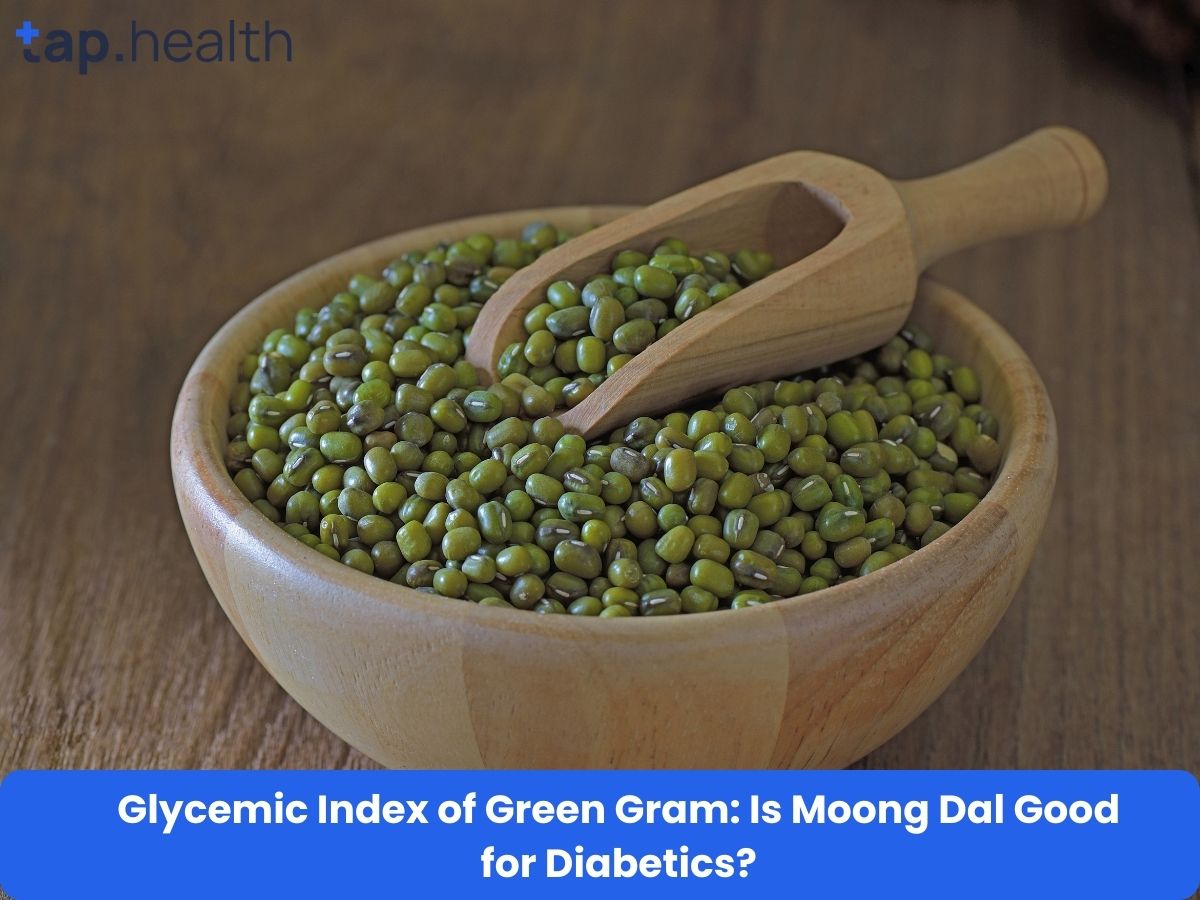
In India, a meal feels incomplete without a comforting bowl of Dal. Whether it is a simple Dal Chawal lunch or a protein-packed breakfast of sprouts, lentils are the heartbeat of our kitchens. Among these, Green Gram—popularly known as Moong Dal or Sabut Moong—holds a special place. It is often the first food given to recovering patients because it is so easy to digest.
But if you are managing Type 2 Diabetes, or if you are simply trying to shed those stubborn extra kilos, you have probably started looking at your plate differently. You are likely asking: Is this healthy dal actually spiking my blood sugar?
You need to know the glycemic index of green gram. Does it live up to its reputation as a superfood, or is it just another carb-heavy pulse?
In this comprehensive guide, we will peel back the layers of this humble legume. We will explore the science behind its GI score, compare it with other dals like Urad and Masoor, and explain exactly how to eat it for maximum health benefits. We will keep it simple, factual, and practical—because managing your health shouldn’t be complicated.
What is Green Gram (Moong Dal)?
Before we dive into the numbers, let’s clarify what we are talking about. Green gram comes in a few different avatars in our grocery stores:
- Whole Green Gram (Sabut Moong): The green-skinned, whole bean.
- Split Green Moong (Chilka Moong): Split in half but with the green skin still on.
- Yellow Moong Dal (Dhuli Moong): Skinned and split; the yellow lentils we use for khichdi.
- Sprouts: Whole beans that have been soaked and germinated.
Each form has a slightly different nutritional profile, but they all originate from the same plant, Vigna radiata. It is a powerhouse of plant-based protein, dietary fibre, and essential antioxidants.
Understanding the Glycemic Index (GI)
To determine if green gram is safe for “sugar patients,” we use the Glycemic Index (GI). Think of the GI as a speedometer for your blood glucose. It measures how fast a food containing carbohydrates raises your sugar levels on a scale of 0 to 100.
- Low GI (0–55): The “Tortoise.” These foods digest slowly, releasing energy steadily. They are best for diabetics.
- Medium GI (56–69): The “Jogger.” Moderate rise in sugar.
- High GI (70+): The “Hare.” Rapid sugar spike followed by a crash.
Glycemic Index of Green Gram: The Numbers
So, where does our favourite Moong Dal stand?
The Glycemic Index of Whole Green Gram is approximately 38 to 43.
This places it firmly in the Low GI category.
This is fantastic news. It means that when you eat a bowl of cooked green gram, your body digests the carbohydrates slowly. The high fibre content acts as a brake, preventing glucose from flooding your bloodstream. This is why doctors often say is green gram good for sugar patients? The answer is a resounding YES.
Glycemic Index of Moong Sprouts
If you want to take the health benefits to the next level, sprout them.
- The Score: The glycemic index of moong sprouts is even lower, estimated around 29 to 30.
- The Reason: Sprouting reduces the starch content and increases the protein and fibre availability. It essentially “pre-digests” the complex sugars, making it easier on your gut and your insulin levels.
Glycemic Index of Green Moong Dal (Yellow/Split)
The yellow version (without the skin) has slightly less fibre than the whole green version.
- The Score: Approximately 42 to 46.
- The Verdict: Still a low GI food, but slightly faster to digest than the whole bean or sprouts.
Glycemic Index of Boiled Green Gram vs. Other Forms
How you cook your food changes its chemistry. Let’s look at the glycemic index of boiled green gram versus other popular preparations.
1. Boiled Green Gram
Simple boiling preserves the structure of the starch.
- GI: ~38–43.
- Impact: Gentle on blood sugar. Ideal for salads or simple curries.
2. Glycemic Index of Green Gram Dosa (Pesarattu)
Pesarattu is a famous dish from Andhra Pradesh made from whole green gram batter.
- GI: ~45–50.
- Why: Unlike a regular dosa made with rice (High GI), Pesarattu is made mostly of lentils. This makes it a protein-rich, diabetic-friendly breakfast. However, if you serve it with Upma (made of Rava), the overall GI of the meal goes up.
3. Glycemic Index of Cooked Green Gram (Fried/Tadka)
If you make a heavy “Dal Fry” with lots of oil, the GI doesn’t increase (fat slows digestion), but the caloric density does. For diabetes management, weight control is key, so stick to lighter tadkas.
Comparing Moong with Other Dals: The Pulse Showdown
It helps to see where Green Gram stands compared to other items in your kitchen pantry.
Glycemic Index of Black Gram (Urad Dal)
Urad dal is the backbone of Idli and Dosa batter.
- Score: ~43.
- Verdict: Urad dal glycemic index is very similar to green gram. It is also low GI.
Glycemic Index of Bengal Gram (Chana Dal)
Chana dal is often ground into Besan (gram flour).
- Score: ~8–11 (Exceptionally Low).
- Verdict: Glycemic index of bengal gram is one of the lowest among all pulses. However, Chana dal can be heavier to digest for some people compared to Moong.
Glycemic Index of Masoor Dal (Red Lentil)
- Score: ~25–30.
- Verdict: Glycemic index of masoor dal is excellent. It cooks fast and is great for soups.
Glycemic Index of Toor Dal (Arhar)
The standard dal for Sambar.
- Score: ~29–35.
- Verdict: Toor dal glycemic index is also low.
The Comparison Summary: While Chana and Masoor might have slightly lower numbers, Green Gram wins on digestibility. It is less likely to cause gas and bloating compared to Chana or Urad, making it the safest daily staple.
Why Is Green Gram Good for Diabetes? The Science
When patients ask, “is green gram good for diabetes,” we look beyond just the GI score. Here is why it works:
1. High Fibre Content
Green gram is rich in both soluble and insoluble fibre. Soluble fibre forms a gel-like substance in your gut, which slows down the absorption of sugar. This means you don’t get that post-meal energy crash.
2. The Protein Effect
Protein takes longer to digest than carbohydrates. Eating glycemic index of green gram dal ensures you feel full for longer (satiety). If you are full, you are less likely to snack on biscuits or namkeen later.
3. Nutrient Density
It is packed with magnesium. Magnesium is crucial for improving insulin sensitivity. Many Type 2 diabetics are deficient in magnesium, and a bowl of green gram can help bridge that gap.
Glycemic Index of Green Vegetables vs. Green Gram
It is important not to confuse pulses with green vegetables.
- Glycemic Index of Green Vegetables (Spinach, Methi, Beans): Usually below 15.
- Glycemic Index of Green Beans: ~15–30.
- Glycemic Index of Green Leafy Vegetables: ~10–15.
Green gram (a legume) has a higher GI than green leafy vegetables. Pro Tip: To make the perfect diabetic meal, mix them! Cook your Green Gram with Spinach (Dal Palak) or Beans. This combination lowers the overall glycemic load of your meal significantly.
Real-Life Scenario
Let’s meet Mrs. Rao, a 52-year-old school teacher from Chennai.
- The Struggle: Mrs. Rao loves her morning Idli and Dosa. However, her post-breakfast blood sugar readings were consistently high (around 180 mg/dL). Rice-based batters were spiking her glucose.
- The Switch: Her nutritionist advised her to switch to Pesarattu (Green Gram Dosa) without the rice filling.
- The Outcome: She started soaking whole moong beans overnight and grinding them with ginger and chillies for her dosa batter.
- The Result: Two weeks later, her post-breakfast sugar dropped to 145 mg/dL. She felt lighter, less sleepy in the classroom, and enjoyed the crispy texture of the Pesarattu. The glycemic index of green gram dosa being lower than rice dosa made all the difference.
Expert Contribution
We consulted with clinical dieticians to get the medical perspective on gi of green gram.
“The beauty of Green Gram is its versatility,” explains Dr. S. Nair, a Senior Dietician. “Many of my patients are vegetarian, and they struggle to get enough protein without increasing carbs. Green gram sprouts are my go-to recommendation. They have the ‘live’ enzymes that aid digestion. I tell my patients: If you want to eat rice, reduce the rice portion by half and double the Moong Dal portion. This balances the meal.”
Experts also warn about the “Fried Moong Dal” snacks.
“Do not be fooled by the ‘Haldiram’s Moong Dal’ packet,” Dr. Nair adds. “The glycemic index of roasted gram or fried moong is fine, but the salt and oil content is terrible for blood pressure and heart health. Always choose home-cooked or sprouted versions.”
Recommendations Grounded in Proven Research and Facts
Based on the glycemic index of green moong dal and nutritional data, here are actionable tips to include it in your diet:
- The Sprout Salad: Eat a bowl of steamed moong sprouts with lemon juice and chopped cucumber before your lunch. This “fibre first” strategy primes your stomach and prevents insulin spikes from the rest of your meal.
- The Flour Swap: Try mixing Green Gram flour (Moong flour) with your regular wheat atta for rotis. This lowers the GI of your chapatis.
- Khichdi 2.0: Regular Khichdi (lots of rice, little dal) is high GI. Make “Diabetic Khichdi” by using 1 cup of broken wheat (dalia) or brown rice and 1 cup of Green Gram. The 1:1 ratio ensures better blood sugar control.
- Snack Smart: Roasted Chana (glycemic index of roasted gram ~28) and boiled Green Gram are the perfect tea-time snacks to replace biscuits.
Key Takeaways
- Low GI Score: The glycemic index of green gram is low (38–43), making it safe for diabetics.
- Sprouts are Best: Sprouting lowers the GI further (~29) and boosts nutrient availability.
- Better than Rice: Substituting rice dishes with Moong-based dishes (like Pesarattu) helps control blood sugar.
- Digestibility: Among all lentils, Moong Dal is the easiest to digest and causes the least bloating.
- Versatile: It can be eaten as a sprout, a dal soup, a savory pancake, or a salad.
Frequently Asked Questions (FAQ) on Glycemic Index of Green Gram
What is the exact Glycemic Index of Green Gram?
The glycemic index of green gram (whole) typically ranges between 38 and 43. This classifies it as a low glycemic index food. The exact number can vary slightly based on the soil it was grown in and how it is cooked, but it remains consistently low.
Is Green Gram good for diabetes patients?
Yes, absolutely. Is green gram good for sugar patients? Yes, because its high protein and fibre content slow down the release of sugar into the bloodstream. It prevents the sudden spikes that are dangerous for diabetics.
How does the Glycemic Index of Green Gram Sprouts compare to cooked dal?
The glycemic index of green gram sprouts is lower, approximately 29-30. The sprouting process breaks down complex starches and increases fibre, making sprouts the healthiest way to consume green gram for blood sugar control.
What is the Glycemic Index of Green Gram Dosa (Pesarattu)?
The glycemic index of green gram dosa is roughly 45-50. This is significantly lower than a traditional rice dosa (which can be 70+). However, to keep it healthy, use minimal oil and avoid filling it with potato masala (aloo).
Which dal has the lowest glycemic index?
The glycemic index of bengal gram (Chana Dal) is generally cited as the lowest, often sitting around 8-11. However, glycemic index of masoor dal and urad dal glycemic index are also very low. Green gram is preferred because it is lighter on the stomach than Chana dal.
Is boiled Green Gram high in carbohydrates?
Green gram does contain carbohydrates, but they are “complex carbohydrates.” The glycemic index of boiled green gram is low because these carbs are wrapped in fibre. Unlike refined flour (maida), they digest slowly and provide sustained energy.
Can I eat Green Gram at night?
Yes. Since it is easy to digest, Green Gram is an excellent dinner option. It won’t cause heaviness or acid reflux like heavier beans (Kidney beans/Rajma) might. A light Moong Dal soup is a perfect dinner for weight loss.
How does the Glycemic Index of Green Beans compare?
Glycemic index of green beans (French beans) is very low, around 15. While green gram is a lentil (pulse) and green beans are a vegetable, both are excellent low-GI foods that should be part of a balanced diet.