In India, sweetness is not just a taste; it is a tradition. Whether it is the morning adrak wali chai (ginger tea) loaded with sugar, the prasad at the temple, or the box of mithai opened for every small celebration, sugar is everywhere. But as waistlines grow and diabetes rates skyrocket across the country, we have to ask the hard question: What is this sugar actually doing to our bodies?
We often hear doctors and dietitians talk about the “Glycemic Index” (GI). They tell us to avoid high GI foods. But what exactly is the refined sugar glycemic index? Is the brown sugar in your coffee shop really healthier? Is Gur (Jaggery) safe for diabetics?
This comprehensive guide will break down the science of sugar in simple Indian English. We won’t bore you with complicated medical jargon. Instead, we will look at the facts, compare different sweeteners, and help you make choices that keep your blood sugar—and your health—in check.
What is Glycemic Index (GI)?
Before we look at the numbers, let’s understand the measuring tape.
The Glycemic Index (GI) is a ranking system for carbohydrates. Think of it like a scoreboard from 0 to 100. It measures how quickly a food raises your blood sugar levels after you eat it.
- Low GI (0 to 55): These foods digest slowly. They release energy steadily, like a slow-burning candle. (Example: Dal, vegetables, whole grains).
- Medium GI (56 to 69): These cause a moderate rise in blood sugar.
- High GI (70 and above): These are like rocket fuel. They digest instantly, causing a massive spike in blood sugar, followed by a crash. (Example: White bread, glucose).
For a diabetic or anyone trying to lose weight, the goal is to keep your diet mostly in the Low to Medium GI range.
The Number You Need to Know: Refined Sugar Glycemic Index
So, where does our everyday table sugar fit in?
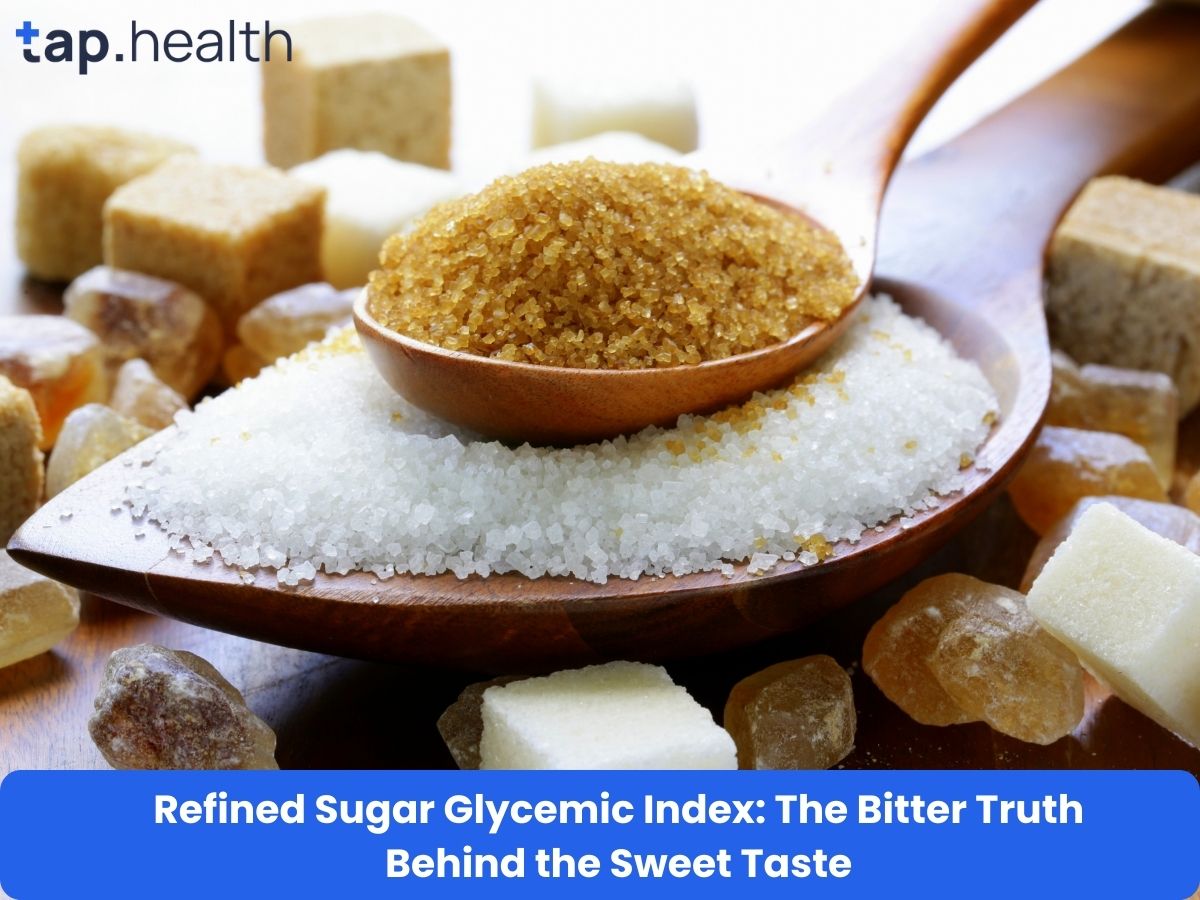
The glycemic index of refined sugar (sucrose) is approximately 65.
This places it in the Medium to High category.
You might be thinking, “65 doesn’t sound too high if 100 is the max.” But here is the catch: Refined sugar is pure carbohydrate. It has zero fiber, zero protein, and zero fat to slow down digestion. When you consume it, it hits your bloodstream very fast.
Refined sugar is made of 50% glucose and 50% fructose. The glucose spikes your blood sugar, while the fructose goes straight to your liver. This double trouble is why refined sugar is often linked to insulin resistance and fatty liver disease.
Brown Sugar Glycemic Index: Is It Healthier?
Go to any fancy cafe in Mumbai or Bangalore, and you will see packets of brown sugar. People rip them open thinking they are making a “healthy” choice. But are they?
The brown sugar glycemic index is roughly 64.
Yes, it is almost exactly the same as white sugar.
The Myth: People think brown sugar is natural. The Fact: Brown sugar is usually just refined white sugar with a little bit of molasses added back in for color and flavor. While it has tiny trace amounts of minerals, they are so small they make no difference to your health.
If you have diabetes, your body cannot tell the difference between white and brown sugar. It processes both of them as a sugar spike. Do not be fooled by the color.
Jaggery Glycemic Index: The Great Indian Debate
In almost every Indian household, grandmothers will say, “Don’t eat sugar, eat Gur (Jaggery), it is good for digestion.” While Jaggery has iron and helps with digestion, does it help with blood sugar?
The jaggery glycemic index is approximately 84.4.
Wait, what? Yes, studies indicate that the GI of jaggery can be remarkably high, sometimes even higher than table sugar depending on the source and processing.
Glycemic Index of White Sugar and Jaggery Comparison:
- White Sugar GI: ~65
- Jaggery GI: ~84
Because jaggery is unrefined, it contains minerals like magnesium and iron, which makes it “healthier” than empty-calorie white sugar. However, for a diabetic, jaggery is still sugar. It raises blood glucose levels very quickly. Replacing sugar with jaggery will not fix your diabetes.
Honey vs. Sugar: A Natural Alternative?
Honey is often touted as a weight-loss miracle. We drink it with warm water and lemon in the morning.
The glycemic index of honey varies from 58 to 61.
This is slightly lower than the refined sugar glycemic index, but not by much.
Why is it lower? Honey contains more fructose and water content than table sugar. However, commercial honey often contains added syrups which can increase the GI. While raw, organic honey has antibacterial properties and antioxidants, it still impacts your blood sugar.
The Verdict: Honey is marginally better than white sugar, but it is still a form of added sugar. Use it sparingly.
Comparing Other Sweeteners
Let’s look at other options you might find in the supermarket “healthy section.”
Coconut Sugar Glycemic Index
Coconut sugar is the current trend. It is made from the sap of the coconut palm.
- GI: Approximately 35 to 54.
- Verdict: This is lower than white sugar. It contains a fiber called inulin which slows down glucose absorption. It is a better alternative, but it is still high in calories.
Palm Sugar Glycemic Index
Similar to coconut sugar, palm sugar is popular in South Indian cuisine.
- GI: Approximately 35 to 40.
- Verdict: A lower GI option that retains some minerals.
Cane Sugar Glycemic Index
Often sold as “organic cane sugar” or “raw sugar.”
- GI: Approximately 60 to 65.
- Verdict: It is chemically almost identical to white refined sugar. The raw sugar glycemic index is not low enough to be considered diabetic-friendly.
Understanding Glycemic Load: The Missing Piece
Looking at the GI alone is only half the story. You also need to understand Sugar Glycemic Load (GL).
While GI tells you how fast the sugar enters your blood, Glycemic Load tells you how much sugar is actually entering.
Formula: GI x Carbohydrates (in grams) / 100.
- Example: Watermelon has a high GI (72), but it is mostly water. So, a standard slice has a very low Glycemic Load.
- Example: Refined sugar has a medium-high GI (65), but it is 100% concentrated carbs. So, even a small spoon has a high Glycemic Load.
White sugar glycemic index and load combined create a dangerous spike because it is dense energy. It forces your pancreas to pump out massive amounts of insulin. Over time, this wears out the pancreas, leading to Type 2 Diabetes.
Real-Life Scenario
Let’s meet Suresh, a 45-year-old IT professional from Hyderabad.
Suresh was diagnosed with pre-diabetes. His doctor told him to “cut down on sugar.” Suresh, trying to be healthy, stopped putting white sugar in his coffee. Instead, he started using Brown Sugar in his coffee and eating Jaggery with his peanuts after lunch, thinking these were “safe.”
Three months later, Suresh went for his check-up. He was shocked. His HbA1c (average blood sugar) had actually increased.
Why? Suresh fell for the “Health Halo” trap. He thought because brown sugar and jaggery were “natural,” he could eat more of them. He didn’t realize that the brown sugar glycemic index is the same as white sugar, and jaggery spikes blood sugar just as bad. He was consuming the same amount of glucose, just in a different form.
Once Suresh understood that all sugar is sugar, he switched to Stevia for his coffee and limited his jaggery intake to a tiny piece once a week. His levels normalized within the next three months.
Expert Contribution
To get a medical perspective, we look at the consensus from nutrition experts.
Dr. R. Gupta, a leading Diabetologist in Delhi, explains:
“Many patients come to me proudly saying they have stopped white sugar and started honey or jaggery. I have to burst their bubble. In the context of diabetes management, the metabolic response to jaggery is very similar to refined sugar. The trace minerals in jaggery are good, but you would have to eat kilograms of it to get any real benefit, which would destroy your sugar levels. If you have diabetes, treat jaggery, honey, and brown sugar with the same caution as white sugar.”
Nutritionist Perspective: Dietitians emphasise that the refined sugar glycemic index is problematic because it is usually consumed in isolation (like in tea) or with refined flour (like biscuits). This combination leads to the fastest fat storage, particularly around the belly.
Recommendations Grounded in Proven Research and Facts
Based on data from the American Diabetes Association and Harvard Health, here are actionable recommendations for the Indian lifestyle:
- The “Zero” Goal is Hard, Try “Reduction”: You don’t have to live a bitter life. Reduce the quantity. If you take 2 spoons of sugar in tea, cut it to 1, then to 0.5. Your taste buds will adapt in 2 weeks.
- Pair Your Sugar: Never eat sugar on an empty stomach. If you crave a sweet, eat it after a meal rich in fiber and protein.
- Bad: Eating a Gulab Jamun at 4 PM on an empty stomach.
- Better: Eating a small piece of Gulab Jamun immediately after a lunch of Roti, Dal, and Salad. The fiber reduces the overall glycemic spike.
- Use Spices: Cinnamon (Dalchini) and Cardamom (Elaichi) naturally sweeten food and improve insulin sensitivity. Add them to your tea to reduce the need for sugar.
- Read Labels: If a product says “No Added Sugar” but lists “Cane Juice,” “Malt Syrup,” or “Corn Syrup,” put it back. These have high GI scores similar to the refined sugar glycemic index.
- Smart Swaps:
- Instead of White Sugar -> Use Monk Fruit or Stevia (GI = 0).
- Instead of Milk Chocolate -> Use Dark Chocolate (70% cocoa or more).
- Instead of Soft Drinks -> Use Sparkling Water with Lemon.
Conclusion
Understanding the refined sugar glycemic index is the first step toward taking control of your health. The number 65 might look harmless, but when consumed daily in tea, coffee, biscuits, and sweets, it creates a rollercoaster of blood sugar highs and lows that damages your body.
The most important takeaway is that “natural” alternatives like brown sugar, honey, and jaggery are not magic pills. While they are slightly less processed, they are metabolically very similar to white sugar.
Your body treats glucose as glucose, regardless of whether it comes from a sugarcane factory or a beehive.
To live a long, healthy, and diabetes-free life, the secret isn’t just switching the type of sugar, but reducing the amount of sweetness in your life. Keep it simple, eat whole foods, and let the natural sweetness of fruits and vegetables nourish you.
Frequently Asked Questions (FAQ)
What is the glycemic index of refined sugar?
The glycemic index of refined white sugar (sucrose) is approximately 65. This classifies it as a medium-to-high GI food. Because it lacks fiber and nutrients, it absorbs quickly into the bloodstream, causing rapid insulin spikes.
Is brown sugar better for diabetics than white sugar?
No, brown sugar is not significantly better for diabetics. The brown sugar glycemic index is roughly 64, which is almost identical to white sugar. It raises blood sugar levels just as fast and should be consumed with the same strict moderation.
Which sugar has the lowest glycemic index?
Among natural caloric sugars, Coconut Sugar and Palm Sugar have lower GI values (around 35-54) compared to white sugar. However, for a true low-GI option, natural non-nutritive sweeteners like Stevia and Monk Fruit are best as they have a GI of 0.
Is jaggery good for diabetes?
Despite popular belief, jaggery is not “good” for diabetes management regarding blood sugar control. The jaggery glycemic index is high (around 84), meaning it spikes blood glucose rapidly. While it has iron and minerals, it is still a concentrated sugar load.
Does honey have a lower glycemic index than sugar?
Yes, Honey has a slightly lower glycemic index (approx 58) compared to refined sugar (65). However, it is still considered a high-sugar food. Diabetics should use it very sparingly, as it will still affect blood glucose levels significantly.
What is the difference between Glycemic Index and Glycemic Load?
Glycemic Index (GI) measures the quality of a carb (how fast it spikes sugar). Glycemic Load (GL) measures the quantity (how much sugar is in a serving). For example, watermelon has a high GI but a low GL because it is mostly water. Refined sugar has both high GI and high GL.
Is raw sugar healthy?
Raw sugar is slightly less processed than white sugar, retaining some molasses. However, the raw sugar glycemic index is roughly 60-65, making it metabolically very similar to white sugar. It offers minimal health benefits over white sugar.
References:
- Harvard Health Publishing: The Glycemic Index of Foods. Link
- American Diabetes Association: Glycemic Index and Diabetes. Link
- University of Sydney: GI Search Database. Link
- National Institutes of Health (NIH): Added Sugars and Cardiovascular Disease. Link
- WebMD: Jaggery Health Benefits and Risks. Link
(Disclaimer: This content is for educational purposes only. Always consult your doctor or a certified dietitian before making significant changes to your diet, especially if you have diabetes or insulin resistance.)