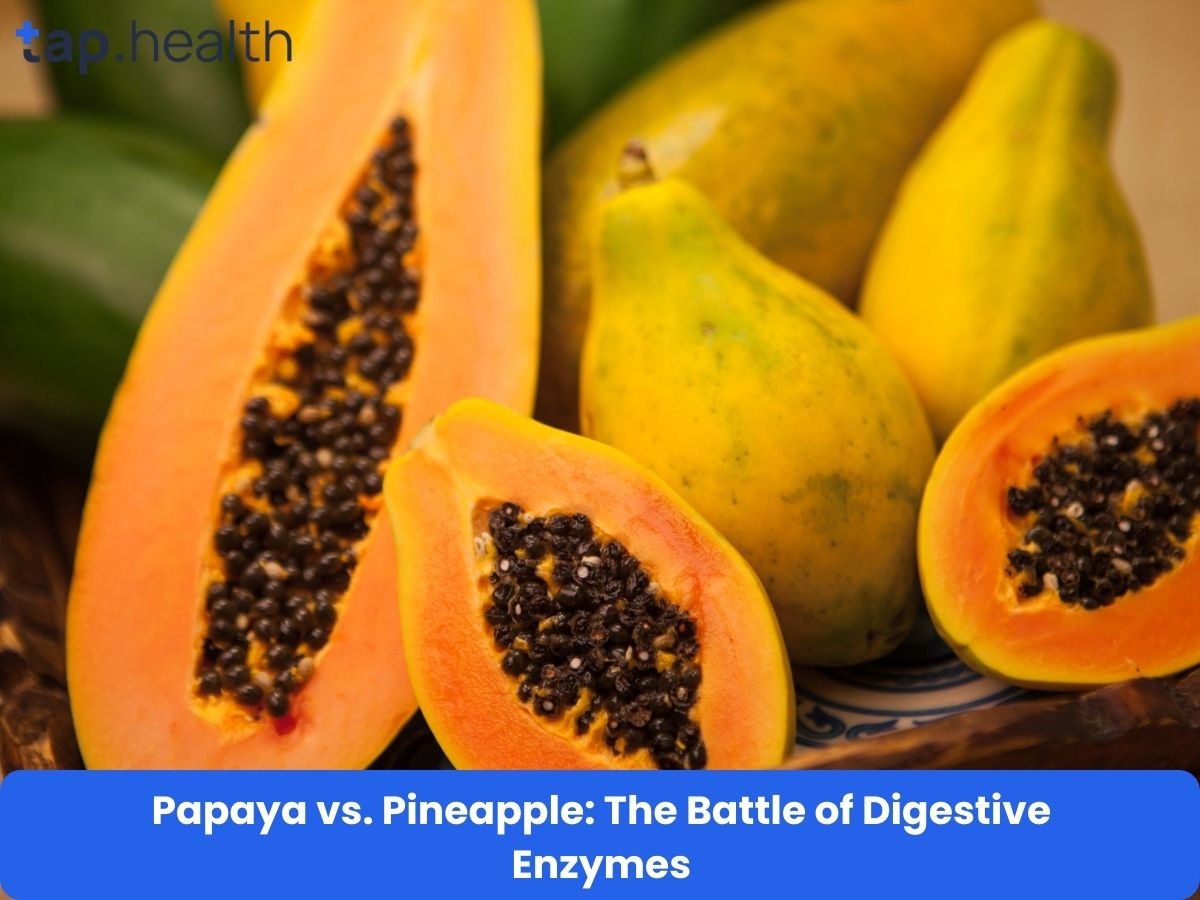
You have just finished a heavy wedding feast. The Butter Chicken, the Naan, and the heavy Dal Makhani are sitting in your stomach like a rock. You feel bloated, heavy, and sluggish.
Your grandmother suggests: “Eat a bowl of Papaya.”
Your gym trainer suggests: “Eat some Pineapple.”
Both are tropical fruits. Both are delicious. And remarkably, both are famous for being “Meat Tenderizers”—meaning they have the power to break down protein and aid digestion.1
But which one is the true champion of gut health?
Is the orange, creamy Papaya safer for diabetics?
Or is the yellow, tangy Pineapple better for inflammation?
And most importantly, does the sweetness of pineapple mean it will spike your blood sugar?
In this comprehensive guide, we are going to host the ultimate tropical showdown: Papaya vs. Pineapple. We will analyze their secret weapons (Papain vs. Bromelain), compare their Glycemic Index (GI), and reveal which fruit belongs in your daily diet and which one should be an occasional treat.
The Contenders: The Soft vs. The Spiky
They might sit next to each other on the fruit platter, but they work in very different ways.
1. Papaya (Papita)
- The Enzyme: Papain.
- The Vibe: Soft, buttery, and musky. It is synonymous with “good motions” in Indian households. It is the go-to fruit for constipation relief.
- The Secret: The black seeds inside are edible and peppery, often used as a natural de-worming medicine.2
2. Pineapple (Ananas)
- The Enzyme: Bromelain.
- The Vibe: Fibrous, juicy, and tangy. It has a “bite” to it—literally. If you eat too much, your tongue hurts.
- The Secret: It is the only known natural source of Bromelain, a powerful anti-inflammatory compound used to treat sports injuries and swelling.
Nutritional Face-Off: The Sugar & Fiber Count
Let’s compare a standard bowl: 1 Cup diced (approx 150g).
| Feature | Papaya (Ripe, 150g) | Pineapple (Fresh, 150g) | The Winner |
| Calories | ~60 kcal | ~80 kcal | Papaya (Lower Calorie) |
| Carbohydrates | ~15g | ~21g | Papaya (Lower Carb) |
| Sugar | ~11g | ~16g | Papaya (Less Sugar) |
| Dietary Fiber | ~2.5g | ~2.3g | Papaya (Slightly more fiber) |
| Vitamin C | High | Very High | Pineapple (Immunity King) |
| Vitamin A | Very High | Low | Papaya (Eye Health) |
| Enzyme Power | Papain (Digestion) | Bromelain (Inflammation) | Tie (Different uses) |
The Analysis:
- For Diabetics: Papaya is the clear winner. It has significantly less sugar and carbohydrates than pineapple.3
- For Immunity: Pineapple wins. One cup provides more than 100% of your daily Vitamin C requirement.
The Enzyme Battle: Papain vs. Bromelain
This is the science that makes these fruits medicinal. Both enzymes are Proteolytic—meaning they break down proteins into amino acids.4
1. Papain (The Gut Sweeper)
Papain is found in the latex (white milk) of the papaya tree and the fruit itself.5
- Function: It breaks down tough protein fibers.6
- The Benefit: It is excellent for people with low stomach acid or those who feel “heavy” after a meat-based meal. It also helps clean the colon, making it the superior choice for Constipation.
2. Bromelain (The Pain Killer)
Bromelain is concentrated in the Stem and Core of the pineapple (the hard part we usually throw away).
- Function: It digests protein, but it also gets absorbed into the bloodstream where it fights inflammation.7
- The Benefit: It helps reduce swelling in joints (Arthritis) and sinuses (Sinusitis). It is less about “pooping” and more about “healing.”
The Verdict:
- Stomach upset/Constipation? Choose Papaya.
- Joint pain/Sore muscles? Choose Pineapple.
The Glycemic Index Battle: The Sweet Trap
For a diabetic, the concern is always the sugar spike.
1. The Glycemic Index of Papaya
GI Score: ~60 (Medium)
- The Reality: While 60 sounds medium, the Glycemic Load (GL) is low. You would have to eat a lot of papaya to spike your sugar significantly because the sugar density is low.
- The Texture: The soft fiber in papaya forms a gel-like substance that coats the gut, slowing down sugar absorption.
2. The Glycemic Index of Pineapple
GI Score: ~59 to 66 (Medium to High)
- The Trap: Fresh pineapple is okay. But Canned Pineapple (slices in syrup) has a GI of nearly 80.
- The Spike: Pineapple contains simpler sugars (sucrose and fructose) that hit the bloodstream faster. Many diabetics report a sharper spike with pineapple than papaya.
- The Acid: The acidity of pineapple can sometimes mask how sweet it actually is.
The Winner: Papaya is safer for daily consumption for diabetics. Pineapple should be limited to small portions.
The Pregnancy Myth: “Hot” Fruits?
In India, this is a massive topic.
“Don’t eat Papaya or Pineapple during pregnancy; it causes miscarriage.”
Is this true?
The Papaya Truth:
- Ripe Papaya (Yellow/Orange): Perfectly safe.8 It is rich in Vitamin A and aids digestion.9+1
- Unripe Papaya (Green): UNSAFE. It contains high amounts of latex, which contains Papain.10 In high doses, crude Papain can trigger uterine contractions (acting like Oxytocin).11+1
- Verdict: Avoid green papaya (raw papaya salad) if pregnant. Ripe is fine in moderation.
The Pineapple Truth:
- Bromelain: In extremely massive doses, bromelain can stimulate the cervix.
- The Reality: The amount of bromelain in a cup of pineapple is tiny. You would need to eat 7-8 whole pineapples to trigger a miscarriage effect.
- Verdict: Safe in moderation, but many Indian elders advise against it due to the “Heat” (Garam Tasir) belief, and stress can be harmful, so listen to your doctor.
The “Tongue Burn”: Why Pineapple Hurts You Back
Have you ever eaten pineapple and felt your tongue itch or bleed?
This is the Bromelain working.
The enzyme is so powerful that it is literally digesting the protein on your tongue.
- The Fix:
- Salt: Dip pineapple in salt water before eating. It deactivates the enzyme slightly on the surface.
- Cook it: Grilling pineapple destroys the enzyme (but also kills the digestive benefit).
Papaya acts gently and never “bites back.”
Real-Life Scenario
Let’s meet Mr. Singh, a 45-year-old with indigestion and borderline diabetes.
The Symptom:
Mr. Singh loved Tandoori Chicken. But every time he ate it, he felt bloated and gassy for hours. He tried antacids, but they didn’t help much.
The Experiment:
He tried eating a bowl of Pineapple after dinner.
- Result: The acidity in the pineapple actually made his heartburn worse.
The Switch:
His dietitian suggested a bowl of Ripe Papaya with Black Salt.
- Result: The Papain helped break down the chicken proteins in his stomach. The soothing texture calmed his acid reflux.
- Bonus: His morning blood sugar remained stable at 105 mg/dL.
Expert Contribution
We consulted medical experts to get the professional stance.
Dr. R. Kapoor, Gastroenterologist:
“For IBS (Irritable Bowel Syndrome) and constipation, Papaya is my #1 recommendation. It is a natural laxative. Pineapple is great, but it is acidic.12 Patients with gastric ulcers or severe acidity should avoid pineapple on an empty stomach.”
Nutritionist Perspective:
“Don’t throw away the Pineapple Core! That hard center part is where 80% of the Bromelain lives. Slice it very thin and eat it if you want the anti-inflammatory benefits. For Papaya, don’t throw the seeds—dry them, crush them, and use them like black pepper.13 They are excellent for gut health.”
Recommendations Grounded in Proven Research
Based on data from the Journal of Medicinal Food and USDA, here are actionable tips:
- The “Meat Marinade” Hack:Both fruits are excellent natural meat tenderizers.14
- If you are cooking mutton or tough chicken, add a tablespoon of Raw Papaya Paste to the marinade. It will make the meat melt in your mouth without adding any chemical taste.
- The “Timing” Rule:
- Papaya: Eat it on an empty stomach in the morning for the best detox effect.15
- Pineapple: Eat it as a mid-afternoon snack. Avoid it late at night due to the acidity.
- For Weight Loss:Papaya is better.
- It has fewer calories and keeps you full due to its water/fiber gel matrix.16 Pineapple tastes better but triggers “sugar cravings” due to its intense sweetness.
- The “Salt” Necessity:Always sprinkle Black Salt (Kala Namak) on both.
- It reduces the acidity of pineapple.
- It reduces the “gas” that papaya might cause in some sensitive stomachs.
Key Takeaways
- Papaya (Papain) is the champion of Digestion and Constipation.17 It is lower in sugar and safer for diabetics.18+1
- Pineapple (Bromelain) is the champion of Inflammation and Immunity.19 It helps with joint pain but is higher in sugar and acidity.
- Safety: Ripe papaya is safe for most; Green papaya is unsafe for pregnancy. Pineapple causes “tongue burn” which can be fixed with salt.20
- The Verdict: For daily gut maintenance and blood sugar control, Papaya wins. For an occasional tangy treat and immune boost, Pineapple wins.
Conclusion
So, Papaya vs. Pineapple: Which fruit reigns supreme?
The winner for the average Indian household—especially those dealing with diabetes or digestion issues—is Papaya.
It is the gentle healer. It soothes the stomach, cleans the colon, and barely touches your blood sugar. It is the reliable friend you need after a heavy meal.
Pineapple is the exciting, flashy friend. It is powerful and healing for injuries, but it comes with a bite (acidity and sugar). Enjoy your pineapple, but respect its potency. And next time you feel that post-wedding bloat, reach for the orange bowl, not the yellow one.
Frequently Asked Questions (FAQ)
Can I eat papaya seeds?
Yes. Papaya seeds are edible.21 They have a sharp, spicy flavor like black pepper and wasabi. They are rich in flavonoids and polyphenols.22 Eating a teaspoon of them can help fight intestinal worms and bacterial infections.+1
Does pineapple burn belly fat?
No fruit burns fat directly. However, pineapple contains Bromelain, which reduces inflammation.23 Sometimes, a “bloated belly” is due to inflammation and digestion issues, not just fat.24 By fixing digestion, pineapple makes your tummy look flatter, but it doesn’t melt fat cells.+1
Is papaya good for skin whitening?
Yes. Papaya is rich in Vitamin A and Papain.25 Papain helps remove dead skin cells (exfoliation).26 Eating papaya and applying mashed papaya on the face can give you a “glow” and help reduce dark spots over time.27+2
Can diabetics eat pineapple daily?
It is not recommended. While fresh pineapple has a medium GI, it is very sweet and easy to overeat. Frequent consumption can keep glucose levels elevated. Stick to 1-2 slices twice a week, rather than daily.
Why shouldn’t we drink milk after eating pineapple?
Pineapple contains Bromelain (an enzyme) and Citric Acid.28 If you drink milk immediately after, the acid and enzymes can curdle the milk in your stomach. This can lead to severe gas, bloating, and stomach cramps. Wait at least 45 minutes.
References:
- USDA FoodData Central: Papaya and Pineapple. Link
- Journal of Medicinal Food: Properties of Bromelain. Link
- Diabetes.co.uk: Fruits and GI. Link
- National Institutes of Health (NIH): Papain and Wound Healing. Link
- Ayurvedic Pharmacopoeia: Garbhini Paricharya (Pregnancy Diet). Link
(Disclaimer: This content is for educational purposes only. Always consult your doctor or a certified dietitian before making significant changes to your diet, especially if you are pregnant or on blood-thinning medication.)