If you are living with diabetes, you likely spend a lot of time thinking about sugar. You check your desserts, you switch to brown rice, and you count your carbs. But there is a “silent partner” in diabetes management that often gets ignored until it is too late: Salt.
It is a common story in Indian households. You sit down for a meal of dal and roti, and perhaps you reach for the salt shaker because the food feels a bit “feeka” (bland). Or maybe you have switched to “Sendha Namak” (Rock Salt) believing it is safer.
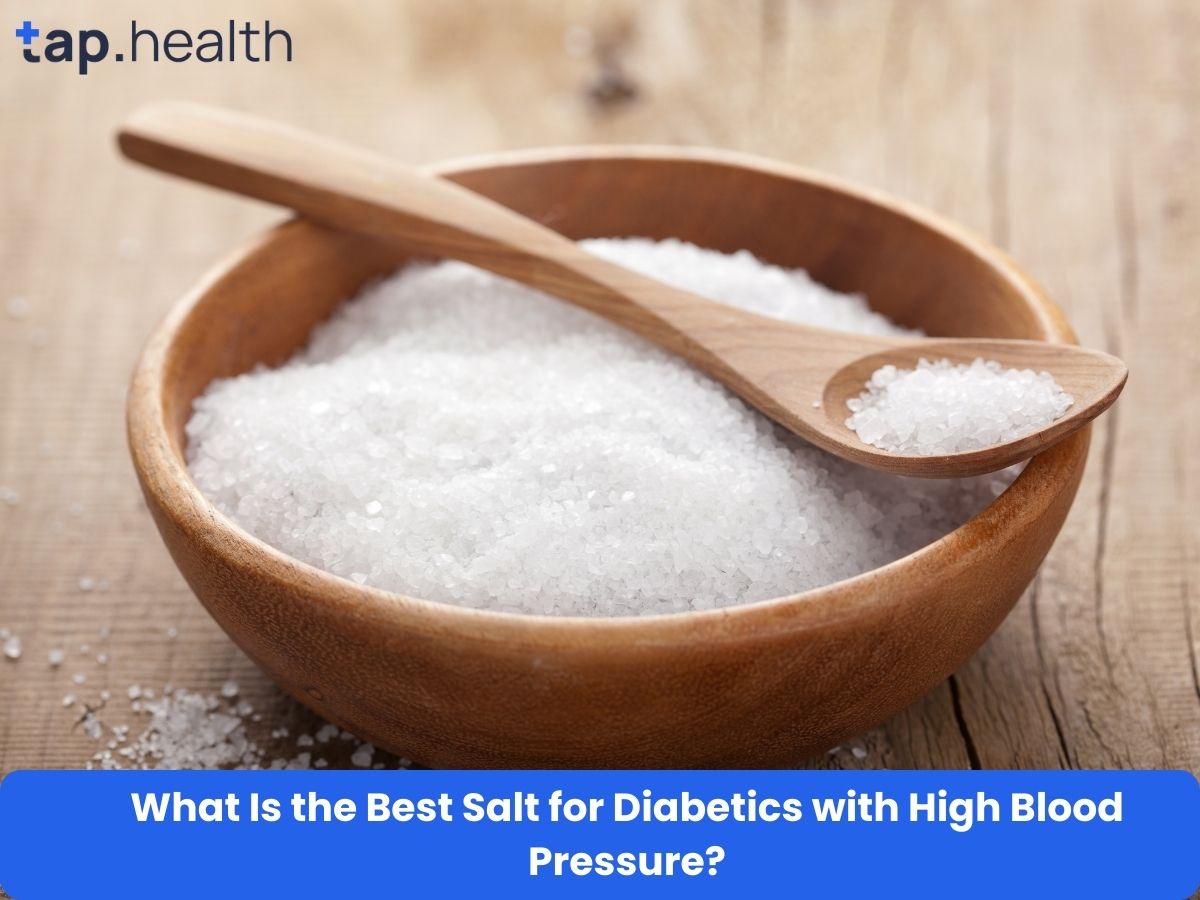
But here is the critical question: What is the best salt for diabetics with high blood pressure?
The answer is not as simple as swapping white salt for pink salt. High blood pressure (hypertension) affects nearly 70% of people with Type 2 diabetes. This combination puts immense stress on your heart and kidneys. Choosing the wrong salt can make things worse, while choosing the right one can actually help protect your organs.
In this detailed guide, we will cut through the marketing myths. We will explain the science of sodium in simple Indian English, reveal the truth about “healthy” salts, and help you make a choice that keeps both your sugar and your pressure in check.
The “Double Trouble”: Diabetes and High Blood Pressure
Before we pick a salt, we must understand the problem. Why does salt matter so much for a diabetic?
The Sodium Trap
Common salt is made of sodium and chloride. Sodium acts like a sponge in your body—it holds onto water.
- The Pressure: When you eat too much salt, your body holds extra water to dilute it. This increases the volume of blood flowing through your veins.
- The Damage: For a diabetic, blood vessels are often already stiff or damaged by high sugar. Adding extra blood volume increases the pressure, forcing your heart to work harder.
The Kidney Connection (Crucial for Diabetics)
This is the most important part. Your kidneys are the body’s filters.
- High BP damages these delicate filters.
- Diabetes also damages these filters (Diabetic Nephropathy).
- Salt accelerates this damage by increasing the pressure inside the kidneys.
So, when we look for the “best salt,” we are looking for something that flavors food without destroying your kidneys or spiking your BP.
The Great Salt Debate: Myths vs. Reality
You will find many salts on the supermarket shelf claiming to be “heart-healthy.” Let’s break them down one by one to see if they are safe for diabetics.
1. Himalayan Pink Salt (The Biggest Myth)
In India, many people switch to Pink Salt thinking it is a miracle cure.
- The Claim: It has 84 minerals and is “natural.”
- The Reality: By weight, Himalayan Pink Salt is about 98% Sodium Chloride. It has almost the same amount of sodium as regular white table salt.
- Verdict: It is not a good solution for lowering blood pressure. It is just prettier salt.
2. Sea Salt
- The Claim: It is less processed and healthier.
- The Reality: Like Pink Salt, sea salt is still mostly sodium. The coarse granules might make you use slightly less, but chemically, it still raises your blood pressure.
- Verdict: Use with caution. It is not a “free pass.”
3. Rock Salt (Sendha Namak)
Often used during fasting (vrat), this is the purest form of salt.
- The Reality: While it lacks the anti-caking agents of table salt, it is still high in sodium. However, in Ayurveda, it is considered cooling and lighter, but modern medicine confirms it still affects BP.
- Verdict: Better than refined salt due to lack of additives, but still raises BP if used in excess.
4. Low Sodium Salt (Potassium-Enriched Salt)
This is usually the “winner” in medical terms—but it comes with a major warning.
- What is it? Manufacturers replace some of the sodium with Potassium Chloride. Common brands in India include Tata Lite or Saffola Salt.
- The Benefit: Potassium actually lowers blood pressure by relaxing blood vessel walls.
- The Verdict: This is generally the best salt for diabetics with high blood pressure—provided your kidneys are healthy. (We will explain this risk in the next section).
The Winner: Potassium-Enriched Salt (With a Caution)
If we look strictly at the research, Potassium-Enriched Salt (Low Sodium Salt) is the best option for reducing blood pressure.
A landmark study published in the New England Journal of Medicine found that replacing regular salt with a potassium-enriched substitute lowered the risk of stroke and heart events significantly.
Why is it good?
- Less Sodium: It typically has 15% to 30% less sodium than regular salt.
- BP Support: The added potassium actively fights against hypertension.
⚠️ The Dangerous Exception: Chronic Kidney Disease (CKD)
This is the most critical paragraph in this article. Please read carefully.
Many diabetics eventually develop kidney issues (Diabetic Nephropathy). If your kidneys are damaged, they cannot filter Potassium out of your blood.
- The Risk: If you have weak kidneys and you eat potassium salt, potassium levels in your blood can spike (Hyperkalemia).
- The Consequence: This can cause dangerous heart rhythm irregularities or even cardiac arrest.
Bottom Line: If your doctor has told you that your kidneys are fine, Low Sodium Salt is your best friend. If you have any kidney trouble, you must avoid it and stick to regular salt in tiny amounts.
How to Reduce Salt Without Losing Flavour
If you cannot rely on salt substitutes, how do you make Indian food tasty? The answer lies in your spice box (masala dabba).
1. The “Sour” Trick
Your tongue often confuses “sour” with “salty.”
- Amchur (Dry Mango Powder): A pinch of amchur in your dal or sabzi adds a tang that mimics saltiness.
- Lemon Juice: Squeeze fresh lemon over your salad or curry right before eating. It brightens the flavor instantly.
- Tamarind (Imli): Great for curries and sambar.
2. Heat and Spice
Distract your taste buds with heat.
- Green Chillies & Black Pepper: The heat from capsaicin stimulates the palate, making you notice the lack of salt less.
- Garlic & Ginger: These strong aromatics provide a savory base that reduces the need for salt. Garlic is also known to have mild BP-lowering properties.
3. Herb Power
- Coriander (Dhaniya): Use heaps of fresh coriander.
- Mint (Pudina): Adds a fresh zing to chutneys without needing excessive salt.
Real-Life Scenario
Let’s make this practical.
Meet Mr. Iyer (58, Bank Manager): Mr. Iyer has Type 2 Diabetes and his BP was consistently 150/90. He loved his pickle (achar) and papad. His doctor told him to stop salt. He tried eating boiled vegetables for a week, hated it, and went back to his old diet. The Mistake: He thought “healthy” meant “tasteless.” The Shift: He consulted a dietitian.
- He switched to Tata Salt Lite (after confirming his kidneys were 100% healthy).
- He stopped buying store-bought pickle. Instead, his wife made an “instant pickle” with raw mango, green chilli, and mustard oil—with zero salt, using vinegar for preservation.
- He stopped eating papad (which is a sodium bomb). The Result: Within 3 months, his BP dropped to 135/85. He didn’t feel deprived because his food was still spicy and tangy.
Expert Contribution
We consulted Dr. S. Gupta, a Senior Nephrologist, to clarify the salt confusion.
“I see many diabetic patients switching to Himalayan Pink Salt thinking they can eat as much as they want. This is a dangerous myth. Sodium is sodium, whether it is pink, white, or black. For a diabetic with high BP, the ‘best’ salt is simply less salt. If their creatinine levels are normal, I recommend a potassium-enriched salt. But if there is even a hint of kidney damage, I tell them to stick to plain white salt but limit it to less than one teaspoon a day for the whole day.”
Read this: Is Sea Salt Good for Diabetics?
Recommendations Grounded in Proven Research
According to the World Health Organization (WHO) and the DASH Diet (Dietary Approaches to Stop Hypertension) guidelines:
- The 5g Limit: Adults should consume less than 5 grams of salt per day (just under one teaspoon). Most Indians consume nearly double this amount.
- Read the Label: Look for “Hidden Sodium.” In processed foods like ketchup, bread, biscuits, and namkeen, sodium is hidden under names like “Monosodium Glutamate” or “Sodium Benzoate.”
- The “Add at the Table” Ban: Never keep a salt shaker on the dining table. Add salt only during cooking. Adding raw salt on top of cooked food gives a very concentrated sodium hit.
Is Black Salt (Kala Namak) Good for High Blood Pressure?
This is a frequently searched question. Kala Namak is famous in India for digestion. It has a sulfurous taste.
- The Fact: While it has slightly less sodium than white salt, it is still very high in sodium.
- The Verdict: It is not a cure. Use it sparingly for flavor (like in chaat or fruit), but do not use it as a daily replacement thinking it lowers BP.
Key Takeaways
- No Magic Salt: Pink, Sea, and Rock salts are essentially the same as white salt regarding blood pressure impact.
- The Winner: Potassium-Enriched (Low Sodium) Salt is the best option for lowering BP, but only if your kidneys are healthy.
- The Kidney Check: Always ask your doctor, “Are my kidneys okay for potassium salt?” before switching.
- Natural Flavour: Use Amchur, Lemon, Garlic, and Chilli to fool your tongue into missing salt less.
- Limit: The goal is 5g (one teaspoon) per day from all sources combined.
FAQ: Frequently Asked Questions
Which salt is good for high blood pressure and diabetes?
The best option is Low Sodium Salt (which contains Potassium Chloride), such as Tata Salt Lite or Saffola Salt. However, this is only safe if your kidneys are functioning perfectly. If you have kidney issues, you must use regular salt but in very small quantities.
Is papaya good for high BP patients?
Yes, papaya is excellent for high BP patients. It is rich in Potassium and antioxidants. Potassium helps flush out excess sodium from your body through urine, which helps lower blood pressure naturally.
Is iodized salt good for High blood pressure?
Iodized salt is necessary to prevent thyroid problems (Goiter), but it is high in sodium, which is bad for blood pressure. You should use iodized salt to get your iodine, but keep the quantity very low.
How to reduce high blood pressure during pregnancy?
To reduce high BP during pregnancy (Gestational Hypertension), avoid salty snacks like pickles, papads, and chips. Stay active (walking), drink plenty of water, and ensure you are getting enough calcium and magnesium. Always follow your gynecologist’s advice strictly.
Is rock salt (Sendha Namak) better than white salt for diabetics?
Rock salt is less processed and lacks additives, which makes it slightly “cleaner,” but it still contains high sodium (about 85-98%). Therefore, it will still raise blood pressure if eaten in excess. It is not a “safe” alternative for unlimited consumption.
What can I use instead of salt for high blood pressure?
You can use acid-based flavorings like lemon juice, tamarind water, vinegar, or dry mango powder (amchur). You can also use herbs like coriander, mint, and spices like black pepper, cumin, and garlic to make food tasty without sodium.
Is sea salt good for high blood pressure?
No. Sea salt has the same effect on blood pressure as regular table salt. The larger crystals might make it seem like you are using less, but the sodium content is roughly the same.
How to treat high blood pressure in a child?
High BP in a child is rare and usually signals an underlying issue like kidney or heart problems. Treatment involves lifestyle changes first: more exercise, weight loss, and a low-salt diet. Doctors may prescribe medication if lifestyle changes don’t work.
References
- National Kidney Foundation: Potassium and Your CKD Diet
- World Health Organization (WHO): Salt reduction
- New England Journal of Medicine: Effect of Salt Substitution on Cardiovascular Events and Death
Disclaimer: This content is for educational purposes only. Always consult your doctor or dietitian before making significant changes to your diet, especially if you have kidney conditions.