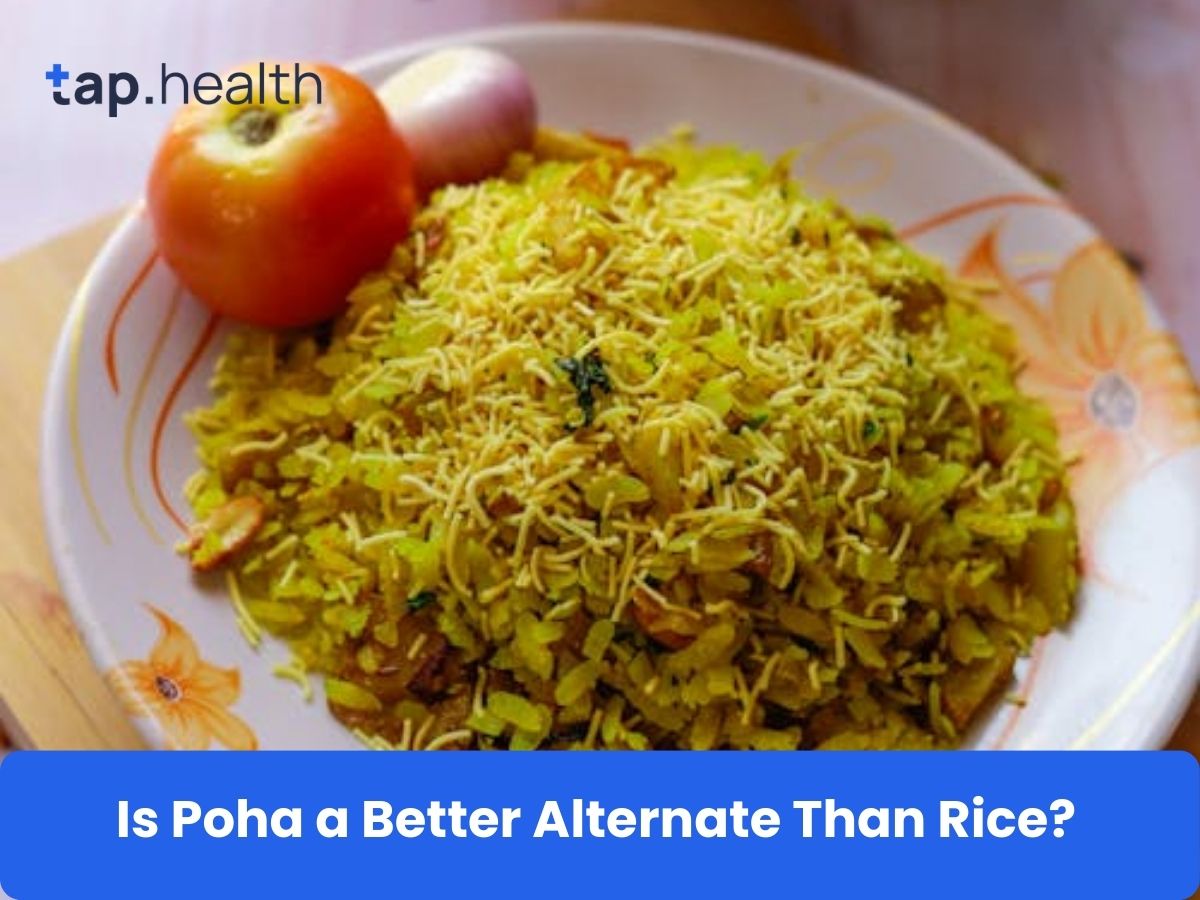
It is 8:00 AM on a Tuesday morning. The pressure cooker has just whistled, signalling that the dal is ready. Now comes the eternal question for the carbohydrate portion of your meal: Do you reach for the white rice, or do you prepare a quick plate of Kanda Poha?
In almost every Indian household, rice is an emotion. It is comfort food. But with the rising rates of diabetes and obesity in our country, the humble bowl of white rice has come under scrutiny. Enter Poha (flattened rice)—the breakfast champion of Maharashtra, Madhya Pradesh, and increasingly, the rest of India. It is light, it is tasty, and your grandmother probably told you it is “lighter on the stomach.”
But is it actually healthier? Or is it just rice in a different costume?
If you are trying to manage your weight, control your blood sugar, or simply eat cleaner, you need to know the truth. You might be asking: “Is Poha a better alternate than rice for my health goals?”
In this comprehensive guide we will settle the Poha vs. Rice debate once and for all. We will peel back the layers of processing, look at the hard nutritional numbers, and consult experts to tell you exactly which grain deserves a place on your plate.
What Is Poha and How Is It Made?
To understand if Poha is better, we first need to understand what it is. Many people mistakenly believe Poha is a different grain. It is not. It is rice, but it has gone through a makeover.
Poha (also called Beaten Rice or Flattened Rice) starts its life as paddy (rice with the husk).
- Parboiling: The paddy is first soaked in hot water and partially boiled. This is a crucial step because it drives nutrients from the husk into the grain.
- Drying & Roasting: The grain is dried and then roasted.
- Flattening: The roasted grains are passed through heavy iron rollers to flatten them. This is where the magic happens—the friction from the iron rollers often fortifies the Poha with a small amount of iron.
- Fermentation (The Secret Step): During the soaking and drying process, the rice undergoes a very mild fermentation. This is why Poha is considered to have probiotic properties, unlike raw white rice.
What Is Rice and Common Types Used in India
White rice, on the other hand, is the result of stripping the grain naked.
- Milling: The paddy is milled to remove the husk, the bran, and the germ.
- Polishing: The remaining white kernel is polished to give it that pearly white shine.
While this makes the rice tasty and soft, it removes the majority of the fibre, B-vitamins, and minerals. What is left is almost pure starch.
- Sona Masoori/Kolam: Medium grain, popular in South and West India. High starch.
- Basmati: Long grain, aromatic. Has a slightly lower Glycaemic Index than short-grain rice but is still a carbohydrate bomb if eaten in excess.
Is Poha Healthier Than Rice?
The Short Answer: Yes.
If we look at the overall nutritional profile, Poha scores higher than white rice in almost every category that matters for metabolic health. It has more iron, more fibre (depending on the variety), and a lower impact on blood sugar.
However, the “healthiness” depends entirely on how you cook it.
- Healthy: Poha cooked with mustard seeds, curry leaves, onions, peas, and peanuts.
- Unhealthy: Poha loaded with deep-fried sev and potatoes (Batata Poha) with lots of oil.
Poha vs Rice – Nutritional Comparison
Let’s look at the numbers. Here is a comparison of raw ingredients (per 100g).
| Nutrient | White Rice (Raw) | Poha (Thick/Medium) |
| Calories | ~345 kcal | ~340 kcal |
| Carbohydrates | 78 g | 76 g |
| Fibre | 0.2 g | 2 – 4 g |
| Protein | 6.8 g | 6.6 g |
| Iron | 0.7 mg | 20 mg (Varies by brand) |
| Probiotics | None | Present |
Export to Sheets
Calories
On paper, the calories look similar. But here is the catch: Poha fluffs up when soaked. A 50g portion of raw Poha swells up to fill a full breakfast bowl. A 50g portion of raw rice cooks down to a much smaller volume. You end up feeling fuller with fewer calories when you eat Poha.
Carbohydrates
Both are high-carb foods. However, the carbs in Poha are slightly more complex due to the parboiling process.
Fibre
Poha retains the bran (outer layer) because it is less polished than white rice. This fibre is crucial for digestion and stopping sugar spikes.
Micronutrients (Iron, B Vitamins)
This is where Poha wins hands down. The iron content in Poha is significantly higher due to the flattening process through iron rollers. Pregnant women and anaemic patients are often advised to eat Poha with a squeeze of lemon (Vitamin C) to absorb this iron.
Poha vs Rice – Glycaemic Index and Blood Sugar Impact
If you have diabetes or pre-diabetes, this is the most important section for you.
The Glycaemic Index (GI) measures how fast a food turns into glucose in your blood.
- White Rice GI: 73 (High). It digests rapidly, causing a sugar spike.
- Poha GI: 38 to 64 (Low to Medium).
Does Poha Spike Blood Sugar More Than Rice?
Generally, No. Poha releases sugar into the bloodstream slower than white rice. This is because parboiling changes the structure of the starch (retrogradation), making it harder for the body to break down quickly.
Role of Portion Size and Cooking Style
While Poha has a better GI, it is not a “free food.”
- The Potato Trap: The famous Aloo Poha or Batata Poha is dangerous for diabetics. Adding potatoes (High GI) to Poha (Medium GI) turns the whole dish into a sugar bomb.
- The Solution: Use Kanda Poha (Onion Poha) or Matar Poha (Peas Poha). Adding peanuts and veggies lowers the overall Glycaemic Load of the meal.
Poha vs Rice for Weight Loss – Which Keeps You Full Longer?
If you are trying to lose weight, Poha is the smarter choice.
- Volume Trick: As mentioned, Poha absorbs water and swells. You eat less grain to feel full.
- Satiety: The presence of probiotic bacteria and fibre means Poha stays in your stomach slightly longer than mushy white rice, keeping hunger pangs away.
- Probiotic Bonus: A healthy gut microbiome is linked to easier weight loss. The mild fermentation of Poha supports gut health.
Winner: Poha. (Provided you don’t drown it in Bhujia/Sev).
Poha vs Rice for Diabetes – Which Is Safer?
For a diabetic, white rice is often the villain. It causes immediate post-meal (post-prandial) spikes.
Poha is a safer alternative, but it must be eaten with caution.
- Red Rice Poha: If you can find Poha made from Red Rice, buy it immediately. It has the same low GI as brown rice but cooks much faster.
- Vegetable Load: A diabetic’s Poha plate should be 50% Poha and 50% Vegetables (beans, carrots, peas, onions).
Verdict: Poha is better than white rice, but Red Rice Poha or Brown Rice are the best options.
Poha vs Rice for Digestion and Gut Health
Have you ever felt heavy and lethargic after a big rice lunch? That is the “carb coma.” Poha is famous for being “light on the stomach.”
- Easy to Digest: Because it is already parboiled, your stomach has to do less work to break it down. It is the perfect food for mornings when your digestion is waking up, or for dinner when you want something light.
- The Probiotic Factor: The manufacturing process of Poha involves soaking the paddy for hours. This encourages natural fermentation. This preserves healthy gut bacteria, making Poha a rare carbohydrate that is actually good for your gut lining.
Poha vs Rice for Heart Health and Cholesterol
Neither Poha nor Rice contains cholesterol. However, the method of preparation makes the difference.
- Poha: Usually cooked with mustard oil (heart-healthy fats), curry leaves (lowers cholesterol), and turmeric (anti-inflammatory).
- Rice: Often eaten with heavy curries or fried as Fried Rice.
Additionally, the Magnesium content in Poha is good for controlling blood pressure.
Poha vs Rice – Which Is Better for Kids and Elderly?
- For Kids: Poha is excellent. It provides high energy (carbs) plus Iron for growing bodies. It is a perfect lunchbox meal because it doesn’t get dry and hard like cold chapatis.
- For Elderly: Digestion slows down with age. Poha is soft, easy to chew, and very easy to digest, making it a superior choice over heavy rice meals.
Best Ways to Eat Poha in a Healthier Way
You can turn Poha into a superfood with these tweaks:
Add Protein
Poha alone is mostly carbs. Add:
- Peanuts: A handful of roasted peanuts adds healthy fats and protein.
- Sprouts: Add steamed moong sprouts to make “Sprouts Poha.”
- Soya Chunks: Small soya granules can be mixed in for a protein boost.
Add Fibre-Rich Vegetables
Don’t just use onions. Add:
- Grated Carrots
- French Beans
- Green Peas (Matar)
- Capsicum
- Curry Leaves (Kadi Patta) – Don’t pick them out! Eat them for hair and gut health.
Use Healthy Cooking Oil
Cook in Mustard Oil, Groundnut Oil, or Ghee (in moderation). Avoid refined vegetable oils.
Avoid Excess Sugar and Fried Add-ons
In some parts of India (like Gujarat or Indore), sugar is added to Poha, and it is topped with spicy Farsan or Sev.
- Stop the Sev: This deep-fried topping adds trans fats and destroys the health benefits.
- Skip the Sugar: Let the onions provide the natural sweetness.
Best Ways to Eat Rice More Healthily
If you love rice and can’t give it up, don’t worry. You can hack it:
Choose Better Rice Types
Switch to Brown Rice, Red Matta Rice (Kerala rice), or Black Rice. These have the bran intact.
Control Portion Size
Follow the quarter-plate rule: Rice should only fill 1/4th of your plate. Half the plate should be Sabzi and Salad.
Pair with Dal, Vegetables, and Protein
Never eat plain rice. Eating it with a bowl of Dal or Rajma adds protein and fibre, which lowers the overall Glycaemic Index of the meal.
Cooling Rice to Reduce Blood Sugar Spike
The Fridge Hack: Cook your rice, then cool it in the fridge for 12 hours. This converts the starch into Resistant Starch. Even if you reheat it, it will spike your blood sugar significantly less than fresh hot rice.
When Poha May Not Be a Better Alternative Than Rice
Is Poha always better? Not necessarily.
- Processed Snacks: The “Diet Chivda” packets you buy in stores are often deep-fried Poha loaded with salt and preservatives. Boiled white rice is healthier than fried Poha chivda.
- Gluten Confusion: Both are gluten-free. But if Poha is processed in a factory that handles wheat, there could be cross-contamination. Celiacs should check the label.
- Sodium: Poha recipes often use more salt than plain steamed rice (which has zero salt). If you have high blood pressure, watch the salt shaker while making Poha.
Real-Life Scenario
Meet Anjali (34, Software Engineer from Bangalore):
Anjali was diagnosed with Prediabetes. She was overweight and felt sluggish every morning after her usual breakfast of Idli or Dosa (rice-based batter). She tried switching to oats but hated the slimy texture.
The Switch: Her nutritionist suggested switching to Vegetable Poha three times a week. The Method: Anjali used Red Poha (thicker variety). She made sure that for every 1 cup of Poha, she added 1 cup of chopped veggies (carrots, beans, peas). She squeezed a full lemon for iron absorption.
The Result:
- Weight Loss: She lost 3 kgs in 2 months. The Poha kept her full until 1 PM, stopping her mid-morning biscuit craving.
- Energy: She didn’t feel the “sugar crash” she used to feel after eating white rice products.
- Blood Sugar: Her fasting sugar levels dropped from 110 to 98.
Anjali realized that it wasn’t about giving up Indian food; it was about choosing the right Indian grain.
Expert Contribution
We consulted Dt. S. Sen, a Clinical Dietician with 15 years of experience:
“I often get asked, ‘Can I eat rice if I have diabetes?’ My answer is usually, ‘Yes, but Poha is a smarter start.’
Poha has a distinct advantage because of its Iron content and its ability to absorb volume. When you eat a bowl of rice, you are eating hundreds of compressed grains. When you eat a bowl of Poha, you are eating fewer grains that have expanded.
My top tip? Never eat white Poha alone. It is a carb source. It needs a partner. Always pair it with peanuts or sprouts. If you eat Poha with just potatoes (Aloo Poha), you are eating Carb + Carb. That is a disaster for your waistline.”
Recommendations Grounded in Proven Research and Facts
According to the National Institute of Nutrition (India) and studies on food processing:
- Iron Absorption: Research confirms that parboiling and flaking rice increases iron retention significantly compared to milling raw rice.
- Probiotic Potential: A study on fermented foods lists Poha as a source of beneficial microbes due to the soaking process involved in its manufacturing.
- Glycaemic Response: Clinical trials show that flattened rice produces a lower glucose peak compared to boiled polished rice, making it suitable for medical nutrition therapy in Type 2 Diabetes.
Conclusion: Key Takeaways
So, is Poha a better alternate than rice?
- For Weight Loss: Yes. It is lower in calories per bowl and keeps you fuller.
- For Diabetes: Yes. It has a lower Glycaemic Index and releases energy slowly (if cooked with veggies).
- For Nutrition: Yes. It wins on Iron, B-Vitamins, and Probiotics.
- For Digestion: Yes. It is lighter and easier on the gut.
The Verdict: While whole grains like Brown Rice or Millets are arguably the healthiest, in the battle between White Rice and Poha, Poha is the clear winner.
It allows you to enjoy the taste of rice without the heavy starch load. It is the perfect middle-ground for the Indian palate—healthy enough to be nutritious, but tasty enough to be comfort food.
So tomorrow morning, don’t feel guilty about that plate of Kanda Poha. Just remember: go easy on the potatoes, heavy on the veggies, and don’t forget the lemon!
Read this : Poha Glycemic Index
Frequently Asked Questions on Is Poha a Better Alternate Than Rice?
1. Is Poha good for weight loss?
Yes. Poha is low in calories (approx. 110 calories per bowl depending on veggies) and contains probiotics that improve metabolism. It keeps you full for longer, reducing the urge to snack.
2. Can diabetics eat Poha daily?
It is safe for diabetics, but portion control is key. Eating it daily is fine if you use the “Red Poha” variety or load it with 50% vegetables and sprouts to lower the Glycaemic Load. Avoid Aloo Poha.
3. Which is better: Oats or Poha?
Oats (especially steel-cut) have more fibre and beta-glucan than Poha, making them slightly better for heart health. However, Poha is tastier for the Indian palette and has more Iron. A mix of both in your weekly diet is ideal.
4. Is Poha gluten-free?
Yes. Poha is made from rice, which is naturally gluten-free. It is an excellent breakfast option for people with Celiac disease or gluten intolerance.
5. Does Poha cause acidity?
Generally, no. Poha is very light and easy to digest. However, if you add too many chillies or raw onions and eat it on an empty stomach, it might trigger acidity in sensitive people.
6. Why is lemon added to Poha?
Apart from taste, lemon provides Vitamin C. Poha is rich in plant-based Iron (non-heme iron), which the body finds hard to absorb. Vitamin C converts this iron into a form that your body can absorb easily. Never skip the lemon!
7. Is Brown Poha better than White Poha?
Yes. Brown or Red Poha is made from unpolished rice. It retains 100% of the bran and germ, meaning it has much higher fibre, magnesium, and zinc content than white Poha. It takes a little longer to soak but is much healthier.
8. Is Poha a probiotic?
Yes. The process of making poha involves soaking the paddy water, which undergoes mild fermentation. This retains some healthy gut bacteria, making it a mild probiotic food that is good for your gut lining.